Quick Answer: For like-for-like bearings, ABEC 5 and ABEC 7 are precision tolerance classes, not quality or load grades. ABEC 7 specifies tighter dimensional and running-accuracy tolerances than ABEC 5. The higher class can suit low-vibration, high-accuracy rotation, but it does not automatically increase load capacity or material quality. Choose ABEC 5 for many general-purpose, cost-sensitive uses, and consider ABEC 7 when tighter runout or lower vibration is required and the shaft, housing, lubrication, and assembly can use that precision.
ABEC 5 vs ABEC 7 bearings is a precision-grade decision, not a simple good-versus-better choice. Both classes can use the same nominal envelope dimensions, so the difference is in permitted dimensional and running-accuracy variation. The right grade depends on runout, noise, speed, fit, cost, and availability under the actual mounting and operating conditions.
The comparison assumes bearings of the same nominal size, type, material, lubrication, and sealing configuration. Change any of those variables and the grade comparison no longer describes the full performance difference.
What ABEC Ratings Actually Measure
ABEC ratings are a bearing precision classification. They define permitted variation in boundary dimensions and running accuracy, including bore, outside diameter, width, form or machining accuracy, and runout. They do not define material grade, heat treatment, lubrication, sealing, internal clearance, load rating, or service life.
ABEC 5 and ABEC 7 should be compared within the same bearing type and nominal size. A higher class is not a standalone performance guarantee. It states that the bearing was made to a tighter tolerance class. The rest of the system must be able to use that precision.
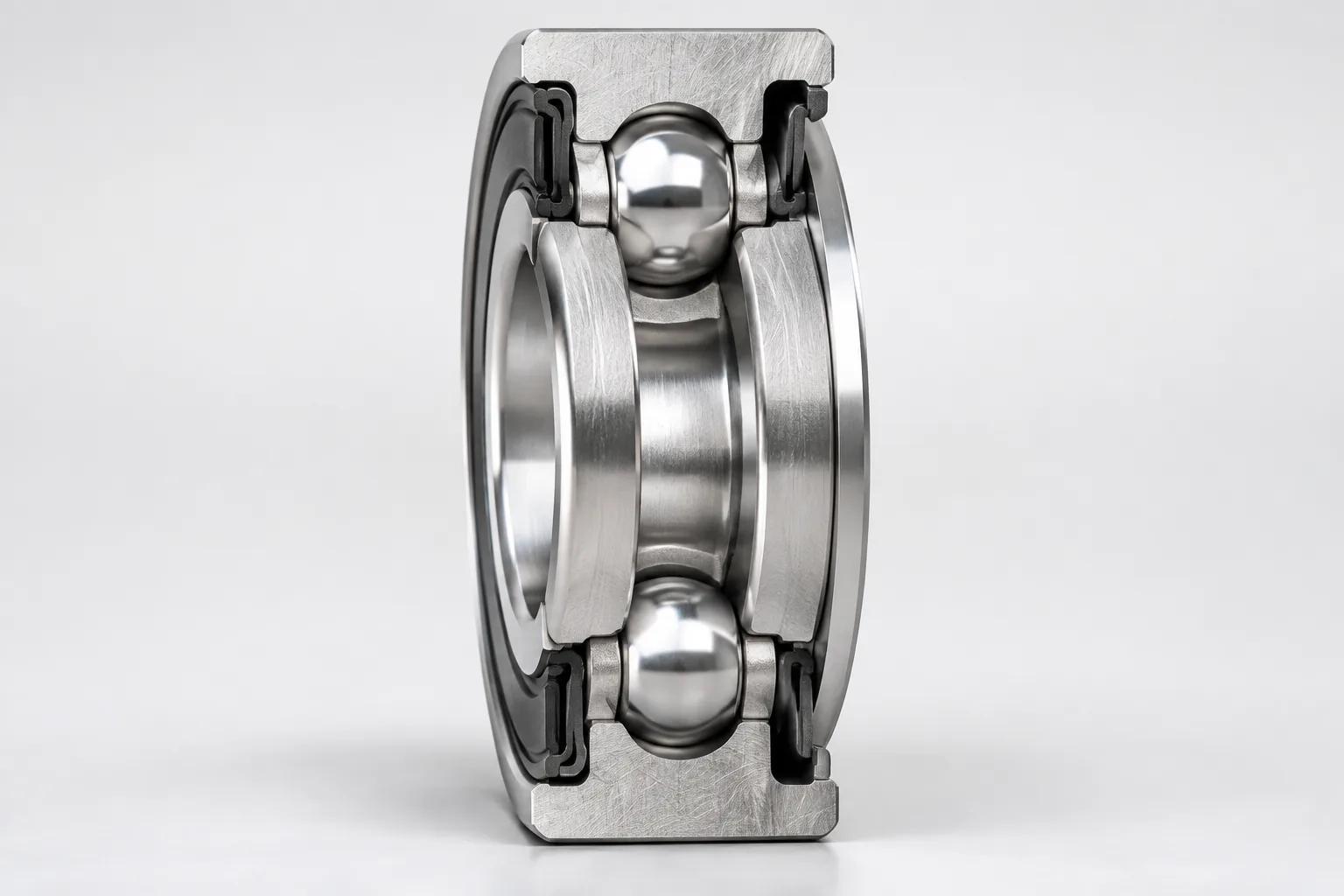
Common terminology maps ABEC 5 to ISO Class 5/P5 and ABEC 7 to ISO P4. These mappings help compare labels, but the exact tolerance values still come from the applicable standard table for the bearing type and size.
Some bearing types and specialty designs may not follow the same ABEC scope in the same way. Confirm the applicable standard or manufacturer data for the exact bearing type before treating the grade as a direct comparison.
Key Differences Between ABEC 5 and ABEC 7
The practical comparison runs across five areas. Use the list as a screen, then confirm the details for the exact bearing and application.
- Tolerance and dimensional precision: ABEC 7 is tighter than ABEC 5.
- Running accuracy: lower permitted runout can matter where rotation must be precise.
- Vibration and noise: tighter running accuracy may help, but lubrication, mounting, contamination, and system design also govern noise.
- Speed suitability: precision can support demanding duty, but speed ratings also depend on cage, lubrication, clearance, load, and heat.
- Cost, availability, and installation: ABEC 7 often carries a higher purchase cost and narrower availability, and higher precision is less forgiving of poor fits and contamination.
Tolerance and Dimensional Precision
ABEC 7 is specified with tighter tolerances than ABEC 5. That difference can matter where shaft and housing fit, runout, or rotational accuracy are critical. The benefit depends on correct mounting in an appropriate shaft and housing fit. A tight-class bearing installed with poor alignment or a loose fit will not deliver the expected precision.
Specific bore, outside-diameter, width, and runout limits come from the applicable standard table and should be checked for the exact size and type.
Running Accuracy, Vibration, and Noise
Higher precision grades are generally associated with tighter running accuracy and potentially lower vibration and noise. ABEC 7 may be preferred in low-noise or low-vibration systems, but overall noise also depends on lubrication, mounting, contamination, and system design. ABEC 7 does not always eliminate noise or vibration. If noise is caused by damage, contamination, or improper installation, a higher ABEC grade alone may not help.
Common bearing symptoms include excessive heat, noise, vibration, shaft movement, and high torque. Likely causes include improper lubrication, contamination, excessive load, and improper handling or installation.
Identify the earliest observed symptom by correlating symptoms with operating history, lubrication condition, contamination, load, and mounting. Avoid relying on a single secondary sign. These symptoms point to a need for diagnosis; they do not prove that one bearing is the sole cause.
Speed Suitability
Tighter precision can support higher-speed or high-accuracy applications when the whole system is designed for it. ABEC grade alone does not determine speed rating. Cage design, lubrication, internal clearance, load, and thermal conditions also matter.
Treat ABEC 7 as potentially suitable for more demanding precision or speed applications, not automatically faster in every case. Confirm speed suitability against the manufacturer speed rating and the actual application conditions. A lower ABEC grade may perform adequately in lower-speed applications where precision is not the limiting factor.
Cost, Availability, and Procurement
ABEC 7 bearings are often more expensive and less broadly available than ABEC 5 bearings, and in some sizes or specialty types, availability may be the deciding factor rather than price. Buyers should verify that the grade marking, supplier documentation, and actual precision class match the requirement, and confirm dimensions, clearance, sealing, and documentation before the order is released.
Consider total system cost, not only bearing purchase price.
Installation and Handling Sensitivity
Higher-precision bearings can be more sensitive to poor mounting practices, contaminated environments, and incorrect fits. ABEC 7 benefits may be lost if shaft or housing alignment, cleanliness, or lubrication is inadequate, so match the precision grade with suitable shaft and housing tolerances and assembly cleanliness. Use careful handling and appropriate installation methods for both grades; precision grade does not replace correct fitting practice.
Performance Implications in Real Applications
Map the comparison to application needs rather than declaring a universal winner. Potential ABEC 7 use cases include precision spindles, instrumentation, low-vibration mechanisms, and high-accuracy rotary systems. ABEC 5 is often sufficient for general-purpose motors, conveyors, fans, and cost-sensitive replacements where standard precision is adequate.
For each use case, check load, speed, runout, noise, environment, and maintenance requirements. Validate each example against the actual load, speed, and environmental conditions. High-load or harsh-environment applications may be governed by bearing type, material, sealing, and lubrication more than by ABEC grade.
When ABEC 5 Is the Better Choice
Choose ABEC 5 when the application does not require the tighter precision of ABEC 7. ABEC 5 can be a practical choice for cost-sensitive projects, general machinery, and replacements where the original specification is ABEC 5. Confirm that ABEC 5 meets the required runout, noise, speed, and service requirements.
When ABEC 7 Is Worth the Premium
Consider ABEC 7 when tighter running accuracy, lower vibration, or high-precision rotation is a clear requirement. The premium is most justified when the surrounding system can actually use the tighter tolerance. Do not upgrade to ABEC 7 solely as a substitute for solving alignment, contamination, or lubrication problems.
If the limit is load rating, contamination, lubrication, or mounting error, a higher ABEC grade may not solve the problem. The shaft, housing, lubrication, and assembly must be suitable for a higher-precision bearing.
Compatibility, Sizing, and Substitution
Compare bearings by nominal bore, outside diameter, width, bearing type, load rating, lubrication, and sealing, not by ABEC grade alone. ABEC 5 and ABEC 7 bearings of the same nominal size may be physically interchangeable in some cases, but the application must tolerate any differences in precision, internal clearance, and cost. Dimensional interchangeability alone does not establish functional equivalence.
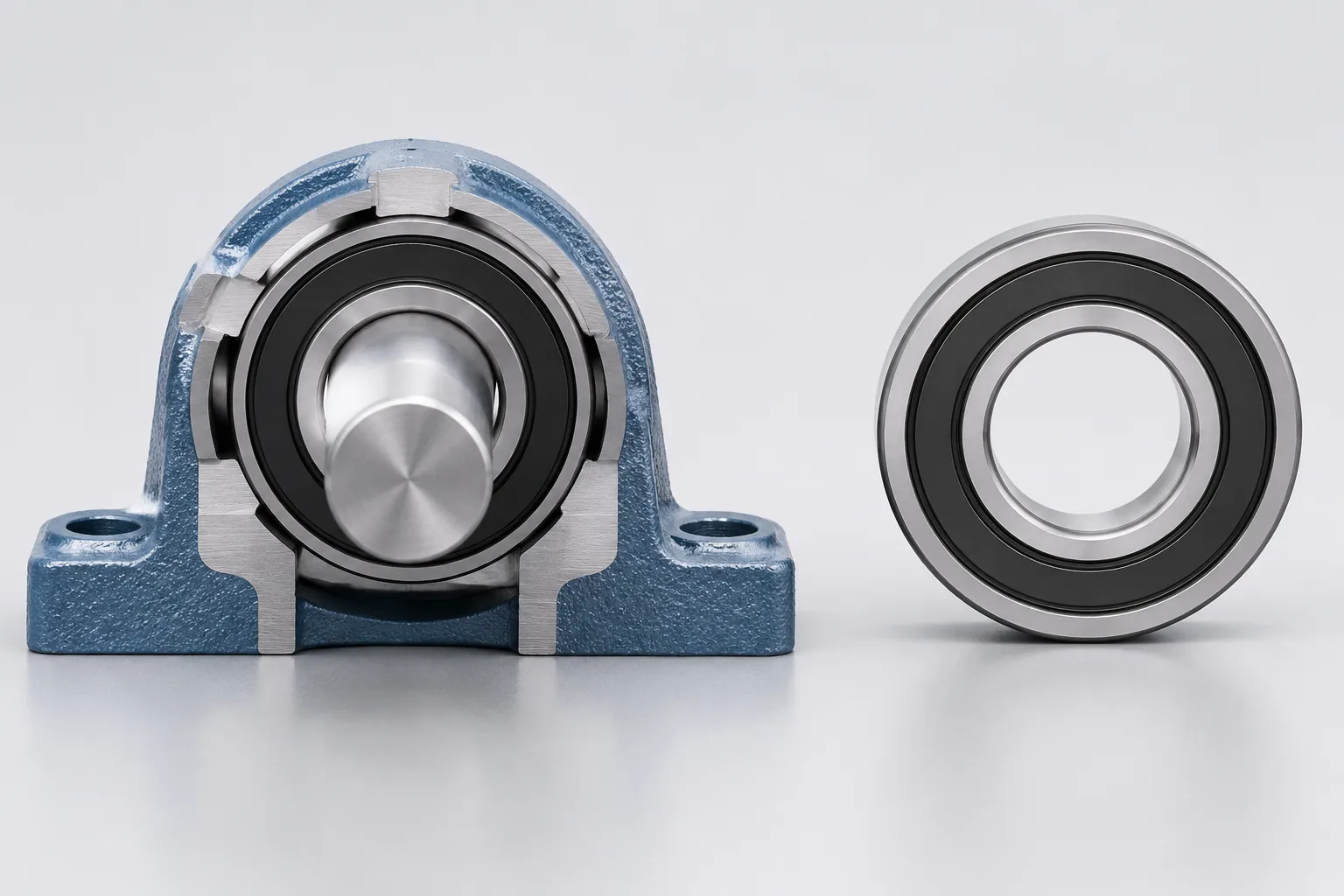
Radial internal clearance is separate from ABEC grade and should be checked separately. Verify manufacturer data before substituting one grade for another. Substitution requires checking dimensions, load ratings, speed ratings, lubrication, seals or shields, and fit. Do not assume interchangeability across different bearing types or non-standard configurations.
Selection Checklist
- Define required precision: runout, rotational accuracy, vibration, and noise.
- Check operating conditions: speed, load, lubrication, sealing, environment, and maintenance interval.
- Confirm fits and installation: shaft and housing tolerances, alignment, cleanliness, and available tooling.
- Compare supply factors: ABEC 5 vs ABEC 7 cost, lead time, and supplier verification.
- Document and verify: record the chosen grade and check that the delivered bearing matches it.
Conclusion
ABEC 5 vs ABEC 7 bearings is a choice between two precision classes, not two levels of overall bearing quality. ABEC 7 is tighter, but the extra precision pays off only when runout, vibration, speed, or rotational accuracy are real requirements and the shaft, housing, lubrication, and assembly support them. ABEC 5 remains a practical choice for many general-purpose and cost-sensitive applications. Confirm dimensions, load rating, clearance, sealing, and speed ratings before substituting one grade for another, then verify the delivered grade against the requirement.
FAQs
Q1: Is ABEC 7 better than ABEC 5?
A: ABEC 7 is not universally better; it is a tighter precision class. It can be the better choice when lower runout, lower vibration, or higher rotational accuracy is required, but ABEC 5 may be sufficient and more economical when standard precision meets the application.
Q2: Does a higher ABEC rating mean higher load capacity?
A: No. ABEC classes describe dimensional and running-accuracy tolerances, not load rating. Load capacity depends on bearing type, size, internal geometry, material, and application conditions, so check the load rating separately.
Q3: Can I replace an ABEC 5 bearing with an ABEC 7 bearing?
A: Sometimes, but not by grade alone. The bearings must match in nominal bore, outside diameter, width, type, load rating, lubrication, sealing, and clearance; the application must also tolerate the tighter precision and higher cost. Verify manufacturer data before substitution.
Q4: Are ABEC 7 bearings always faster?
A: No. Higher precision can support demanding speed applications when the full system is designed for it, but speed rating also depends on cage design, lubrication, clearance, load, and heat. Confirm the manufacturer speed rating for the exact bearing and operating conditions.
Q5: Do ABEC ratings apply to all bearing types?
A: ABEC ratings are most directly associated with ball-bearing precision classes and may not apply in the same way to all bearing types or specialty designs. Confirm the applicable standard or manufacturer data for the exact bearing type.