Quick Answer: Common signs of a bad wheel bearing include humming, rumbling, or growling noise that changes with speed or steering; grinding or screeching; steering-wheel vibration; wheel wobble or excessive play; vague steering or a pull to one side; and, on some hub assemblies, an ABS warning light. Brake pulsation, abnormal wheel-end heat, grease leakage, and rough rotation also warrant inspection. These symptoms point to a need for diagnosis, not proof of one failed part.
A wheel bearing that is starting to fail rarely announces itself with one neat symptom. The first clue is often a low hum that appears at highway speed, a grinding feel through the floor, or a steering wheel that no longer feels settled. Because tires, brakes, CV joints, and suspension parts can imitate the same complaints, the useful question is not only what a bad wheel bearing sounds like, but which checks separate a bearing fault from those look-alikes. This guide covers the common signs, the road-test clues that matter, and the limits of a symptom-only diagnosis.
Noise Symptoms: Humming, Rumbling, Growling, and Grinding
Noise is one of the main reasons readers search for bad wheel bearing signs. The character of the sound matters, and so does the way it changes with speed, steering, and load.
Humming, Rumbling, or Growling
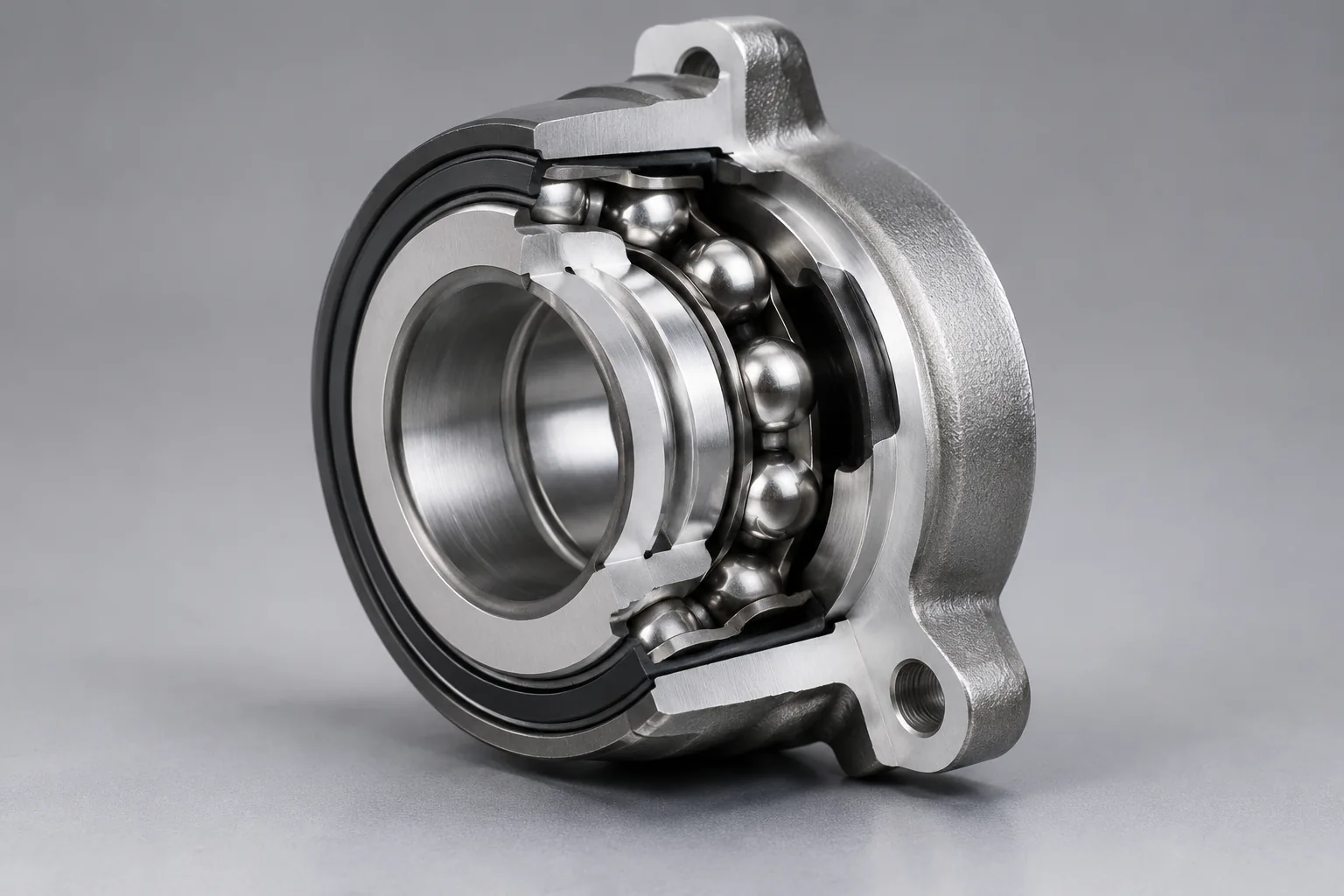
A humming, rumbling, or growling noise is one of the most common bad wheel bearing signs. It often rises with vehicle speed and may change when the vehicle turns or when weight shifts from one side to the other. Bearing-origin noise can be present while driving straight, but slight steering input or a lane change often makes it more noticeable. Treat that pattern as a diagnostic clue, not as proof. Tire tread pattern and wear, different road surfaces, wheel imbalance, and other driveline components can create similar low-frequency noise.
Grinding or Screeching
A continuous high-pitched squeal or grinding sound while the vehicle is moving is a stronger wear signal at the wheel end. Grinding that appears or intensifies during turns or wheel-load transfer may point to mechanical damage such as roller or raceway damage. That pattern deserves prompt inspection, but it still needs confirmation. Brake pad wear indicators, rotor contact, and debris trapped near the brake or shield can also produce grinding or screeching.
Why the Noise Changes When You Turn or Shift Weight
A slight left-right steering movement transfers more vehicle weight to one side. If the bearing on that side is damaged, the noise may become louder or quieter. One common road-test clue is that the noisy side may be opposite the direction of the rumble. That clue is not reliable on its own because structure-borne noise travels through the frame and can seem to come from the opposite wheel end. Use the steering test only at a safe speed and in suitable road conditions, and do not replace a bearing based only on the direction from which the sound seems to come.
Vibration, Wheel Wobble, and Steering Feel
Steering-wheel vibration that varies with vehicle speed or turning can be a wheel-end bearing wear symptom. Vibration or wheel wobble linked to a hub bearing may indicate mechanical bearing damage. The same complaints can come from tire damage, suspension faults, wheel imbalance, and alignment problems. Because vibration and steering changes affect control, they deserve attention even when the cause is not yet known.
Wheel Wobble and Excessive Play
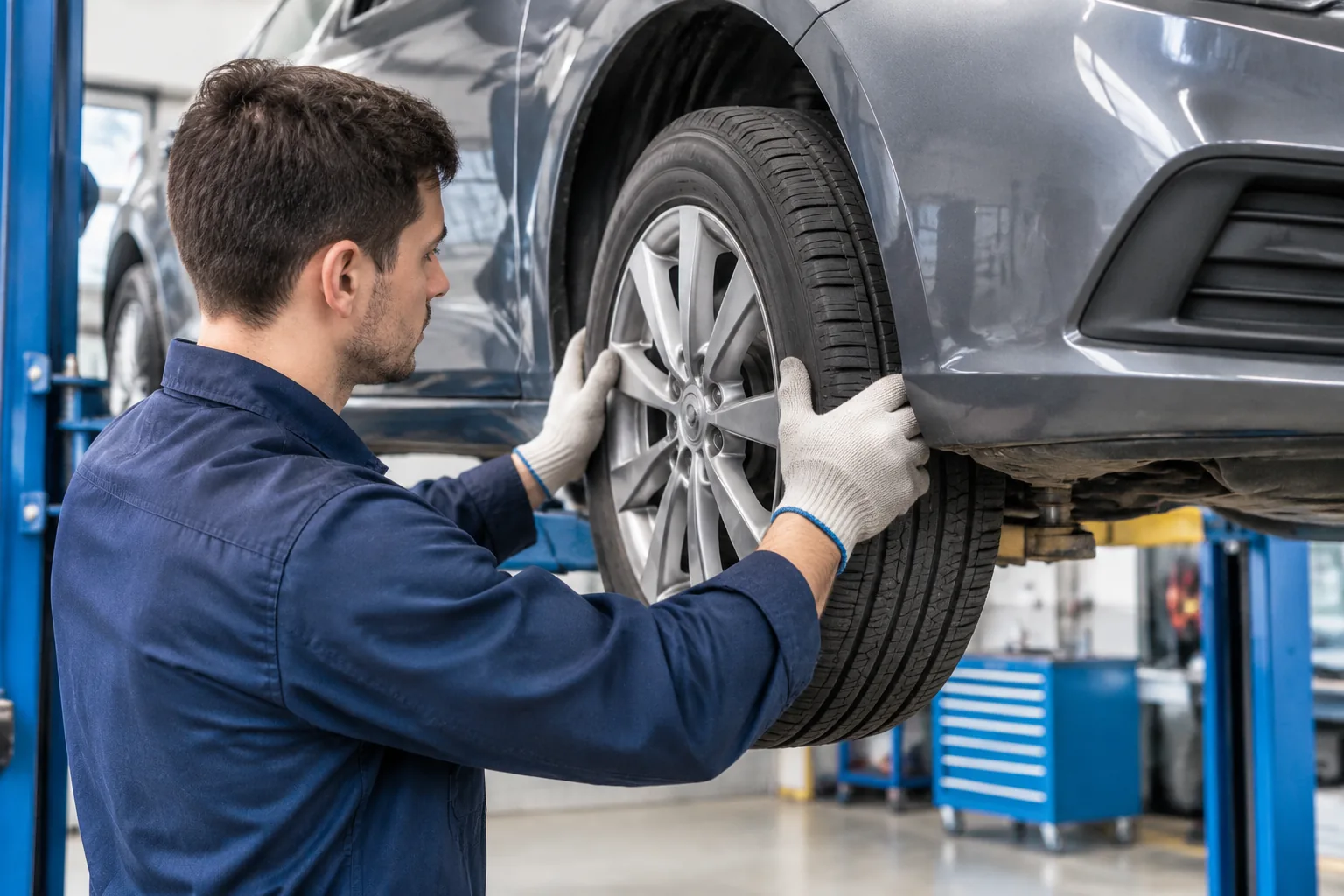
A wheel with excessive play when lifted and pushed or pulled may indicate a damaged bearing or hub assembly. A practical check is to grasp the wheel at the 3 o’clock and 9 o’clock positions, push and pull, then repeat at the 12 o’clock and 6 o’clock positions. During the check, feel for roughness, looseness, or abnormal noise. Noticeable wheel play is a reason for professional inspection before continuing normal use.
Steering Looseness, Vague Feel, or Pull
Excessive steering play, a vague feeling around center, and poor handling can appear when a hub assembly is failing. A damaged wheel bearing may also make the vehicle feel as if it is pulling to one side. These symptoms overlap with alignment error, tire pressure difference, tire conicity, and worn steering or suspension parts. A pull or vague steering feel should therefore be diagnosed as a chassis complaint, not assumed to be a bearing.
Clicking, Snapping, and Knocking Sounds
Clicking or snapping during turns and knocking or clunking over bumps are sometimes listed among hub assembly fault signs. They are less bearing-specific than humming or grinding. Snapping, clicking, or popping during sharp turns can come from an outer CV joint. Knocking or clunking when changing from acceleration to coasting is more often linked to a CV joint, universal joint, or differential backlash than to a wheel bearing. Present these sounds as possible clues, not as a bearing diagnosis.
ABS Warning Lights and Brake Symptoms
Some hub bearing assemblies integrate a wheel-speed sensor. If the bearing or hub assembly is damaged, an ABS sensor fault may appear with the ABS warning light. When that light is on, follow the vehicle manufacturer’s test procedure and use a diagnostic scan tool to identify the brake-system component reporting the fault. Do not replace a hub assembly only because the ABS light is on. Severe bearing play can also cause brake rotor runout, which may lead to brake pulsation, brake pull, and uneven pad or rotor wear. Those brake symptoms have more common causes, including caliper faults and rotor distortion.
Heat, Grease Leaks, and Rough Rotation
Warning signs at the wheel end include:
- Abnormal wheel-end heat
- Increased noise or vibration
- Grease leakage or discoloration
- Rough rotation
- Visible seal damage
These signs support inspection, but they do not by themselves identify the exact failed component.
Abnormal Heat and Grease Leaks
Compare wheel-end temperatures cautiously because normal driving and braking create heat. A meaningful comparison is between similar wheel ends after comparable use. Grease leakage or discoloration and visible seal damage are stronger visual clues that the wheel end needs inspection. Abnormal temperature rise may come from incorrect or insufficient lubrication, contamination, excessive load, installation error, or friction from worn components. Dragging brakes, tire rubbing, and other wheel-end faults can also generate abnormal heat.
Rough Rotation and Bearing Play
After safely lifting the vehicle and removing the brake disc and related parts, manual rotation of the hub bearing assembly can reveal roughness, looseness, or noise. This check is an intermediate-level task and requires a torque wrench and a dial indicator with a magnetic base. Roughness, looseness, or abnormal noise during manual rotation is a bearing damage sign and indicates replacement. The check requires safe lifting, correct reassembly, and the specified torque.
How to Tell a Bad Wheel Bearing From Other Faults
Start with a road test before condemning a bearing. Note the speed, the road surface, whether the noise changes in a turn, and whether it is present while driving straight. Then check bearing play, rotation roughness, ABS fault codes, and noise from adjacent wheel ends. Before blaming the bearing, exclude these possible causes:
- Tire tread condition, uneven wear, and different road surfaces
- Wheel imbalance and poor alignment
- Worn suspension parts
- CV joints
- Brake calipers and brake rotors
Diagnosis is more reliable when road-test observations are combined with physical wheel-end checks and fault-code reading. A symptom that sounds like a bearing fault may originate in the tire, suspension, driveline, or brake system.
When Symptoms Warrant Prompt Inspection
Prompt inspection is appropriate when any of these signs is present:
- Wheel wobble or excessive play
- Grinding
- Abnormal wheel-end heat
- An ABS warning light
- Brake pulsation
Severe or worsening symptoms affect steering, braking, or wheel security and should not be treated as normal wear. Qualified service is recommended because confirming a bad wheel bearing requires safe lifting, physical checks, and exclusion of similar faults. No single symptom always proves bearing failure; urgency depends on symptom severity, vehicle controllability, and the presence of wheel play, heat, or braking changes.
Conclusion
The useful takeaway is a pattern, not a single sound. A bad wheel bearing more often shows up as a speed-related hum or rumble, a grinding change in a turn, vibration through the steering wheel, wheel play, or a wheel end that runs hot or leaks grease. ABS and brake complaints can join the list on some vehicles, but they have many other causes. If noise, play, heat, an ABS warning, or a braking change appears, arrange inspection rather than waiting for the symptom to become severe. A road test plus wheel-end checks gives a safer basis for deciding whether the bearing, a tire, a CV joint, a brake component, or another chassis part needs attention.
FAQs
Q1: How can I tell if the noise is a wheel bearing or a tire?
A: Tire tread pattern, flat spots, cupping, and uneven wear can imitate a bearing rumble, so inspect the tires first and compare noise from adjacent wheel ends before replacing a bearing. Bearing noise commonly changes with vehicle speed and slight steering input, but a road test alone cannot separate every tire fault from a bearing fault.
Q2: Does a bad wheel bearing always make noise when driving straight?
A: No. Some damaged bearings are quiet while driving straight and become noticeable only during a lane change or turn when load shifts. Others produce a constant hum at road speed. The absence of straight-line noise does not rule out a bearing, and the presence of noise does not confirm one.
Q3: Can a bad wheel bearing trigger the ABS light?
A: It can on vehicles whose hub assembly includes the wheel-speed sensor. Damage at that sensor can set an ABS fault. The light can also come from wiring, another sensor, a brake-system fault, or another wheel. Use the manufacturer’s test procedure and a scan tool before replacing parts.
Q4: Is it safe to drive with a bad wheel bearing?
A: A bearing with roughness, looseness, grinding, or abnormal heat should not be treated as a minor wear item. Continued driving can affect steering, braking, and wheel security. Have the vehicle inspected promptly; if the wheel has visible play, the vehicle pulls, or braking changes, arrange service before further normal use.
Q5: Why does the noise change when I turn?
A: Turning shifts vehicle weight onto one side and changes the load on each wheel bearing. A damaged raceway or rolling element may become louder or quieter under that load. The direction of the noise is only a clue because sound travels through the frame and can seem to come from the opposite side.
Q6: How do I check for wheel bearing play?
A: With the vehicle safely lifted, grasp the wheel at 3 and 9 o’clock, push and pull, then repeat at 12 and 6 o’clock. Feel for looseness, roughness, or abnormal noise. This is an intermediate-level check that requires a torque wrench and a dial indicator with a magnetic base, and the wheel-end parts must be reassembled to the specified torque.