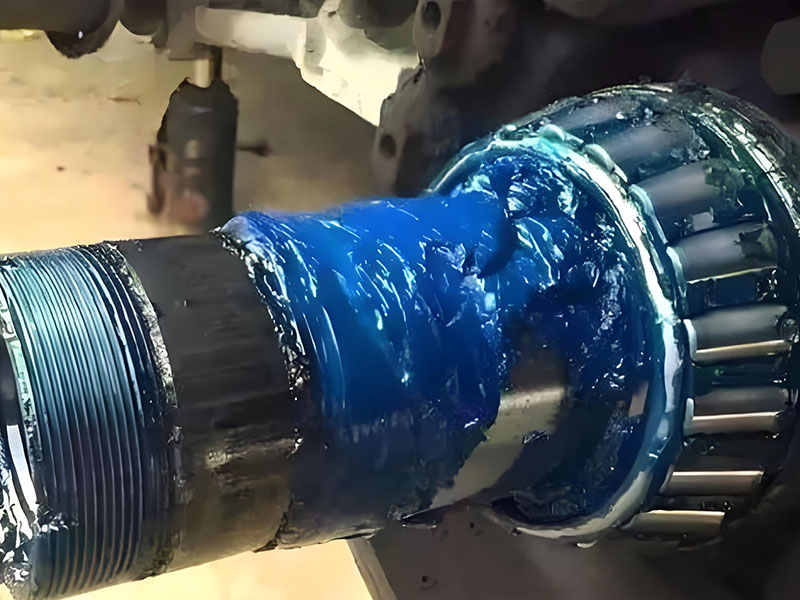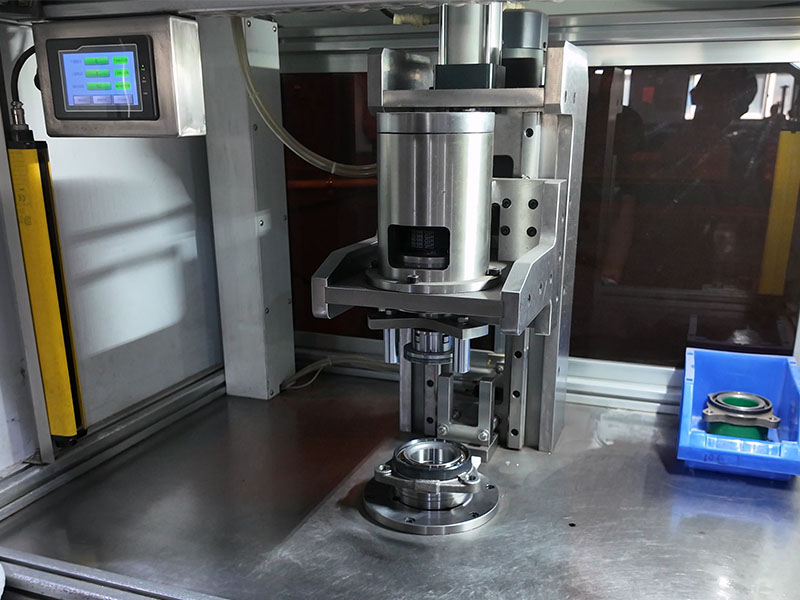
Quick Answer: Lubrication affects bearing functionality by creating a thin film that separates rolling elements, raceways and cages. This lowers friction and wear, limits heat, helps exclude contaminants and protects finished surfaces from corrosion. Film thickness, viscosity at operating temperature, lubricant quantity and cleanliness set torque, speed capability, noise and rating life. Wrong viscosity, wrong fill quantity and contamination are among the leading causes of premature bearing failure.
Lubrication is not a consumable added after a bearing has been selected. It is a design input and a maintenance variable that sets film thickness, friction torque, speed capability, running noise and calculated life. This article explains how the lubrication impact on bearing functionality works in grease and oil systems, and which conditions most often decide whether a bearing runs cool and quiet or fails early.
What the Lubricant Film Does Inside a Bearing
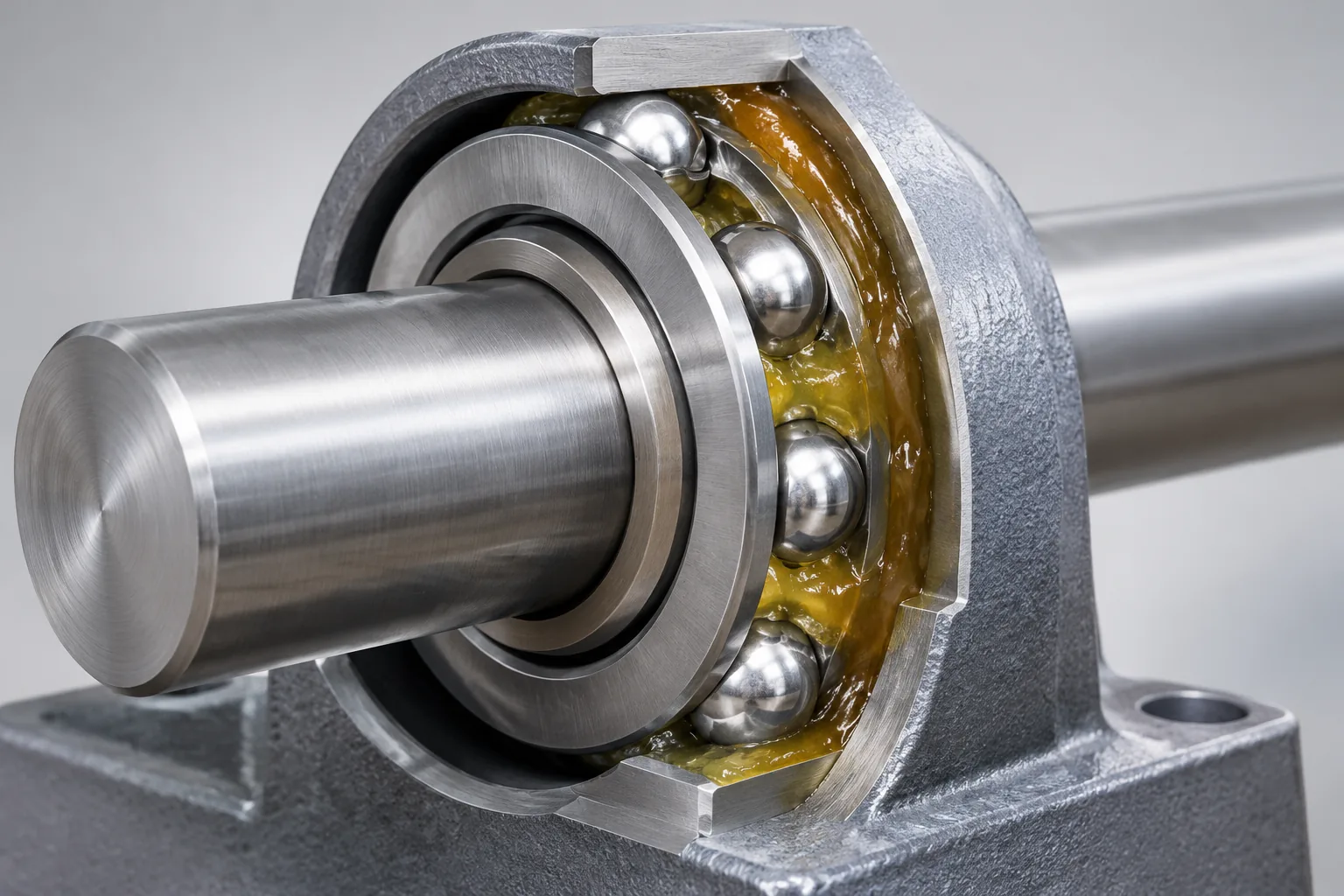
The lubricant creates a separating film between rolling elements, raceways and cages. That film prevents direct metal-to-metal contact and reduces friction, wear and the risk of seizure. Inside a bearing, the film is typically only microns to sub-microns thick. Its thickness depends on lubricant viscosity, relative surface speed, load and contact geometry.
Lubrication does more than lower friction:
- Surface separation between rolling elements, raceways and cages.
- Wear protection for loaded contact surfaces.
- Corrosion protection of finished surfaces.
- A contaminant barrier in grease-lubricated arrangements.
- Heat transfer in oil-lubricated arrangements.
Correct lubrication can extend rolling-fatigue life. Insufficient film thickness caused by low operating viscosity shortens bearing life. Lubricant cannot reverse existing surface damage such as indentations, corrosion pitting or spalling; it protects surfaces that are still intact.
Viscosity, Temperature and the Viscosity Ratio
The lubrication condition can be expressed by the viscosity ratio kappa = nu/nu1. Here nu is the actual lubricant viscosity at operating temperature, and nu1 is the rated viscosity required for the bearing size and speed.
| Viscosity ratio | Lubrication condition |
|---|---|
| kappa 1 to 4 | Typical range for many bearing applications |
| kappa = 4 | Full-film lubrication, with rolling-contact load carried by the film |
| kappa below 0.1 | Boundary lubrication dominated by asperity contact |
The controlling value is viscosity at the bearing’s real operating temperature, not the nominal viscosity printed on the product. Higher viscosity can improve film formation, but it also raises friction, so thicker oil is not automatically better.
As bearing temperature rises, lubricant viscosity falls, film thickness drops and surface separation weakens. Hot grease also thins, which increases leakage and component separation risk and can raise bearing torque. The oxidation rate of grease is about twice as fast for each 10 C (18 F) rise in operating temperature.
How Lubricant Quantity Changes Heat, Torque and Life
A grease shortage leads to lubricant starvation, which can generate heat and heavy metal wear. Overfilling causes churning, higher torque and overheating. Under-lubrication and over-lubrication can therefore produce similar outcomes: abnormal temperature and premature bearing damage.
A bearing usually produces the least heat when it receives only the minimum amount of lubricant needed for reliable lubrication. That minimum still has to satisfy sealing and heat-dissipation needs, so the lowest fill is not automatically the correct fill. For typical industrial applications, keep the bearing cavity approximately one-third to one-half full of grease. Specific bearing or equipment maker fill quantities, and high-speed or vertical-shaft arrangements, override this general guidance.
Grease or Oil: Speed, Cooling and Contamination Trade-offs
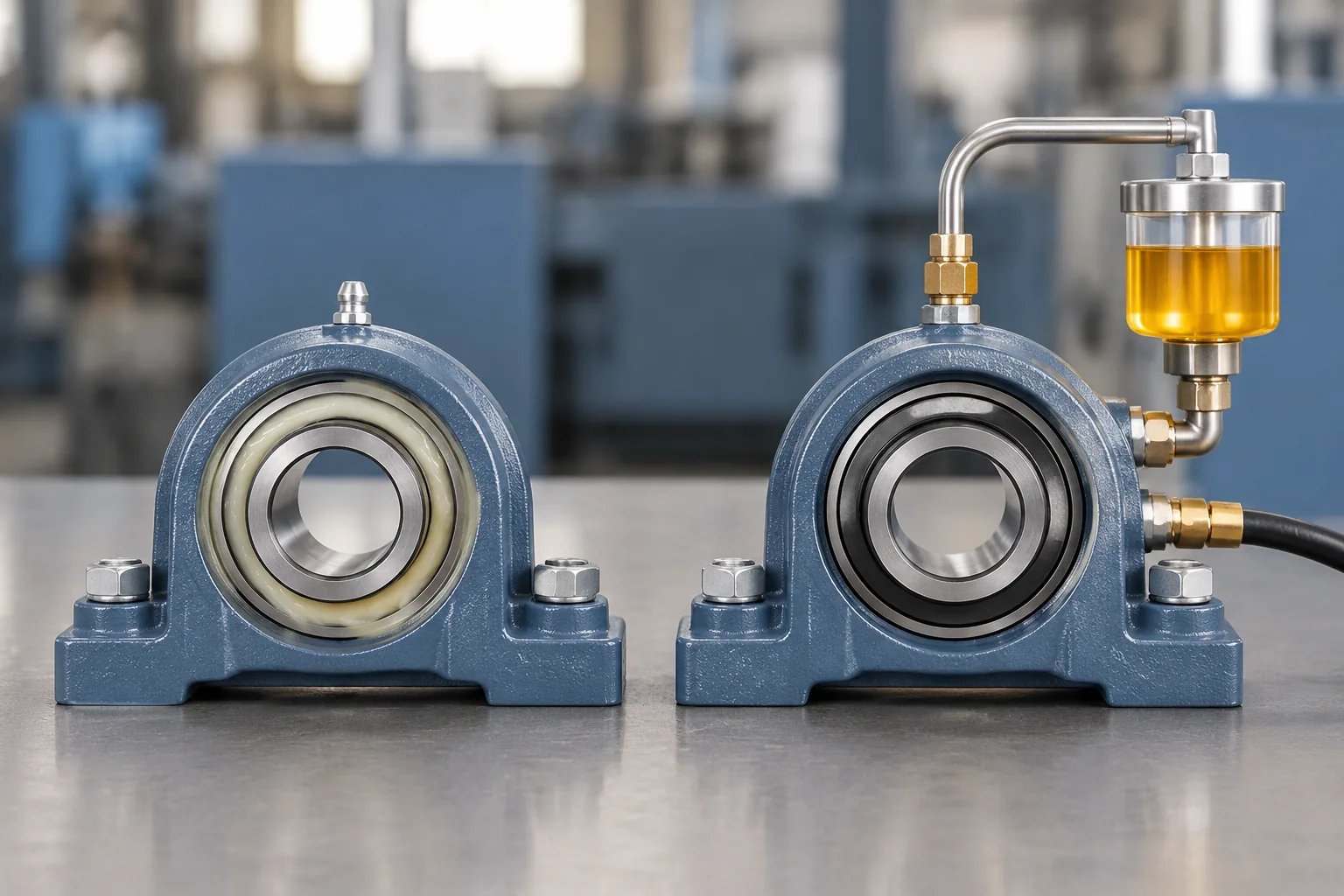
Oil lubrication generally supports higher bearing speeds than grease lubrication. In a typical comparison, grease covers about 65% to 80% of the limiting speed achievable with oil. Oil that circulates carries away friction-generated and externally supplied heat, which helps avoid overheating and lubricant breakdown; it can also be filtered and fully replaced.
| Factor | Grease | Oil |
|---|---|---|
| Speed capability | About 65% to 80% of oil limiting speed | Higher limiting speed |
| Heat removal | Limited by grease flow and fill | Circulating oil carries heat away |
| Housing and sealing | Simpler arrangements | More complex sealing and circulation |
| Contamination | Can form a barrier against ingress | Filtration and complete replacement are possible |
| Leakage | Usually less leakage exposure | Leakage control is more critical |
Choice therefore follows speed, heat generation, sealing practicality, relubrication access and contamination risk rather than preference. A sealed grease-for-life bearing may be the correct choice even where oil would allow higher speed, when relubrication access is impractical.
Contamination, Aging and Relubrication
Contaminated lubricant can carry hard particles that dent bearing surfaces, concentrate local stress and markedly cut service life. A small count of large hard particles is enough to leave permanent plastic deformation that spoils the surface finish.
Mechanical working, oxidation, aging and contamination all break down lubricant performance, so filtration, oil changes or grease replenishment become necessary. General industry estimates link roughly 36% of early bearing failures to poor lubrication practice, whether the cause is too much, too little or the wrong lubricant. Contamination accounts for about 14%, so the two together explain roughly 50% of premature failures. These figures are general estimates, not fixed ratios for every machine or duty.
ISO 15243:2017 provides the vocabulary for classifying bearing damage and failure modes and their possible root causes. It was published in March 2017 and confirmed in 2022. That structure supports a consistent lubrication diagnosis. Contamination-driven damage can occur even with correct viscosity and quantity, so lubrication grade alone does not guarantee life.
Why Lubrication Enters Bearing Life Calculations
ISO 281:2007 defines dynamic load ratings and rating life. Its modified rating life calculation accounts for reliability, lubrication condition, lubricant contamination and the material fatigue load limit, while basic rating life corresponds to 90% reliability. A third edition is in revision.
ISO 16281:2025 covers calculation methods for the modified reference rating life of universally loaded rolling bearings. The calculation explicitly includes lubrication, contamination, the fatigue load limit, tilt or misalignment, operating clearance and how load is distributed inside the bearing. It was published in January 2025, with a corrected version in August 2025.
The practical consequence is that lubrication is a calculation input at the design stage, not only a maintenance decision after the bearing is in service. Selecting a lubricant that delivers an adequate kappa at operating temperature and keeping contamination out are the two levers that most directly change the calculated life. Calculated life values apply only to the load, speed, temperature, lubrication and cleanliness inputs actually used in the calculation. They do not cover damage from installation error, misalignment beyond modeled limits, electrical erosion or severe contamination events.
Lubrication Effects on Noise and Running Smoothness
The makeup and cleanliness of the grease affect running noise, since the lubricant changes how vibration is excited and damped. ISO 21250-1:2020 covers the principles, test assembly and test machine needed for noise testing of rolling bearing greases. That is why a grease grade can be specified against a noise criterion.
Noise sensitivity depends on the application: quiet-running and instrument bearings are more sensitive than heavily loaded industrial arrangements. Noise or vibration that changes after relubrication signals a lubrication issue; it does not prove which component has failed. Noise change can also come from contamination, raceway damage, inadequate clearance or mounting error, so lubrication is one of several possible causes.
Matching Lubricant Choice to the Operating Conditions
Work through the decision inputs in order:
- Viscosity needed at operating temperature for the target kappa.
- Speed and limiting speed for grease or oil.
- Temperature range, including start-up.
- Load type and magnitude.
- Contamination environment.
- Sealing practicality and relubrication access.
Confirm that the selected grease or oil is compatible with the cage, seal and any previously used lubricant before mixing or switching. Set replenishment or oil-change intervals from operating temperature, speed, contamination and observed condition rather than a single universal interval. Where the equipment maker specifies a lubricant grade, fill quantity or interval, that specification takes precedence over general guidance.
Selection must be rechecked whenever speed, load, temperature or environment changes materially. Extreme low-temperature start-up, food-contact, vacuum or high-radiation duties require lubricants outside the scope of this article and should be referred to the lubricant and bearing maker.
Signs That Lubrication Impact on Bearing Functionality Is the Problem
Typical lubrication-related indications include:
- Abnormal temperature rise.
- Changed or louder running noise.
- Grease leakage or oil separation.
- Discolored or hardened grease.
- Varnish deposits.
- Wear debris in the lubricant.
Read symptoms as an invitation to diagnose. Check quantity against specification, viscosity against operating temperature, contamination ingress paths, seal condition, alignment, fit and load before concluding the lubricant is at fault. Diagnosis must also consider non-lubrication causes such as misalignment, incorrect fit, overload and electrical erosion.
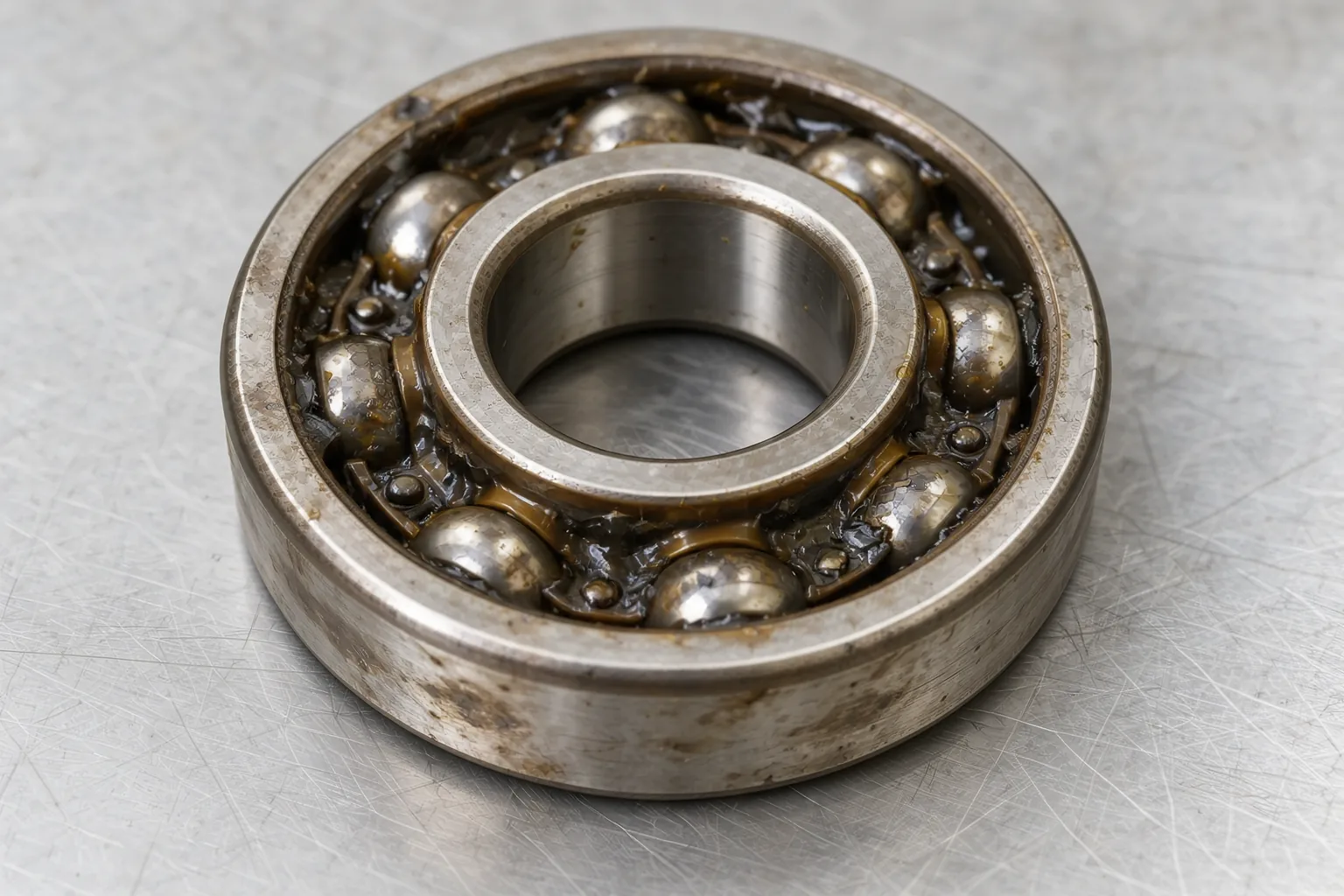
Use ISO 15243:2017 terms to describe the visible damage pattern consistently and to record the suspected cause. Safe next action: replace or replenish with the specified lubricant, restore the specified fill level and sealing, then monitor temperature and noise after restart. Where damage has already produced indentations, scoring or spalling, correct lubrication will not restore the surface and the bearing needs replacement.
Conclusion
Lubrication impact on bearing functionality runs through film thickness and friction, heat and torque, speed capability, contamination resistance, noise and calculated rating life. It is set by viscosity at operating temperature, quantity and cleanliness, not by brand or price. The two decisions that carry the most weight are adequate kappa at real operating temperature and exclusion of contamination, supported by the correct fill quantity to avoid both starvation and churning. A safe next step is to check the equipment maker’s lubricant specification first, then verify fill level, viscosity grade, relubrication interval and sealing against actual operating conditions, and monitor temperature and noise after any change.
FAQs
Q1: Does adding more grease reduce bearing friction?
A: No. Excess grease causes churning, higher torque and overheating, while too little causes starvation, heat and metal wear. Keep the cavity at the specified fill, typically about one-third to one-half for general industrial applications.
Q2: What viscosity ratio should I aim for?
A: Most applications sit between kappa 1 and 4, where kappa = nu/nu1 uses viscosity at operating temperature. A value near 4 approaches full-film lubrication, and a value below 0.1 indicates boundary lubrication, so confirm the target against the bearing maker’s guidance for the actual speed, load and temperature.
Q3: How often should a bearing be relubricated?
A: There is no universal interval. It follows operating temperature, speed, contamination and observed grease condition, and grease oxidation roughly doubles for every 10 C (18 F) rise, so use the equipment maker’s interval and shorten it when temperature or contamination is higher than assumed.
Q4: Why has the grease turned dark or started to leak?
A: Heat, oxidation and mechanical working degrade grease, and higher temperature thins it, increasing leakage and component separation risk. Check fill level, operating temperature and seal condition before simply adding more grease.
Q5: Does the lubricant really change bearing noise?
A: Yes. Grease composition and cleanliness affect both vibration excitation and damping, and ISO 21250-1:2020 defines how bearing greases are noise-tested. A noise change alone is a symptom, so also check contamination, clearance and mounting.
Q6: Can I mix two different greases?
A: Only after confirming thickener and base-oil compatibility with both makers, because incompatible thickeners can soften or harden the mixture. When compatibility is unknown, clean out the old grease and refill with the specified product.
Q7: Can good lubrication compensate for misalignment or overload?
A: No. Adequate film thickness protects intact surfaces within the modeled load, speed, temperature and cleanliness conditions, but misalignment, incorrect fit and overload remain separate causes that lubrication cannot correct.