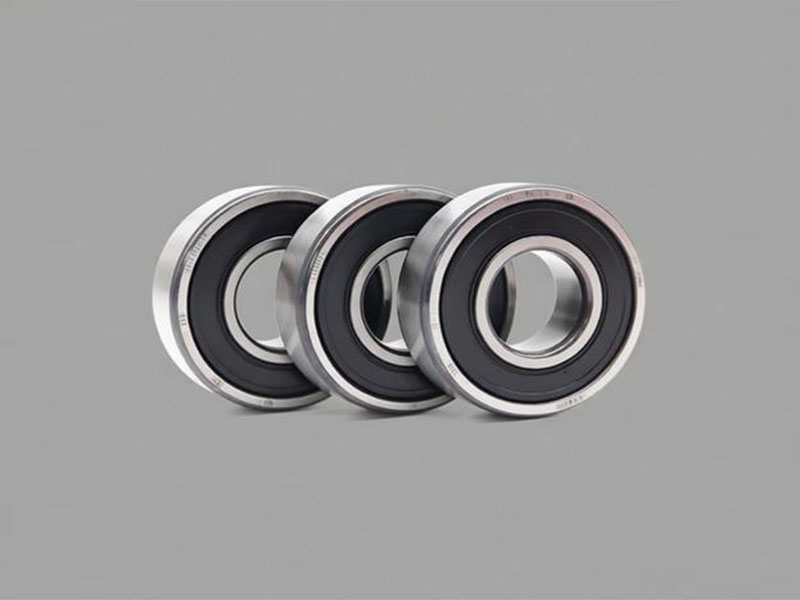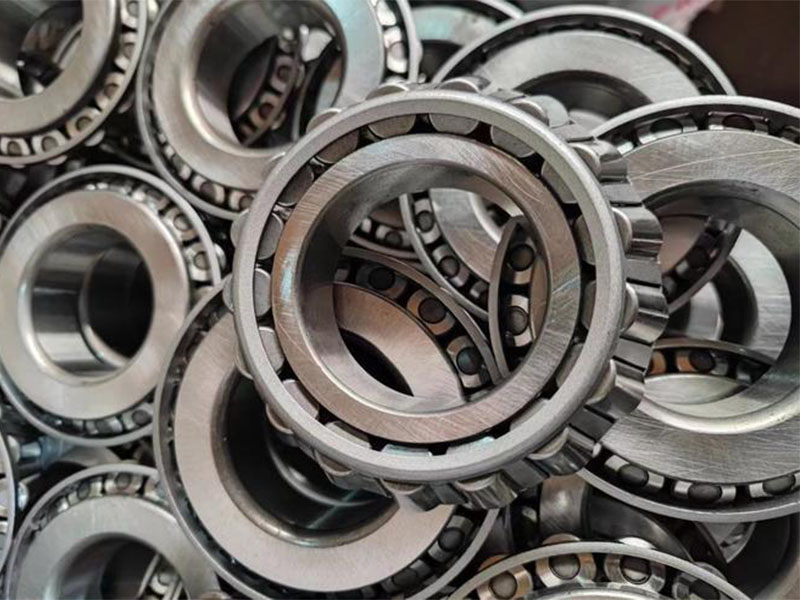
Quick Answer: One-way bearings are used wherever a shaft must transmit torque in one direction and freewheel in the opposite direction. They appear as one-way clutches, roller clutches, sprag clutches, freewheels, overrunning clutches, or backstops. Their three main application functions are overrunning, indexing, and backstopping. Common examples include printers, ATMs, fishing reels, e-bikes, starter drives, automatic transmissions, conveyors, and standby fans or pumps.
One-way bearings are used across a wide range of machines, yet the name covers a family of one-way mechanisms, not a single product. The application decides which function matters: overrunning for two drives on one shaft, indexing for stepped motion, and backstopping for reverse prevention. The examples below show where each function appears and what to check before selection.
Match the Application to the Function
One-way bearings solve three broad drive problems. Identify the problem first, then select the bearing style and size that can handle the torque, speed, and environment.
Overrunning Applications
Overrunning is used when two drives share a shaft or when a driven member may turn faster than its driver. The one-way element engages when the driver turns the load and releases when the load overruns. Typical examples include standby fans, pumps, and turbines; a low-speed threading drive on textile feed rolls; and a vehicle coasting demonstrator that lets the engine stop without dragging.
A self-supporting overrunning clutch for high-power, high-speed main and standby fan, blower, pump, or turbine duty is typically specified with an ambient temperature condition up to 40°C. That condition is a manufacturer standard, not a universal application limit.
Indexing Applications
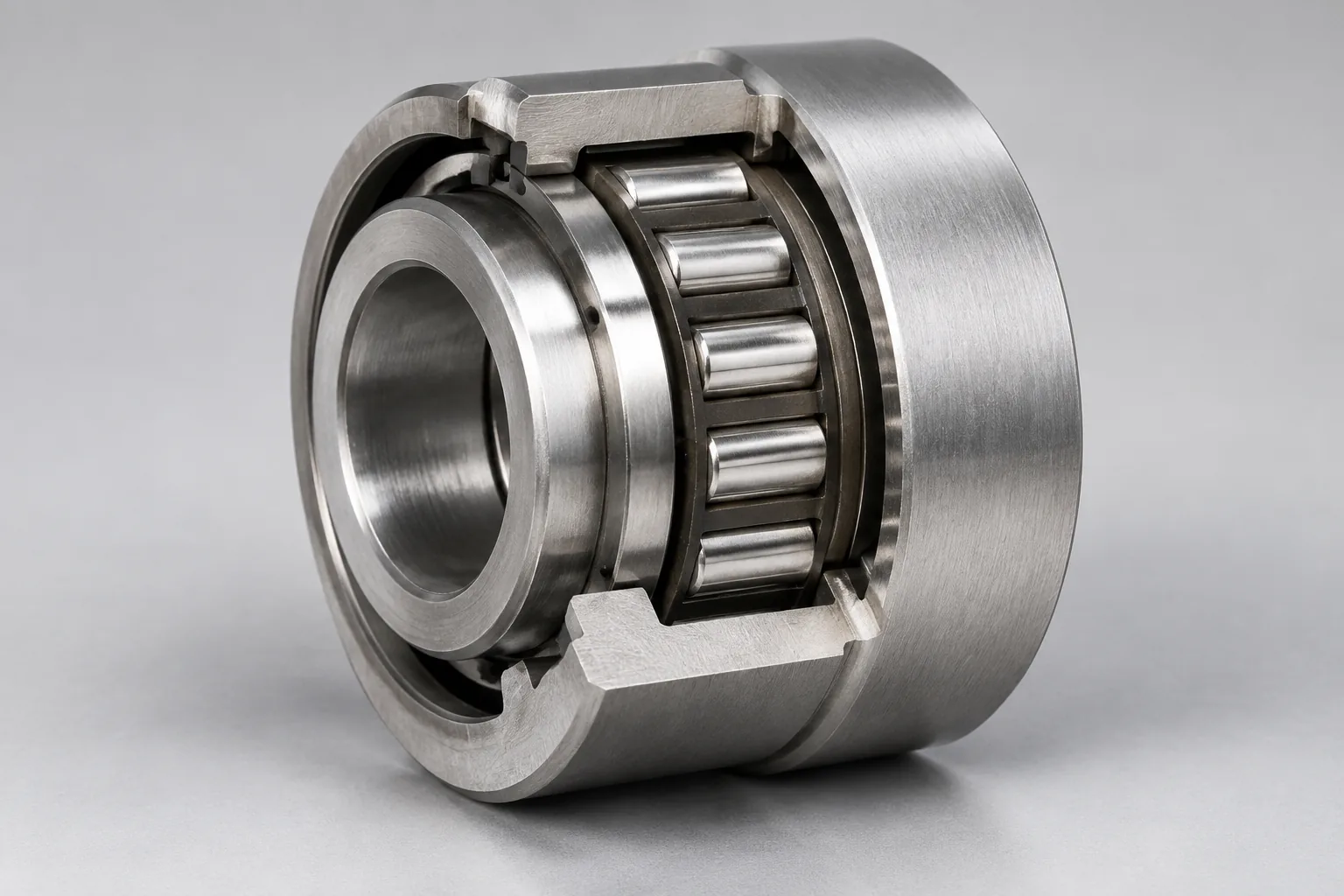
Indexing converts reciprocating input into one-way, stepwise output rotation. Packaging systems, stamping presses, and cut-to-length lines are common examples. The clutch locks on the forward stroke and releases on the return stroke so the output advances in fixed increments.
Backstopping Applications
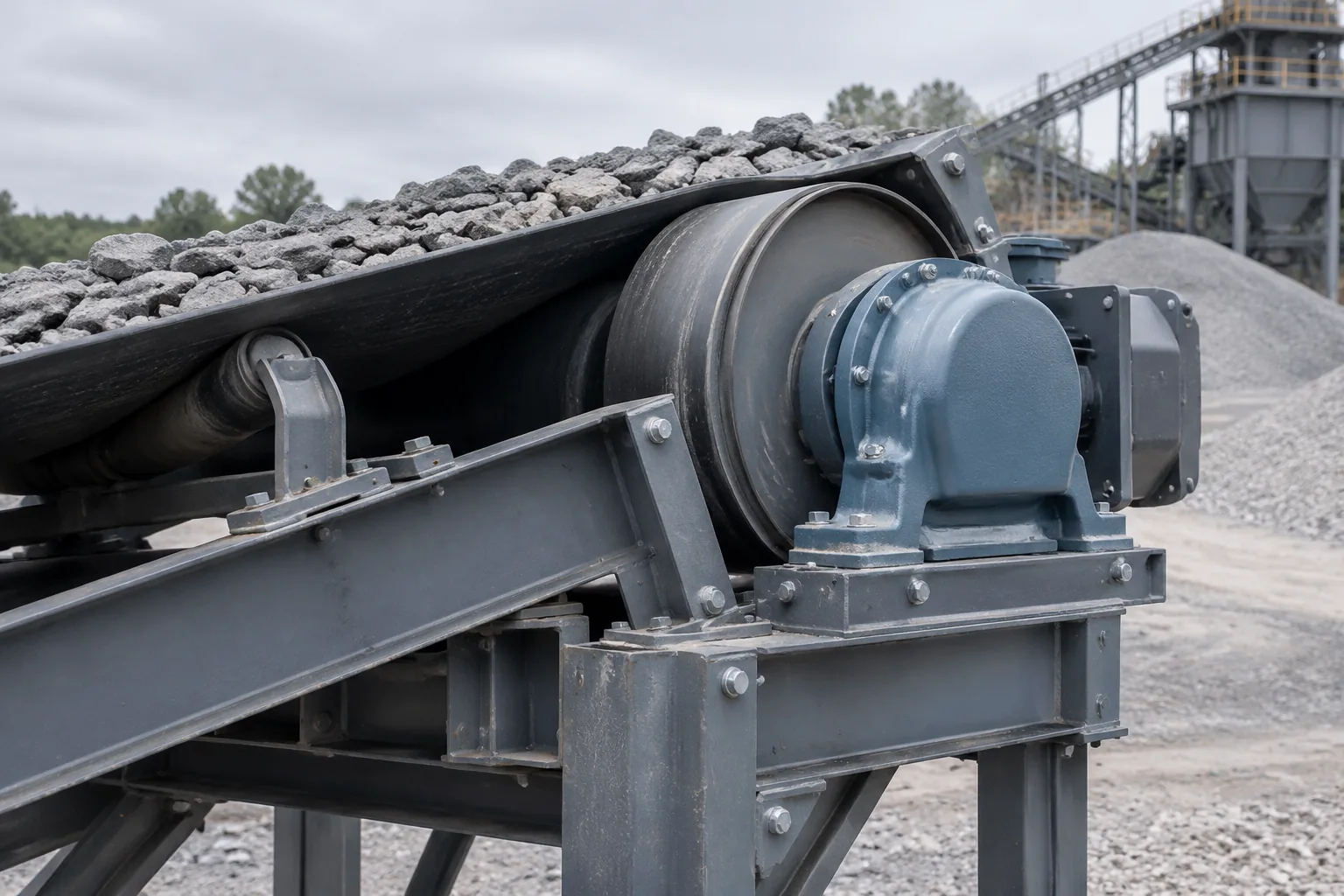
Backstopping allows rotation in the driven direction and prevents reverse rotation when power is removed or when gravity tries to pull an incline backward. Inclined conveyors and mining equipment use backstops for this reason. Heavy-duty backstops can combine holdback, torque limitation, load sharing among multiple backstops, and controlled reverse release after a belt jam. One bucket-wheel excavator backstop is rated 47,970 lb·ft (65,000 N·m) to protect an inclined discharge conveyor.
Large uphill belt conveyors may use self-contained freewheels on the drive pulley shaft, with sealed oil-chamber lubrication for harsh environments.
Everyday and Consumer Equipment
Consumer and office equipment often uses small drawn-cup roller clutches. The common functions are anti-reverse, feed control, and automatic engagement or disengagement. Drawn-cup roller clutches are available in miniature bore sizes, typically 3.2 to 35 mm, so they fit compact paper paths, spools, and drive modules.
Printers, Copiers, and Paper Feed Mechanisms
Paper feeders are a typical application for drawn-cup one-way roller clutches. The clutch locks the paper-feed direction and freewheels in the opposite direction, so the feed roller can advance paper without being driven backward by the mechanism.
ATMs and Cash Handling
Cash-handling machines use one-way clutches for banknote transport, separation, or preventing feed-roller reverse rotation. The clutch holds the intended feed direction while allowing the roller to release when the paper path moves faster.
Fishing Reels
Fishing reels use a one-way clutch to prevent the handle or spool from rotating backward. The clutch engages for retrieve and releases for free spool or reverse movement, depending on the reel design.
Pedal-Assist E-Bikes
Pedal-assist electric bikes can use a one-way mechanism to connect or disconnect motor drive, pedal drive, and coasting states automatically. The clutch prevents the motor from driving the pedals when the rider is not pedaling, and it lets the bike coast without turning the motor.
Small Engines and Powersports Starting
Small engines and powersports starters use one-way clutches to connect the starter to the crankshaft and then overrun after the engine starts. Agricultural machinery and engine starters for logging machines are listed applications. Motorcycle electric-start systems use roller clutches between the starter and crankshaft; once the engine runs faster than the starter, the clutch overruns and protects the starter components.
Automotive and Transportation Applications
Automotive uses range from transmission internals to starter drives and assembly-plant conveyors. The function is usually overrunning or one-way torque transmission during a transition between power sources.
Automatic Transmissions and Torque Converters
Automatic transmission converters use one-way clutches to hold a reaction member in one direction while allowing free rotation in the other. Sprag-type one-way clutches are also used in automatic-transmission applications. The clutch supports torque multiplication and smooth ratio changes without a manual control.
Permanent-Mesh Starters
A permanent-mesh starter keeps the starter gear engaged with the ring gear. A one-way clutch between the engine crankshaft and the starter ring gear overruns after engine start, allowing the starter motor speed to fall to zero while the starter gear remains engaged. This avoids the need for a separate engagement mechanism.
Vehicle Coasting and Efficiency Demonstrators
A fuel-efficiency demonstrator used a one-way clutch near the chainring so the vehicle could coast when the engine stopped. One such clutch was rated 180 N·m with a maximum overrunning speed of 4,200 rpm, and the vehicle covered 389 km on 1 L of diesel in a 2014 competition. This is a demonstrator example, not evidence that all production vehicles use the same arrangement. Production coasting functions require a system-level design review, including safety and regulatory requirements.
Industrial Machinery and Material Handling
Industrial uses are dominated by backstopping, overrunning, and indexing in conveyors, process lines, and dual-drive systems. Selection depends on torque, speed, environment, and safety requirements.
Conveyors, Bucket Wheels, and Mining Equipment
A double-drive conveyor can use one-way clutches so the standby drive is not back-driven when the main drive runs, and the standby drive can take over automatically if the main drive fails. One automotive assembly-plant installation used clutches rated 7,000 lb·ft per unit.
Large inclined conveyors use backstops to prevent reverse motion when power is removed. One bucket-wheel excavator backstop is rated 47,970 lb·ft (65,000 N·m) to protect an inclined discharge conveyor. In mining and aggregate environments, sealed, oil-chamber, or otherwise protected designs may be required; verify per product.
Packaging, Stamping, and Cut-to-Length Lines
Packaging systems, stamping presses, and cut-to-length processes are typical applications for overrunning, indexing, and small backstopping clutches. These applications often require repeated, one-way motion rather than continuous rotation.
Textile and Web Feeding
Textile and web-fed equipment uses one-way clutches to disengage a low-speed threading drive when production speed is higher. A fabric feed roll can be turned at 5 rpm during threading; when the line runs at 10 rpm, the clutch automatically releases the low-speed drive so it is not back-driven. One such clutch was rated 2,250 lb·ft (3,060 N·m). The same principle applies to other web-handling rolls where an auxiliary drive must disengage at production speed.
Continuous Process Lines
Heat-treat, bakery, and chemical-plating lines require continuous motion and often use cooling or ventilation fans. These lines are cited as typical applications for overrunning, indexing, and small backstopping clutches. The clutch may be used on the fan drive, the conveyor drive, or an auxiliary drive that must release at operating speed.
Main and Standby Fans, Pumps, and Turbines
Main and standby fan, blower, pump, and turbine drives use self-supporting overrunning clutches so the standby drive is not back-driven by the running main drive. When the main drive stops, the standby drive can engage and carry the load. High-power, high-speed duty requires a design that accounts for overrunning speed, lubrication, and ambient temperature; a standard ambient condition up to 40°C is not a universal limit.
Selection and Safety Notes for Application Matching
Application matching starts with the function, not the catalog page. Use these checks before selecting a one-way bearing:
- Define the function: overrunning, indexing, or backstopping.
- Verify the duty: bore or shaft size, torque, overrunning speed, lubrication, and ambient temperature. Drawn-cup clutches commonly range from 3.2 to 35 mm bore.
- Confirm the series: temperature limits are model-specific – for example, oil lubrication from -10 to 120°C and grease lubrication from -10 to 70°C on one common series – so confirm the selected series rather than assuming a family-wide limit.
- Check the environment: dust, moisture, washdown, and enclosed oil chambers can change the required design.
- Add a separate safeguard: do not rely on a one-way clutch as the only safety device where slippage could cause injury or major damage.
Not every one-way bearing is suitable for every function or environment. A clutch that works as an overrunning element in a clean office machine may not be suitable for a mining conveyor or a high-speed standby drive.
Conclusion
One-way bearings are used wherever a machine needs one-way torque transmission and free rotation in the opposite direction. The application usually falls into overrunning, indexing, or backstopping. Match the function first, then verify torque, speed, bore, lubrication, temperature, and safety requirements. If slip could cause injury or major damage, add a separate mechanical safety device rather than relying on the clutch alone.
FAQs
Q1: What are one-way bearings used for?
A: They transmit torque in one direction and freewheel in the opposite direction. Their three main functions are overrunning, indexing, and backstopping. Overrunning lets a driven part turn faster than its driver; indexing converts reciprocating motion into stepped rotation; backstopping prevents reverse rotation.
Q2: Where are one-way bearings used in everyday equipment?
A: Printers and copiers, ATMs, fishing reels, and pedal-assist e-bikes are cited examples. These uses typically involve feed control, anti-reverse, or automatic engagement and disengagement. The clutch may lock a feed direction, prevent a reel from turning backward, or connect and release a drive as operating conditions change.
Q3: Where are one-way clutches used in vehicles?
A: Automatic transmission converters and permanent-mesh starters are cited applications. Motorcycle electric-start systems use roller clutches that overrun after engine start. A fuel-efficiency demonstrator used a one-way clutch to allow coasting with the engine stopped; that is a demonstrator example, not a universal production arrangement.
Q4: Where are one-way bearings used in industrial machinery?
A: Inclined conveyors, bucket-wheel excavators, textile feed rolls, packaging, stamping, cut-to-length lines, continuous process lines, and main and standby fans, pumps, and turbines are cited examples. Industrial use usually centers on backstopping, overrunning, or indexing. The selected design must match torque, speed, environment, and maintenance requirements.
Q5: Can one-way bearings prevent reverse rotation on inclined conveyors?
A: Yes; this is the backstopping function. Heavy conveyors and mining equipment use backstops to hold the load when power is removed – for example, a bucket-wheel excavator backstop rated 47,970 lb·ft (65,000 N·m). Selection must account for torque, environment, and controlled-release requirements. In some systems, multiple backstops share the load, and a controlled release may be needed after a belt jam.
Q6: What should be checked before choosing a one-way bearing for an application?
A: Check the required function, torque, speed, bore or shaft size, lubrication, and ambient temperature. Confirm the selected series because temperature limits are model-specific – for example, oil lubrication from -10 to 120°C and grease lubrication from -10 to 70°C on one common series. Use a separate mechanical safety device where clutch slip could cause injury or major damage. The clutch is a drive element, not a substitute for a system-level safety review.