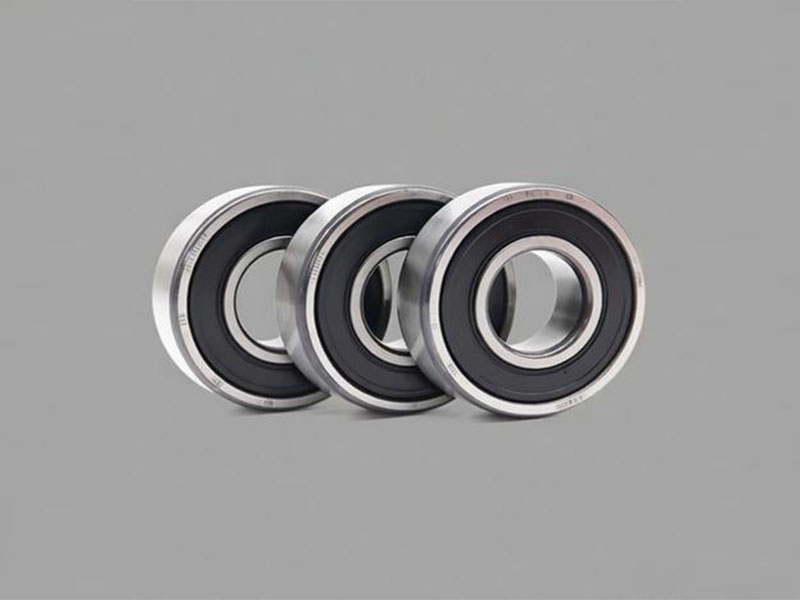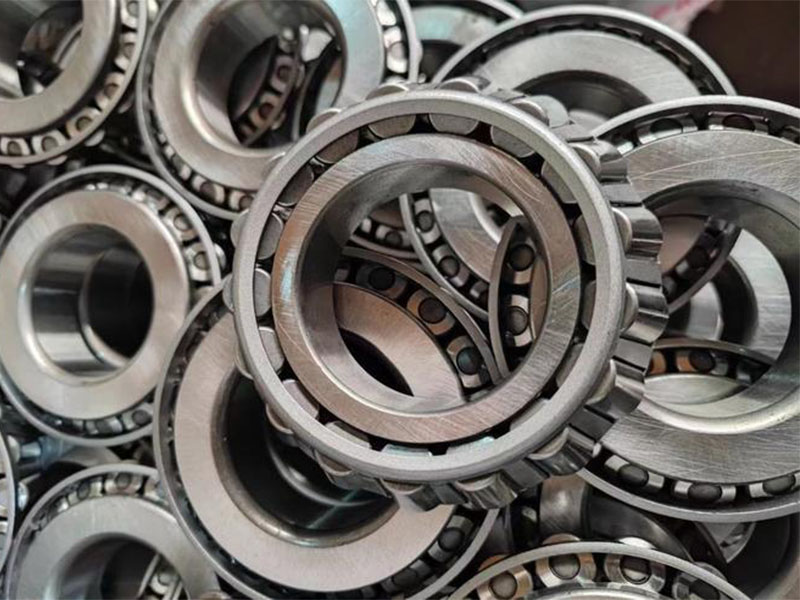
Selecting the correct grease for ball and roller bearings is a fundamental maintenance decision that directly impacts equipment reliability. The right grease reduces friction, prevents wear, and extends bearing service life. But how do you determine which grease is appropriate for your specific operating conditions? This guide provides a systematic approach to selecting grease based on consistency, base oil viscosity, thickener type, and application requirements.
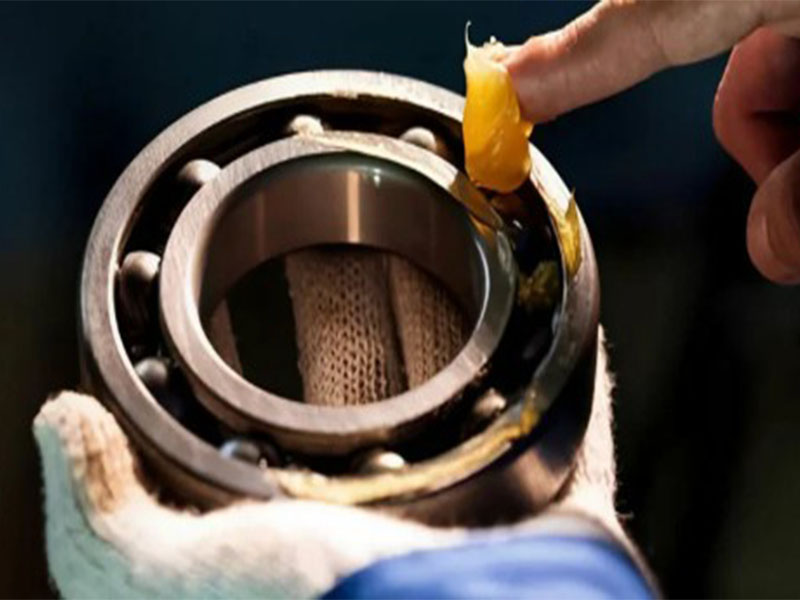
Why Lubrication Matters for Ball and Roller Bearings
Grease is the most common lubricant for rolling element bearings. For small and medium ball and roller bearings, grease offers design simplicity, reduced sealing requirements, and lower maintenance compared to oil systems. Grease stays in place, provides a physical barrier against contaminants, and does not require complex circulation equipment.
Proper grease selection influences four key performance metrics:
- Friction Reduction: A suitable grease maintains an elastohydrodynamic (EHL) film between rolling elements and raceways, preventing direct metal-to-metal contact.
- Load Distribution: The base oil viscosity determines the film thickness under load. Higher viscosity oils provide stronger film for heavy-load applications.
- Corrosion Protection: The thickener and additive package protect bearing surfaces from moisture-induced rust and corrosion.
- Heat Dissipation: Grease helps carry heat away from the contact zone, though oil is generally superior for high-heat dissipation.
When grease is improperly selected, bearing failures occur prematurely. Understanding the composition of grease—typically 70–90% base oil, 5–20% thickener, and 1–10% additives—helps in making an informed selection.
Common Grease Types for Ball and Roller Bearings
The thickener type determines many of a grease’s performance characteristics, including temperature limits, water resistance, and mechanical stability. Below are the most widely used thickener types for bearing applications.
Lithium and Lithium Complex Grease
Lithium-based greases account for the majority of greases sold worldwide. Simple lithium greases are effective for general-purpose applications, while lithium complex products offer higher temperature tolerance. These greases adhere well to bearing surfaces and perform reliably in temperatures ranging from -30°C to +120°C (-22°F to +248°F). However, water washout and rust protection can be limited in persistently wet or salty environments. Lithium complex greases are widely used in automotive wheel bearings, electric motors, and industrial machinery.
Calcium Sulfonate Grease
Calcium sulfonate has emerged as an attractive alternative to lithium, particularly where water resistance and wear protection are critical. This thickener type offers excellent inherent corrosion resistance and strong load-carrying capability. Calcium sulfonate greases perform well in marine, agricultural, construction equipment, and wet hub environments. An additional advantage is that calcium sulfonate is generally compatible with most lithium and lithium complex greases, simplifying transitions in existing equipment.
Polyurea Grease
Polyurea greases are known for long service life and low oil separation. They are ideal for electric motor bearings and sealed-for-life applications where regreasing is difficult. Polyurea formulations resist hardening over time, maintaining consistent lubrication throughout extended operating cycles. However, compatibility can be limited—polyurea greases are not necessarily compatible with other thickener types, and water resistance varies by formulation. Before switching to polyurea in wet or contaminated environments, verify washout data from the technical data sheet.
Synthetic Grease
Synthetic greases use synthetic base oils such as PAO, ester, or silicone instead of mineral oil. For applications with high speeds, high temperatures, or where long service life is required, grease with a synthetic base oil is often the preferred choice. Synthetic greases are recommended when operating temperatures exceed 100°C (210°F) or drop below -30°C (-22°F). The higher cost is justified by extended relubrication intervals and reliable performance under extreme conditions.
Key Parameters for Selecting Bearing Grease
Grease selection requires evaluating multiple parameters simultaneously. The following sections explain the most important factors.
NLGI Consistency Grade: NLGI 1, 2, and 3
The NLGI (National Lubricating Grease Institute) grade classifies grease consistency from 000 (nearly liquid) to 6 (very hard). For ball and roller bearings, three grades are most relevant:
- NLGI 1: Soft grease preferred for low ambient temperatures, cold starts, and oscillating applications. The lower consistency ensures adequate lubrication without excessive stiffness. NLGI 1 is also suitable for centralized lubrication systems requiring easier pumpability.
- NLGI 2: The most common grade for general bearing applications. NLGI 2 offers a balance between fluidity for easy application and stiffness for staying in place under operating conditions. Most general-purpose and multi-purpose greases are formulated as NLGI 2.
- NLGI 3: Stiffer grease recommended for large bearings, vertical shaft arrangements, high ambient temperatures, or applications with significant vibration. NLGI 3 resists leakage and maintains its protective layer under severe conditions.
Choose NLGI 2 unless specific operating conditions—such as low temperature (then use NLGI 1) or high temperature/vibration (then use NLGI 3)—dictate otherwise.
Base Oil Viscosity: From Low-Viscosity to High-Viscosity Grades
Base oil viscosity determines the oil film thickness between rolling elements and raceways, and is arguably the most important single parameter in grease selection. According to ISO 281 bearing life calculations, the required viscosity ratio (κ) should be ≥1 for adequate film formation. A general guideline for rolling element bearings:
- ISO VG 32–46: Suitable for high-speed spindles and bearings with speed factors approaching 600,000. Lower viscosity reduces churning and heat generation.
- ISO VG 100–220: Appropriate for wheel bearings at medium speeds and general industrial applications. This range provides a robust film for most standard operating conditions.
- ISO VG 460 or higher: Required for slow-speed, heavily loaded bearings. These greases typically contain extreme pressure (EP) additives to prevent metal-to-metal contact under high stress.
When selecting base oil viscosity, also consider operating temperature. Higher operating temperatures reduce the effective viscosity; therefore, a higher ISO VG grade may be required for hot environments to maintain adequate film thickness.
Operating Temperature Range
The grease must remain functional across the full range of expected operating temperatures. Key temperature parameters:
- Base oil viscosity at operating temperature: The grease must provide sufficient film thickness at the highest expected temperature.
- Dropping point: The temperature at which the grease liquefies. Select a grease with a dropping point well above maximum operating temperature.
- Low-temperature pumpability: Ensure the grease remains soft enough to flow at minimum ambient temperature.
For standard industrial bearings operating between -30°C and +120°C (-22°F to +248°F), lithium-based greases with NLGI 2 consistency and ISO VG 100–220 base oil are typically sufficient. For extended temperature ranges, synthetic greases provide reliable performance from -50°C to +200°C (-58°F to +392°F) or beyond.
Speed, Load and Environmental Conditions
Additional selection considerations include:
- High speed: Use lower consistency (NLGI 1 or 2) and lower base oil viscosity (ISO VG 32–68). Avoid over-greasing—high-speed bearings require less grease fill to prevent excessive churning and temperature rise.
- Heavy or shock loads: Select grease with EP additives or naturally robust thickeners such as calcium sulfonate. Higher base oil viscosity (ISO VG 220–460) provides stronger film protection.
- Wet or washdown environments: Calcium sulfonate grease offers superior water resistance and corrosion protection. Verify the water washout test results from the product’s technical data sheet.
- Food processing: Use food-grade (NSF H1) greases formulated with base oils and additives approved for incidental food contact.
How to Apply Grease to Ball and Roller Bearings
Once the appropriate grease has been selected, correct application is essential for achieving the expected bearing life.
Determining the Correct Grease Quantity
The initial grease fill volume for a bearing can be estimated using the following formula:
G (grams) = 0.005 × D × B
where:
- D = bearing outside diameter (mm)
- B = bearing width (mm)
For example, a 6208 deep groove ball bearing with OD = 80 mm and width = 18 mm: G = 0.005 × 80 × 18 = 7.2 grams (100% fill).
However, bearings are not filled to 100% of available space. The recommended fill percentage depends on operating speed, characterized by the speed factor (n × dm), where n is rotational speed in rpm and dm is the mean bearing diameter in mm (average of inner and outer diameter). For example, for a bearing with ID 40 mm and OD 80 mm, dm = (40+80)/2 = 60 mm.
| Speed Category | Speed Factor (n × dm) | Recommended Fill |
|---|---|---|
| Low speed | < 100,000 | 50–80% |
| Medium speed | 100,000 – 300,000 | 30–50% |
| High speed | 300,000 – 500,000 | 25–35% |
| Very high speed | > 500,000 | 20–30% |
For periodic regreasing, use approximately 50% of the full fill quantity. Over-greasing is the leading cause of grease-related bearing failures. Excessive grease causes churning, temperature rise, increased power consumption, and potential seal damage.
Step-by-Step Grease Application Procedure
A practical lubrication process includes the following steps:
- Confirm the correct grease product — verify the NLGI grade, thickener type, and base oil viscosity match the application requirements.
- Clean the grease fitting and surrounding area — contamination introduced during regreasing is a common failure cause.
- Apply only the recommended amount — use the calculated quantity, not an arbitrary number.
- Rotate the bearing where appropriate — this helps distribute the grease within the bearing cavity.
- Purge excess grease only where housing design permits — remove old grease if the housing includes a purge port.
- Monitor temperature, noise, and vibration after lubrication — abnormal changes may indicate incorrect grease or application errors.
Re-grease Interval Calculation
A usable re-lubrication procedure for ball and roller bearings:
- Start with the OEM interval — equipment manufacturer specifications provide the baseline.
- Adjust for operating conditions — higher speed, heavier load, elevated temperature, or contamination all require shorter intervals.
- Validate through inspection and monitoring — vibration analysis, temperature tracking, and grease sample analysis confirm whether the interval is appropriate.
Factors that increase required regreasing frequency: high temperature (the hotter the environment, the more frequently grease must be replenished), dust and moisture contamination, vertical shaft orientation (grease runs out faster), vibration (causes oil separation from thickener), and bearing element type (spherical roller bearings churn grease more heavily than ball bearings).
Common Mistakes When Lubricating Bearings
Using the Wrong Grease Type for the Application
Selecting grease based on color or habit rather than performance requirements is a widespread error. Each thickener type has distinct strengths and limitations. Using a general-purpose lithium grease in a wet marine environment will lead to water washout and corrosion, whereas calcium sulfonate would maintain protection.
Mixing Incompatible Greases
Mixing incompatible greases can cause thickening, softening, oil separation, or additive precipitation. Polyurea greases are particularly sensitive—they are not necessarily compatible with other thickeners and sometimes not even with other polyurea formulations. When changing grease types, purge the existing grease completely before introducing the new product. Calcium sulfonate is an exception, as it is generally compatible with most lithium and lithium complex greases.
Over-Greasing vs. Under-Greasing
| Issue | Consequences |
|---|---|
| Over-greasing | Excessive churning → temperature rise → oxidation → seal damage → energy loss |
| Under-greasing | Insufficient film → metal-to-metal contact → rapid wear → premature failure |
For high-speed bearings, over-greasing is more harmful than under-greasing. When in doubt, use less grease and rely on proper relubrication intervals rather than excessive fill.
Bearing Grease Selection Summary
For most standard ball and roller bearing applications operating under normal temperatures, moderate speeds, and clean, dry conditions:
- NLGI 2 consistency
- Lithium complex thickener
- ISO VG 100–220 base oil viscosity
For specific operating conditions, adjust accordingly:
| Operating Condition | Recommended Adjustment |
|---|---|
| Low temperature (< -20°C / -4°F) | NLGI 1 consistency |
| High temperature (> 100°C / 212°F) | NLGI 3 consistency, synthetic base oil |
| High speed | Lower base oil viscosity (ISO VG 32–68), reduced fill percentage |
| Heavy loads | Higher base oil viscosity (ISO VG 220–460), EP additives |
| Wet environment | Calcium sulfonate thickener |
| Long service life / sealed bearings | Polyurea thickener, synthetic base oil |
Frequently Asked Questions About Bearing Grease
Q1: What type of grease should I use for my bearings?
A: For general industrial ball and roller bearings under normal operating conditions, an NLGI 2 lithium complex grease with ISO VG 100–220 base oil viscosity is the standard starting point. Adjust based on specific temperature, speed, load, and environmental conditions.
Q2: How often should bearings be greased?
A: Start with the OEM recommended interval, then adjust for operating speed, temperature, load, and contamination levels. Use monitoring methods such as temperature tracking or vibration analysis to validate the interval. High temperature and heavy contamination require more frequent regreasing.
Q3: Can I mix different types of greases?
A: Avoid mixing different thickener types unless compatibility has been verified. Polyurea greases are particularly incompatible with other thickeners. Calcium sulfonate is an exception, as it is generally compatible with most lithium greases. When switching grease types, purge the existing grease as thoroughly as possible.
Q4: What happens if I use the wrong grease?
A: Using the wrong grease can cause insufficient lubrication, increased friction and wear, overheating, corrosion, premature bearing failure, and unplanned downtime. For example, using a lithium grease without adequate water resistance in a wet environment leads to washout and rust, while using too-high base oil viscosity in a high-speed bearing causes churning and overheating.
Q5: How do I know if my bearings are properly lubricated?
A: Indicators include stable operating temperature, normal noise levels, no excessive vibration, and no leakage or purging of degraded grease. Grease sample analysis is the most reliable method for verifying lubricant condition. Regular monitoring of bearing temperature and vibration provides ongoing confirmation.
Q6: How do I check grease compatibility before switching products?
A: Request compatibility data from the grease manufacturer or conduct a simple mix test: combine samples of the existing and new grease in a 50/50 ratio, store at operating temperature for 24–48 hours, and examine for softening, hardening, or oil separation. If changes are observed, do not mix.
Q7: What is GC-LB certification and does it matter for my application?
A: GC-LB is an NLGI certification identifying greases suitable for both automotive wheel bearings (GC) and chassis points (LB) per ASTM D4950. GC-LB certified greases have passed standardized tests for consistency, dropping point, water washout, rust protection, wear, and low-temperature torque. For automotive or general industrial bearings, selecting a GC-LB certified grease provides assurance of minimum performance standards.
Q8: Can I use grease instead of oil in ball bearings?
A: Yes, grease is typically the first choice for small and medium rolling element bearings due to design simplicity, reduced sealing requirements, and lower maintenance. However, very high-speed applications or situations requiring active heat dissipation may still require oil lubrication. Grease is not recommended when operating speeds exceed the grease’s DN capability (rotational speed × mean bearing diameter) or when continuous cooling is required.
For technical support or bearing application inquiries, please contact our engineering team.