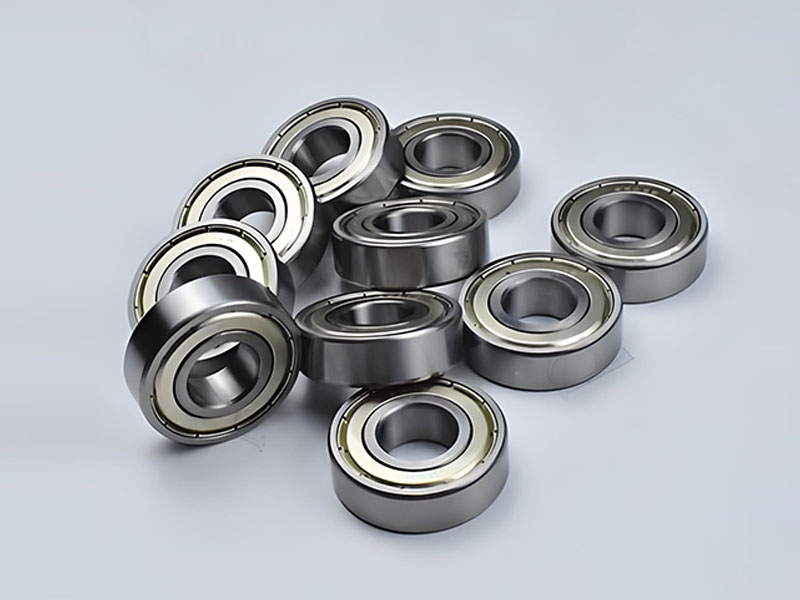
Quick Answer: Choose a custom bearing supplier for OEM projects by defining the application and evidence package first, then verifying the actual manufacturing site’s certification scope, engineering calculations, drawing standards, process control, and prototype-to-production capability. Require ISO 281 life calculation inputs, sector-specific quality evidence such as IATF 16949 with PPAP or AS9100D, and a first article package. Qualify the supplier through a scorecard and pilot order before serial release.
A custom bearing supplier for OEM projects should be qualified on evidence, not on a catalog claim or a brand-level certificate. The decision starts with a written application brief and ends with a pilot order that proves the supplier can repeat the approved process.
This guide sets out the checks that change the buying decision: site-specific certification, engineering calculation, drawing and tolerance control, prototype-to-production validation, process audit, RFQ evidence, commercial terms, traceability, and supplier scoring.
Define the Custom Bearing Brief Before Comparing Suppliers
A useful comparison starts with a brief that is complete enough for every supplier to quote on the same basis. Record the bearing type, envelope dimensions, load cases, speed, temperature, lubrication, contamination level, mounting fits, sealing environment, target life, annual volume, and required quality documents.
Do not rely on nominal dimensions alone. Field bearing failures can come from contamination, wear, misalignment, corrosion, lubrication, or seal failure, so the operating environment belongs in the brief alongside the drawing.
Decide the sector requirements early. Automotive work points to IATF 16949 and PPAP, aerospace and defense work points to AS9100D, and general industrial work may use ISO 9001 with project-specific evidence. Name the applicable standards in the brief so the supplier’s quote and calculation package use the same reference set.
- ISO 281:2007 defines the basic rating life calculation for rolling bearings, with basic rating life tied to 90% reliability.
- ISO 492:2023 covers radial rolling bearing dimensions and geometrical tolerances; it does not apply to needle roller bearings, airframe bearings, or other products that need specialist standards.
- ANSI/ABMA 20-2025 was approved as a US national standard on 2025-09-09 and replaces ANSI/ABMA 20:2011; it covers common metric radial ball bearings, cylindrical roller bearings, and spherical roller bearings.
Where a US-market metric radial bearing is specified, the brief should say whether ANSI/ABMA 20-2025 applies. The standard covers dimensions, tolerances, radial internal clearance, snap ring grooves, and some flange dimensions.
Verify Certifications at the Actual Manufacturing Site
Request certificate copies for the specific production plant that will make the bearing. The copy should show the site address, certificate number, certification body, certification scope, whether design is included or excluded, and the expiry date. A group headquarters certificate is not a substitute for the actual manufacturing site certificate.
If the supplier claims custom design capability, the certificate scope must include design. A manufacturing-only certificate does not prove design capability, even when the group advertises engineered bearings.
Check that the certification matches the project sector and the manufacturing location, not just the brand name. The same group can hold different certificates at different factories.
- A rolling bearing plant in Momo, Novara, Italy lists IATF 16949 certificate 0542057, valid from 2024-09-02 to 2027-09-01, with a scope covering the design and manufacture of rolling bearings.
- A bearing plant in Montgomery, Illinois, USA lists AS9100/EN9100 and ISO 9001 with a scope covering the design and manufacture of rod ends, spherical bearings, and plain bearings.
- One bearing group lists different combinations by plant: Elgin, Illinois has IATF 16949 and ISO 14001; Hamilton, Alabama has ISO 9001 and ISO 14001; Macomb, Illinois has IATF 16949, ISO 9001, and ISO 14001.
- The Taoyuan and Zhongli plants of a Taiwan-based bearing maker list IATF 16949:2016 valid from 2023-12-13 to 2026-12-12, with a scope covering bearing design and manufacture and no design exclusion.
Automotive OEM projects should require IATF 16949 at the producing site. Aerospace and defense projects should require AS9100D scope matched to the design and production activities quoted.
Automotive OEM Projects: IATF 16949 and PPAP
Require IATF 16949:2016 at the actual production plant for automotive projects. The standard replaced ISO/TS 16949:2009 and remains aligned with ISO 9001.
For lower-tier suppliers, use the IATF supplier development path. Third-party certified ISO 9001 is the initial minimum acceptable level, with IATF 16949 certification as the eventual goal based on customer risk and supplier performance.
Require PPAP for automotive production parts. Define the submission level, sample quantity, control plan, process flow, PFMEA, MSA, and material or performance test reports in the order. AIAG PPAP-4 is the industry standard for confirming that production parts consistently meet engineering design records and specification requirements.
Aerospace and Defense Projects: AS9100D Scope
Require AS9100D certification when the project is aviation, space, or defense related. AS9100D includes ISO 9001:2015 requirements and adds aviation, space, and defense industry requirements; it was published on 2016-09-20.
Check that the certificate scope covers the actual design and production activities quoted. Confirm that customer requirements and regulatory requirements are flowed down and take priority over the standard itself. AS9100D certification alone does not prove aerospace bearing design capability when design is outside the scope.
Check Engineering and Design Capability, Not Just Manufacturing
Ask for evidence of application design, bearing selection, life calculation, tolerance stack-up, prototype validation, and production test capability. A supplier that can machine a sample is not necessarily able to select the bearing, validate the application, and release a repeatable production process.
Require life calculations to cite ISO 281 inputs: basic dynamic load rating C, equivalent dynamic load P, speed, target L10 or L10h, reliability, lubrication, and contamination correction conditions. Do not accept a single rated life number without the assumptions and correction factors behind it.
For critical projects, confirm whether the supplier can perform qualification testing, not only sample production. Documented qualification testing should be required before production approval for critical aerospace, automotive, or industrial projects.
- One bearing maker states that its engineering process covers application design, finished product testing, delivery, and follow-up technical support, with a North American engineering team in Plymouth, Michigan.
- One bearing maker operates a New Product Development Center at 155 Lexington Drive, Laconia, New Hampshire 03246, supporting early prototype design through qualification testing and commercialization, including full-scale testing for aero engine shafts, gearboxes, APUs, landing gear, and helicopter rotor components.
Confirm Drawing, Tolerance, and Standard Compliance
Use approved 2D drawings and 3D models. The drawing should specify bearing type, bore, outside diameter, width, chamfer, fits, tolerance class, radial and axial clearance, cage, seals, lubricant, and material grade.
Reference the applicable tolerance standard in the drawing and require the supplier to confirm applicability and any product exclusions. ISO 492:2023 was published in August 2023 as the 6th edition and covers radial bearing dimensions and geometrical tolerances where it applies. It excludes needle roller bearings, airframe bearings, and other products that require specialized standards.
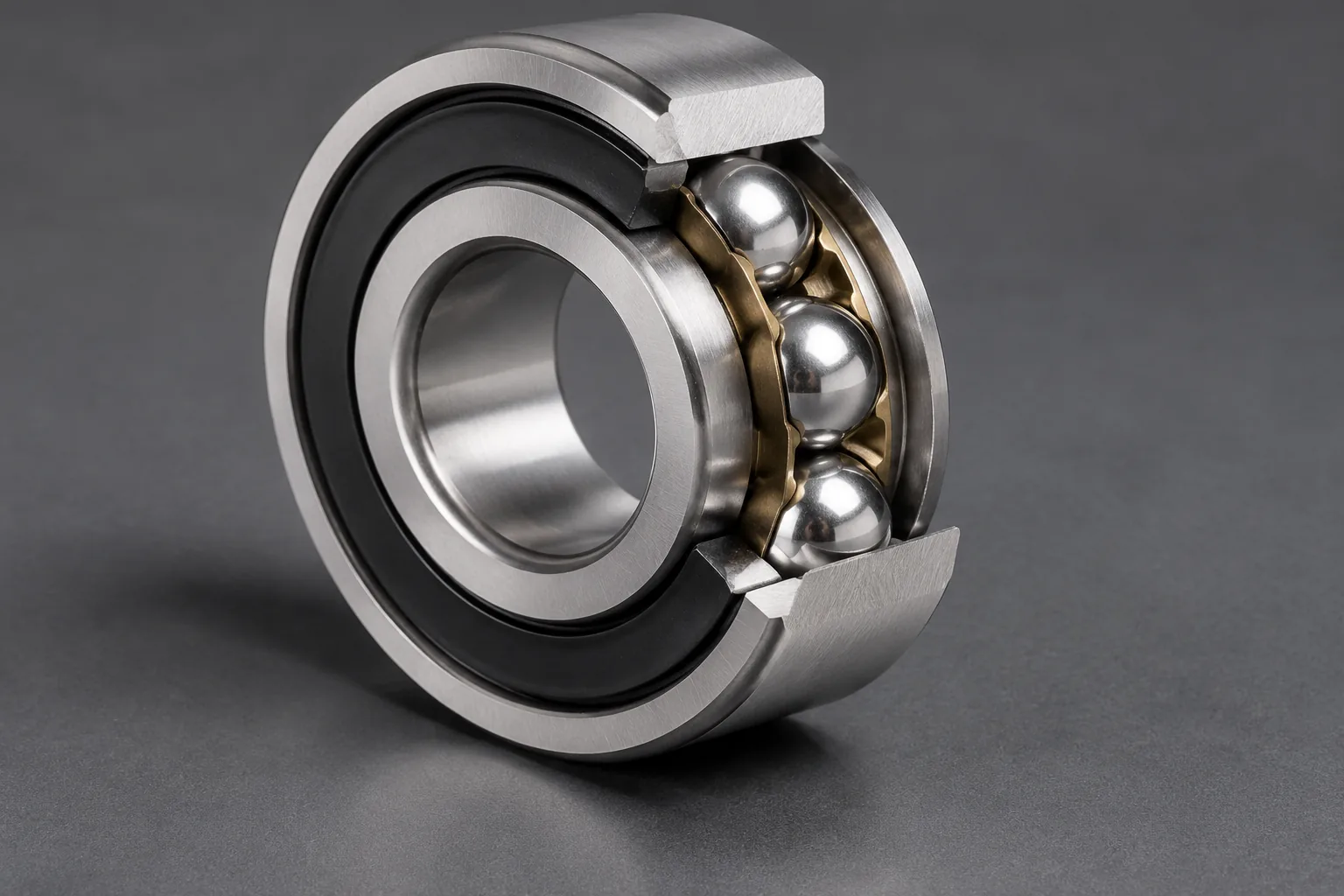
For US-market metric radial ball bearings, cylindrical roller bearings, and spherical roller bearings, ANSI/ABMA 20-2025 can be cited where applicable. It covers dimensions, tolerances, radial internal clearance, snap ring grooves, and some flange dimensions. Use it as the drawing reference only when the bearing type and market fit the standard’s scope.
Evaluate Prototype-to-Production Capability
Separate prototype capability from serial production capability during supplier evaluation. Ask how the prototype method differs from the final production process in material, heat treatment, grinding, cage, seals, lubrication, and assembly.
Confirm whether the supplier can support qualification testing and not just deliver samples. For low-volume custom bearings, verify dedicated small-batch capability; for large or special bearings, verify the supplier’s maximum size and handling limits.
- One bearing maker states that test samples can be produced by CNC machining, 3D printing, or prototype tooling, so the comparison of prototype and production methods is a necessary question.
- One bearing maker states that its special industrial bearing facility can design and manufacture single bearings, bearing units, or bearing sets in small batches, including custom seals, lubrication, coatings, and special structures.
- A bearing plant in Ploiesti, Romania lists design, development, manufacturing, and repair of bearing-related parts up to 4,000 mm, including metallurgical testing and evaluation.
Low-volume or customized OEM projects should verify small-batch capability separately from mass-production capability. Large-bearing projects should confirm the supplier’s dimensional and testing limits before the RFQ is issued.
Audit In-House Processes and Subcontractor Control
Require a process map that identifies which operations are performed in-house and which are subcontracted. Cover heat treatment, precision grinding, honing or superfinishing, cage production, seal supply, grease filling, assembly, and testing.
Obtain the key subcontractor list and their certifications. Special processes should be controlled even when they are outsourced. Use factory size, automation, and certifications as supporting evidence, not as a substitute for process control.
A bearing plant in Savli, India lists a site of approximately 130,000 square meters and a building area of 25,000 square meters, with in-house heat treatment, precision grinding, honing, and automated assembly. Its certifications include ISO 9001:2015, IATF 16949, ISO 14001:2015, ISO 45001:2018, and ISO 50001.
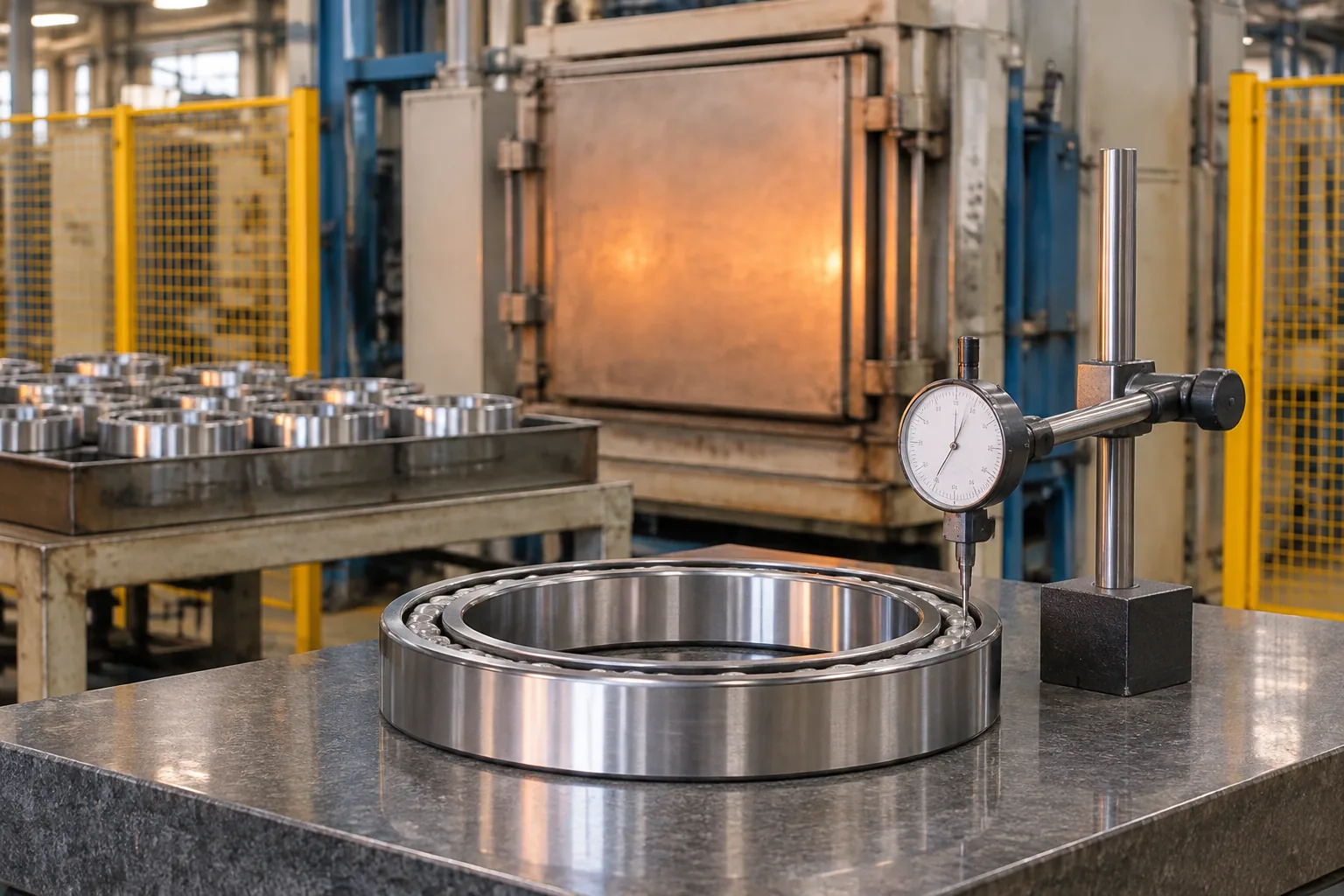
Critical special processes should be performed in-house or by approved subcontractors with evidence of control. A certificate at the group level does not show who performed the heat treatment or final grinding on the quoted part.
Build an RFQ and First Article Evidence Package
Request certificate copies, approved 2D drawings and 3D models, the ISO 281 life calculation, and a first article inspection package. First article evidence should include full dimensional inspection, material certificates, heat treatment or hardness records, roundness and runout data, internal clearance, noise or vibration results, torque, and seal test results.
For automotive parts, require PPAP documentation and define the submission level and sample quantity in the purchase order. For aerospace parts, require AS9100D scope evidence and qualification test records. The order should also name the control plan, process flow, PFMEA, MSA, and material or performance test reports where PPAP applies.
AIAG PPAP-4 defines the Production Part Approval Process used to confirm that production parts can consistently meet engineering design records and specification requirements. The evidence package should be reviewed before the pilot order, not after serial release.
Compare Commercial, Capacity, and Change-Control Terms
Require NRE or tooling cost, tooling ownership, MOQ, prototype lead time, production lead time, monthly capacity, capacity reservation, batch traceability method, safety stock, change notification period, and end-of-life notice period. Clarify how the supplier will support volume ramp and long-term OEM demand.
Require written change control for material, process, subcontractor, or manufacturing site changes. Compare commercial terms only after the technical and quality qualification criteria are defined. A lower piece price does not offset an unapproved process change or an unverified capacity limit.
Custom tooling ownership and change notification periods should be fixed before pilot production. Those terms protect the OEM when volumes change, the supplier moves a process, or the part approaches end of life.
Assess Nonconformance, Traceability, and Counterfeit Risk
Ask for the supplier’s nonconformance response process: isolation, batch traceability, temporary containment, 8D root-cause analysis, rework or replacement timing, and responsibility for line-stop, sorting, and expedited freight costs. The response should identify who owns each action and how the batch is contained.
Verify supply chain authenticity through authorized channels and packaging authentication where available. Industry guidance recommends purchasing through authorized distribution and using the World Bearing Association WBA Bearing Authenticator to scan security labels and verify packaging authenticity.
Require internal traceability and regulatory compliance flow-down for critical bearing types such as rod end and spherical bearings. Published quality information for rod end and spherical bearings states that the quality system complies with ISO 9001:2015 and AS9100D with design scope, and that it requires the supply chain to meet regulatory, internal traceability, and quality system requirements.
Use a Weighted Supplier Scorecard and Pilot Order
Score suppliers on technical fit, certification, engineering capability, process control, quality documentation, capacity, commercial terms, traceability, and communication. Assign weights before scoring so the team agrees on which evidence is decisive for the project.
Validate the selected supplier with a sample or pilot order before full approval. Define acceptance criteria for the pilot, review first article or PPAP results, and document corrective actions. Keep audit findings and supplier responses as part of the approved supplier record.
The pilot order should test the same process route, material, heat treatment, grinding, assembly, and inspection steps that will be used in serial production. If the pilot uses a different method, the approval does not prove the production process.
Red Flags During Custom Bearing Supplier Selection
- A group-level certificate without the actual production site address, certificate number, scope, and expiry date.
- A claimed design capability without design included in the certification scope.
- No ISO 281 life calculation inputs or no explanation of lubrication and contamination corrections.
- No clear list of in-house versus subcontracted special processes.
- Prototype method differs from production without a documented process comparison.
- No PPAP, AS9100D, qualification test evidence, or traceability process for the relevant OEM sector.
- No written change notification, end-of-life notice, or nonconformance response process.
Final OEM Supplier Qualification Checklist
- Application brief completed and approved.
- Actual manufacturing site certificate verified for address, scope, design inclusion, certificate number, and expiry.
- Engineering calculation and qualification test capability confirmed.
- Drawing standards and tolerances agreed.
- Prototype-to-production process differences documented.
- In-house and subcontracted process map obtained.
- RFQ evidence package, first article documents, and PPAP or AS9100D evidence reviewed.
- Commercial terms, capacity, change control, traceability, and nonconformance process accepted.
- Pilot order completed and supplier scorecard approved.
Conclusion
Choosing a custom bearing supplier for OEM projects is a qualification process, not a price comparison. Start with a complete application brief, verify the actual manufacturing site certificate and design scope, and require ISO 281 calculation inputs, drawing standards, process control, and first article evidence before the pilot order.
Use PPAP for automotive production parts, AS9100D scope evidence for aerospace and defense work, and a written scorecard for every sector. Release serial production only after the pilot proves the same process route, traceability, change control, and nonconformance response that the OEM will depend on.
FAQs
Q1: What information should an OEM include in a custom bearing RFQ?
A: Include bearing type, envelope dimensions, load cases, speed, temperature, lubrication, contamination level, mounting fits, sealing environment, target life, annual volume, and required quality documents. Also state the applicable standards and the sector evidence package so suppliers quote to the same basis.
Q2: Is a group-level ISO 9001 certificate enough for an OEM project?
A: No. A group certificate does not prove control at the quoted plant. Request the actual manufacturing site certificate with address, certificate number, certification body, scope, design inclusion or exclusion, and expiry date.
Q3: When should an OEM require PPAP from a custom bearing supplier?
A: Require PPAP for automotive production parts before serial release, and define the submission level, sample quantity, control plan, process flow, PFMEA, MSA, and material or performance test reports in the purchase order. AIAG PPAP-4 is the industry reference for confirming production parts consistently meet engineering design records and specifications.
Q4: Does AS9100D certification automatically prove aerospace bearing design capability?
A: No. AS9100D certification proves a quality management system scope, not automatic design capability. Check that the certificate scope includes the actual design and production activities quoted, and confirm customer and regulatory flow-down.
Q5: What engineering documents should a custom bearing supplier provide?
A: Request application design notes, bearing selection basis, ISO 281 life calculation, tolerance stack-up, prototype validation records, and production test capability. For critical projects, require qualification test records, not only sample production.
Q6: Which bearing tolerance standard should be on a custom bearing drawing?
A: Use ISO 492:2023 for radial bearing dimensions and geometrical tolerances where it applies, and ANSI/ABMA 20-2025 for US-market metric radial ball, cylindrical roller, and spherical roller bearings where relevant. State product exclusions, because ISO 492:2023 does not cover needle roller bearings, airframe bearings, or other products needing specialist standards.
Q7: Can a prototype bearing supplier scale to serial production?
A: Only after the supplier shows how prototype methods differ from production in material, heat treatment, grinding, cage, seals, lubrication, and assembly, and after qualification testing. For low-volume custom work, verify small-batch capability separately from mass production.
Q8: Should heat treatment and precision grinding be in-house?
A: Critical special processes should be in-house or controlled by approved subcontractors with evidence of process control. Ask for a process map showing heat treatment, precision grinding, honing or superfinishing, cage production, seal supply, grease filling, assembly, and testing, plus the key subcontractor list and certifications.
Q9: What documents should be in a custom bearing PPAP?
A: A custom bearing PPAP should include the control plan, process flow, PFMEA, MSA, material and performance test reports, dimensional results, and sample parts at the agreed submission level. Define the level and sample quantity in the order.
Q10: What commercial terms should OEM buyers lock down with a custom bearing supplier?
A: Lock down NRE or tooling cost, tooling ownership, MOQ, prototype and production lead times, monthly capacity, capacity reservation, batch traceability, safety stock, change notification period, and end-of-life notice. Fix tooling ownership and change notice before pilot production.
Q11: How can OEMs reduce counterfeit bearing risk?
A: Buy through authorized channels and use packaging authentication where available. Industry guidance recommends authorized distribution and the World Bearing Association WBA Bearing Authenticator to scan security labels. Also require batch traceability and a nonconformance process covering isolation, containment, 8D analysis, and cost responsibility.