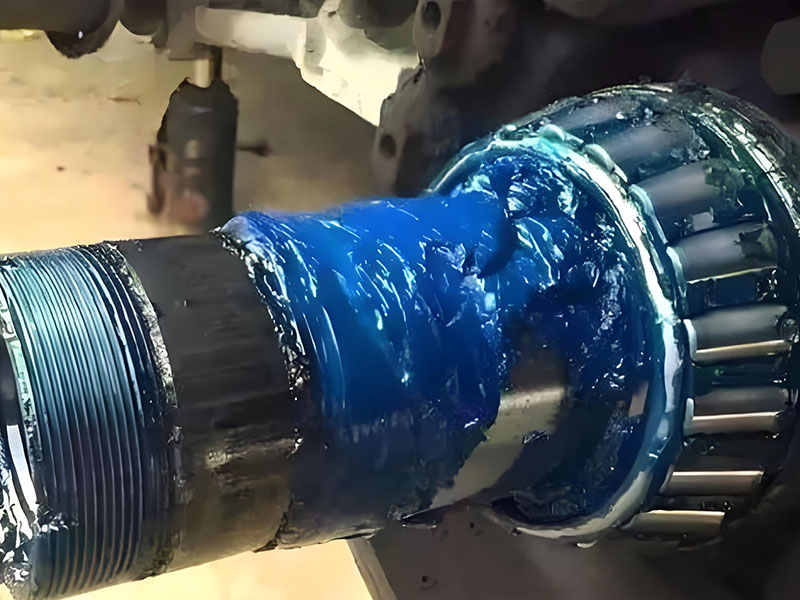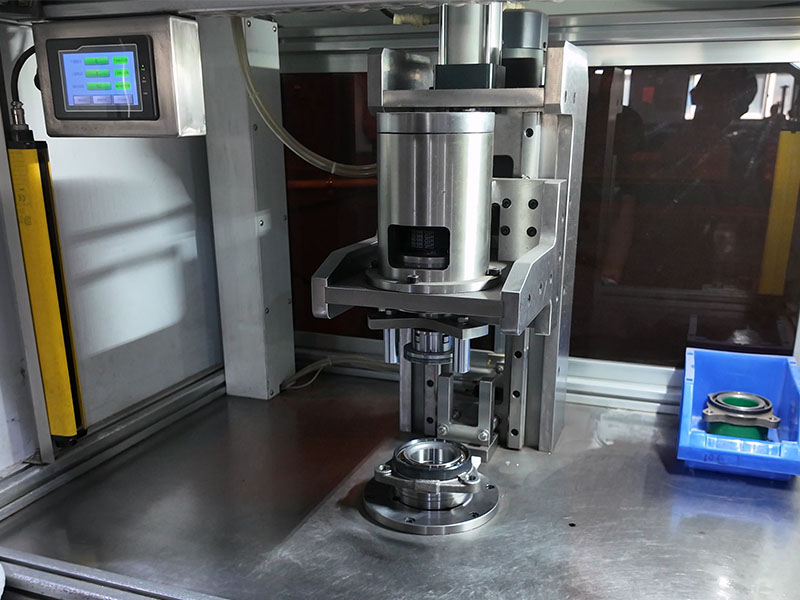
Quick Answer: A plain bearing, also called a sliding bearing, supports or guides a moving part through direct sliding contact rather than through balls or rollers. It can carry radial, axial, oscillating, or linear motion, and it may use oil, grease, pressurized fluid, a solid lubricant, a self-lubricating material, or no added lubricant. Plain bearing is a broad term; bush, bushing, and sleeve bearing usually describe cylindrical forms.
A plain bearing is one of the simplest ways to support a rotating, oscillating, or sliding part. The key question is not only what it is, but how its sliding surface, lubrication method, construction, and material determine where it can be used. This article explains those points and keeps product-specific limits separate from general principles.
Plain Bearing Definition and Key Terms
In ISO 4378-1:2024 terminology, a plain bearing is a bearing whose relative motion is sliding. It carries load, constrains motion, and reduces friction and wear at the sliding interface. The same standard treats plain bearing and sliding bearing as synonyms, so both terms describe the same broad family.
ISO 4378-1:2024 defines a plain bearing bush as a replaceable tubular bearing element whose inner surface, outer surface, or both form a sliding surface. This definition matters because the bush is a component within the broader plain-bearing family, not a separate bearing principle.
Plain Bearing, Sliding Bearing, Bush, Bushing, and Sleeve Bearing
The terminology overlaps, but the distinctions are useful when reading catalogs or maintenance records.
- Plain bearing is the generic term for a bearing that works by sliding contact.
- Sliding bearing is the ISO synonym for a plain bearing.
- Plain bearing bush is a replaceable tubular element with a sliding surface on its inner surface, outer surface, or both.
- Bush, bushing, and sleeve bearing commonly refer to cylindrical plain bearings.
- Journal bearing and thrust bearing are load-direction subtypes, not synonyms for every plain bearing.
Rolling-element bearing terminology is built around races, rolling elements, and cages. Plain bearing terminology is built around sliding surfaces, bushes, backing layers, and lubricant films. Some plain designs use ring-shaped components, so the terms should be read in context rather than treated as a universal parts list. Commercial usage can vary, so the drawing, catalog entry, and application data should be checked when a term is used loosely.
How a Plain Bearing Works
A shaft, pin, or other mating part moves directly on the bearing sliding surface. The motion may be rotating, oscillating, or linear. The bearing carries the load, constrains the direction of motion, and reduces friction and wear at the interface.
Friction control can come from several sources. The right choice depends on the bearing design and the operating conditions.
- An oil or grease film separates the sliding surfaces and carries part of the load.
- An externally pressurized fluid is supplied by a pump or other pressure source.
- A solid lubricant provides a low-friction film where a fluid film is impractical.
- The bearing material itself can provide low-friction or self-lubricating behavior.
Self-lubricating plain bearings obtain lubrication from the bearing material, from material components, or from a solid lubricant layer. Porous self-lubricating bearings contain interconnected pores filled with lubricant, which can be released to the sliding surface during operation. These descriptions explain the principle only; actual friction and wear behavior still depends on the material system, load, speed, temperature, fit clearance, and environment.
Plain Bearing vs Rolling-Element Bearing
The basic difference is the motion at the load-carrying interface. A plain bearing relies on sliding contact between mating surfaces. A rolling-element bearing uses balls or rollers between races. A cylindrical plain bearing often has a simple sleeve form and no internal moving parts such as balls or rollers.
| Feature | Plain bearing | Rolling-element bearing |
|---|---|---|
| Load-carrying motion | Sliding contact | Rolling contact through balls or rollers |
| Typical internal parts | Bearing material or sliding layer, sometimes a backing and lubrication features | Rings, rolling elements, and a cage |
| Lubrication | Oil, grease, pressurized fluid, solid lubricant, self-lubricating material, or no added lubricant | Usually grease or oil, depending on design |
| Selection basis | Load, speed, temperature, fit, environment, and maintenance plan | Load, speed, stiffness, fit, environment, and maintenance plan |
Do not treat the comparison as a universal selection rule. Plain bearings are not always quieter, longer-lasting, cheaper, or maintenance-free. Their performance depends on material, load, speed, temperature, fit clearance, and environment. Some plain bearings are pre-lubricated or self-lubricating, while others require a continuous oil or grease supply. Selection between plain and rolling-element designs needs application data beyond the definition.
Types of Plain Bearings by Load Direction
The load direction relative to the shaft axis is a practical way to classify plain bearings.
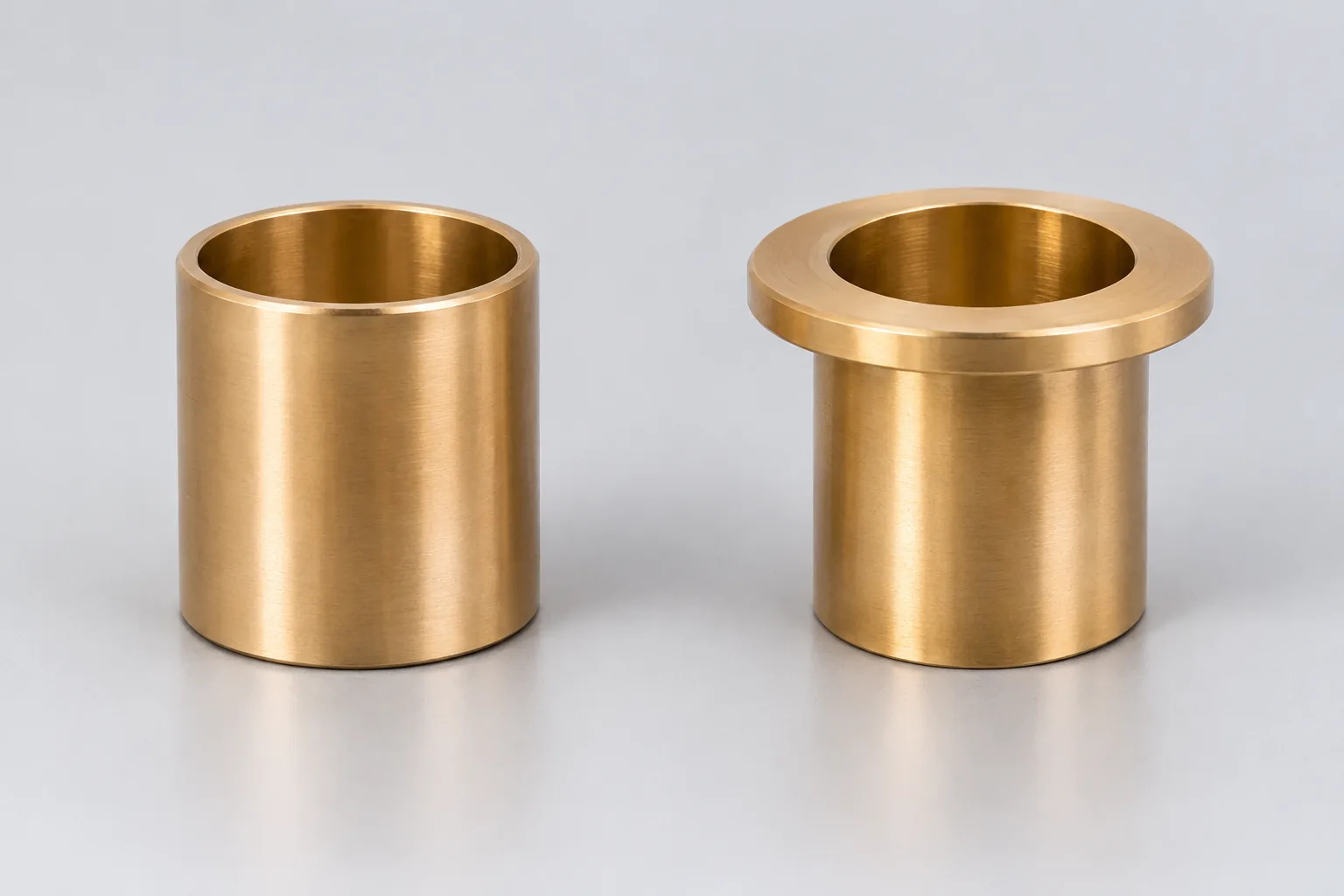
- Plain journal bearing or journal bearing: the load direction is perpendicular to the shaft axis, so the bearing mainly carries radial load.
- Plain thrust bearing or thrust bearing: the load acts along the shaft axis, so the bearing carries axial load.
- Journal thrust bearing or flanged bearing: the design can carry combined radial and axial load.
- Thrust washer: an annular plate used with a radial plain bearing to support axial load.
These names describe the load path, not the material or lubrication method. A journal bearing may be metallic, polymer, or composite, and it may be oil-lubricated, grease-lubricated, or self-lubricating. The same is true for thrust designs. For that reason, a complete description usually combines load direction with construction and lubrication.
Types of Plain Bearings by Lubrication Method
Lubrication method is another major classification. Each method answers a different operating problem.
- Hydrodynamic bearing: motion generates fluid pressure and a load-carrying lubricant film between the sliding surfaces.
- Hydrostatic bearing or externally pressurized bearing: an external pressure source supplies pressurized lubricant to the bearing.
- Hybrid bearing: the design uses both hydrostatic and hydrodynamic lubrication.
- Solid-film lubricated bearing: a solid lubricant provides the low-friction film.
- Unlubricated bearing: the bearing operates without lubricant.
- Self-lubricating bearing: lubrication comes from the bearing material or from solid lubricant components in the material.
- Porous self-lubricating bearing: interconnected pores are filled with lubricant.
Unlubricated and self-lubricating do not mean that every plain bearing is maintenance-free. Some designs require continuous oil or grease, some need only initial or pre-lubrication, and some can run dry or self-lubricate. The maintenance plan must match the actual bearing construction, not the broad category name.
Common Plain Bearing Constructions
Construction describes how the sliding surface is made and how the bearing is installed. Common forms include the following.
- Solid bush: made from a single material.
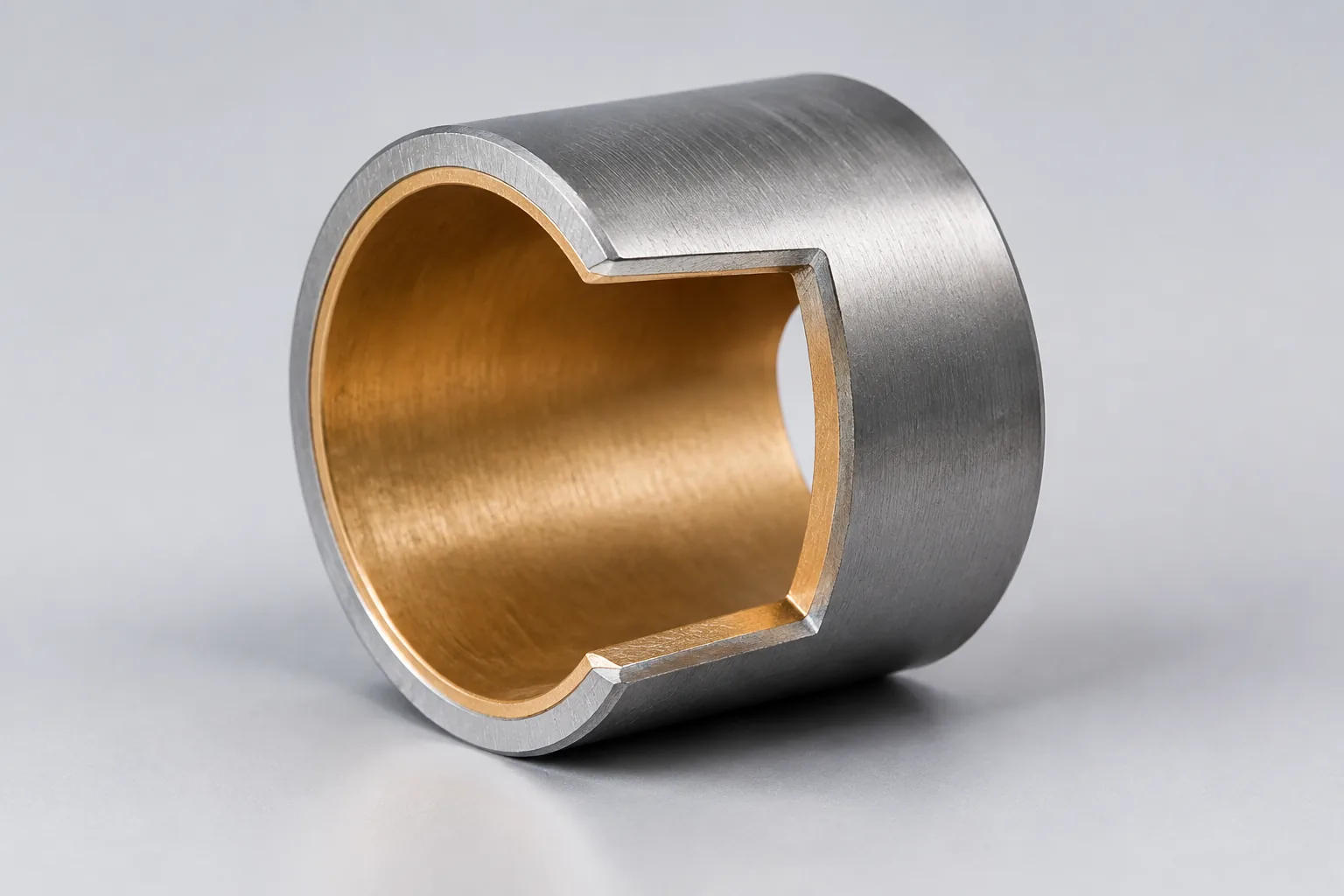
- Multilayer bush: made from different material layers, usually a backing for strength and rigidity plus a low-friction bearing layer.
- Wrapped bush: made by rolling a single-layer or multilayer bearing material strip into shape.
- Flanged bush: has a flange at one or both ends to carry axial load or provide axial location.
- Half-bearing: the sliding surface covers 180° of the shaft circumference and is often installed in pairs.
For multilayer plain bearings, ISO 4378-1:2024 describes a typical layer build. The backing is usually steel. The bearing material layer is usually thicker than 0.2 mm. A running-in overlay is usually 0.01-0.05 mm, an intermediate bonding layer is usually 0.001-0.002 mm, and a corrosion protection layer is usually 0.0005-0.001 mm. These values apply to the multilayer construction described in the standard; they are not a universal specification for every plain bearing.
Common Materials Used in Plain Bearings
Material choice controls load capacity, friction, wear behavior, corrosion resistance, and the allowable operating environment. ISO 4378-1:2024 lists metallic bearing material examples including aluminum alloys, copper alloys, and white-metal alloys. It lists polymer material examples including polyoxymethylene (POM), polyamide (PA), and polyphenylene sulfide (PPS).
Commercial plain bearings also use metal-polymer composites, engineering plastics, fiber-reinforced composites, bimetals, and sintered metals. PTFE and graphite can serve as low-friction or solid-lubricant materials. Some bronze bushings use PTFE or graphite lubricating plugs, while oil-impregnated sintered bronze stores and releases oil from its pores.
These examples are starting points, not a universal material recommendation. Material choice depends on load, speed, temperature, environment, fit clearance, and lubrication. A material that works well in a dry, low-speed application may be unsuitable for a lubricated, high-load application, and the reverse is also true.
Key Characteristics and Design Considerations
Plain bearings typically have simple construction with few parts. A cylindrical bush has no balls or rollers. That simplicity can reduce the number of components, but it does not remove the need to check the sliding pair, the housing, the shaft, and the lubrication plan.
Specific material systems can reduce noise, extend life, reduce or eliminate external lubrication needs, and improve efficiency. These benefits depend on material, load, speed, temperature, fit clearance, and environment. A low-friction polymer may perform well in one application and wear quickly in another. A metallic bearing may carry high load but need a reliable lubricant film. A self-lubricating composite may simplify maintenance but have its own pressure and speed limits.
Plain bearings are not all maintenance-free. Distinguish between continuous lubrication, initial or pre-lubrication, dry running, and self-lubrication. The maintenance instruction should follow the bearing construction and the application data.
Temperature and life data must also stay with the product they describe. For example, one self-lubricating plain-bearing product family is listed with a nominal operating range of -50°C to +200°C. That figure belongs to that product and construction; it must not be generalized to all plain bearings. The same rule applies to noise, life, and efficiency claims: they need a specific material system and operating condition.
Related Standards and Terminology References
Standards help keep terminology, dimensions, lubrication features, and quality checks consistent. The following references are useful when reading catalogs or preparing a specification.
- ISO 4378-1:2024: plain bearing terminology, definitions, classification, design, materials, and performance. This is the fifth edition and replaces ISO 4378-1:2017.
- ISO 3547-1: dimension system for wrapped bushes.
- ISO 12128:2020: dimensions, types, and marking of lubrication holes, lubrication grooves, and oil pockets in bushes. This is the third edition, published in April 2020 and confirmed in 2025.
- ISO 6525:2018: dimensions and tolerances for ring thrust washers made from strip.
- ISO 12301: quality control and inspection techniques for geometric and material quality characteristics of plain bearings.
- ICS 21.100.10: the international classification number for plain bearings.
Use the standards for terminology, dimensions, lubrication features, and quality references. Verify the current edition before publication or purchase, because editions and national adoptions can change.
Key Takeaways
- A plain bearing is a sliding bearing: it supports or guides motion through sliding contact and does not use balls or rollers.
- Plain bearings can carry radial, axial, oscillating, or linear motion depending on the design.
- They are classified by load direction, lubrication method, construction, and material.
- Lubrication status varies widely: hydrodynamic, hydrostatic, hybrid, solid-film, unlubricated, and self-lubricating designs all exist.
- Use ISO 4378-1:2024 terminology and avoid universal performance claims.
Conclusion
A plain bearing is best understood as a sliding-contact bearing family, not as a single product. Its load direction, lubrication method, construction, and material together determine how it should be selected, installed, and maintained. A journal bearing, a thrust washer, a wrapped bush, a flanged bush, and a self-lubricating sleeve can all belong to the same broad family while behaving very differently in service.
For a safe next step, identify the load direction and operating conditions first, then confirm the bearing construction, material, lubrication requirement, and applicable standard. Keep product-specific ratings with the product they belong to, and do not assume that a maintenance-free or self-lubricating label applies to every plain bearing.
FAQs
Q1: What is the difference between a plain bearing and a bushing?
A: A plain bearing is the broad family of bearings that work by sliding contact. A bushing is usually a cylindrical plain bearing or a replaceable tubular element, so it is one common form within that family rather than a separate principle.
Q2: Are plain bearings maintenance-free?
A: Not necessarily. Some designs require continuous oil or grease, some need initial or pre-lubrication, and some can run dry or self-lubricate. The maintenance requirement depends on the bearing construction, material, and application conditions.
Q3: What does a self-lubricating plain bearing use for lubrication?
A: It uses the bearing material, material components, or a solid lubricant layer to provide lubrication. A porous self-lubricating bearing stores lubricant in interconnected pores and releases it to the sliding surface.
Q4: How do I know whether I need a journal bearing or a thrust bearing?
A: Check the direction of the load relative to the shaft axis. A journal bearing mainly carries radial load perpendicular to the axis, while a thrust bearing carries axial load along the axis. A flanged or journal thrust design can carry combined radial and axial load.
Q5: Can a plain bearing run without lubricant?
A: Some can. An unlubricated bearing is designed to run without lubricant, and a self-lubricating bearing obtains lubrication from its material or solid lubricant components. Other plain bearings still need an oil film, grease, or an external pressure supply, so the design must be checked before dry running is allowed.
Q6: What is a half-bearing?
A: A half-bearing has a sliding surface that covers 180° of the shaft circumference. It is often installed in pairs, so the two halves together form the full bearing surface around the shaft.
Q7: Do ISO standards apply to all plain bearings?
A: They provide common terminology, dimension systems, lubrication-feature references, and quality-control methods, but the applicable standard depends on the bearing type and product. Always verify the current edition and the specific scope before using a standard as a purchase or inspection requirement.