Quick answer: Sleeve bearings are cylindrical plain bearings that support rotating or sliding shafts using a lubricant film. A bushing is a thin-walled type of sleeve bearing, typically press-fit for easy replacement. Both handle radial loads; flanged versions also handle thrust. Common materials include bronze (heavy-duty), PTFE composite (self-lubricating), and bimetal (high load). Choose based on load, speed, lubrication needs, and installation constraints.
Sleeve bearings and bushings are two commonly used terms in rotating and linear motion systems. While often used interchangeably, they have subtle differences in design, application, and terminology. This guide will explain what sleeve bearings and bushings are, describes their common types and materials, and provide a direct comparison to help engineers and purchasers choose the right component for their machinery.
What Are Sleeve Bearings and Bushings?
A sleeve bearing is a cylindrical plain bearing that supports a shaft or axle, allowing rotational or linear movement by sliding contact. It relies on a thin film of lubricant or a self-lubricating liner to reduce friction and wear. Sleeve bearings are known for their compactness, high load capacity, and quiet operation.
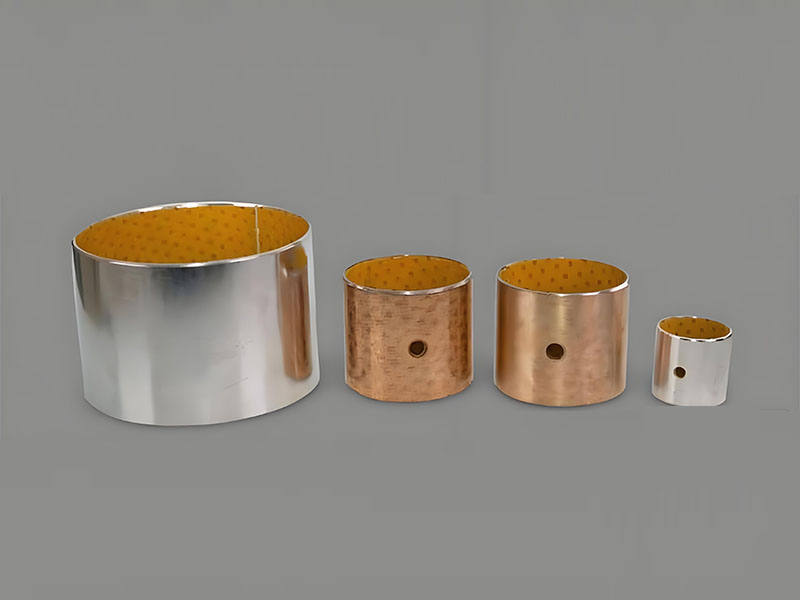
A bushing is a specific type of sleeve bearing, typically manufactured as a thin-walled, press-fit cylinder. Bushings are often removable and replaceable, serving as a sacrificial liner that protects the housing bore. In many industrial contexts, the terms “sleeve bearing” and “bushing” are used interchangeably, but a bushing is generally considered a subset of sleeve bearings designed for easier installation and replacement.
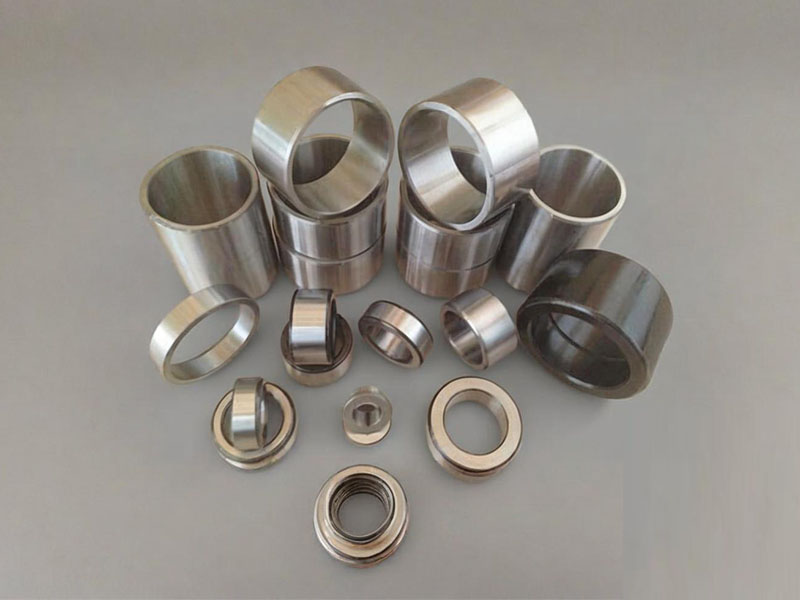
Common Types of Bushings
Bushings come in various designs to accommodate different load directions, installation constraints, and operating conditions. Below are common types of bush bearings with detailed descriptions of their material, design, and typical applications.
- Plain Sleeve Bushings – These are cylindrical bushings without any flange. The material is typically bronze, steel-backed PTFE, or engineering plastic. The design features a uniform wall thickness throughout the entire cylinder. Plain sleeve bushings are commonly used in general rotating shafts, hinge pins, and automotive suspension components where only radial loads are present.
- Flanged Bushings – These bushings include a radial flange at one end, which provides thrust load capacity in addition to radial support. The material is often bronze or composite. The design integrates the flange with the cylindrical body, allowing the bushing to position the shaft axially. Flanged bushings are widely applied in gearboxes, electric motors, and conveyor rollers where axial positioning is required.
- Thrust Washers – These are flat annular discs designed exclusively for axial load. The material can be hardened steel, bronze, or PTFE composite. The design is thin and flat, with no cylindrical section. Thrust washers are used in transmissions, clutches, and other axial bearing arrangements where space is limited and pure thrust loads must be accommodated.
- Split Bushings – These bushings have a longitudinal cut along their length, allowing installation without removing attached components from the shaft. The material is typically bronze or plastic. The design includes one or more cuts that enable the bushing to be wrapped around a shaft. Split bushings are ideal for large crankshafts, steering columns, and any assembly where disassembly is difficult or time-consuming.
- Composite Bushings – These are multilayer bushings that combine a steel backing with a porous bronze interlayer and a PTFE lining. The material composition includes steel, bronze, and PTFE. The design is self-lubricating and offers very low friction. Composite bushings are used in hydraulic cylinders, agricultural machinery, and robotics, where maintenance-free operation is desired.
- Flanged Composite Bushings – These are composite bushings with an integral flange, combining the properties of a composite bushing with thrust load capability. The material is the same as standard composite bushings (steel, bronze, PTFE). The design merges a radial bearing surface and an axial thrust surface into one component. Flanged composite bushings are found in automotive pedal assemblies, pneumatic cylinders, and office equipment.
Common Types of Sleeve Bearings
Sleeve bearings are classified by their material composition and shape. They offer advantages such as affordability, lightweight design, high load-carrying capacity, and the ability to operate with or without external lubrication. Their primary functions include enabling linear or rotational movement, constraining shaft motion, and reducing friction through sliding action (as opposed to rolling action in ball or roller bearings).
By Material and Lubrication Mechanism
Each of the following sleeve bearing types is described in terms of its structure, manufacturing process, materials, working principle, lubrication requirements, key characteristics, and typical applications.
PTFE Composite Bushing (Oilless Bearing)
The PTFE composite bushing consists of a steel backing, a porous bronze sinter layer, and a PTFE/lead overlay. Its manufacturing process involves sintering bronze powder onto a steel strip and then rolling on the PTFE mixture. The primary material is low-friction PTFE, which gives the bearing its self-lubricating property. The working principle relies on a transfer film of PTFE that coats the shaft during operation, reducing friction without any external oil. This bearing requires no grease or oil, making it completely maintenance-free. It is characterized by low friction, good wear resistance, and a wide operating temperature range from -200°C to +260°C. Typical applications include automotive door hinges, food processing equipment, and textile machinery where lubricant contamination must be avoided.
POM Composite Bushing
The POM composite bushing has a structure consisting of a steel backing, a porous bronze sinter layer, and a POM (acetal resin) top layer. Its manufacturing process is similar to that of the PTFE composite bushing, but with POM instead of PTFE. The material is POM with surface micro-pores or indentations that retain grease, providing additional lubrication. The working principle involves the POM layer offering low friction while the embedded grease pockets release lubricant during intermittent operation. Lubrication requirements include an initial greasing, after which the bearing can run for long intervals without relubrication. It is characterized by good load capacity and strong performance under marginal lubrication conditions. Typical applications include gear pumps, shock absorbers, and hydraulic cylinders where occasional lubrication is acceptable.
Bimetal Bushing
The bimetal bushing is composed of a steel backing and a sintered bronze layer, typically CuPb10Sn10 or CuSn8. (Note: Lead-containing grades such as CuPb10Sn10 may require RoHS compliance verification for certain markets.) Its manufacturing process involves sintering bronze powder onto a steel strip, followed by rolling and sizing. The materials are steel for mechanical strength and bronze for its bearing properties such as conformability and embedability. The working principle is that the bronze layer conforms to minor misalignments and embeds dirt particles, while an external lubricant forms a load-carrying film between the bearing and shaft. Lubrication requires external grease or oil supplied through oil grooves or grease fittings. This bushing is characterized by high load capacity, excellent thermal conductivity, and fatigue resistance. Typical applications include heavy-duty diesel engines, compressors, and construction equipment where high loads and temperatures are present.
Bronze Wrapped Bearing
The bronze wrapped bearing is structured as a cylindrical shape wound from a bronze strip, typically CuSn8 phosphor bronze. Its manufacturing process involves cold-forming the strip and optionally adding oil pockets or graphite plugs. The material is wrought bronze, which offers good strength and ductility. The working principle relies on sliding contact with lubricant retained in the oil pockets or provided by the graphite plugs. Lubrication normally requires grease or oil, although graphite-plug versions can run dry for short periods. This bearing is characterized by low cost, good conformability to shaft misalignment, moderate load capacity, quiet operation, and ease of installation. Typical applications include agricultural machinery, conveyor rollers, and packaging equipment.
Bronze Liners and Wear Plates
Bronze liners and wear plates are solid machined components rather than wrapped or sintered structures. Their manufacturing process involves casting or extruding bronze stock (typically C93200 or C95400 aluminum bronze), followed by machining to final dimensions. The material is solid bronze, often with graphite or oil grooves machined into the surface. The working principle relies on a hydrodynamic or boundary lubrication film formed between the bronze surface and the mating component. Lubrication requires external grease or oil supplied through grooves, though some grades include solid lubricant inserts for reduced maintenance. These components are characterized by high load capacity, excellent wear resistance, good corrosion resistance, and the ability to handle shock loads. They are typically used as replaceable wear surfaces in heavy machinery. Typical applications include slideways in machine tools, large hydraulic cylinder guides, bridge expansion joints, and mining equipment where large surface areas require protection against sliding wear.
Solid Lubricant Inlaid Bearings
Solid lubricant inlaid bearings have a structure consisting of a metal base (bronze, iron, or stainless steel) with solid lubricant (graphite or MoS₂) embedded in drilled holes or machined grooves. The manufacturing process involves drilling or milling a pattern of holes or grooves into the metal blank and then inserting solid lubricant plugs. The materials combine a strong metal base with a solid lubricant that releases under friction. The working principle is that friction heat causes the solid lubricant to expand and release a thin film onto the shaft surface. These bearings require no external oil or grease, even when operating at high temperatures or in vacuum environments. They are characterized by the ability to run dry, resistance to high temperatures (up to 350°C in air, or 400°C in inert atmosphere), and compatibility with food and chemical processing. Typical applications include furnace equipment, kiln cars, and food packaging machines where conventional lubricants would contaminate the product or degrade.
By Shape
The shapes of sleeve bearings are mainly divided into three types:
- Sleeve (Cylindrical) – A straight cylinder without any flange, supporting only radial loads. This is the most common shape.
- Flanged – A cylinder with a flange at one end, supporting combined radial and axial (thrust) loads.
- Thrust Washer – A flat ring with no cylindrical section, supporting pure axial loads only.
Materials Used in Sleeve Bearings and Bushings
Material selection directly affects bearing performance, wear life, and operating limits. Both sleeve bearings and bushings share similar material families.
Base Materials
- Carbon steel – low cost, moderate strength, requires surface hardening or lubrication.
- Hardened steel – high wear resistance, used with hard shafts and oil lubrication.
- Iron – good damping and embedability, common in low-speed applications.
- Stainless steel – corrosion resistance, used in food, marine, or chemical environments.
- Bronze – excellent wear resistance and conformability, the most common material for bushings.
- Brass – lower friction than bronze but less load capacity, used for light-duty bushings.
- Copper – high thermal conductivity, used in high-temperature or heat-dissipation applications.
- Bronze-steel alloy – combines strength of steel with bearing properties of bronze (bimetal).
Lubricant Materials (for self-lubricating or maintenance-free bearings)
- PTFE (Teflon) – very low friction, dry operation, up to 260°C.
- POM (Acetal) – good stiffness and wear resistance, pre-greased or dry.
- Nylon – low friction, quiet operation, used in water or humid environments.
- Plastic oil – oil-filled microporous polymer, slow release over life.
- Graphite – solid lubricant for high temperatures (350°C+ in air) or vacuum.
- Grease – most common external lubricant for metal bushings.
Sleeve Bearings vs Bushings: Key Comparison Factors
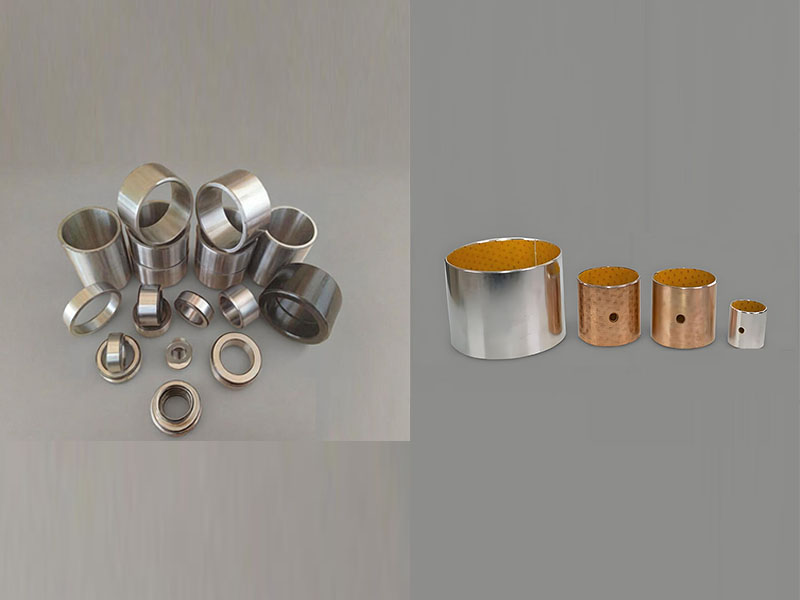
When selecting between a sleeve bearing and a bushing (understanding that bushings are a subtype of sleeve bearings), the decision often comes down to specific design constraints. The table below compares the two based on practical engineering factors. Note that the distinctions are general tendencies; many components blur the line.
| Factor | Sleeve Bearing (General) | Bushing (Thin-walled, Press-fit) |
|---|---|---|
| Velocity and loading | Typically higher load capacity (thicker wall). Suitable for moderate to high speeds with proper lubrication. | Generally lower load capacity due to thin wall. Best for light to moderate loads and lower speeds. |
| Smoothness of operation | Excellent if lubricated; self-lubricating types also run smoothly. | Smooth but may be limited by wall flexibility; requires tighter housing tolerances. |
| Lubrication | Can be maintenance-free (composite) or require periodic greasing (metal). | Often designed as low-maintenance; many composite bushings are self-lubricating. |
| Operating noise | Very quiet – no rolling elements. | Equally quiet under proper fit and lubrication. |
| Budget | Wide range: from inexpensive bronze to costlier engineered composites. | Generally lower cost due to less material and simpler manufacturing (thin-wall). |
| Installation | May require machining or interference fit. Thicker walls less prone to deformation. | Easier press-fit installation. Can be replaced without reaming the housing. |
In practice, many engineers use “bushing” when referring to a replaceable, thin-walled sleeve bearing. The choice between a standard sleeve bearing and a bushing is often dictated by housing design, available radial space, and replacement frequency.
Frequently Asked Questions
What is a self-lubricating bearing?
A self-lubricating bearing contains solid or liquid lubricant within its structure (e.g., PTFE, graphite, or oil-impregnated pores), eliminating the need for external grease or oil. Common examples are PTFE composite bushings and oil-impregnated bronze bearings.
Why use bronze bushings?
Bronze bushings offer excellent wear resistance, good conformability (ability to adjust to misalignment), and high load capacity. They also have natural lubricity and retain lubricants well. Bronze is the standard material for heavy-duty, low-speed applications such as agricultural and construction machinery.
What factors should be considered when choosing a bearing?
Key factors include: load magnitude and direction (radial or axial), rotational speed, operating temperature, lubrication availability, environmental conditions (dust, moisture, chemicals), installation and replacement constraints, and total cost of ownership.
What are plastic bushings used for?
Plastic bushings (made of nylon, POM, or PTFE) are used in applications requiring corrosion resistance, electrical insulation, low friction, or quiet operation. Typical uses include medical devices, food processing equipment, office automation, and water pumps. They are often self-lubricating and suitable for light to moderate loads.
When should I use a flanged bushing instead of a plain sleeve bearing?
Use a flanged bushing when the application subjects the bearing to both radial and axial (thrust) loads, and when axial positioning or retention of the shaft is required. Plain sleeve bearings without a flange support only radial loads. Flanged designs also simplify assembly by providing a built-in locating feature. Common applications include gearboxes, electric motors with axial play constraints, and pivot joints.
What is the difference in installation between a press-fit bushing and a slip-fit sleeve bearing?
A press-fit bushing is installed with interference fit, typically using an arbor press or hammer, and requires precise housing bore tolerances (often ISO H7). Once pressed, it remains stationary relative to the housing. A slip-fit sleeve bearing uses a clearance fit, allowing axial movement or easy removal for maintenance. Slip-fit bearings are commonly found in mounting brackets, idler rollers, and applications requiring frequent disassembly. The choice affects replacement ease, alignment accuracy, and housing design cost.
Conclusion
Understanding the differences between sleeve bearings and bushings is essential for proper machine design and maintenance. While bushings are a subset of sleeve bearings—typically thin-walled and press-fit—the two terms are often used interchangeably in industry. Both types share similar material families (bronze, steel, composites) and lubrication strategies (grease, PTFE, graphite, or oil-impregnated). The choice between a sleeve bearing vs bushing should be based on load, speed, available space, maintenance preferences, and budget. By applying the comparison factors and type descriptions in this guide, engineers can confidently select the most reliable and cost-effective plain bearing solution for their application.