Quick Answer: Maintain a slewing ring bearing by following the OEM installation drawing, keeping the raceway and open gear correctly lubricated, protecting the seals, maintaining bolt preload, and tracking wear trends. Relubrication intervals depend on load, speed, temperature, contamination, water exposure, and duty cycle, so published reference periods are only starting points. Self-lubricating sliding-element designs may need wear inspection rather than external grease.
Slewing ring bearing maintenance is condition-based work: lubricate the right points, keep contaminants out, confirm the bolted connection, and read early signals before they become damage. The schedule should come from the bearing and equipment manufacturer, not from a generic checklist.
Use OEM Instructions and Applicable Standards to Guide Slewing Ring Bearing Maintenance
Start with the bearing manufacturer’s installation drawing and manual. These documents define the relubrication quantity, grease type, seal checks, bolt preload, and inspection intervals for that bearing. A generic maintenance card cannot replace them because seal design, raceway arrangement, gear type, and duty cycle change the requirements.
For cranes, EN 13001-3-4:2018 requires following the manufacturer’s instructions for installation, maintenance, lubrication, centering, and gear backlash. It also warns that ordinary maintenance assumptions may not cover dusty or wet raceways. ASME SRB-1-2018 covers design, application, installation, inspection, and maintenance of ball slewing rings. ISO 16123:2025 addresses marine crane slewing rings, including maintenance, with a lower ambient limit of -40°C.
Confirm the bearing design before creating a lubrication schedule. Self-lubricating polymer sliding-element slewing rings can run dry and need wear inspection, not rolling-bearing grease intervals.
Record the Bearing, Grease, and Lubrication Points Before Scheduling Work
Build a record before the first service. Include the bearing model, serial number, seal type, raceway lubrication points, open-gear lubrication points, and the original factory grease. Use the installation drawing for relubrication quantity; do not assume a universal grease volume or interval.
Factory fills differ. One common example is a KP2K-30 lithium soap grease to DIN 51825 with corrosion protection to DIN 51802 and low water absorption to DIN 51807. Another is an NLGI No. 1 lithium mineral-oil grease with EP additives. Confirm the actual fill for the bearing being serviced.
Verify compatibility before adding or changing grease. Added grease must be compatible with the original fill. If the original grease is unknown, obtain manufacturer guidance before mixing or substituting. Keep raceway lubrication and open-gear lubrication as separate tasks because their requirements differ.
Set Relubrication Intervals by Duty Cycle and Environment
Use manufacturer reference intervals only as a starting point, then shorten them for dust, water, high humidity, tropical conditions, mining, continuous rotation, extreme temperature, washdown, and long shutdown. Set separate intervals for raceways and open gears.
Published rolling-bearing references show the range:
- About 500 operating hours in dry, clean indoor conditions; 100 to 200 operating hours outdoors or in contaminated environments.
- Continuous lubrication for extreme contamination such as drilling rigs or steel plants.
- Those references assume operating temperature below 70°C, circumferential speed below 0.5 m/s, and low to medium load. A gear-tooth reference interval may be half the raceway interval.
- Duty-based references include 250 operating hours for light duty, 200 for normal duty, and 100 for extreme duty. Shorten further for tropical, high-dust, mining, or continuous-rotation conditions.
- Slow or oscillating equipment may need grease about every 100 operating hours; fast or continuous rotation may need daily or every 8 hours; idle equipment should receive grease at least every 6 months.
- An installed bearing that is not yet commissioned should be relubricated at the latest after 3 months, then every 3 months. Relubricate before and after long shutdowns.
When operating temperature exceeds +70°C, shorten relubrication intervals. For reliable operation, grease service life should not exceed 3 years. For high or very high loads at low or very low speeds, lubricants with base oil viscosity up to ISO VG 1500 may be used according to operating temperature, but consult the manufacturer first.
Reference values are not universal. Confirm OEM intervals for the specific bearing, seal, grease, and application. Self-lubricating slewing rings should not be assigned rolling-bearing grease intervals.
Relubricate Correctly: Clean, Rotate, and Purge Old Grease
Clean the grease nipple before injecting grease. Where practical, lubricate while the bearing still has working warmth. Rotate or sufficiently oscillate the bearing slowly during grease injection.
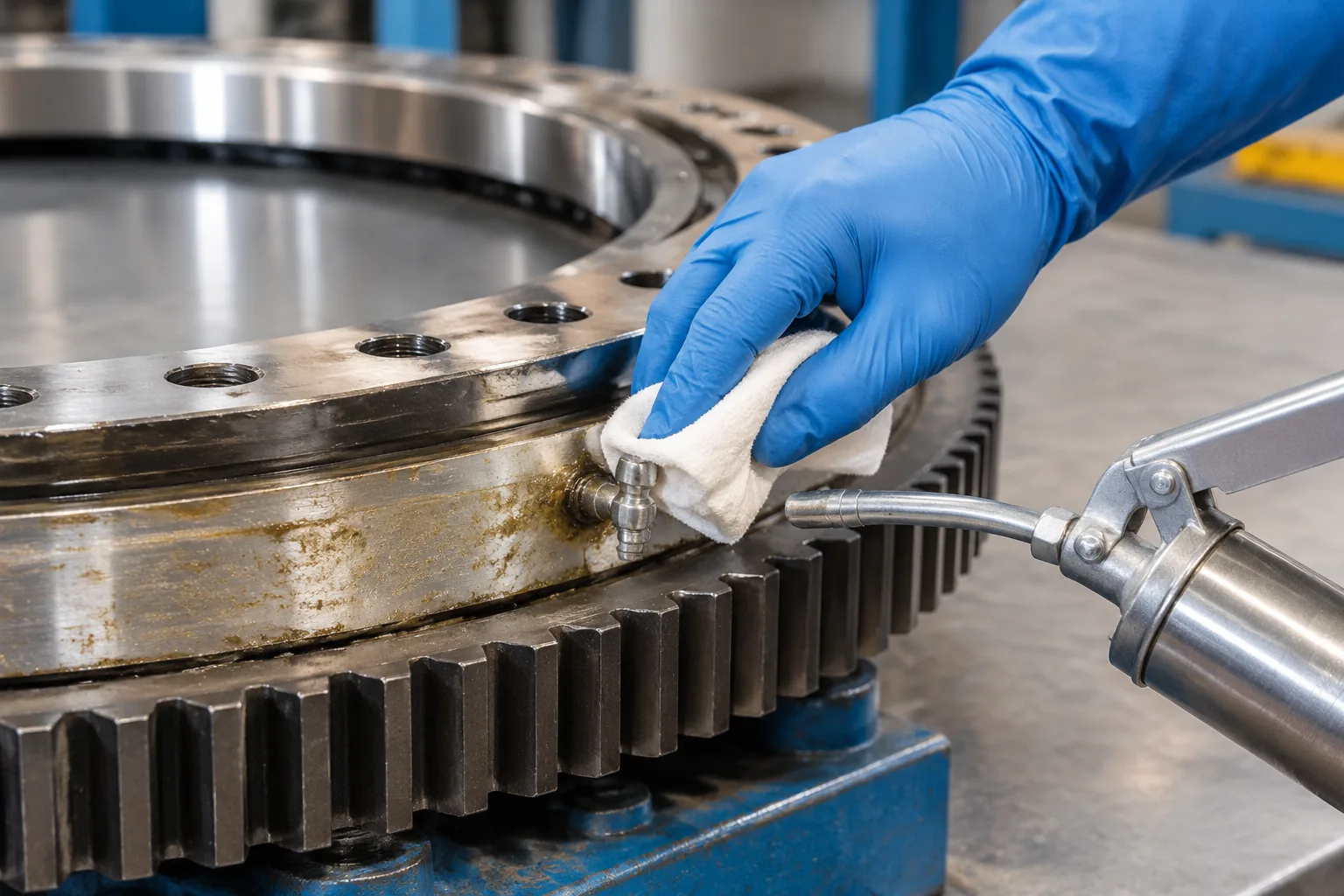
Inject until a ring of fresh grease appears at the seals or labyrinth on both sides, and allow old grease and contaminants to escape freely. Before first operation, confirm that all lubrication channels are filled. Remove old grease collars and observe the expelled grease for contamination or abnormal condition.
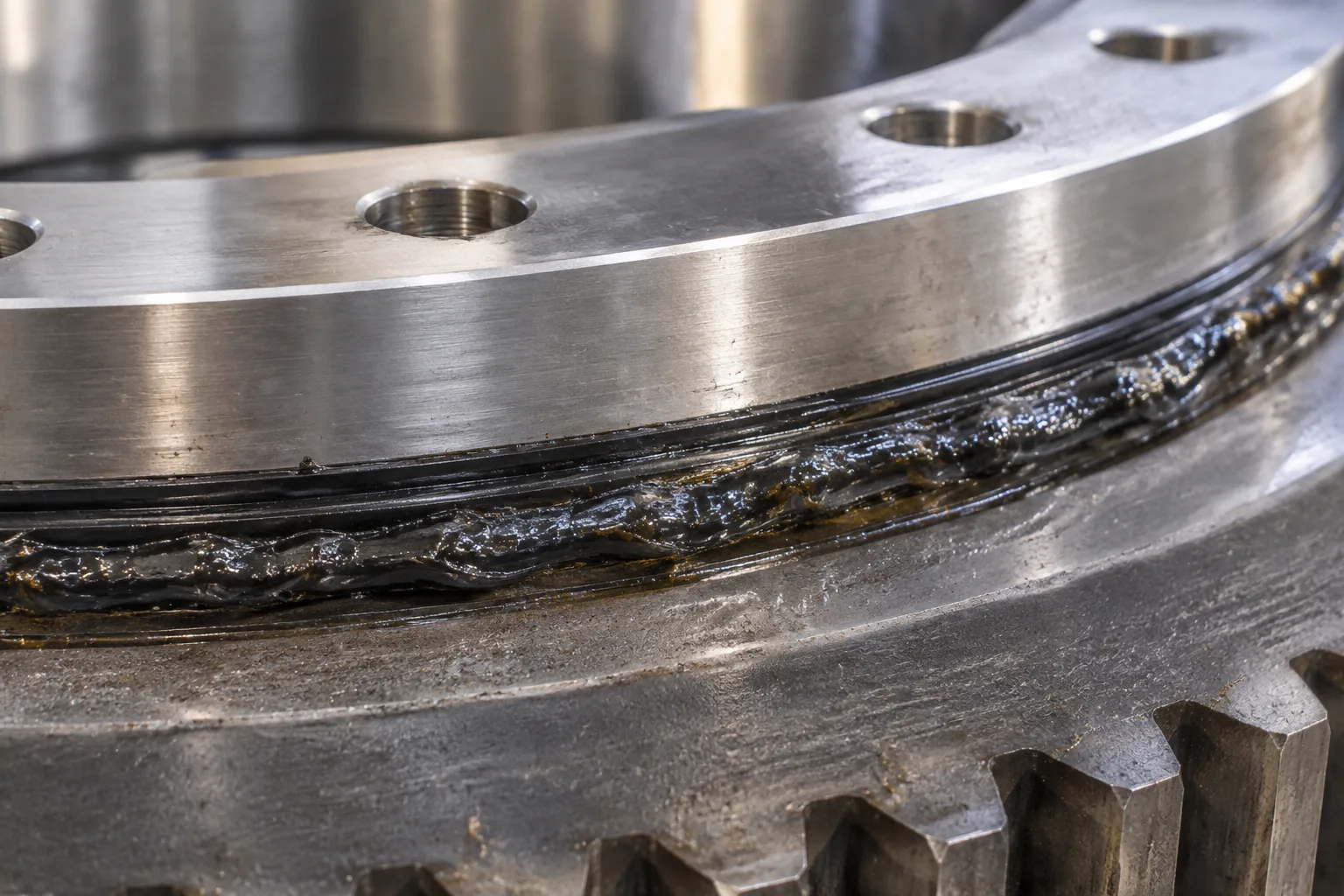
Slow rotation during greasing helps distribute grease and push out contaminants. If the bearing cannot be rotated or the lubrication point arrangement is non-standard, follow OEM instructions.
Lubricate Open Gears Separately From the Raceway
Open gear teeth need a maintained lubricant film. Apply grease at the pinion and large gear mesh. Use automatic gear lubrication systems where specified, and keep the gear area clean.
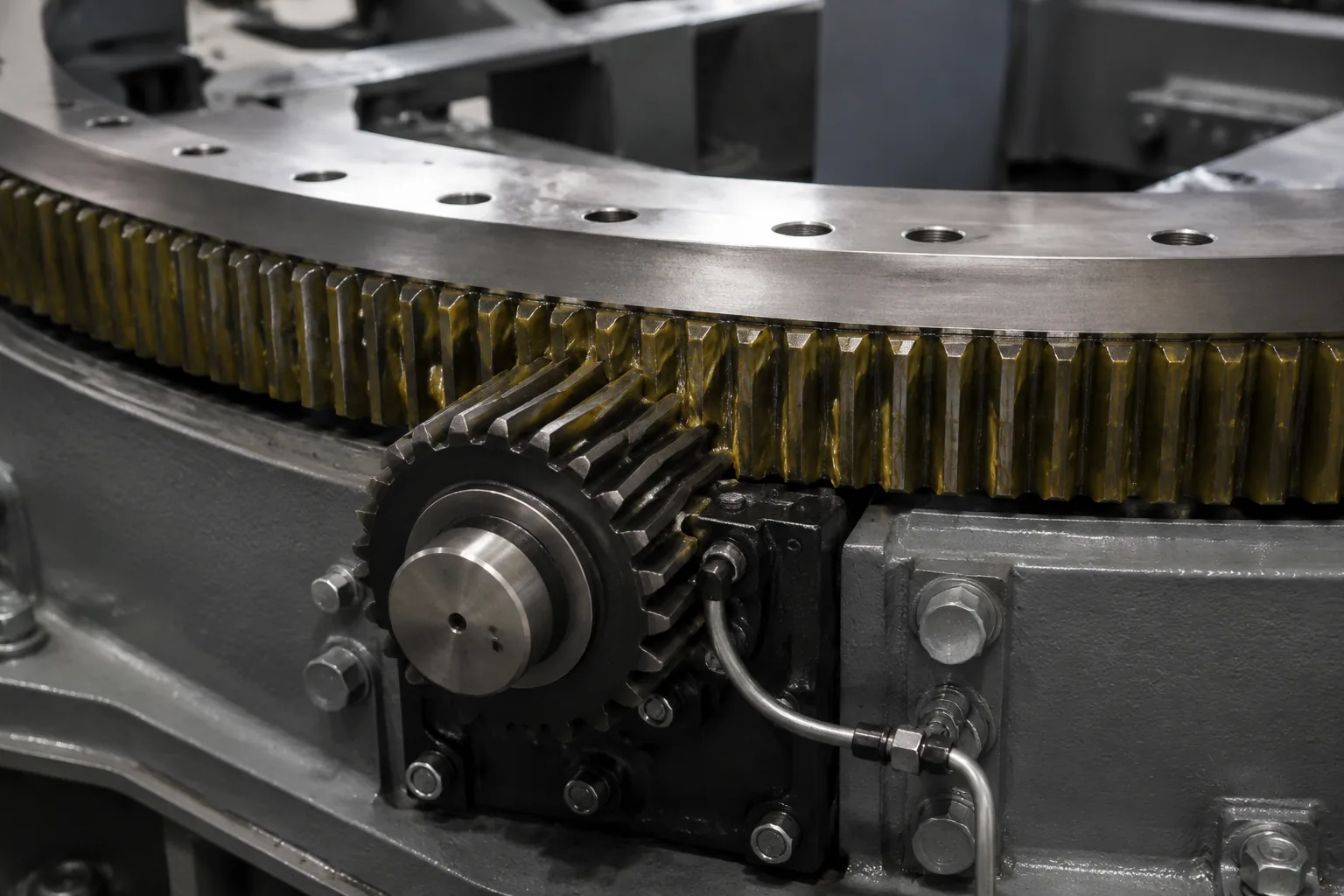
Do not let washdown agents or water enter the seal or raceway. Do not use the raceway relubrication interval for the open gear without checking OEM guidance. A gear-tooth reference interval may be half the raceway interval. Open gears on slow or intermittent equipment may need lubrication about every 8 hours; fast or continuous equipment needs more frequent lubrication.
Gear lubrication frequency depends on speed, duty, contamination, and whether an automatic system is installed.
Inspect Seals and Control Water and Contamination Ingress
Check that seals are complete, seated correctly in the groove, and free from hardening, cracks, tears, and grease leakage. Replace damaged seals promptly. Inspect seals at least every 6 months, and more often for washdown, dusty, humid, or outdoor applications.
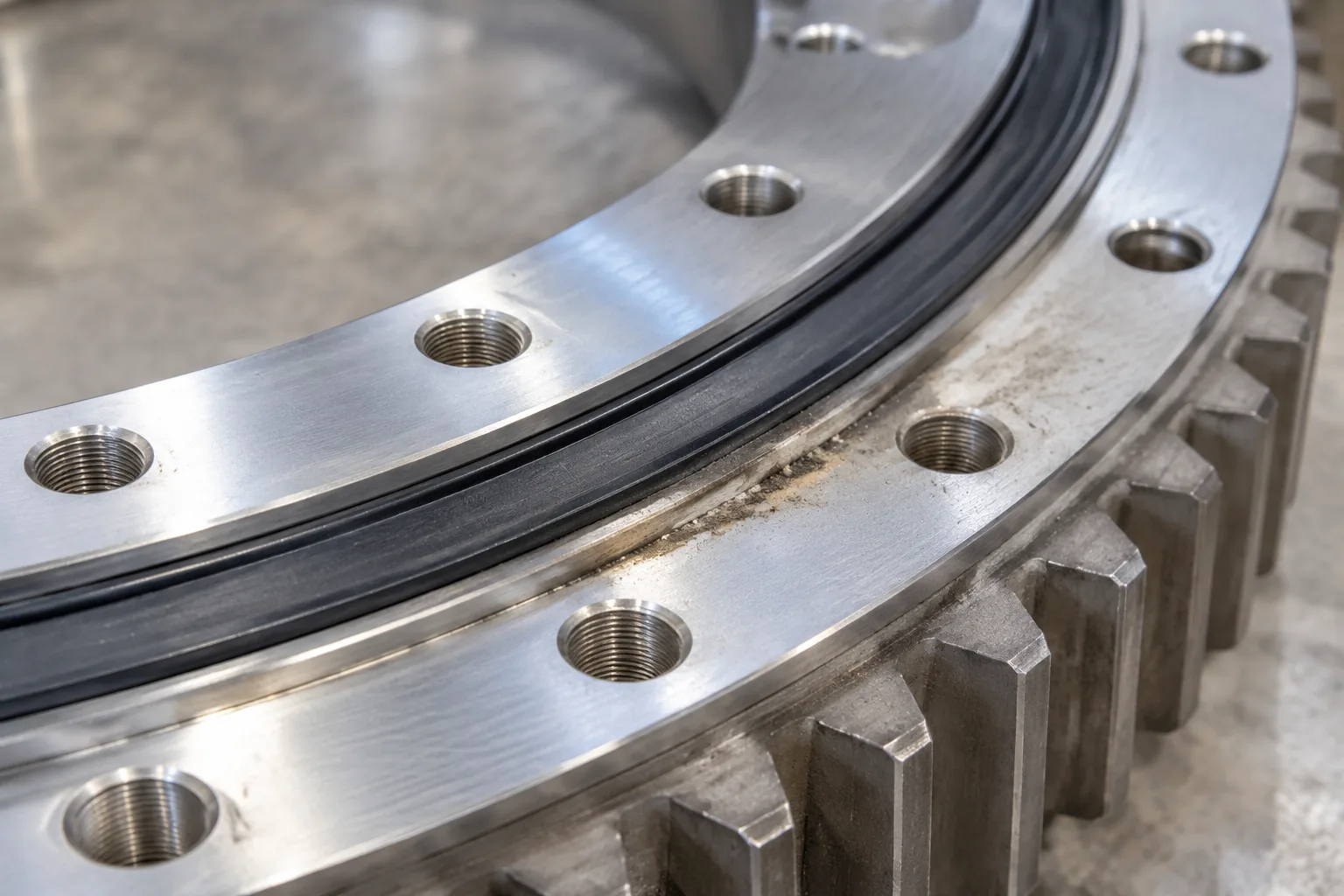
During cleaning, do not let high-pressure water, steam, or cleaning agents damage seals or enter the raceway. Relubricate after water or steam cleaning, before and after long shutdowns, and under high-humidity conditions.
Check Bolt Preload and Connection Settlement
Maintain installation bolt preload throughout bearing life. Retighten or re-tension bolts to the specified torque or preload to compensate for settlement of connection surfaces. Use OEM-specified torque or hydraulic tension values; do not apply generic torque figures.
Impact, vibration, and high temperature increase the risk of bolt loosening or creep, so set inspection frequency by duty. Bolt torque checks are routine maintenance, and bolt values must come from the OEM or application drawing.
Monitor Tilting Clearance, Rotation Torque, Noise, Vibration, and Grease Condition
Measure tilting clearance or settlement at first commissioning and repeat at suitable intervals to establish a wear trend. Compare readings against the baseline and OEM limits. Trend records are more useful than single readings.
Record rotation torque, abnormal noise, and abnormal vibration as early indicators of lubrication, contamination, installation, or wear problems. Inspect expelled grease for metal particles, contamination, and changes in condition. Watch for gear tooth spalling, cracks, rapid clearance increase, and repeated bolt loosening.
Apply Extra Maintenance in Special Operating Conditions
Increase lubrication or shorten intervals after washdown, steam cleaning, high humidity, tropical conditions, heavy dust, mining, continuous rotation, and extreme temperature. Write these conditions into the maintenance plan rather than handling them as one-off actions.
- Relubricate before and after long shutdowns. A general 3-month reference applies to long shutdown and to installed but not commissioned bearings.
- For equipment idle for extended periods, provide at least periodic grease replenishment; at least every 6 months is a common reference.
- For extreme contamination such as drilling rigs or steel plants, use centralized lubrication or grease cartridges for continuous lubrication where specified.
Know When to Stop Operation and Call a Specialist
Stop and assess if rotation torque changes abnormally, metal particles appear in grease, gear teeth spall or crack, clearances increase rapidly, or bolts repeatedly loosen. These signs can indicate damage that will worsen under load.
Seek manufacturer or specialist evaluation for damaged seals, suspected water ingress, high-temperature operation, unusual wear, or grease compatibility questions. Consult the manufacturer before using very high-viscosity lubricants or changing grease type. Abnormal torque, metal particles, tooth spalling, cracks, rapid clearance increase, or repeated bolt loosening require shutdown and specialist evaluation.
Conclusion
Effective slewing ring bearing maintenance depends on a documented baseline: the correct grease, the correct points, the correct bolt preload, and readings that show whether wear is progressing. Record initial clearance, torque, noise, vibration, and grease condition, then compare future checks with those values.
The safe next step is to build the schedule from the OEM drawing and the applicable standard, then adjust it for load, speed, temperature, water, dust, and shutdown periods. Do not copy a fixed interval from another machine or apply rolling-bearing grease practices to a self-lubricating design.
FAQs
Q1: How often should a slewing ring bearing be relubricated?
A: There is no single universal interval. Published references range from about 100 to 500 operating hours for rolling-element bearings, to daily or every 8 hours for fast or continuous rotation, and every 3 months for some installed or long-shutdown conditions. Use OEM data and adjust for load, speed, temperature, contamination, water, and duty cycle.
Q2: Can I mix different greases?
A: Do not assume compatibility. Verify with the bearing manufacturer before adding a different grease, and make sure the added grease is compatible with the original factory fill. If the original fill is unknown, obtain guidance before mixing or substituting.
Q3: Do all slewing ring bearings need grease?
A: No. Self-lubricating sliding-element designs can run dry and require wear inspection instead of external relubrication. Confirm the bearing design and lubrication system before creating a grease schedule.
Q4: What should be checked besides lubrication?
A: Check seals, bolt preload, tilting clearance or settlement, rotation torque, noise, vibration, grease condition, and open-gear condition. Record the readings so a wear trend is visible.