When the mercury rises, standard machinery components often falter. In the worlds of glass manufacturing, metal processing, and industrial baking, bearings are pushed to their thermal limits. High temperatures can degrade lubricants, alter material hardness, and cause critical components to seize. This is where the specialized engineering of high temperature bearings becomes indispensable.
DUHUI will delve into their design, materials, lubrication, and selection criteria, providing you with the knowledge to make informed decisions for your most demanding applications.
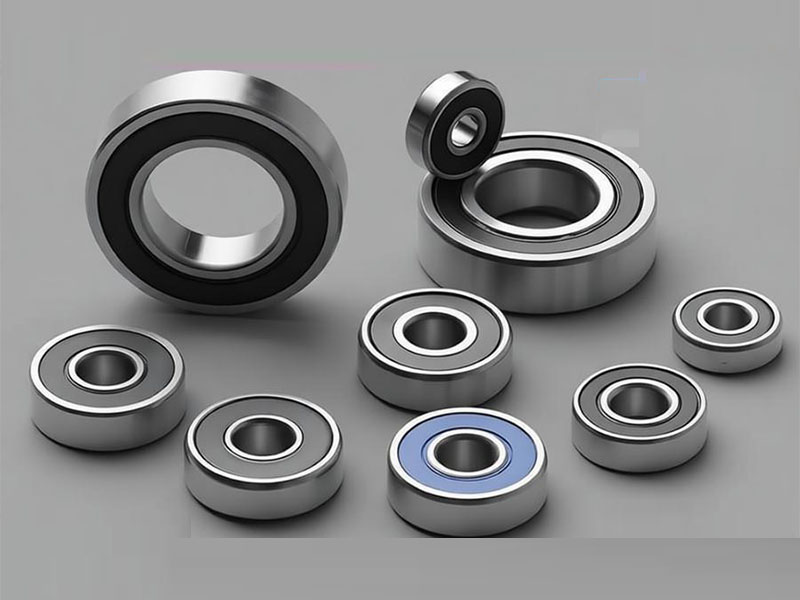
What is a High Temperature Bearing?
Technically, a bearing is often classified as a “high temperature” bearing when its operating conditions consistently exceed 150°C (302°F) . At this point, standard bearings with conventional heat treatment and grease will begin to fail . However, a true high-temperature solution is not just about swapping materials. It requires a holistic design approach that integrates specialized heat treatment, increased internal clearances, advanced lubricants, and stable cage materials to ensure long-term reliability.
Key Design Features: Engineered for Extremes
To survive and thrive in high-heat environments, these bearings incorporate several critical design modifications:
- Thermal Stability & Heat Treatment: Bearing steels undergo special heat stabilization processes (tempering) at temperatures higher than their intended operating temperature. This prevents unacceptable growth or shrinkage during service. Suffixes like S1 (for up to 200°C) and S2 (for up to 250°C) on bearing designations indicate this specialized heat treatment .
- Enhanced Internal Clearance: Heat causes the bearing components to expand. To prevent radial preloading and seizing, high-temperature bearings are manufactured with greater internal clearance than standard bearings. Common designations like C3, C4, and even C5 are standard, with C4 being frequently specified for applications around 250°C and above .
- Advanced Cage (Retainer) Materials: The cage holds the rolling elements in place. At high temperatures, standard polymer cages (like nylon) melt, and stamped steel cages may lack strength. Common solutions include machined brass cages, PEEK (polyether ether ketone) , or graphite-impregnated composites that can withstand thermal stress and even provide a degree of solid lubrication.
- High-Temperature Seals and Shields: Rubber seals (e.g., 2RS) degrade quickly above 120°C. For high temperatures, manufacturers turn to metal shields (ZZ or 2Z) for protection without contact, or specialized high-temperature Viton® seals (2RSR) for limited temperature ranges . For the most extreme environments, open designs are used with external lubrication systems.
- Surface Treatments: Some bearings, like SKF’s VA201 series, feature a manganese phosphate coating on all surfaces. This treatment improves the adhesion of lubricants to metal surfaces and enhances running-in properties, which is critical when lubrication films are thin .
Lubrication Strategies: The Lifeblood at High Temperatures
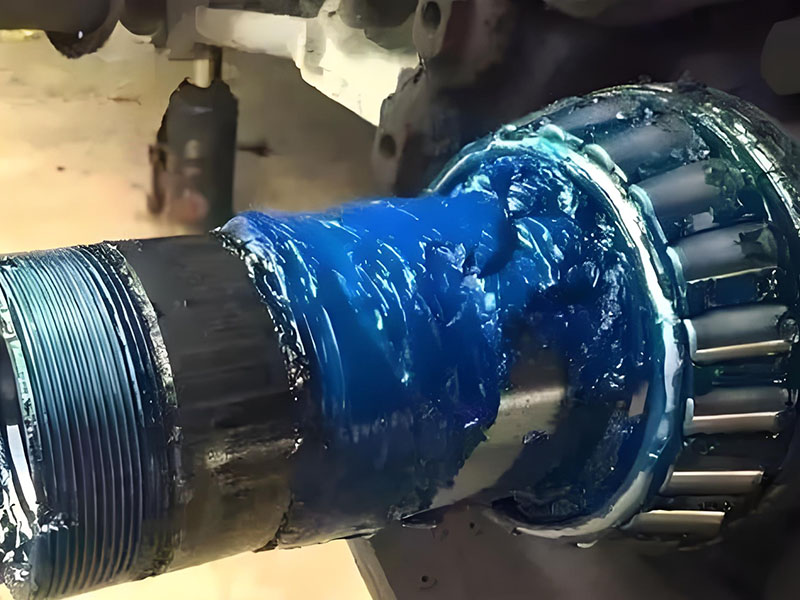
Lubrication is arguably the most critical factor in high-temperature bearing performance. Standard greases will oxidize, carbonize, or simply evaporate. Two primary lubrication strategies exist:
High Temperature Greases
These are formulated with synthetic base oils (like PFPE, PAO, or esters) and high-temperature thickeners (such as polyurea, complex lithium, or bentonite clay). The choice of grease depends heavily on the operating temperature and speed.
| Brand | Product Model | Operating Temperature Range | Base Oil/Thickener Type (Inferred) |
| SKF | LGHP 2 | –40 to +150 °C | PAO/Diurea |
| LGET 2 | –40 to +260 °C | PFPE/PTFE | |
| JET-LUBE | AP-1 | -18°C to 288°C | High-temp synthetic/Inorganic |
| Klüber | BARRIERTA KM 192 | -50°C to 260°C | PFPE/PTFE |
| Krytox | 143 AC | -34°C to 288°C | PFPE/PTFE |
| OKS | 4200 | -10°C to 180°C | Synthetic/MoS2 |
Solid Lubricants
For very high temperatures ( >300°C), or in vacuum environments where grease cannot be used, solid lubricants are the answer. These are often embedded in cages or applied as coatings.
- Graphite: Retains lubricity at very high temperatures and is often used in air furnace applications .
- Molybdenum Disulfide (MoS2): Effective under heavy loads and in a vacuum, but oxidizes in air at temperatures above 400°C.
- PTFE/Teflon: Provides low friction but can decompose at very high temperatures .
Materials Science: Selecting the Right Substrate
The material from which the bearing rings and rolling elements are made dictates its maximum operating temperature and load-carrying capacity.
High Temperature Bearing Steels
For applications up to 500°C, specialized steels are required. The table below compares the most common grades .
| Property | Quenched & Tempered Chrome Steel | 440C Stainless Steel | M50 Tool Steel | Precipitation-Hardened Stainless | Nickel-Based Superalloys (e.g., Inconel 718) |
| Typical Grade | SAE 52100 (GCr15) | AISI 440C | M50 (UNS T11350) | X30CrMoN15-1 / 17-4PH | Inconel 718 |
| Max. Temp. (Long-term) | 150°C | 200°C | 320°C | 400°C | 600-800°C |
| Max. Temp. (Short-term) | 200°C | 300°C | 480°C | 500°C | 800°C+ |
| Key Strength | Baseline cost, high hardness | Corrosion resistance | Red hardness, fatigue life | High strength-to-weight ratio | Extreme oxidation & creep resistance |
| Typical Application | General industrial ovens | Medical, chemical | Jet engine spindles | Aerospace engine bearings | Turbine engines, rockets |
Ceramic Materials
For ultimate performance, ceramics are used.
- Silicon Nitride (Si3N4): The most common material for hybrid bearings (steel rings, ceramic balls). It is lightweight, electrically insulating, and maintains hardness up to 800°C+ .
- Silicon Carbide (SiC): Used in full ceramic bearings for the most extreme environments. It can operate at temperatures up to 1300°C and offers exceptional resistance to corrosion and wear, though it is brittle .
- Zirconia (ZrO2): Offers higher toughness than SiC and is used in less extreme, but still high-temperature, corrosive environments .
Types and Applications of High Temperature Bearings
High-temperature bearings come in various types to suit different machinery designs and load conditions. Common types include Deep Groove Ball Bearings (for high-speed, moderate loads) , Spherical Roller Bearings (for heavy loads and misalignment) , and Angular Contact Ball Bearings (for combined loads) .
These bearing types are essential across a diverse range of industries:
- Ceramics & Glass: Lehrs and kiln cars rely on bearings with high clearances and solid lubrication to withstand radiant heat and abrasive dust .
- Food & Beverage: Continuous baking ovens require bearings with food-grade, high-temperature grease that will not contaminate products .
- Energy & Power: Turbine safety bearings and generator components demand materials like M50 for long-term reliability .
- Environmental Control: Incinerators and ash precipitators use bearings that must survive both high heat and corrosive byproducts.
How to Select the Right High Temperature Bearing
Choosing the correct bearing is a systematic process:
- Define Your Operating Window: Don’t just look at the peak temperature. What is the continuous operating temperature? How fast is the temperature cycling? What about load and speed?
- Assess the Environment: Is there corrosion, water, or dust? For dirty environments, consider sealed or shielded options .
- Select Lubrication First: Often, the lubricant’s maximum temperature is the limiting factor. Choose your grease or solid lubricant strategy before finalizing the bearing material .
- Determine Required Clearance: For most applications above 200°C, a C4 clearance is a safe starting point to prevent thermal locking .
- Evaluate Cost vs. Lifecycle: An expensive full-ceramic bearing may be more cost-effective in the long run than repeatedly replacing a cheaper steel bearing that fails every month.
Conclusion
Navigating the world of high temperature bearings can be complex, but a clear understanding of materials, lubrication, and design features makes the selection process manageable. The right bearing is a critical investment in your equipment’s productivity and lifespan.
The market offers proven solutions from established global brands. For instance, SKF’s VA201 series is a go-to choice for applications up to 250°C, while their VA228 series pushes the limit to 350°C with graphite-based lubrication . NSK offers YS and SJ series bearings with spacer joints to handle axial adjustment at high temperatures.