Cranes are the backbone of modern construction, industry, and logistics. At the heart of every crane’s mobility and lifting power lies a critical, often unseen component: the slewing bearing. This “articulated joint” allows the superstructure to rotate smoothly and precisely relative to the undercarriage, bearing immense loads under challenging conditions. A failure here means costly downtime, safety hazards, and significant repair expenses.
Whether you are an equipment manufacturer, a maintenance engineer, or a procurement specialist, understanding crane slewing bearings is paramount. This comprehensive guide delves into everything you need to know—from basic definitions and types to expert advice on selection, maintenance, and troubleshooting. With over 20 years of manufacturing experience, DUHUI Bearing brings you insights designed to optimize your equipment’s performance and longevity.
What is a Crane Slewing Bearing?
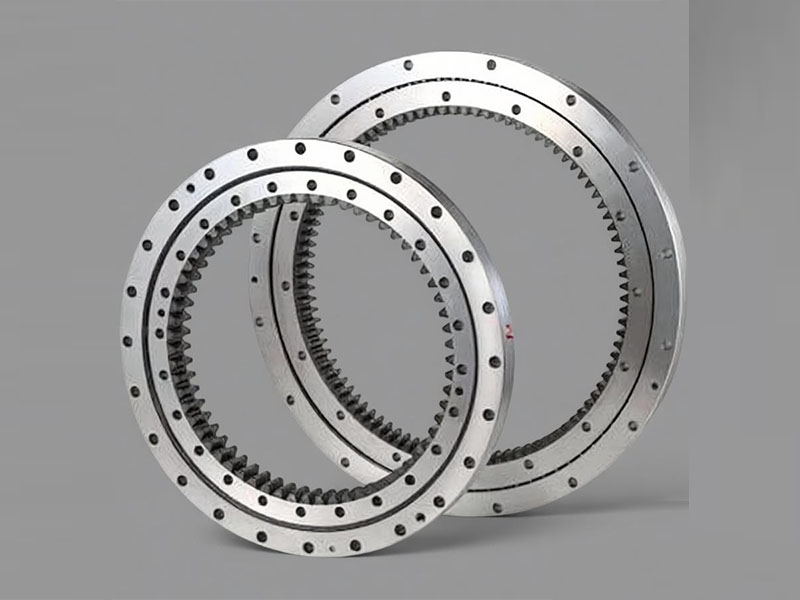
A crane slewing bearing, also known as a slewing ring or turntable bearing, is a large-sized rotational element that facilitates controlled rotation between two primary parts of a crane: the vehicle or base (lower structure) and the superstructure (upper structure with the boom).
Definition and Core Function
Its primary function is multi-faceted:
- Load Transmission: It simultaneously transmits axial loads (vertical), radial loads (horizontal), and the enormous tilting moment (overturning forces) generated by the crane boom and its lifted load.
- Smooth Rotation: It enables the superstructure to rotate with minimal friction and high precision, ensuring smooth crane operation.
- Secure Connection: It acts as a robust, rigid connection, integrating seamlessly with the crane’s mounting structures.
Materials and Construction
The performance and durability of a slewing bearing are largely dictated by its materials. Typically, the rings are forged or rolled from high-quality steels such as 50Mn or 42CrMo, chosen for their excellent strength and wear resistance. The raceways, where the rolling elements travel, are often induction hardened to create a durable, wear-resistant surface that can withstand continuous heavy loads. The integral gears (internal or external) are also heat-treated for optimal toughness and fatigue life.
Main Types and Characteristics of Crane Slewing Bearings
Selecting the right bearing type is the first critical step. The choice depends on the crane’s size, application, and load requirements. The most common types are categorized by their rolling elements.
Single Row Ball Bearing
This is the most common and cost-effective design. It features a single row of steel balls running in four-point ground raceways.
- Characteristics: Compact, lightweight, and suitable for moderate loads.
- Application: Ideal for smaller cranes like mini-excavators, small truck cranes, and aerial work platforms where the loads are relatively balanced.
Double Row Ball Bearing
To increase load capacity without significantly increasing the bearing’s diameter, two rows of balls can be used. This design offers greater stability and can handle higher radial and axial forces.
- Characteristics: Higher load capacity than single-row designs within a similar size envelope.
- Application: Often found in medium-sized cranes, tower cranes, and material handling equipment requiring enhanced stability.
Cross Roller Bearing
In this design, cylindrical rollers are arranged perpendicularly in a single raceway, separated by spacers. Each roller is oriented at 90 degrees to its neighbor, enabling it to handle high loads from all directions.
- Characteristics: High rigidity, high rotational precision, and excellent resistance to tilting moments. It has a smaller profile for its load capacity.
- Application: Essential for heavy-duty applications like large truck cranes, crawler cranes, and offshore cranes where precision and stiffness under massive loads are non-negotiable.
Three Row Roller Bearing
For the most extreme demands, the three-row roller design features separate raceways for axial and radial loads, each with its own set of rollers.
- Characteristics: The highest load-carrying capacity and the largest size.
- Application: Used in very large mining excavators, heavy shipboard cranes, and giant portal cranes.
Core Advantages of a High-Quality Slewing Bearing
Investing in a premium slewing bearing from an experienced manufacturer like DUHUI provides tangible operational benefits.
- Exceptional Load-Handling Capacity: The defining feature of a slewing bearing is its ability to manage complex load combinations—axial, radial, and tilting moment—simultaneously.
- Precision and Smooth Control: High-quality manufacturing tolerances ensure minimal run-out and play. This translates to precise boom control, reduced vibrations, and safer, more efficient lifting operations.
- Long-Term Cost Efficiency: While the initial investment in a high-grade bearing might be higher, its superior materials, heat treatment, and manufacturing precision lead to a significantly longer service life. This reduces replacement frequency, unplanned downtime, and total lifecycle costs.
Key Application Areas
The versatility of slewing bearings makes them indispensable across numerous industries:
- Mobile Cranes: Including truck-mounted, all-terrain, and crawler cranes used in construction and infrastructure projects.
- Tower Cranes: Essential for the smooth rotation of the jib on construction sites.
- Marine & Offshore Cranes: On ships, ports, and offshore platforms, where they must withstand corrosive saltwater environments and dynamic sea loads.
- Mining & Excavation: In massive draglines, shovels, and continuous miners, enduring the harshest and most abrasive conditions.
How to Correctly Select a Crane Slewing Bearing
Proper selection is a technical process that requires a thorough analysis of your crane’s operating conditions.
- Load Type and Magnitude: Calculate the static and dynamic loads, paying special attention to the maximum tilting moment. This is often the determining factor for bearing size and type.
- Rotational Speed and Duty Cycle: Is the crane for intermittent light use or continuous heavy lifting? The duty cycle dictates the bearing’s dynamic load rating and lubrication requirements.
- Environmental Factors: Consider ambient temperature, humidity, dust, sand, and chemical exposure. These influence the need for special seals, corrosion-resistant coatings, and specific lubricants.
- Mounting Structure and Interface: The bearing must fit perfectly. Precise information on bolt hole patterns, gear specifications, and overall dimensions is crucial.
Maintenance for Maximum Service Life
Even the best bearing will fail prematurely without proper care. A proactive maintenance routine is your best defense.
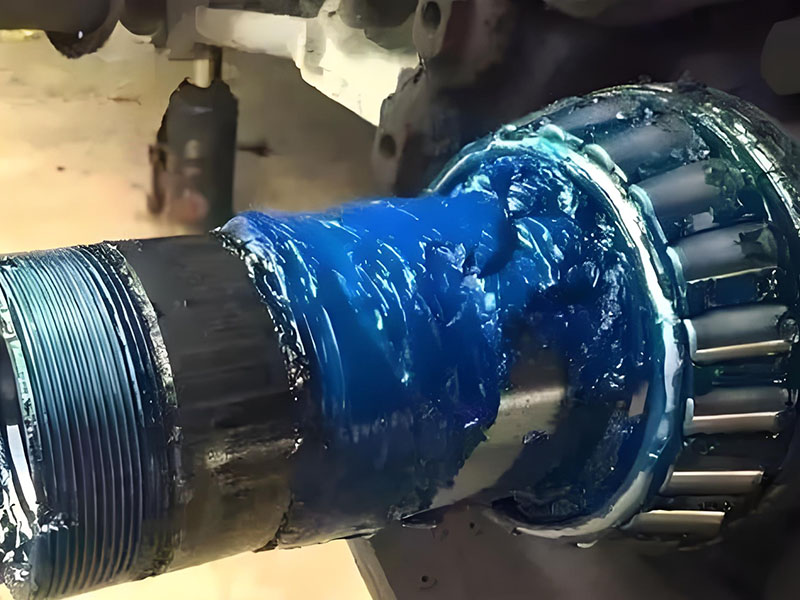
- The Importance of Regular Lubrication: Lubrication is not an option; it’s a necessity. It reduces friction, prevents metal-to-metal contact, protects against corrosion, and helps flush out contaminants. Use the recommended grease type and adhere strictly to the relubrication schedule (e.g., every 100 operating hours).
- Torque Checks and Bolt Maintenance: The mounting bolts holding the bearing are under immense, fluctuating stress. Regularly check bolt torque with a calibrated wrench, as per the manufacturer’s specifications. Loose bolts are a primary cause of bearing and structural failure.
- Condition Monitoring: Be proactive. Listen for unusual noises like grinding or rumbling. Monitor the running smoothness of the rotation. Periodically inspect the gear teeth for wear, pitting, or chipping. Check for any signs of corrosion or seal damage.
Common Problems and Troubleshooting
Here’s how to identify and address some frequent issues:
Abnormal Noise:
- Cause: Lack of lubrication, contamination (dirt/sand in the raceway), or damage to the rolling elements or raceways.
- Solution: Relubricate immediately. If noise persists after fresh grease, the bearing may need inspection for internal damage.
Unsteady or Jerky Rotation:
- Cause: Damaged or worn gear teeth, foreign objects jamming the gears, or excessive wear in the bearing itself creating play.
- Solution: Inspect the gear ring and pinion for wear. Check for debris and ensure proper alignment. If the bearing has excessive clearance, replacement may be necessary.
Loose Mounting Bolts:
- Cause: Insufficient initial tightening torque, vibration, or elastic deformation of the mounting structure.
- Solution: Immediately re-torque all bolts to the correct specification. Check the mounting structure for cracks or deformation. Never ignore loose bolts.
Conclusion and Call to Action
The crane slewing bearing is a sophisticated, mission-critical component. Understanding its types, selecting it based on precise engineering data, and committing to a rigorous maintenance schedule are fundamental to ensuring your crane’s safety, reliability, and profitability.
Need a custom solution? Contact our technical sales team today. We can discuss your specific load requirements, environmental challenges, and design constraints to engineer the perfect bearing for your application.