Quick Answer: Lazy Susan hardware is the bearing, mounting plate, post, and shelf system that lets corner cabinets and deep pantries rotate for easier access. The main choices are full-circle turntables, pie-cut or kidney-shaped corner shelves, pull-out or swing-out units, and bottom-mount, top-mount, or drop-in configurations. Match the hardware to the cabinet opening, load, shelf shape, and moisture exposure, and verify the exact model’s dimensions and load rating before buying.
Corner cabinets and deep pantries often hide storage that is hard to reach. A Lazy Susan turns a fixed shelf into a rotating platform, but the hardware behind the shelf determines how well it carries load, how smoothly it turns, and how long it stays aligned. This guide covers the main hardware types, materials, sizing checks, installation steps, and maintenance points that matter before you buy or replace a unit.
What Is Lazy Susan Hardware?
Lazy Susan hardware is the load-bearing and rotating mechanism that supports a shelf, tray, or corner storage unit. It may be sold as a complete turntable assembly with shelves and a bearing, or as a hardware kit that contains the bearing, mounting plate, and fasteners without the shelf. The distinction matters because a kit and a complete unit are not interchangeable unless the shelf, mounting pattern, and load path match.
Typical components include:
- Swivel bearing: the ring of balls or rollers that allows rotation between the base and the moving shelf.
- Mounting plate or base: spreads load into the cabinet floor, top, or side structure.
- Center post or hub: positions stacked shelves and can be fixed or rotating.
- Shelves or trays: carry contents and determine the usable shape.
- Stops, guides, and fasteners: keep the assembly aligned and limit unwanted movement.
Corner cabinets and deep pantries use rotating storage because the door opening is narrow and the back of the cabinet is difficult to reach. A rotating shelf brings items forward without requiring the user to unload the front of the cabinet.
Dimensions and load ratings are product-specific. A similar diameter or bearing size does not prove the same capacity. Check the specification for the exact model, including the load rating for the complete assembly rather than the bearing alone.
Types of Lazy Susan Hardware
The right type depends on the cabinet shape, the clear opening, the door swing, and how the user needs to reach the contents. The categories below cover common residential cabinet and furniture hardware, not commercial display turntables or industrial slewing rings.
Full-Circle Turntable Bearings
Full-circle turntable bearings use a circular bearing race and a round shelf or tray. They suit deep cabinets, pantry shelves, and freestanding turntables where the opening can clear the full diameter. Because the shelf rotates continuously, the user can bring any part of the shelf to the front.
Check the diameter, load capacity, mounting height, and rotation clearance before buying. The cabinet opening and door must accommodate the full diameter plus enough clearance for the shelf and any contents that overhang the edge. A shelf that fits the cabinet but rubs the door or side panel will bind in use.
Pie-Cut and Kidney-Shaped Lazy Susans
Pie-cut, kidney-shaped, and D-shaped shelves are cut to clear the cabinet door and the corner. They are common in corner base cabinets where a full round shelf would collide with the door or cabinet side. The shape affects how far the user must reach and how much usable space remains.
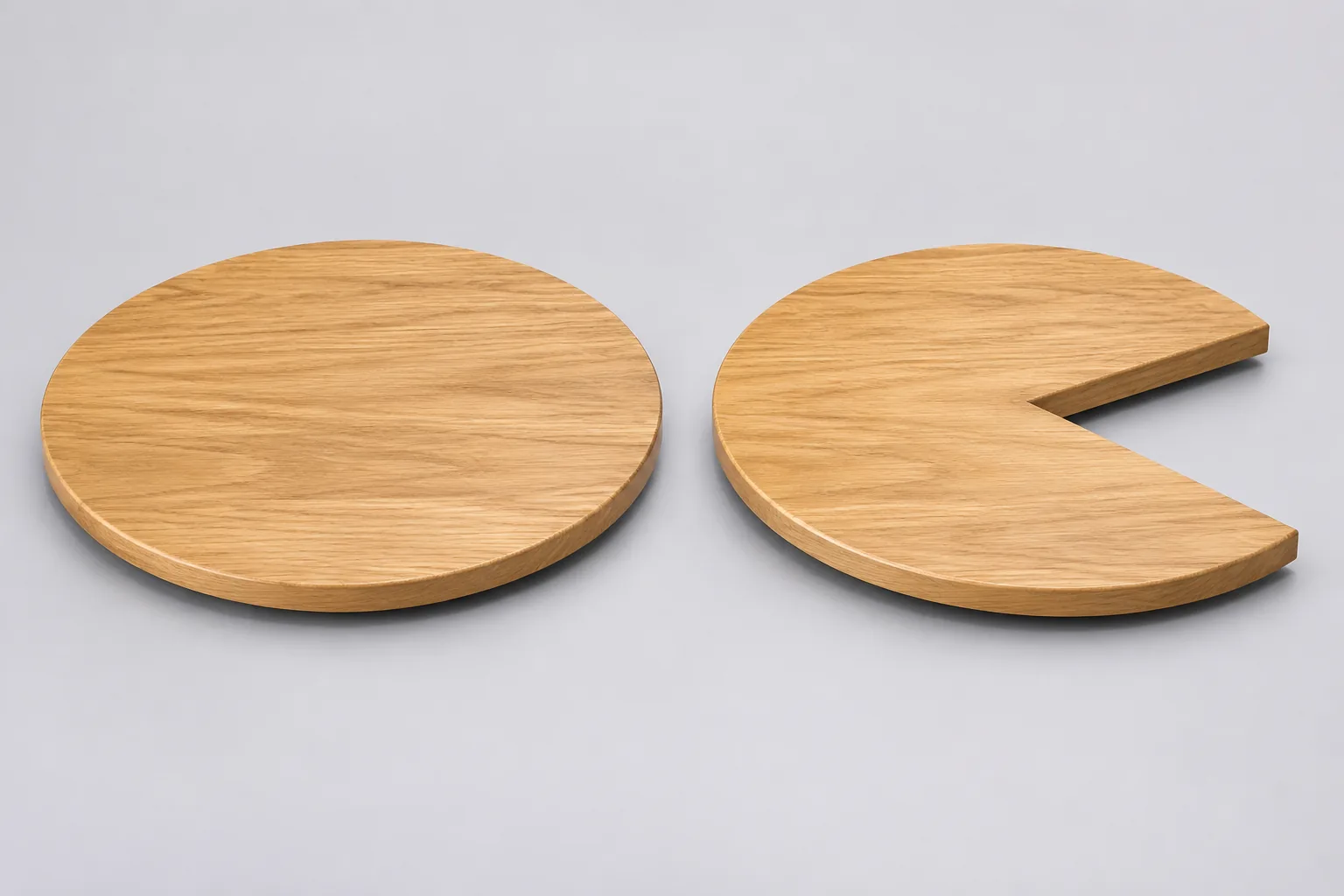
Single-tier and multi-tier versions are available. Some use a fixed center post, while others use a rotating post or hub. Fixed-post designs depend on shelf hubs that turn around the post; rotating-post designs turn the post with the shelves. The choice affects installation and how the shelves are adjusted.
Match the shelf shape to the door position and hinge direction. Left-opening, right-opening, and symmetrical designs are not interchangeable in every cabinet. A standard square cabinet usually does not need kidney-shaped hardware because the opening does not create the same corner conflict.
Pull-Out and Swing-Out Lazy Susan Hardware
Pull-out and swing-out systems move the shelf or tray out of the cabinet rather than only rotating it in place. Blind-corner hardware may use a sliding frame, a swing arm, or a combination of both. These systems can make deep corner space easier to reach, but they differ from a simple turntable in installation complexity and load path.
A simple turntable usually transfers load through a central bearing or post into the cabinet floor or top. A pull-out or swing-out system may also load the cabinet side, the door, and a track. Confirm the cabinet opening, track space, door attachment, and side-panel strength before selecting a system. The door and frame may need reinforcement that a basic turntable does not require.
Drop-In, Bottom-Mount, and Top-Mount Configurations
Bottom-mount hardware fixes the bearing or post to the cabinet floor. Top-mount hardware attaches to the cabinet top or to a reinforced upper structure. Drop-in units sit in a prepared opening or recess and can often be removed without dismantling the shelf. These configurations are sometimes called drop-in, bottom-mount, and top-mount in product listings.
Mounting position changes the load path, stability, and shelf-height adjustment. A top-mount installation needs a top panel or reinforcement able to carry the load. A bottom-mount installation needs a sound cabinet floor and a bearing or post that sits flat. Match the mount to the structure that can carry the load, not just to the shelf diameter.
Materials, Finishes, and Hardware Quality
Material and finish affect corrosion resistance, cleaning, appearance, and the load path through the hardware. The bearing inside the assembly matters as much as the visible shelf material.
| Material or finish | Common use | What to check |
|---|---|---|
| Steel | Bearing plates, posts, and structural brackets | Plating or coating, weld quality, and fastener threads |
| Galvanized steel | Hardware exposed to moisture | Coating damage at cut edges and contact with dissimilar metals |
| Stainless steel | Damp areas and washable spaces | Grade, fastener compatibility, and actual corrosion rating |
| Aluminum | Lightweight arms, frames, and mounting parts | Wear at pivot points and galvanic contact with steel |
| Plastic | Light-duty trays, glides, and covers | Load rating, heat exposure, and UV stability |
| Wood shelves | Pantry, corner, and furniture trays | Finish, moisture movement, and fastener pull-through |
Surface treatment matters in kitchens and bathrooms. Plating, powder coating, and painted finishes help resist rust, but scratches and cut edges can expose bare steel. Clean with products suitable for the finish and dry the hardware after exposure to water.
Bearing type, ball fit, race finish, lubrication, and seals affect how smoothly the shelf turns. A bearing that feels loose or gritty when rotated by hand is a poor choice for a loaded shelf. Low-profile units often use small ball bearings and a plated steel plate; the low height saves vertical space but leaves less room for large rolling elements.
Corrosion resistance and load performance depend on the grade, finish, bearing, and test method published for the exact product. The material name alone is not a rating. In humid rooms, prioritize plated, coated, or stainless components and check that fasteners and shelf supports use compatible materials.
Sizing and Load Capacity
Measure the cabinet before comparing products. Record the clear opening width and height at the door, the interior depth, the available height between shelves, and the mounting surface. For a round shelf, the diameter must be smaller than the narrowest opening it must pass through, with enough clearance for door swing and shelf rotation.
Load capacity must cover the shelf weight plus the contents. It should also reflect the mounting method and fasteners, because the cabinet panel and screws carry the load along with the bearing. Do not compare only the bearing’s catalog rating to the total load if the shelf, post, or fasteners are the weaker part of the assembly.
Check tier spacing and access height as well. A large shelf can reduce the usable height between tiers, and a deep shelf can make items at the back difficult to see. The goal is a shelf that turns freely without forcing the user to bend or reach past the door frame.
- Diameter: shelf size plus rotation clearance
- Height: tier spacing, door clearance, and mounting height
- Load: shelf weight plus contents, with a margin for use
- Mounting: bottom, top, drop-in, or pull-out structure
- Door type: hinge side, swing path, and opening width
Common diameter ranges and load classes vary by brand and model. Use the product’s dimension drawing and the rated capacity for the complete assembly rather than a generic size chart. Non-standard corner cabinets may need a custom shelf or special hardware. In that case, make a template or verify the mounting pattern before ordering.
Installation Guide for Lazy Susan Hardware
The sequence below applies to a typical bottom-mount or post-mounted turntable. Pull-out and top-mount systems use different brackets, so follow the product instructions for those designs.
- Measure and mark. Confirm the opening, center point, and mounting surface. Mark the hole pattern or post location.
- Check the structure. Confirm that the cabinet floor or top can carry the load. Add blocking or reinforcement where the panel is thin or damaged.
- Fix the base, post, or plate. Pre-drill pilot holes and use the specified fasteners. Do not overtighten screws into particleboard or thin plywood.
- Install the shelf or tray. Seat it fully on the bearing or hub and check that it sits level.
- Test the rotation. Turn the shelf through its full swing, check door clearance, and confirm that contents remain stable.
Typical tools include a tape measure, drill, screwdriver, level, and a template or marking gauge. Use fasteners suited to the cabinet panel and the hardware.
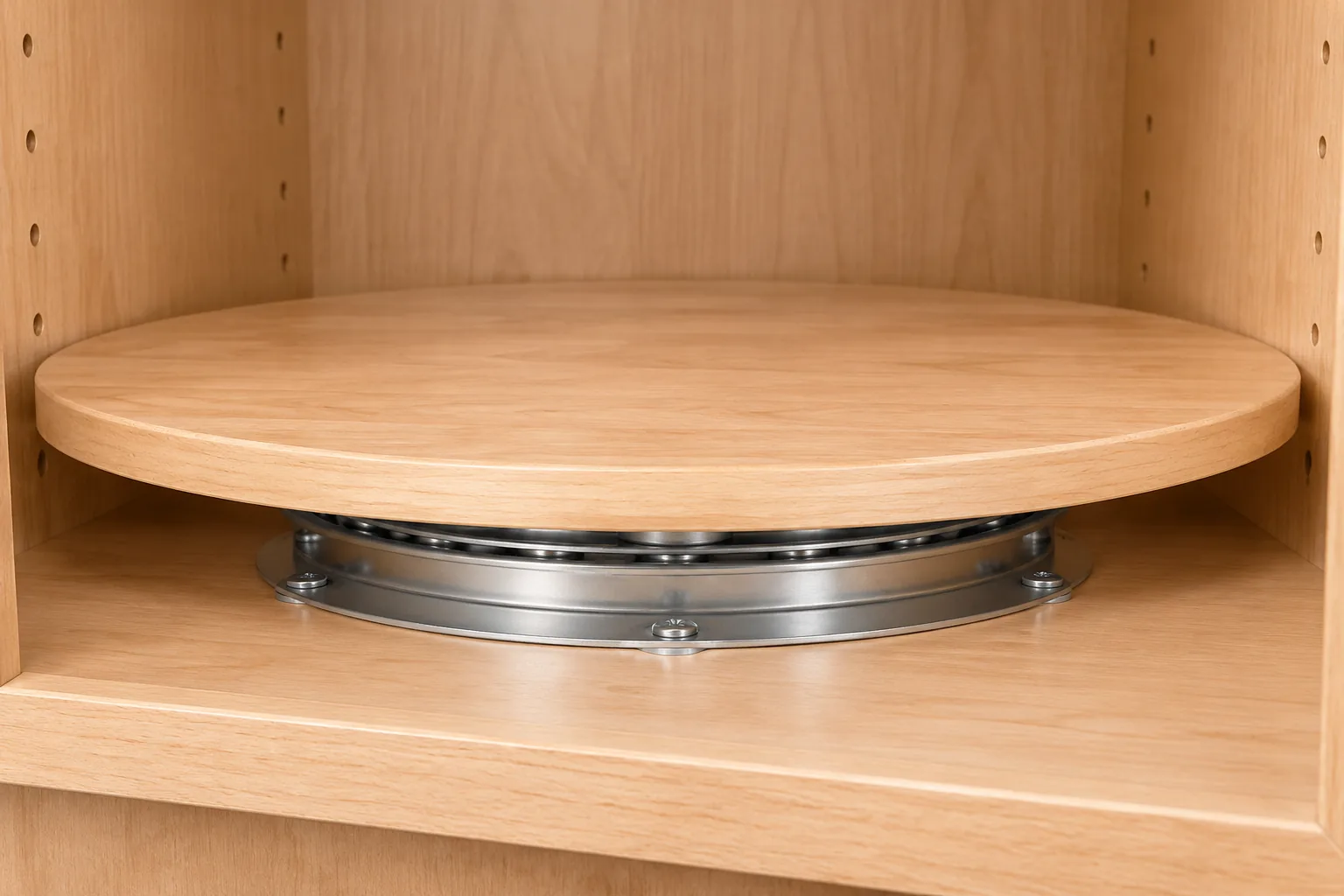
Some bearing plates have a larger access hole on one face for reaching fasteners. Check the orientation before tightening, and rotate the lower face until the holes align. If the bearing has a serviceable lubrication point, follow the maker’s instruction; sealed bearings should not be opened or flooded with oil.
Replacing an old turntable is not always a direct swap. Reuse the old mounting holes only if the pattern, load path, and screw size match. A new installation may need a new center point, different reinforcement, or a larger access hole.
Before finishing, check the door swing, shelf rotation, and the stability of tall items. A shelf that turns freely when empty can bind when loaded if the cabinet floor flexes or the post is not vertical. Cutting or enlarging a cabinet opening should be done by someone with woodworking experience. Structural changes to a cabinet can affect its strength and the door alignment.
Buying Checklist: How to Choose Lazy Susan Hardware
Use the cabinet, not the product photo, as the starting point. The buying decision should satisfy the opening, load, moisture, and installation conditions together.
- Cabinet type: corner, pantry, blind corner, bath, or furniture
- Opening and depth: clear width, height, and door swing
- Shelf shape: full-circle, pie-cut, kidney, D-shaped, or pull-out
- Load: shelf plus contents, including heavy pantry items
- Material and finish: moisture exposure and cleaning
- Mounting: bottom, top, drop-in, or track system
- Kit contents: bearing, plate, post, shelves, stops, screws, instructions
- Budget: complete installed cost, including reinforcement and replacement parts
- Support: replacement parts, warranty, and return terms
Complete kits reduce the risk of mismatched parts, but they can cost more and may not fit an existing shelf. Separate bearings or turntables can be useful for a repair when the shelf and mounting pattern are sound. In either case, confirm that screws, post, shelf hubs, and stops are included or available.
Check the product’s dimension drawing against your measured cabinet. Confirm return terms, warranty, and replacement-part availability before ordering, especially for a non-standard opening or a discontinued cabinet. Price varies with size, material, bearing type, and system complexity. Use an actual supplier quote for the configured product rather than a generic range.
Maintenance and Troubleshooting
Keep the hardware clean and check fasteners periodically. Use a mild cleaner appropriate to the finish, and avoid harsh chemicals that can corrode the surface or leave residue near food. If the bearing is serviceable, lubricate it only as instructed by the maker; sealed bearings should be left sealed.
- Binding: overload, obstruction, out-of-level mounting, or a damaged bearing
- Noise: loose fasteners, dry bearing, contamination, or a cracked mounting plate
- Wobble: loose post, worn hub, thin cabinet panel, or missing fasteners
- Sagging: load above the shelf or mounting capacity, or a weak shelf material
- Door interference: shelf diameter too large, hinge side mismatch, or cabinet out of square
Work through the simple causes first: remove excess load, check that the shelf is level, tighten fasteners, and clear any obstruction. Then inspect the bearing and post for wear. Replace the hardware when the bearing race is damaged, the post is bent, or the mounting surface is crushed. Continuing to force a damaged bearing can enlarge the mounting holes and damage the shelf.
Applications Beyond the Kitchen
The same hardware principles apply outside the kitchen. Pantries use full-circle or D-shaped shelves for deep storage. Bathroom cabinets use rotating trays for toiletries, where moisture resistance and easy cleaning matter. Corner cabinets in living areas may use a turntable for media, games, or general storage. Custom furniture can use a low-profile bearing under a seat, table, or display shelf.
Different settings change the selection priorities. A humid bathroom places more weight on corrosion resistance and compatible fasteners. A heavy pantry shelf places more weight on the load path and mounting structure. A visible furniture piece may place more weight on finish and shelf appearance. Choose the hardware for the actual environment, not only for the cabinet shape.
This guide does not cover decorative display turntables or industrial slewing rings, because their load paths and installation requirements differ from cabinet hardware.
Conclusion
Choosing the right Lazy Susan hardware starts with the cabinet: its shape, clear opening, door swing, mounting structure, and the load it must carry. From there, choose full-circle, pie-cut, kidney, pull-out, or swing-out hardware that matches the access path. Check material and finish for moisture, confirm the complete assembly’s dimensions and rating, and install the unit level with fasteners that suit the panel. Measure first, verify the exact model, and test the rotation under load before finishing the installation.
FAQs
Q1: How much weight can Lazy Susan hardware hold?
A: There is no single rating. Capacity depends on the bearing, shelf material, post, mounting surface, and fasteners. Use the manufacturer’s rated load for the complete assembly and include the shelf weight plus contents. A bearing’s standalone rating does not prove that a finished shelf will carry the same load.
Q2: How do I measure a corner cabinet for a Lazy Susan?
A: Measure the clear opening at the door, the interior depth, the available height, and the mounting surface. For a round shelf, allow clearance for the full diameter and door swing. For a kidney or D-shaped shelf, confirm the hinge side and door position. Compare the measurements with the product’s dimension drawing before ordering.
Q3: Is bottom-mount or top-mount hardware more stable?
A: Neither is universally more stable. A bottom-mount unit transfers load to the cabinet floor, while a top-mount unit depends on a secure top panel or reinforcement. Choose the configuration that matches the cabinet structure and the load. A weak panel can make either design unstable.
Q4: What is the difference between a plastic turntable and a metal bearing?
A: A plastic turntable is a complete tray and may use a simple plastic glide or a small bearing. A metal bearing is the rotating mechanism and may be sold separately. The bearing and mounting plate usually control smoothness and load capacity, while the tray material affects weight, cleaning, and appearance. Check the rating for the complete assembly.
Q5: Can I install a Lazy Susan in an existing cabinet?
A: Yes, if the opening, shelf clearance, and mounting structure suit the hardware. Check that the cabinet floor or top can carry the load, and reinforce thin panels. Compare the mounting pattern with the new unit. Cutting or enlarging the cabinet should be done by someone with woodworking experience.
Q6: How do I fix binding or noise in Lazy Susan hardware?
A: Remove excess load, check that the shelf is level, tighten loose fasteners, and clear obstructions first. Then inspect the bearing and post for wear or contamination. Clean and lubricate a serviceable bearing only as instructed. Replace the hardware if the bearing race is damaged, the post is bent, or the mounting surface is crushed.