Quick answer: A throw out bearing (clutch release bearing) is a thrust bearing that disengages the engine from the transmission when you press the clutch pedal. Symptoms of failure include grinding noise when pressing the pedal, pedal vibration, and difficulty shifting. Under normal driving, a quality bearing lasts 80,000–120,000 miles. Replacement cost ranges $400–$1,500 for most vehicles—labor is the main expense because the transmission must be removed. Replacing the full clutch kit at the same time is recommended.
A throw out bearing—also called a clutch release bearing—connects the clutch pedal action to the pressure plate inside a manual transmission. When this bearing fails, common signs include grinding noise, pedal vibration, or difficulty shifting gears. This guide explains how the bearing works, how to recognize failure, replacement procedures, cost estimates, and selection criteria for replacement parts.
What Is a Throw Out Bearing?
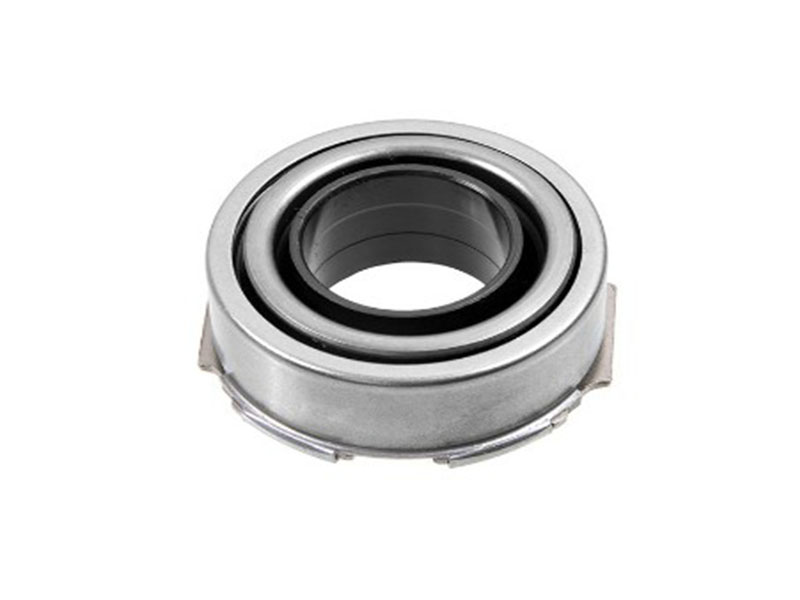
A throw out bearing is a thrust bearing mounted on the transmission input shaft or a guide sleeve. It sits between the clutch fork (or hydraulic actuator) and the pressure plate diaphragm fingers. When the driver presses the clutch pedal, the bearing moves forward, pushes against the pressure plate, and disengages the engine from the transmission.
Several terms refer to the same component:
- Clutch release bearing
- Clutch throw out bearing
- Hydraulic throwout bearing
- Hydraulic release bearing
- Release bearing
- Clutch bearing
These names appear interchangeably in repair manuals and parts catalogs.
What Does a Throw Out Bearing Do?
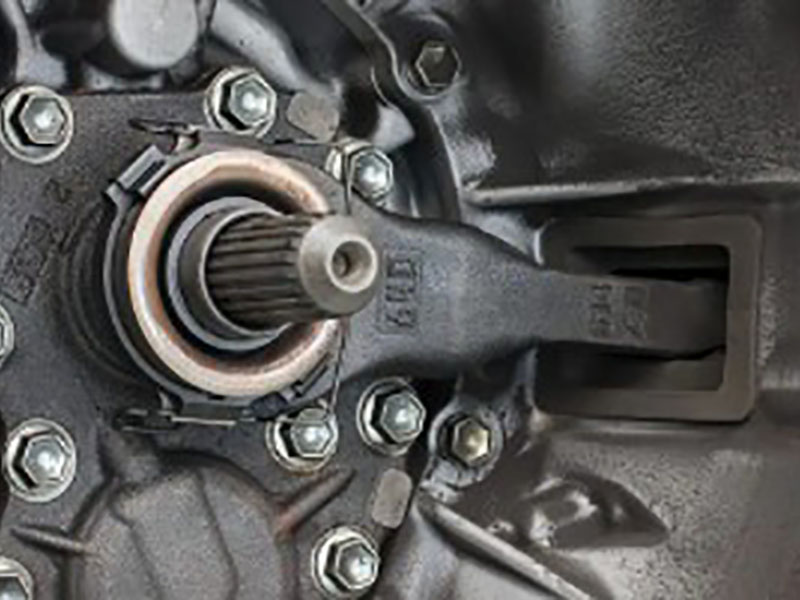
The bearing serves one mechanical function: to temporarily separate the engine from the transmission so gears can be changed without grinding.
The disengagement sequence proceeds as follows:
- The driver presses the clutch pedal.
- In a hydraulic system, the master cylinder sends fluid to the slave cylinder. In a cable system, a cable pulls the clutch fork directly.
- The clutch fork or hydraulic actuator pushes the throw out bearing forward.
- The bearing contacts the pressure plate diaphragm fingers and presses them inward.
- The pressure plate lifts away from the clutch disc, freeing the disc from the flywheel.
- With the drivetrain disconnected, the driver selects a gear.
- Releasing the pedal allows the diaphragm spring to push the bearing back, re-engaging the clutch.
The bearing rotates only while the clutch pedal is depressed. In a correctly adjusted system, the bearing retracts and stops rotating when the pedal is fully released.
Symptoms and Diagnosis of a Bad Throw Out Bearing
Core Symptoms of a Failing Throw Out Bearing
The following five symptoms are the most reliable indicators of a worn throw out bearing.
- Grinding, chirping, or rattling noise when pressing the clutch. This noise appears only when the pedal is depressed and disappears when the pedal is released. It results from worn rolling elements, damaged races, or loss of lubrication.
- Clutch pedal vibration or pulsation. An uneven bearing face or flat-spotted rollers produce a vibration felt through the pedal during engagement. The vibration typically worsens over time.
- Difficulty shifting gears. If the bearing cannot travel far enough or apply sufficient force, the clutch does not disengage fully. This causes gear grinding or resistance, especially when shifting into first or reverse.
- Stiff or inconsistent pedal feel. As internal lubrication degrades and components wear, the pedal may become stiffer than normal. The engagement point may also vary from one use to the next.
- Clutch slippage under load. In advanced failure stages, a damaged bearing can prevent the pressure plate from clamping the clutch disc completely. Engine RPM rises without a corresponding increase in vehicle speed.
Diagnostic Flow
| Observation | Recommended Action |
|---|---|
| Noise only when pedal is depressed | Inspect throw out bearing |
| Noise only when pedal is released | Inspect pilot bearing or transmission input shaft |
| Vibration during initial pedal contact | Check pressure plate lever height and bell housing alignment |
| Pedal chattering | Inspect bearing surface and pressure plate fingers |
| No noise but clutch drag (hydraulic systems) | Verify air gap and clutch hydraulic function |
When Replacement Is Mandatory
- Metal-on-metal grinding noise. Once consistent grinding occurs, internal damage is present. Continued driving risks damaging the pressure plate fingers and clutch fork.
- Severe pedal vibration. Vibration felt throughout the vehicle when depressing the pedal indicates an uneven bearing face or damaged pressure plate.
- Transmission already removed for other work. Even without symptoms, replacement is strongly recommended due to the high labor cost of later access.
- Clutch slippage already present. Slippage often accompanies bearing failure and requires immediate attention.
Causes of Throw Out Bearing Failure
- Riding the clutch pedal. Resting a foot on the pedal keeps the bearing in light contact with the pressure plate, causing continuous rotation and excess heat.
- Incorrect clutch adjustment. Improper free play—too little or too much—can leave the bearing in constant contact with the pressure plate diaphragm springs.
- Lack of lubrication. Throw out bearings are pre-greased and sealed. Over time and under high heat, grease may break down, harden, or leak. Once lubrication is insufficient, metal-to-metal contact occurs.
- Poor-quality replacements. Low-cost aftermarket bearings often use inferior steel, inadequate heat treatment, or low-grade grease. The labor cost to replace a failed bearing again makes these a false economy.
- High mileage and severe driving conditions. Even under normal use, bearings have a finite service life. Vehicles used in heavy traffic, for towing, or on track see shorter life than highway-driven passenger cars.
Types of Throw Out Bearings
By Actuation Mechanism
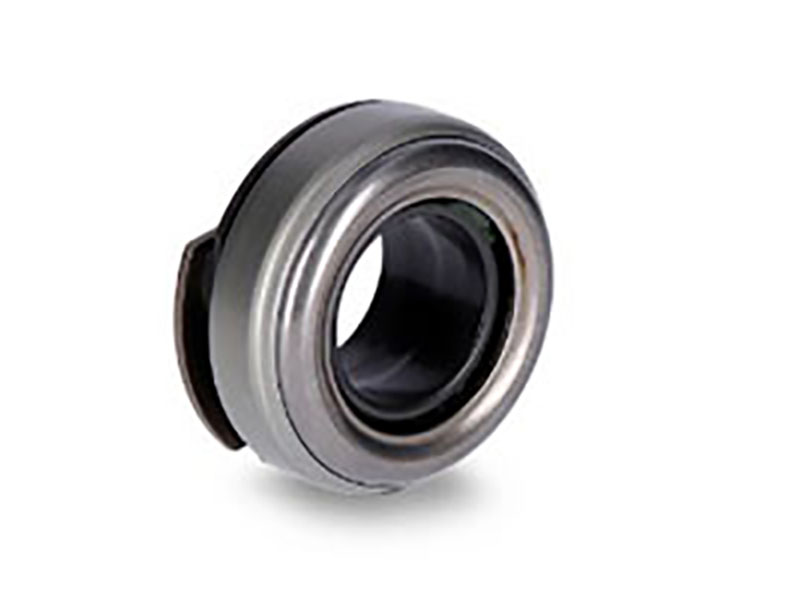
Mechanical throw out bearings are actuated by a clutch fork that pivots inside the bell housing. The fork is moved by a linkage, cable, or external slave cylinder. Mechanical systems are simpler and less expensive but may require periodic adjustment.
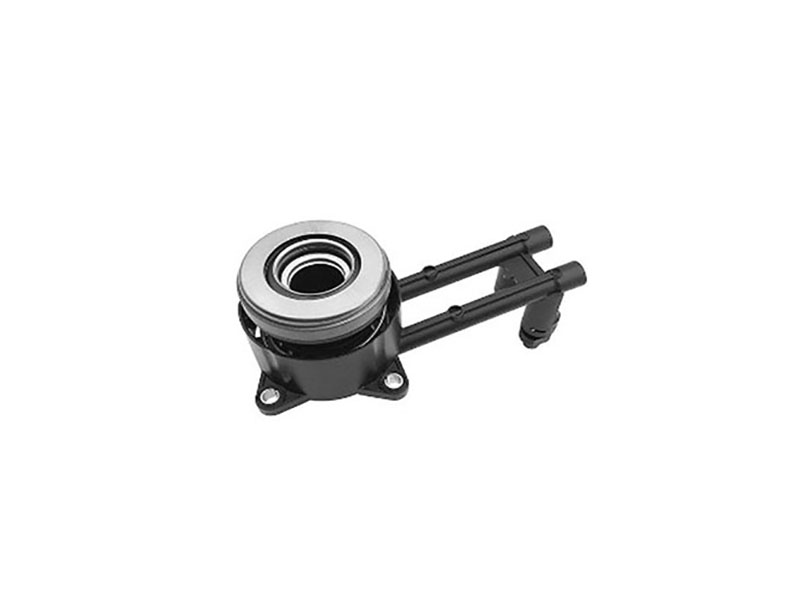
Hydraulic throw out bearings integrate the bearing with a concentric slave cylinder (CSC) that fits around the transmission input shaft. Hydraulic systems self-adjust for wear, providing consistent pedal feel. However, CSC failures require transmission removal, and fluid may leak into the bell housing if the bearing fails. Hydraulic bearings fall into two subcategories: constant-contact types that maintain light contact with the pressure plate fingers, and intermittent types that retract fully. Performance applications often prefer intermittent designs to reduce heat buildup.
By Internal Bearing Structure
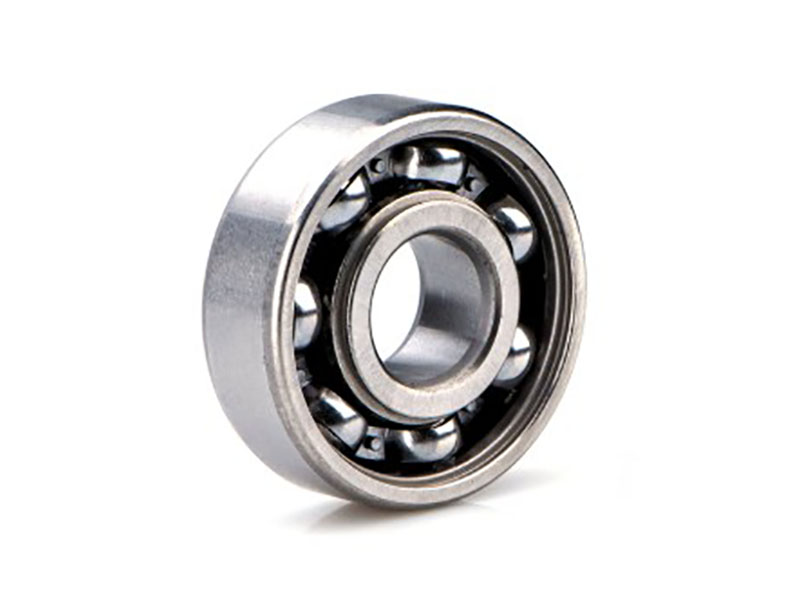
Ball bearings use spherical balls between inner and outer races. This is the most common configuration for passenger cars, offering smooth operation and good durability.
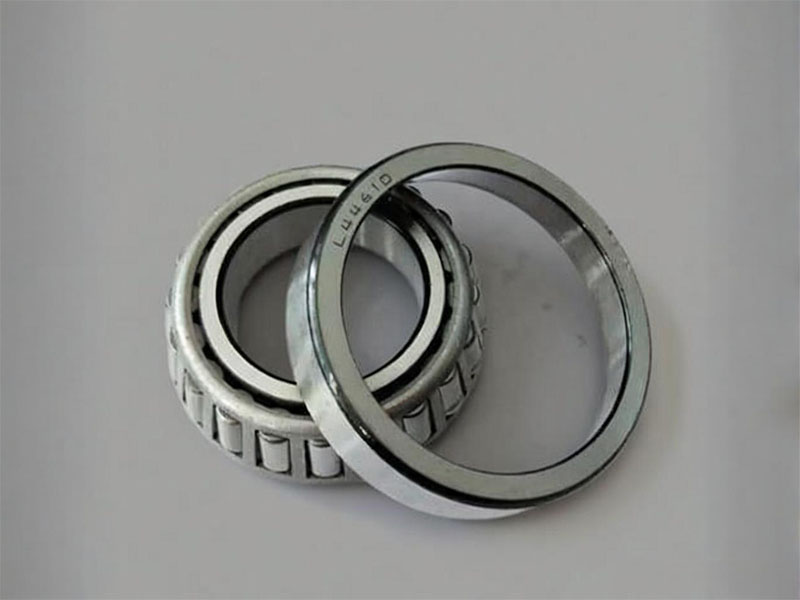
Tapered roller bearings use conical rollers arranged between tapered races. They support higher axial loads and are typically found in heavy-duty trucks, performance vehicles, and racing applications.
Throw Out Bearing Replacement
Components Typically Replaced Together
Professional repair facilities recommend inspecting—or replacing—several related components while the transmission is removed:
- Clutch disc
- Pressure plate
- Flywheel (inspect for heat cracks or warping)
- Pilot bearing (or bushing)
- Clutch alignment tool
Lubrication Points During Installation
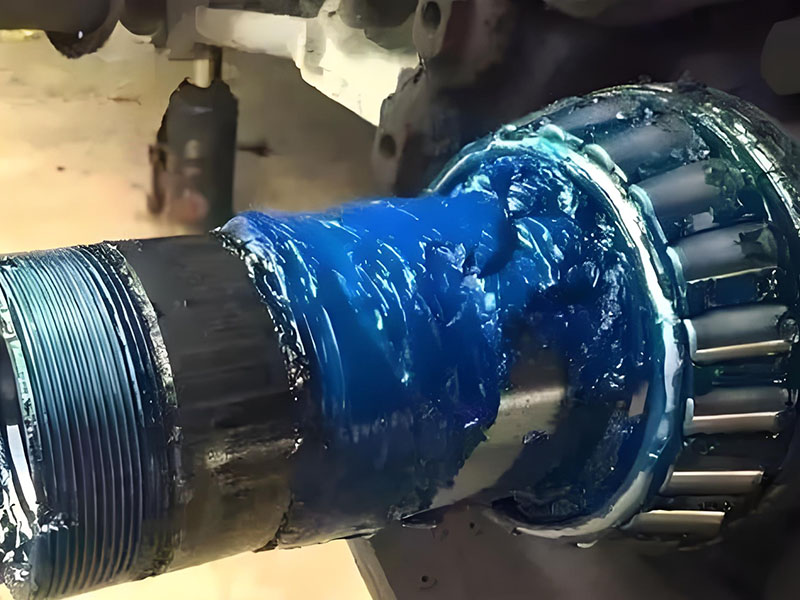
Apply high-temperature grease containing molybdenum disulfide to the following areas:
- Transmission input shaft splines (prevents clutch disc binding)
- Bearing sleeve or guide tube (ensures smooth sliding)
- Clutch fork pivot ball (reduces friction and noise)
- Slave cylinder pushrod contact point
Avoid over-greasing, as excess can contaminate the clutch disc or flywheel.
Typical Replacement Process
- Raise and safely support the vehicle.
- Remove the driveshaft (RWD) or axle shafts (FWD).
- Disconnect the clutch hydraulic line or cable, and remove the starter motor.
- Support the transmission with a jack, then remove its mounting bolts.
- Lower the transmission and slide it rearward until the input shaft clears the clutch assembly.
- Remove the old throw out bearing from the clutch fork or slave cylinder.
- Install the new bearing, applying grease to specified areas.
- Reassemble in reverse order, torquing all fasteners to factory specifications.
Cost to Replace a Throw Out Bearing
Parts cost. A standalone throw out bearing typically ranges from $30 to $150 for standard applications. Performance bearings or hydraulic units (CSC with integrated bearing) range from $80 to $300 or more.
Labor cost. Labor accounts for most of the expense because the transmission must be removed and reinstalled. Most vehicles require 3 to 8 hours of shop time. At typical hourly rates of $80–$150, labor alone is $240 to $1,200.
Total estimated cost.
- Bearing-only replacement: $400 – $1,000 (many shops will not perform bearing-only jobs due to liability)
- Full clutch kit replacement: $500 – $1,500 for most mainstream vehicles
- Performance or luxury vehicles: $1,500 – $2,500+
Replacing the full clutch assembly while the transmission is already out adds only the incremental cost of the clutch disc and pressure plate—typically $100–$400 extra—and provides better long-term value.
Should You Replace the Throw Out Bearing Yourself?
Requirements for DIY Replacement
- Safe lifting with four jack stands (a floor jack alone is insufficient)
- Removal of driveshaft, transmission, and clutch linkage or hydraulic lines
- Clutch alignment tool for centering the disc
- Torque wrench for factory specifications
- Transmission jack or heavy-duty floor jack with adapter
- Ability to handle a transmission weighing 75–150 pounds
Comparison: DIY vs. Professional
| Aspect | DIY | Professional |
|---|---|---|
| Cost | Saves $300–$900 in labor | Higher total cost |
| Time | 8–16 hours for first-timer | 4–8 hours |
| Tools | May need to purchase specialty tools | Already equipped |
| Warranty | No labor warranty | 12–24 months on parts and labor |
| Risk | Improper alignment can damage new clutch | Reduced risk |
DIY replacement is feasible for experienced home mechanics with the required tools. For others, professional installation is recommended.
How to Choose the Right Replacement Bearing
Vehicle Compatibility
- Vehicle make, model, and year. Start with the OEM part number. Search by VIN or model details.
- Transmission type. Mechanical systems use a separate bearing that clips onto the clutch fork. Hydraulic systems often use a CSC with integrated bearing—the bearing alone cannot be replaced separately.
- Clutch system modifications. If the vehicle has an aftermarket high-performance pressure plate, the bearing must be rated for increased spring pressure.
Bearing Materials and Construction
Rings and rolling elements. High-carbon chromium bearing steel GCr15 (SUJ2 / 100Cr6 / E5200) is the standard material for precision bearing rings and balls. After quenching and tempering, hardness reaches HRC 60–65, providing fatigue strength and wear resistance. The working temperature limit is approximately 200°C (392°F).
Retainers (cages). Standard retainers are cold-rolled carbon steel (SPCC). For corrosive environments, misalignment, or high-speed operation, stainless steel or phenolic resins may be used.
Seals and lubrication. Seal quality directly affects bearing life. Lower-quality bearings may use ordinary rubber seals that degrade faster. OE-quality bearings use nitrile or advanced sealing materials. Economy bearings often use lower-grade grease that breaks down under heat. Quality bearings employ high-temperature lithium, polyurea, or molybdenum disulfide-based greases.
Heat treatment. Proper quenching and tempering achieves HRC 60–64. Inadequate heat treatment results in lower hardness and premature wear.
Comparison: Economy vs. OE-Quality vs. Premium Bearings
| Feature | Economy | OE-Quality | Premium |
|---|---|---|---|
| Steel quality | Lower-grade | GCr15 / SUJ2 | Premium steel + stricter QC |
| Seal material | Basic rubber | Nitrile or advanced | High-temperature / chemical-resistant |
| Lubrication | Lower-grade grease | High-performance grease | Additive-enriched / specialty grease |
| Heat treatment | Insufficient or simplified | Quench + temper (HRC 60–64) | Enhanced heat treatment |
| Retainer | Low-grade steel | Carbon or stainless steel | Performance retainer (nylon/bronze) |
| Durability | Risk of premature failure | Meets OE life expectations | Extended life, severe-duty capable |
| Best suited for | Short-term / light duty | Standard replacement (daily drivers) | Performance / racing / heavy-duty |
For most drivers, OE-quality bearings offer the best balance of cost and reliability. Premium bearings are justified only for performance builds, track use, or heavy-duty applications.
When to Consider Performance Upgrades
Hydraulic conversion kits. Some vehicles with mechanical linkage can be converted to hydraulic actuation. Benefits include smoother pedal action, self-adjusting engagement, and reduced pedal effort.
Performance-spec bearings. These use premium materials—higher-grade bearing steel or improved heat treatment—and may feature larger rolling elements or additional grease capacity. They are designed for higher RPMs, increased spring pressures, and more frequent engagement cycles.
Complete race clutch systems. For competition use (drag racing, autocross, circuit racing), a matched clutch system is the best approach. These kits include the pressure plate, clutch disc, flywheel, and a selected throw out bearing, all engineered for extreme thermal and mechanical loads.
Conclusion
A throw out bearing is a wear item that requires attention when symptoms appear. Recognizing the early signs—noise, vibration, or shifting difficulty—allows for planned replacement before collateral damage occurs. When replacing the bearing, inspecting or renewing the clutch disc, pressure plate, and pilot bearing is a cost-effective practice. Selecting a bearing that matches the vehicle’s transmission type and performance requirements ensures reliable operation. For most drivers, an OE-quality bearing provides the best value, while performance upgrades are reserved for modified or competition vehicles.
Frequently Asked Questions
Q1: How long does a throw out bearing typically last?
Under normal highway driving, a quality release bearing lasts 80,000–120,000+ miles. Driving habits significantly affect lifespan. Normal highway driving is baseline (100%). City / stop-and-go traffic reduces life to approximately 60–80% (50,000–80,000 miles). Aggressive driving or track use may reduce life to 20,000–40,000 miles (25–35% of normal). Towing heavy loads typically yields about 60% of normal life.
Q2: Can a bad throw out bearing damage other components?
Yes. A failed bearing can score the pressure plate diaphragm fingers, damage the clutch fork pivot, and wear the transmission input shaft guide sleeve. In severe cases, debris from a disintegrated bearing can contaminate the clutch disc or flywheel.
Q3: Why does the noise disappear when I release the clutch pedal?
The throw out bearing only rotates under load when the pedal is depressed. When the pedal is released, the bearing retracts (or spins without axial load) and typically stops making noise. This on-off behavior is a diagnostic clue.
Q4: Do I have to replace the clutch when replacing the throw out bearing?
Not mandatory, but strongly recommended. The labor to access the bearing is the same whether you replace only the bearing or the entire clutch assembly. If the clutch disc and pressure plate have significant wear, you will pay the same labor cost again if they fail later.
Q5: How to tell the difference between a bad throw out bearing and a bad pilot bearing?
Throw out bearing: noise or vibration occurs when pressing the clutch pedal. Pilot bearing: noise or vibration occurs when the pedal is released (engine connected to transmission), and may change or disappear when the pedal is depressed.
Q6: Are aftermarket hydraulic throwout bearings reliable?
Yes, when purchased from reputable manufacturers. Brands that supply OE to major automakers generally offer high-quality aftermarket hydraulic units. Cheap unbranded hydraulic bearings often fail prematurely due to poor seals or low-grade components.
Q7: Can I lubricate or service a sealed throw out bearing without replacing it?
No. Throw out bearings are sealed units and cannot be serviced. Spraying lubricants through the inspection port may temporarily quiet noise but does not address internal wear. The only correct fix is replacement.
Q8: Why do some throw out bearings rattle at idle with the clutch released?
In some vehicles, particularly older designs or performance clutches, slight rattle at idle with the clutch released may occur from normal engine vibration. However, if the rattle is pronounced or accompanied by noise when depressing the pedal, the bearing may be worn and internal clearance increased.
Q9: Can a failing throw out bearing damage the transmission input shaft?
If the bearing completely fails, debris or excessive wear can damage the input shaft guide sleeve or bearing slide surface. In extreme cases, a seized bearing can spin on the guide tube, requiring transmission disassembly for repair.
Q10: What is the difference between a constant-contact and an intermittent hydraulic throw out bearing?
Constant-contact hydraulic bearings maintain light contact with the pressure plate fingers at all times. Intermittent bearings retract fully when the clutch pedal is released. Performance applications generally prefer intermittent designs to reduce heat buildup and parasitic drag.
Q11: Should I replace the clutch fork or pivot ball when replacing the throw out bearing?
The clutch fork pivot ball (fulcrum) wears over time. A worn pivot can reduce release stroke and affect pedal feel. While not always required, inspecting these components and replacing them if worn—especially in high-mileage vehicles—is recommended to restore proper clutch actuation geometry.