Quick answer: What is a universal joint (U-joint)? It’s a mechanical coupling that transmits torque between two shafts at an angle—commonly used in rear-wheel-drive and 4WD drivelines. Types include single (up to ~30° angle) and double Cardan. Common series: 1310, 1330, 1350, with torque ratings from ~130 to 210 lb-ft. U-joints have non-constant velocity output unless phased with equal angles. They come as greasable or sealed. Symptoms of failure: clunking, vibration, squeaking.
Universal joints, commonly known as U-joints, are critical components in a vehicle’s drivetrain. They connect rotating shafts while allowing them to operate at varying angles. Whether you’re maintaining a rear-wheel-drive truck or troubleshooting driveline vibration, understanding how universal joints work is essential. This guide covers the types, functions, advantages, and maintenance requirements of automotive U-joints.
What Is a Universal Joint?
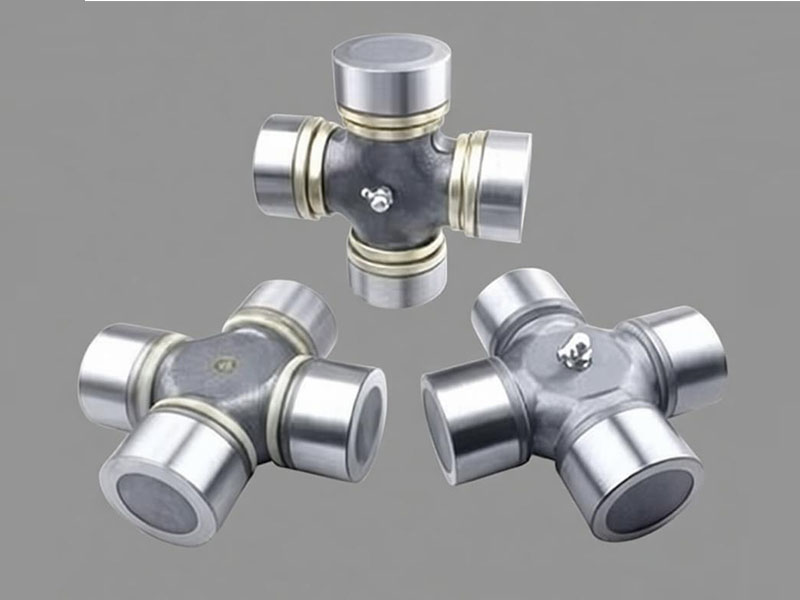
A universal joint is a mechanical coupling that transmits torque and rotational motion between two shafts whose axes are not aligned in a straight line. The joint consists of a cross-shaped center piece—often made of forged or cast steel—with bearing caps at each end, supported by needle bearings. This design allows the joint to flex and accommodate angular movement while maintaining power transmission.
Universal joints are also referred to as Cardan joints or Hooke’s joints, named after the mathematician Gerolamo Cardano who studied their mechanical properties.
Types of Universal Joints
Universal joints are classified in several ways. Understanding these distinctions helps in selecting the correct replacement part.
Single vs. Double Cardan Joints
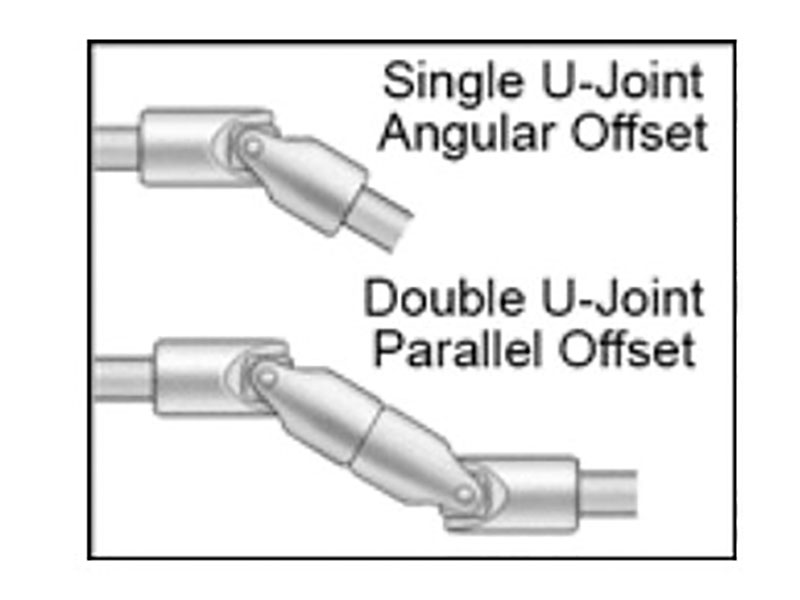
A single universal joint has one bending point and can operate at angles of up to approximately 30 degrees under normal conditions. It provides reliable torque transmission but introduces rotational speed variation as the operating angle increases.
A double Cardan joint incorporates two U-joints linked by a centering mechanism, effectively canceling out the velocity fluctuation inherent in a single joint. Double Cardan joints are commonly used in lifted trucks and four-wheel-drive vehicles where driveline angles exceed the limits of a standard U-joint.
U-Joint Series and Sizing
U-joints are categorized by series numbers that indicate their physical dimensions and torque capacity. Common series include 1310, 1330, 1350, and 1410. For example:
- 1310 series: 1.062-inch cap diameter, continuous load rating of approximately 130 lb-ft
- 1330 series: 3.625-inch overall width, continuous rating of 150 lb-ft
- 1350 series: 1.188-inch cap diameter, continuous rating of 210 lb-ft
Higher series numbers correspond to larger physical dimensions and greater torque capacity, making them suitable for heavy-duty applications.
Hub Styles: Solid vs. Bored
U-joints are also available in two hub configurations:
- Solid body: The cross has solid trunnions without lubrication passages. These joints are typically sealed and require no periodic greasing.
- Bored (hollow) body: The cross contains internal passages for grease distribution, usually fitted with a grease zerk (fitting) for periodic lubrication.
How Does a Universal Joint Work?
The operation of a universal joint involves complex rotational dynamics. When the input and output shafts are perfectly aligned, velocity transfers uniformly from one shaft to the other.
However, when the shafts operate at an angle, the driven shaft does not maintain a constant rotational speed. A single U-joint causes the output velocity to accelerate and decelerate twice per full revolution of the input shaft. The extent of this fluctuation depends on the operating angle—the greater the angle, the more pronounced the velocity variation.
This non-constant velocity characteristic is inherent to universal joints. In automotive applications, this issue is mitigated by using two U-joints on the same driveshaft. When the angles at both ends are equal, the fluctuations cancel each other out, producing a consistent output speed.
Features of a Universal Joint
A standard universal joint consists of several precision-engineered components:
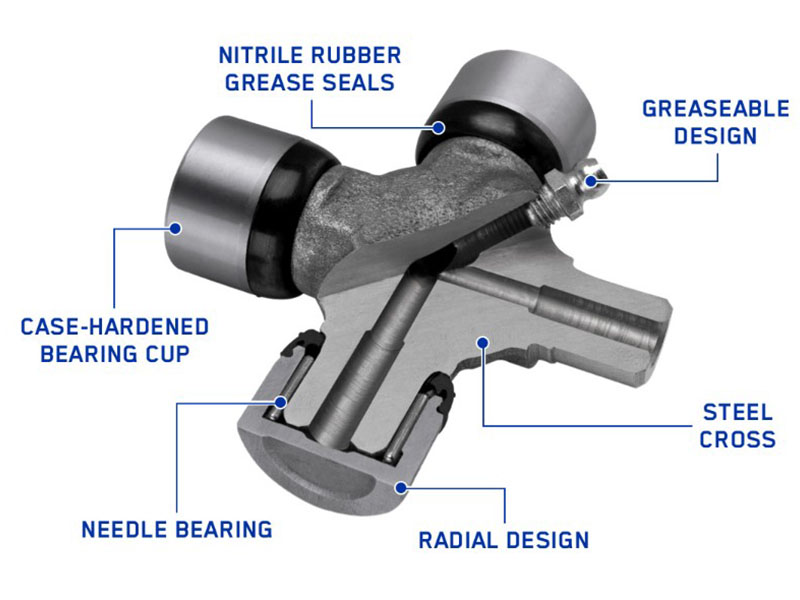
- Steel cross (spider): The central component, typically forged from alloy steel, providing the structural core of the joint
- Needle bearings: Fine rollers housed within the bearing cups that reduce friction between the cross trunnions and yokes
- Bearing cups: Hardened steel caps that encase the needle bearings and fit into the yoke ears
- Grease seals: Typically made of nitrile rubber, these retain lubricant while excluding contaminants
- Grease fitting (zerk): Present on serviceable joints, allows periodic lubrication
Case-hardened bearing cups provide wear resistance on the running surfaces where the cross journals rotate within the needle bearings.
Where Are Universal Joints Located?
On a typical rear-wheel-drive vehicle, universal joints are mounted at both ends of the driveshaft:
- The front U-joint connects the driveshaft to the transmission output yoke
- The rear U-joint connects the driveshaft to the differential input yoke
In four-wheel-drive and all-wheel-drive vehicles, additional universal joints are found on the front driveshaft and, in some configurations, within the front axle assemblies. Vehicles with two-piece driveshafts incorporate an additional U-joint at the center support bearing location.
What Does a Universal Joint Do?
A universal joint performs two primary functions in a vehicle’s drivetrain. First, it transfers rotational motion and torque from the transmission to the differential, enabling power to reach the wheels. Second, it accommodates the angular changes that occur as the suspension moves up and down and as the driveline shifts under load.
Without universal joints, the rigid connection between transmission and differential would fail as soon as the vehicle encountered any suspension travel or road irregularity.
Advantages of Universal Joints
Universal joints offer several engineering and economic advantages:
- Flexibility in angular misalignment: Universal couplings accommodate substantial angular displacement between shafts—up to 30 degrees for single joints and more with double Cardan designs
- High torque transmission efficiency: U-joints transfer power with minimal energy loss
- Cost-effectiveness: Compared to CV joints, universal joints are significantly less expensive to manufacture
- Simple assembly and disassembly: Replacement typically requires only basic tools and a press
- Ability to handle shock loads: The robust steel construction withstands sudden torque spikes common in off-road and towing applications
Disadvantages of Universal Joints
Despite their widespread use, universal joints have inherent limitations:
- Non-constant velocity output: A single U-joint produces fluctuating rotational speed when operating at an angle, which can cause driveline vibration if not properly phased
- Wear without proper lubrication: Needle bearings require consistent grease coverage; insufficient lubrication leads to accelerated wear and joint failure
- Maintenance requirement: Serviceable joints demand periodic greasing, which may be overlooked in routine vehicle maintenance
- Limited angular capacity: Operating angles exceeding approximately 30 degrees significantly increase velocity fluctuation and wear
- No axial misalignment compensation: Universal joints accommodate angular displacement but not parallel offset or axial movement
Applications of Universal Joints
Universal joints are used in various automotive applications:
- Rear-wheel drive (RWD) vehicles: Driveshaft connections between transmission and differential
- Four-wheel drive (4WD) vehicles: Front and rear driveshafts, and some front axle shafts
- All-wheel drive (AWD) vehicles: Driveshaft connections in longitudinally-mounted drivetrain configurations
- Commercial trucks and vans: Heavy-duty drivelines where high torque capacity is required
- Agricultural and industrial machinery: Power take-off (PTO) shafts and equipment drives
How Many U-Joints Are on a Vehicle?
The number of universal joints varies by vehicle configuration:
Rear-wheel drive vehicles: Typically two U-joints—one at the transmission end of the driveshaft and one at the differential end. Vehicles with two-piece driveshafts may have three U-joints, with an additional joint at the center support bearing.
Four-wheel drive and all-wheel drive vehicles: The count increases significantly. A typical 4WD truck may have five to seven U-joints: two or three in the front driveshaft, two in the rear driveshaft, and additional joints in the front axle shafts. The exact number depends on whether the vehicle uses solid axles or independent front suspension and whether the driveshafts are single-piece or multi-piece designs.
To determine the exact count for a specific vehicle, consult the manufacturer’s service manual or inspect the driveline components directly.
How to Tell If a U-Joint Is Bad
Common symptoms of a failing universal joint include:
- Clunking noise when shifting: A worn joint produces a metallic clunk when the transmission is placed into Drive or Reverse
- Vibration at highway speeds: As speed increases, a failing U-joint causes noticeable driveline vibration
- Squeaking or chirping sounds: Lack of lubrication or worn needle bearings produce high-pitched noises, particularly during acceleration or deceleration
- Excessive driveline play: Manual rotation of the driveshaft may reveal free movement before the differential resists motion
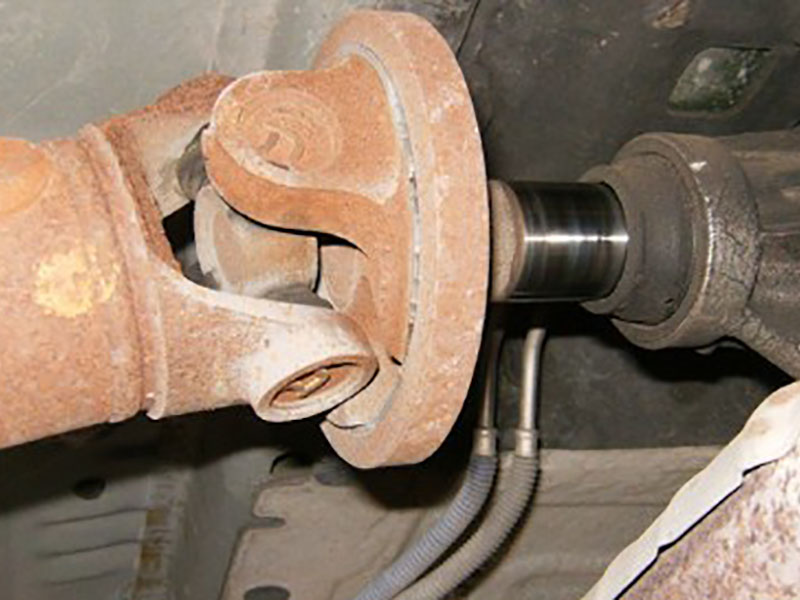
- Visible rust or corrosion: Reddish-brown dust around the bearing caps indicates rust formation and imminent failure
When any of these symptoms appear, the affected U-joint should be inspected and replaced promptly to prevent driveshaft damage or loss of power transmission.
Common Universal Joint Failure Modes
Universal joints typically fail in one of several distinct modes. Recognizing the specific failure mechanism can help diagnose root causes and prevent recurrence.
Needle bearing brinelling: Excessive impact or shock loading creates indentations on the bearing needles and trunnion surfaces. This causes rough rotation and accelerated wear. Brinelling often results from improper installation or severe driveline shock.
Wear from insufficient lubrication: When greasable joints are not serviced at recommended intervals, the needle bearings run dry. Friction generates heat, turning lubricant into a hardened, abrasive residue. The joint develops play and eventually seizes.
Corrosion and rust: Moisture ingress past damaged or aged grease seals leads to rust formation on the cross and bearing cups. Rust acts as an abrasive, rapidly destroying the needle bearings and creating false brinelling when the vehicle remains stationary for extended periods.
Fatigue fracture of the cross: Repeated torsional stress beyond the joint’s design limit can cause the cross arm to crack. This is more common in modified vehicles with increased engine power or larger tires without upgrading to a higher-capacity U-joint series.
Seal failure and contamination: Torn or hardened nitrile seals allow dirt, water, and road salt into the bearing cavity. Contaminants mix with grease and accelerate wear. Sealed (lubed-for-life) joints are particularly vulnerable once the factory seal is compromised.
Yoke ear deformation: Over-tightening or using incorrect tools during installation can distort the yoke ears, preventing proper bearing cup retention. This leads to cup rotation and premature joint failure.
How to Replace a Universal Joint
Replacing a universal joint requires mechanical aptitude and proper tools. The following steps outline the standard procedure for a typical driveshaft U-joint. Always refer to the vehicle-specific service manual before beginning.
Required tools: Ball joint press or U-joint press tool, snap ring pliers, socket set, hammer, brass drift, bench vise (optional), grease gun with compatible grease.
Step 1: Remove the driveshaft. Mark the orientation of the driveshaft relative to the differential and transmission yokes. Remove the retaining bolts or straps at each end. Carefully lower the driveshaft without allowing the U-joint caps to fall off.
Step 2: Remove snap rings. Use snap ring pliers to remove the retaining rings from inside the yoke ears. Clean debris from the ring grooves before removal.
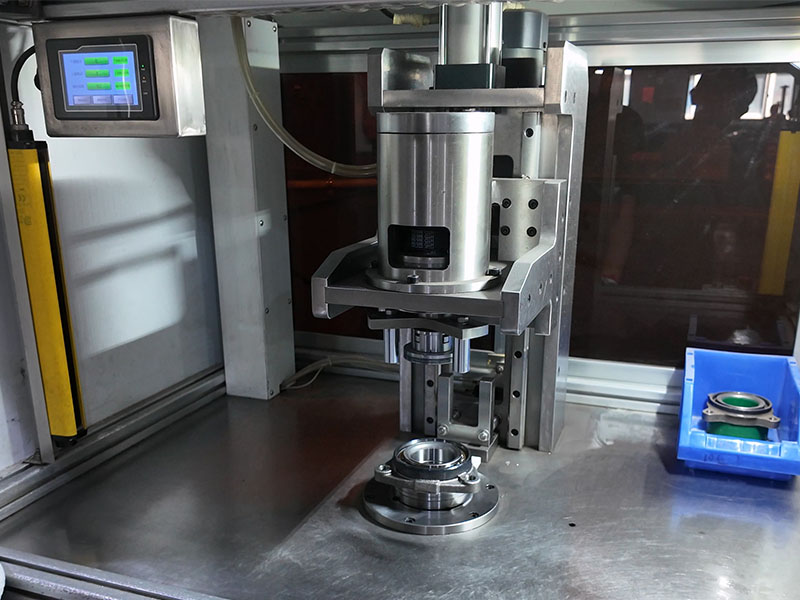
Step 3: Press out the old U-joint. Position the yoke in a U-joint press or vise with a socket supporting one ear. Press the bearing cap out of the yoke. Rotate the driveshaft and repeat for the opposite cap. Remove the cross and the remaining caps.
Step 4: Clean the yoke bores. Remove old grease, rust, or burrs from the bearing cup seats inside the yoke ears. Inspect the yokes for cracks or deformation.
Step 5: Install the new U-joint. Apply a thin layer of grease to the new bearing cups. Insert the cross into the yoke, then start one bearing cup by hand. Press the cup into the yoke bore until the snap ring groove is exposed. Install the snap ring. Repeat for the opposite cup. Ensure the cross moves freely without binding.
Step 6: Install snap rings and verify movement. After all four cups are seated and snap rings are in place, rotate the cross in all planes. The joint should articulate smoothly with no notchy feeling.
Step 7: Reinstall the driveshaft. Align the orientation marks, install the retaining bolts or straps, and torque to manufacturer specifications. For greasable U-joints, apply fresh grease until it purges from all four seals.
Step 8: Road test. Drive the vehicle and monitor for vibration or unusual noise. If vibration persists, check driveshaft balance and U-joint phasing.
U-Joint Maintenance: Greasable vs. Sealed
Universal joints fall into two maintenance categories.
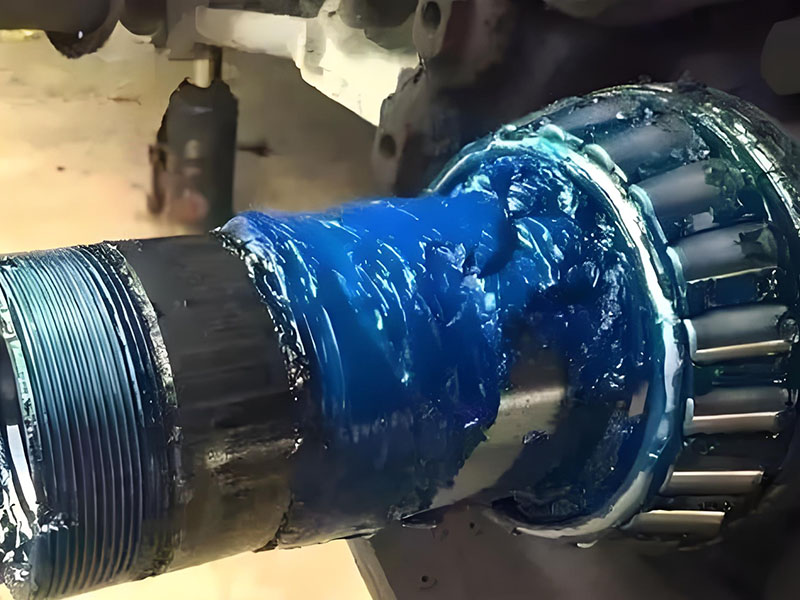
Greasable U-joints feature a grease zerk on the cross or bearing cup. Periodic lubrication—typically every 20,000 to 30,000 miles or every one to two months for commercial vehicles—flushes out old grease and contaminants while replenishing the needle bearings’ lubricant film. Serviceable joints offer extended service life but require regular attention.
Sealed (lubed-for-life) U-joints are factory-lubricated and do not have grease fittings. While they require no routine maintenance, they cannot be re-greased once the factory lubricant degrades. Most original equipment manufacturers use sealed joints, whereas aftermarket replacements often include grease zerks for serviceability.
When selecting replacement U-joints, consider the operating conditions. Vehicles used in dusty environments, frequent towing, or off-road applications benefit from greasable designs that allow regular maintenance.
Conclusion
Universal joints are fundamental components in rear-wheel-drive, four-wheel-drive, and all-wheel-drive vehicles. They enable power transmission while accommodating angular movement between the transmission, driveshaft, and differential. Understanding the different types—single vs. double Cardan, greasable vs. sealed, and various series ratings—allows for proper selection and maintenance. Regular inspection and lubrication (where applicable) prevent common failure symptoms such as vibration, clunking, and premature wear. While universal joints have limitations such as non-constant velocity output, their durability, torque capacity, and cost-effectiveness keep them as the standard choice for heavy-duty and commercial driveline applications. By following the maintenance guidelines and recognizing early warning signs, vehicle owners can maximize U-joint service life and drivetrain reliability.
FAQ
Q1: What is the difference between a universal joint and a CV joint?
Universal joints (U-joints) and constant velocity (CV) joints both transmit torque through an angle, but they have distinct characteristics. The table below summarizes the key differences:
| Feature | U-Joint | CV Joint |
|---|---|---|
| Cost | Lower production cost | Higher production cost |
| Maintenance | Varies by type: greasable requires lubrication; sealed is maintenance-free | Sealed, generally maintenance-free |
| Vibration at angle | Increases with operating angle | Minimal at wide angles |
| Torque capacity | Higher capacity, suitable for heavy-duty | Moderate capacity |
| Service life | Good, with proper maintenance | Long, but boot failure leads to rapid wear |
| Typical applications | RWD trucks, SUVs, commercial vehicles | FWD vehicles, AWD systems |
CV joints maintain constant rotational speed regardless of operating angle, making them preferable for front-wheel-drive applications where steering creates wide articulation angles. Universal joints offer superior torque capacity and cost-effectiveness, which is why they remain standard in rear-wheel-drive and heavy-duty applications.
Q2: How long do universal joints last?
U-joint lifespan varies by vehicle type, driving conditions, and maintenance. Under normal highway driving, serviceable joints may last 80,000 to 150,000 miles with proper lubrication. Sealed joints typically have a similar lifespan but cannot be re-greased, so they must be replaced once the factory lubricant degrades.
Q3: Can I drive with a bad U-joint?
Driving with a failed U-joint is unsafe. A seized joint can cause the driveshaft to detach from the vehicle or damage the transmission and differential. If U-joint failure symptoms appear, replace the joint before further driving.
Q4: How much does U-joint replacement cost?
Parts cost varies by application: basic U-joints range from $15 to $60, while heavy-duty or double Cardan joints may cost $100 to $200. Labor adds additional expense depending on vehicle accessibility and whether pressing equipment is required.
Q5: Do U-joints need to be greased after installation?
Yes. New greasable U-joints require immediate lubrication before vehicle operation. After installation, follow the manufacturer’s maintenance schedule—typically every 20,000 to 30,000 miles or annually under normal conditions.
Q6: Are all U-joints the same size?
No. U-joint dimensions vary by series (1310, 1330, 1350, 1410, etc.) and by manufacturer. When ordering replacement U-joints, always match the series number, cap diameter, and overall width to the original part.
Q7: Can a CV joint be used instead of a U-joint?
In most applications, CV joints are not direct replacements for U-joints because of different mounting configurations and dimensional differences. Vehicle drivelines are designed specifically for one joint type or the other based on operating angle requirements.