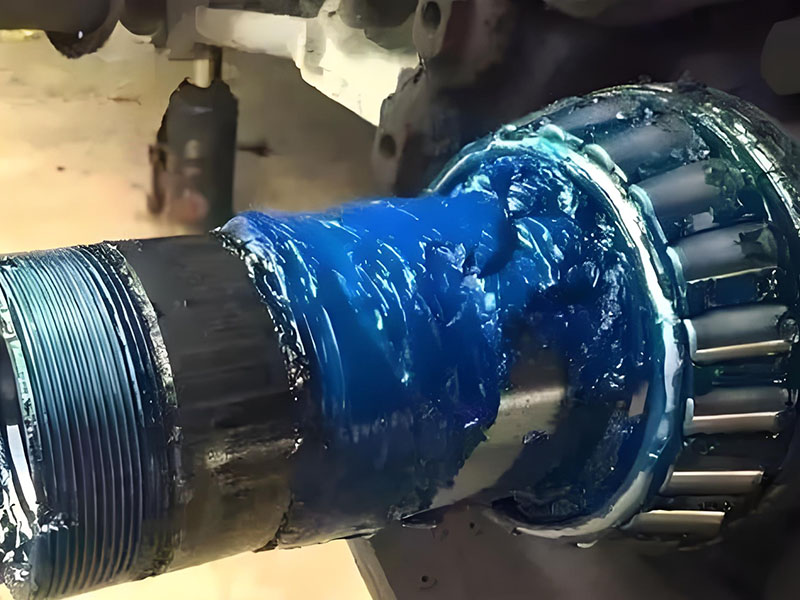
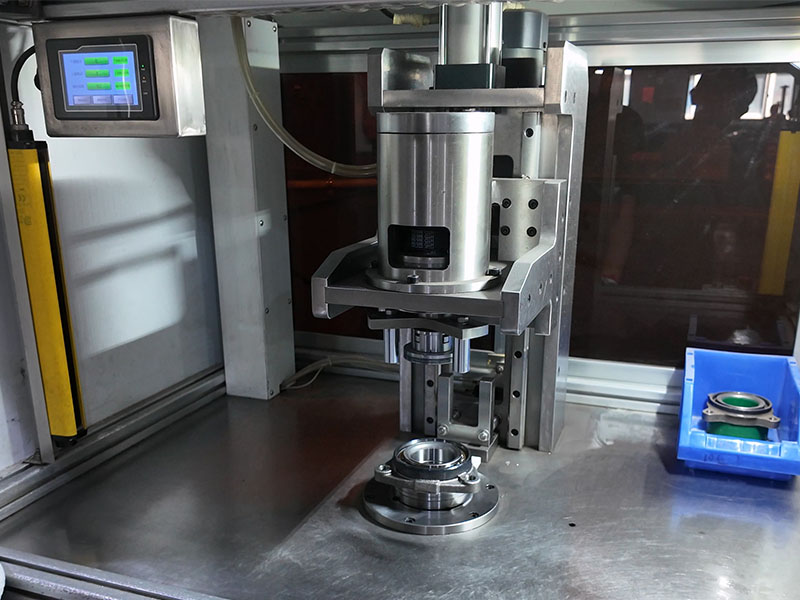
When selecting bearings for rotating machinery, engineers often compare journal bearings and ball bearings—two fundamental types that operate on different principles. Journal bearings rely on a thin fluid film for sliding contact, while ball bearings use rolling elements to separate moving parts. Understanding their differences in load capacity, speed capability, maintenance requirements, space constraints, and cost is essential for making an informed choice. This article provides a direct comparison between journal bearings and ball bearings, followed by practical selection guidance for common industrial applications.
What Are Journal Bearings?
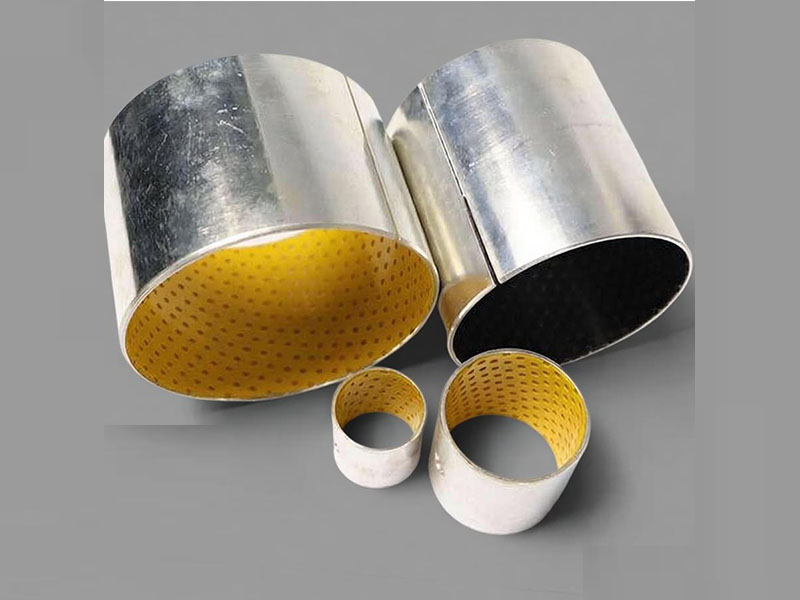
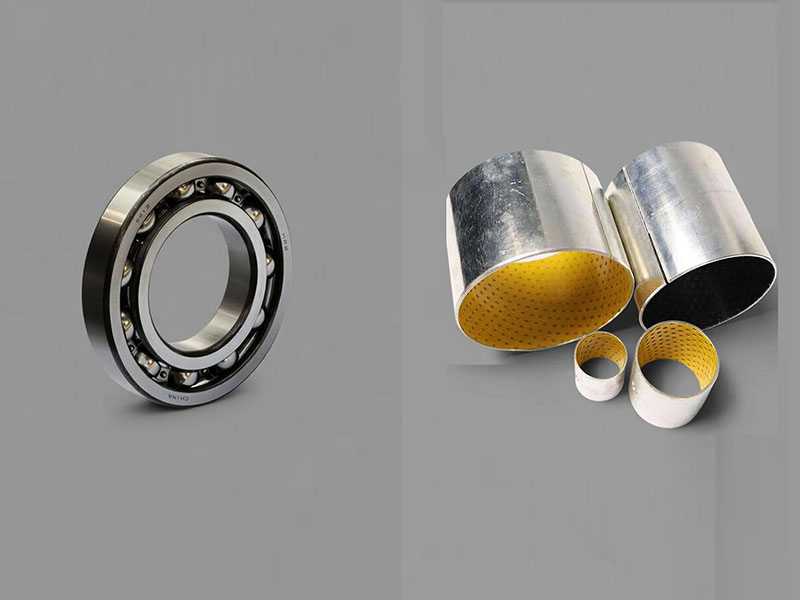
Journal bearings, also known as plain bearings or sleeve bearings, consist of a rotating shaft (the journal) supported within a stationary sleeve or shell. The bearing surface is typically made of a relatively soft material such as babbitt, bronze, or polymer, while the journal is hardened.
Journal bearings operate on hydrodynamic lubrication: as the shaft rotates, it draws lubricant into the wedge-shaped clearance, creating a pressure film that lifts the shaft off the bearing surface. Under steady conditions, there is no direct metal-to-metal contact. A variant called hydrostatic bearing uses an external pump to supply pressurized lubricant before rotation begins, eliminating starting friction and wear.
Advantages of Journal Bearings
- High Load Capacity — The large contact area of the fluid film allows journal bearings to support very heavy radial loads without fatigue failure.
- Tolerance to Shock and Overload — The fluid film dynamically redistributes pressure under varying loads, making journal bearings more resilient to shock loads and temporary overloads compared to ball bearings.
- Reduced Noise — No rolling elements means no rolling contact noise. Journal bearings operate quietly, especially under high loads.
- Long Service Life Under Stable Conditions — When a full hydrodynamic film is maintained with clean lubricant, journal bearings experience no wear and can theoretically run indefinitely without fatigue-related failure.
Common Applications for Journal Bearings
- Turbines — Steam and gas turbines in power plants.
- Compressors — High-speed centrifugal and axial compressors.
- Electric Motors — Large industrial motors, especially at lower speeds.
- Heavy Industrial Equipment — Marine propulsion shafts, paper mills, mining machinery.
What Are Ball Bearings?
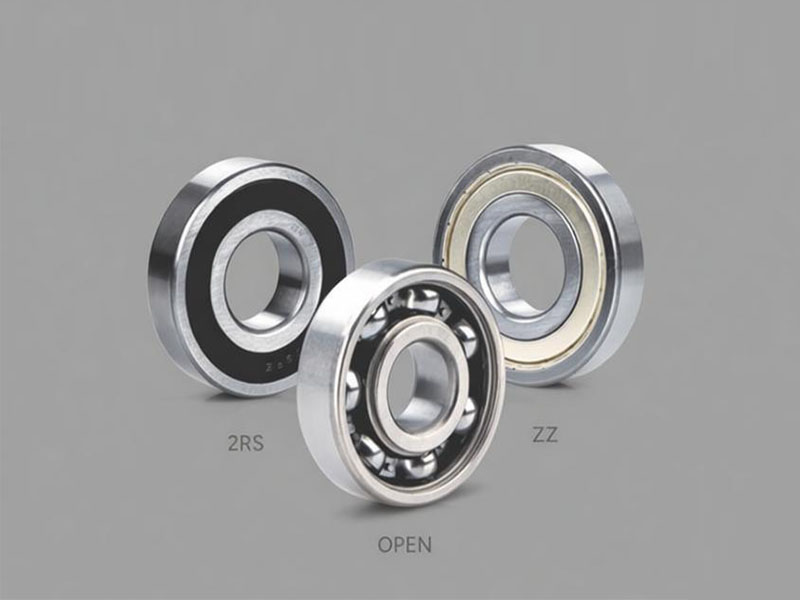
Ball bearings are rolling-element bearings that use spherical balls to separate the inner and outer raceways. The balls create a point contact with the raceways—theoretically a single point—which minimizes rolling friction. A typical ball bearing includes an inner race (mounted on the shaft), an outer race (housed in the equipment), a set of balls, and a cage to maintain ball spacing. Many designs incorporate seals or shields to retain lubricant and exclude contaminants.
Ball bearings can accommodate radial loads, axial loads, or combined loads. Angular contact ball bearings are specifically designed for high-speed operation with both radial and axial forces.
Advantages of Ball Bearings
- Low Friction and High Efficiency — Rolling contact produces significantly lower friction than sliding contact, resulting in lower power loss and higher energy efficiency across most speed ranges.
- High-Speed Capability — Ball bearings generate less heat at elevated rotational speeds, making them suitable for high-speed applications such as machine tool spindles and turbochargers.
- Versatility in Load Types — Unlike journal bearings, which are primarily radial-load devices, ball bearings can handle both radial and axial loads, simplifying bearing arrangements in compact designs.
- Lower Maintenance Requirements — Pre-lubricated, sealed ball bearings require no additional lubrication during their service life, reducing ongoing maintenance costs and downtime compared to journal bearings.
Common Applications for Ball Bearings
- Automotive Industry — Wheel hubs, transmissions, alternators, electric power steering, and EV drive motors.
- Aerospace Industry — Aircraft engines, landing gear, flight control systems, APUs.
- Industrial Machinery — General-purpose motors, conveyors, pumps, fans, material handling equipment.
- Precision Instruments — Hard disk drives, medical devices, robotics, and measuring equipment.
Journal vs Ball Bearing: Key Differences
The table below summarizes the critical differences between journal bearings and ball bearings.
| Feature | Journal Bearing | Ball Bearing |
|---|---|---|
| Load Capacity | Excellent for heavy radial loads. Can handle radial loads exceeding 200 kN on an 80 mm shaft diameter under proper lubrication. | Moderate load capacity. For an 80 mm shaft, typical dynamic load rating (C) may be around 45–60 kN. Point contact limits load. |
| Starting Torque | High at start-up due to absence of fluid film (metal contact until rotation builds pressure). Hydrostatic designs eliminate this. | Low starting torque; rolling elements separate surfaces even at rest. |
| Speed Capability | Suitable for low to medium speeds. Can achieve very high speeds with precision hydrodynamic design. | Excellent for high speeds under moderate loads. Preferred for high-speed electric motors and spindles. |
| Friction & Efficiency | Low once hydrodynamic film is established, but higher at start-up. | Consistently low friction across operating range. |
| Maintenance | Requires regular lubrication replenishment and monitoring. | Sealed ball bearings are often maintenance-free for life. However, ball bearings have finite fatigue life and will eventually require replacement. |
| Space Requirements | Less radial space needed, but requires greater axial length for equivalent load capacity. | Compact axially; requires more radial space due to raceway dimensions. |
| Noise | Quiet operation, no rolling noise. | Can be quiet when new, but may develop noise as wear progresses. |
| Failure Mode | Wear due to insufficient lubrication or contamination; no fatigue limit. | Contact fatigue (spalling) is the primary failure mode. Finite life under cyclic stress. |
| Cost | Lower initial manufacturing cost. Higher long-term cost due to lubrication and maintenance. | Higher initial cost. Lower total cost of ownership in many applications due to reduced maintenance. |
Why Ball Bearings Have a Finite Fatigue Life While Journal Bearings Do Not
The most fundamental difference in longevity between these two bearing types lies in their contact mechanics.
Ball bearings rely on point contact between the rolling elements and raceways. Under load, this point contact generates extremely high Hertzian contact stress—often exceeding 2–3 GPa in normal operation. Each time a ball rolls across a point on the raceway, the material undergoes a cycle of compressive stress. After millions or billions of cycles, subsurface micro-cracks initiate, propagate, and eventually cause spalling (surface pitting). This is a fatigue-limited failure mode. Even with ideal lubrication and perfect alignment, a ball bearing has a finite L10 life (the life at which 10% of a population is expected to fail).
Journal bearings, in contrast, operate on a fluid film. When a full hydrodynamic or hydrostatic film separates the shaft from the bearing surface, the load is transmitted through the lubricant, not through solid-to-solid contact. The stresses within the lubricant are distributed across the entire bearing area, and the shaft and bearing materials experience no cyclic contact stress. Therefore, as long as the fluid film is maintained and contamination is controlled, a journal bearing does not experience fatigue and can theoretically operate indefinitely. The only failure modes for journal bearings are related to lubricant starvation, contamination, or misalignment—not material fatigue.
This distinction explains why ball bearings are always specified with a rated life (e.g., L10 life in hours), while journal bearings are evaluated based on parameters such as minimum oil film thickness and maximum bearing pressure.
How to Choose Between Journal and Ball Bearings
Load and Speed Requirements
Heavy radial loads, low to medium speed → Journal bearings are typically preferred.
High speed, moderate loads → Ball bearings offer lower friction and better efficiency.
Starting Torque and Operating Cycles
If your equipment starts and stops frequently, ball bearings provide consistent low starting torque. Journal bearings require careful lubrication system design to avoid wear during start-up. For continuous operation where start-up is infrequent, journal bearings are acceptable.
Maintenance and Longevity
Sealed ball bearings are ideal for applications where access for maintenance is difficult or downtime is costly. Journal bearings are suitable when regular lubrication checks are already part of the maintenance schedule, and when theoretically unlimited life under stable conditions is desired.
Cost Considerations
Evaluate both initial cost and total cost of ownership: Journal bearings have lower purchase cost but require ongoing lubricant and labor. Ball bearings cost more upfront but may reduce long-term expenses, especially in sealed, maintenance-free configurations.
Environmental Considerations
Contamination — Sealed ball bearings offer good protection against debris. Journal bearings are sensitive to particulate contamination that can damage the shaft and bearing surface.
Temperature — Ball bearing materials (bearing steel) retain hardness up to approximately 150°C; higher temperatures require special materials. Journal bearing performance depends on lubricant viscosity; high-temperature lubricants may be required.
Cleanliness — In clean environments such as precision instruments or food processing, sealed ball bearings are often preferred.
Summary
Journal bearings and ball bearings serve different engineering needs. Journal bearings excel in heavy radial load, low-to-medium speed applications with continuous operation, offering high load capacity, shock tolerance, quiet operation, and theoretically unlimited life under full fluid film conditions. Ball bearings provide low friction, high-speed capability, low starting torque, versatility for combined loads, and minimal maintenance—especially in sealed designs.
The choice depends on your specific load, speed, duty cycle, maintenance access, and environmental conditions. For heavy, steady loads with regular maintenance access, journal bearings are often the better choice. For high-speed, moderate-load applications where maintenance reduction is a priority, ball bearings are generally preferred.
Frequently Asked Questions (FAQs)
Q1: Which bearing type is better — journal or ball?
A1: Neither is universally better. Journal bearings are preferred for heavy radial loads and continuous operation, while ball bearings excel in high-speed, moderate-load applications requiring low maintenance.
Q2: Do journal bearings require more maintenance than ball bearings?
A2: Yes. Journal bearings require regular lubrication replenishment and monitoring. Sealed ball bearings often require no additional lubrication during their service life.
Q3: Can ball bearings handle the same loads as journal bearings?
A3: No. For the same shaft diameter, a journal bearing can typically handle two to four times the radial load of a ball bearing. This is due to the difference between fluid film contact (large area) and point contact (very high contact stress).
Q4: How long do journal bearings last compared to ball bearings?
A4: A journal bearing operating under full hydrodynamic lubrication with clean oil can theoretically last indefinitely without wear. Ball bearings have finite fatigue lives and will eventually fail by spalling; typical L10 life can range from thousands to tens of thousands of hours depending on load and speed.
Q5: Which bearing is quieter?
A5: Journal bearings are generally quieter, especially under heavy loads. As ball bearings wear, rolling contact noise increases.
Q6: What is the main disadvantage of ball bearings?
A6: Their finite fatigue life. Even under perfect conditions, ball bearings will eventually fail due to subsurface contact fatigue. Journal bearings have no such fatigue limit if the fluid film is maintained.
Q7: Can I replace a ball bearing with a journal bearing?
A7: Not directly. The housing design, shaft finish, lubrication system, and space envelope are different. Replacement requires engineering evaluation of load, speed, starting torque, and maintenance access.
Q8: What is starting torque and why does it matter?
A8: Starting torque is the torque required to begin rotating a stationary shaft against bearing resistance. Ball bearings have low starting torque. Journal bearings without hydrostatic lift have high starting torque because the shaft rests on the bearing surface until rotation builds the fluid film.