Quick Answer: A failing throwout bearing typically causes grinding noise or vibration when you press the clutch pedal. You may also experience hard shifting, a stiff pedal, or complete clutch failure. Replacement cost ranges from $330 to $820 for most common passenger vehicles (parts + labor). Luxury models cost more.
How can a driver tell if a strange noise when pressing the clutch pedal points to a failing throwout bearing? And what should one expect to pay for a throwout bearing replacement cost? This article answers these two central questions. It describes the most frequent bad throwout bearing symptoms, explains how to distinguish them from similar transmission issues, and provides realistic repair cost estimates for parts and labor.
What Is a Throwout Bearing and How Does It Fail?
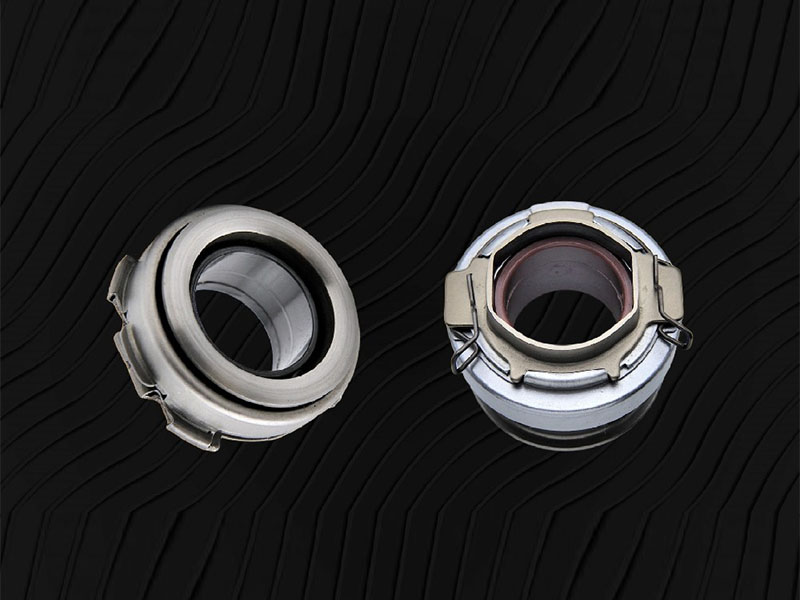
In a manual transmission vehicle, the throwout bearing (also called the clutch release bearing) sits between the clutch fork and the pressure plate. Its only job is to press against the pressure plate’s diaphragm spring when the driver pushes the clutch pedal, thereby disconnecting the engine from the transmission. Once the pedal is released, the bearing moves back and stops rotating.
This on‑off duty cycle means the bearing wears only when the clutch is depressed. Over time, the internal grease degrades, rolling elements (balls or rollers) develop flat spots, and the raceways become pitted. Driving habits directly accelerate this wear. One of the most significant factors is stop‑and‑go traffic. The throwout bearing operates only when the clutch pedal is pressed – each press adds to its cumulative workload. A driver who commutes in heavy city traffic may depress the clutch hundreds of times per day, while a highway driver may depress it only a few times per trip. Consequently, vehicles used primarily in urban environments tend to require clutch release bearing replacement more often than those driven mainly on open roads.
Common Throwout Bearing Symptoms and How to Diagnose Them
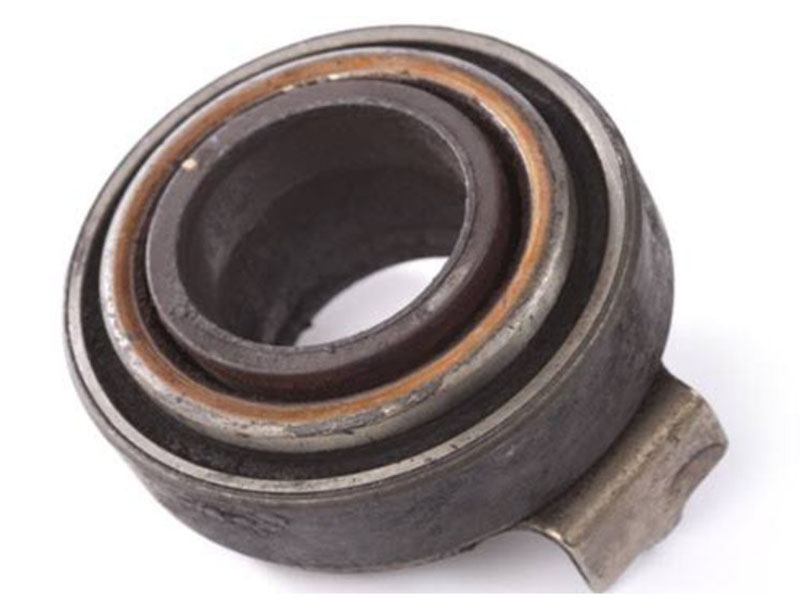
The following six symptoms are the most reliable indicators of a worn or failing throwout bearing. Each entry follows the same pattern: what you notice → why it happens → how to confirm → practical advice.
Symptom 1: Noise Only When the Clutch Pedal Is Pressed
What you notice: A grinding, squealing, chirping, or rattling sound that starts exactly when you push the clutch pedal down and stops immediately when you release it. The noise comes from the bellhousing area.
Why it happens: As the bearing’s internal components wear, the clearances increase, and metal surfaces begin to contact each other. The rotation under load amplifies the vibration into audible noise.
How to confirm: With the engine idling in neutral, press the clutch pedal fully. Listen carefully. Release the pedal. Repeat three times. If the noise is present only during pedal depression, the throwout bearing is the most likely cause.
Practical advice: Do not confuse this with a transmission input shaft bearing failure. If you hear noise while the clutch pedal is up (engine idling in neutral) and the noise disappears when you press the clutch down, the input shaft bearing is the problem – not the throwout bearing.
Symptom 2: Vibration Through the Clutch Pedal
What you notice: Instead of a smooth, linear feel, the clutch pedal transmits a pulsation, trembling, or rough sensation when you press it. The vibration may become stronger as engine speed increases.
Why it happens: The throwout bearing no longer spins concentrically. An unevenly worn bearing or a damaged pressure plate diaphragm spring causes intermittent contact, which the driver feels as vibration.
How to confirm: With the vehicle stationary and the engine running, press the clutch pedal slowly while keeping your foot in constant contact. Compare the sensation to a known healthy vehicle. If the vibration occurs only when the clutch is partially engaged (not fully depressed), the pressure plate or clutch disc may also be involved.
Practical advice: A vibrating clutch pedal rarely fixes itself. Continued driving typically worsens the vibration and can damage the pressure plate fingers or the flywheel surface.
Symptom 3: Difficulty Shifting Gears
What you notice: Gears become hard to engage. The shift lever feels stiff, requires extra force, or seems to meet resistance – especially when trying to select first gear or reverse. In some cases, you need to pump the clutch pedal to get a gear to engage.
Why it happens: The throwout bearing can no longer fully disengage the clutch disc from the flywheel. Even with the pedal fully depressed, residual friction keeps the transmission input shaft spinning, making the synchronizers work against a rotating load.
How to confirm: With the engine running and the vehicle stationary, press the clutch pedal fully, wait two seconds, then attempt to shift into reverse. If reverse grinds or refuses to engage smoothly, suspect incomplete clutch disengagement. Repeat the test with the engine off; if shifting is smooth with the engine off but hard with the engine running, the clutch disengagement is the problem.
Practical advice: Difficulty shifting can also result from low transmission fluid, a worn shift cable, or a failing master/slave cylinder. If hard shifting occurs without any prior noise or vibration, inspect the hydraulic system and fluid level before condemning the throwout bearing.
Symptom 4: Rough or Notchy Shift Feel
What you notice: The gear lever feels gritty, notchy, or as if it is scraping against an uneven surface during each shift. The sensation is different from heavy resistance – it is more about poor feedback than excessive force.
Why it happens: The throwout bearing may be beginning to fail but has not yet caused significant clutch drag. Slight misalignment or uneven rotation transmits small vibrations through the clutch fork and into the shift linkage. Alternatively, the bearing’s guide sleeve may have developed surface grooves, causing irregular movement.
How to confirm: Drive the vehicle through all forward gears at moderate speed. Is the notchy feel consistent across all gears? If yes, the throwout bearing or clutch disengagement is the likely source. If only one gear feels notchy, the problem is more likely inside the transmission (e.g., a worn synchronizer for that gear).
Practical advice: Do not automatically assume rough shifting means a bad throwout bearing. Old or low transmission fluid is a common and less expensive cause. Check the fluid level and condition first. However, when rough shifting is accompanied by any other symptom on this list (noise, vibration, pedal stiffness), the throwout bearing becomes a strong suspect.
Symptom 5: Stiff or Heavy Clutch Pedal
What you notice: The clutch pedal requires noticeably more leg effort to depress than it used to. The pedal may feel as if it is binding or sticking at certain points during its travel. In severe cases, the pedal becomes extremely hard to move or completely unresponsive.
Why it happens: Internal grease within the throwout bearing degrades under high heat from repeated clutch use. As lubrication breaks down, friction increases – both inside the bearing and between the bearing and its guide sleeve. The bearing may also tilt due to uneven wear, creating mechanical binding.
How to confirm: Compare the pedal effort to the same make and model vehicle if possible. A clear increase indicates a problem. If the pedal becomes completely locked (cannot be depressed at all), stop driving immediately – the bearing may have seized.
Practical advice: A stiff pedal should not be ignored. If the pedal becomes unresponsive, do not try to force it. Arrange for a tow. A seized throwout bearing can leave the vehicle stuck in gear, making it impossible to drive and potentially damaging the transmission or engine.
Symptom 6: Complete Clutch Failure
What you notice: The vehicle will not move when a gear is selected and the clutch is released, or the clutch refuses to disengage regardless of how hard the pedal is pressed. In some cases, a loud grinding or banging noise from the bellhousing is followed by a total loss of clutch function.
Why it happens: The throwout bearing has failed catastrophically. It may have disintegrated (internal balls or rollers falling out) or seized solid on the guide sleeve. Without a functioning release bearing, the pressure plate cannot be actuated – the clutch remains either permanently engaged or permanently disengaged, both making the vehicle undrivable.
How to confirm: With the engine running on a level surface, attempt to shift into first gear. If the gears grind loudly and the vehicle does not move when you release the clutch, the clutch is not disengaging. If the vehicle lurches forward or stalls as soon as you select a gear with the clutch pedal down, the throwout bearing may have locked in the engaged position. In either case, do not continue driving – the vehicle requires towing to a repair shop.
Practical advice: Complete clutch failure is almost always preceded by weeks or months of milder symptoms (noise, vibration, hard shifting). Regular attention to early warning signs can prevent this costly and inconvenient failure.
Throwout Bearing Replacement Cost Estimate
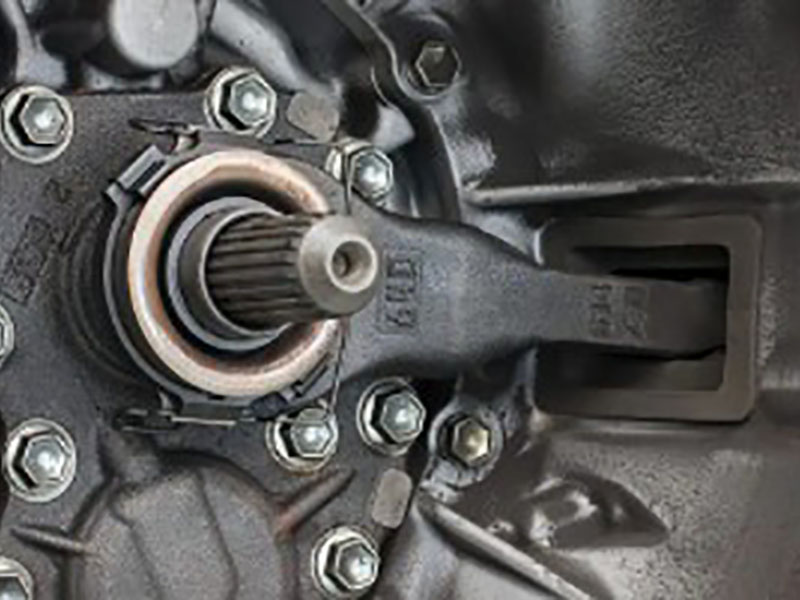
Replacing a throwout bearing requires removing the transmission from the vehicle – a labor‑intensive process. The cost estimates below are based on national averages for common passenger vehicles (e.g., Honda Civic, Toyota Corolla, Ford Focus) as reported by repair survey platforms. Luxury or performance models (BMW, Audi, Porsche) may cost significantly more due to higher parts prices and longer labor times.
| Cost Component | Price Range (USD) |
|---|---|
| Throwout bearing part (alone) | $30 – $100 |
| Labor (professional shop) | $300 – $720 |
| Total replacement cost (parts + labor) | $330 – $820 |
| Full clutch kit replacement (disc, pressure plate, bearing, sometimes flywheel) | $750 – $2,000+ |
Labor hours: Typically 4 to 6 hours, depending on vehicle make, model, and drivetrain layout (front‑wheel drive vehicles often take longer than rear‑wheel drive). Shop labor rates range from $75 to $120 per hour.
Cost‑saving tip for vehicle owners: Removing the transmission is the same labor‑intensive process whether the mechanic replaces just the throwout bearing or the entire clutch assembly. Therefore, when the transmission is already removed for throwout bearing repair, it makes financial sense to replace related components at the same time:
- Adding a new clutch disc, pressure plate, and – if worn or recommended – a flywheel requires almost no additional labor.
- The extra parts cost is modest compared to paying for a second transmission removal if the clutch disc or pressure plate fails a few months later.
Many professional shops advise this approach to avoid repeated labor charges. This is often called the “while you’re in there” rule among mechanics.
Tip for readers: The cost estimates and diagnostic information provided are for general reference. Actual repair costs vary by vehicle model, geographic location, and shop labor rates. Always consult a qualified mechanic for a precise diagnosis and repair estimate.
Preventive Measures to Extend Throwout Bearing Life
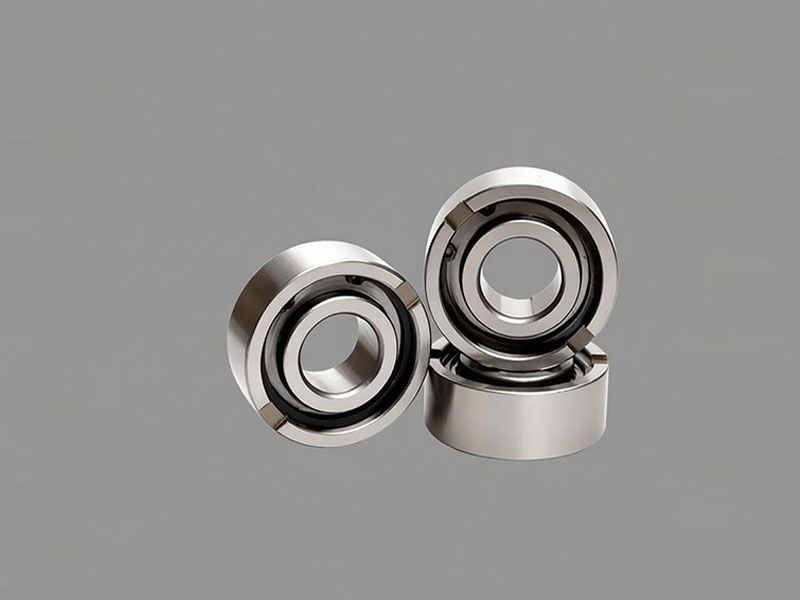
Once a throwout bearing has been replaced, or if the current bearing is still healthy, the following practices can help maximize its service life.
- Avoid resting your foot on the clutch pedal: Even light pressure can keep the throwout bearing in partial contact with the pressure plate, causing continuous rotation and unnecessary wear.
- Shift to neutral at long stops: When waiting at a traffic light, in a drive‑through lane, or at a railroad crossing, shift to neutral and release the clutch pedal. This allows the bearing to stop rotating and cool down.
- Include clutch inspection in routine maintenance: A mechanic can listen for early noise and check for excess play in the clutch fork. Early detection of a slightly worn bearing is far less expensive than a full clutch replacement.
- Maintain proper transmission fluid: While the throwout bearing itself is not lubricated by transmission fluid, low fluid affects the input shaft bearing and the guide sleeve surface. Follow the manufacturer’s fluid change intervals.
Conclusion
Recognizing the six common throwout bearing symptoms – noise on pedal depression, pedal vibration, difficulty shifting, rough shifts, a stiff pedal, and complete clutch failure – allows drivers to schedule repairs before a breakdown occurs. Delaying throwout bearing repair not only risks being stranded but can also damage the pressure plate, flywheel, or transmission case. When transmission removal is necessary, replacing additional clutch components at the same time can save labor costs in the long run. Prevention through proper driving habits remains the simplest and most cost‑effective strategy.
Frequently Asked Questions (FAQs)
Q1: Why does a faulty throwout bearing only make noise when the clutch is pressed?
Because the bearing only contacts the pressure plate and rotates under load when the pedal is depressed. When the pedal is released, the bearing retracts and remains stationary – hence no noise.
Q2: How do I tell the difference between a throwout bearing failure and a pilot bearing failure?
The throwout bearing is located at the front of the transmission and presses against the pressure plate. The pilot bearing is pressed into the end of the crankshaft and supports the input shaft. Pilot bearing noise often changes with engine speed and may occur with the clutch engaged or disengaged. When replacing a clutch, inspect both.
Q3: How can I distinguish a throwout bearing noise from a transmission input shaft bearing noise?
Throwout bearing: noise when clutch pedal is pressed → quiet when pedal released. Input shaft bearing: noise when clutch pedal is released (input shaft spinning) → quiet when pedal pressed (input shaft stops rotating).
Q4: Can a throwout bearing fail without making any noise?
Yes, though less common. A bearing may gradually seize or develop excessive play without audible warning. In such cases, the driver typically experiences a stiff pedal, difficulty shifting, or vibration without grinding or squealing. Do not assume a silent clutch means a healthy throwout bearing.
Q5: Why is the repair cost for a throwout bearing so much higher than the part price?
The bearing itself costs only $30–100, but replacing it requires removing the transmission – a 4‑ to 6‑hour job. Labor constitutes 70–90% of the total bill.
Q6: Why do vehicles driven in heavy traffic have shorter throwout bearing life?
The bearing operates only when the clutch is depressed. Stop‑and‑go traffic involves hundreds of depressions per day, while highway driving involves very few. More depressions = faster wear.
Q7: Is it safe to continue driving if the clutch still works but the bearing is noisy?
No. Continued driving risks sudden bearing seizure or fragmentation. A seized bearing can damage the pressure plate, flywheel, or transmission housing. If the bearing locks up completely, the clutch may become impossible to disengage – leaving the vehicle stuck in gear.
Q8: Does a bad throwout bearing always produce noise when the clutch is depressed?
Not always. Grease degradation or uneven race wear may present primarily as a stiff pedal, hard shifting, or vibration without clear noise.