When designing or maintaining rotating machinery, one question inevitably arises: what type of bearing can best support the loads my equipment will encounter? For applications involving forces acting perpendicular to the shaft axis, the answer is radial bearings. This overview provides a comprehensive technical guide to radial bearings, covering their types, structural components, industrial applications, key advantages, maintenance practices, and common failure modes.
What Are Radial Bearings?
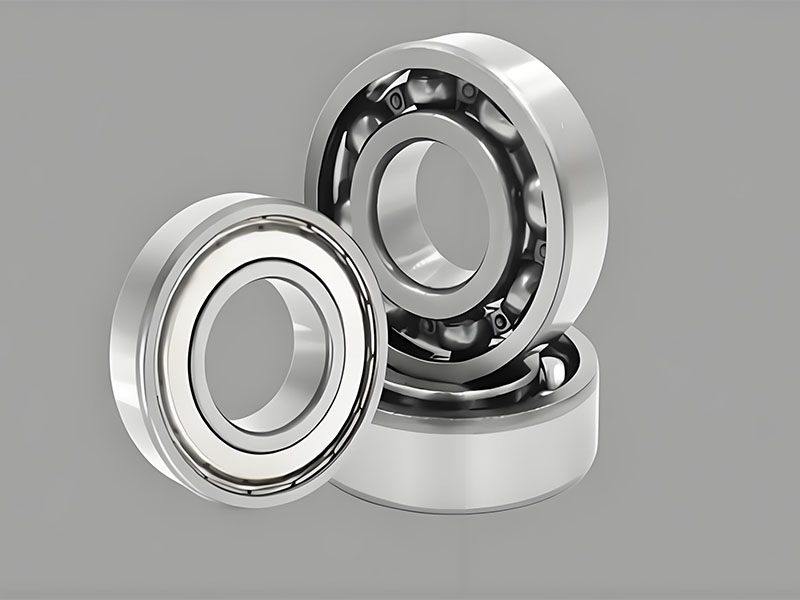
Radial bearings are precision-engineered mechanical components designed primarily to support radial loads—forces that act perpendicular to the axis of a rotating shaft. In electric motors, pumps, conveyors, and countless other machines, radial bearings enable smooth rotation while minimizing friction between moving parts.
A radial load is distinct from an axial (or thrust) load. Whereas axial loads act parallel to the shaft axis, radial loads exert pressure perpendicular to the bearing bore and outer diameter. Many radial bearings can accommodate some degree of axial load as well, but their primary function remains radial load support.
Types of Radial Bearings
Radial bearings are generally categorized by their rolling element geometry into two main families: ball bearings and roller bearings.
Ball Bearings
Ball bearings use spherical rolling elements that create point contact with the raceways, enabling low-friction operation at high rotational speeds.
- Deep Groove Ball Bearings are the most common type of radial bearing. Their raceways are closely conformed to the ball geometry, allowing them to accommodate moderate radial loads and light-to-moderate axial loads in both directions. They are widely used in electric motors, pumps, fans, and household appliances.
- Angular Contact Ball Bearings feature a defined contact angle (typically 15°, 25°, or 40°) between the ball and raceway. This design enables them to support combined radial and axial loads, though the axial capacity is directional—one bearing supports thrust in one direction only, so they are usually used in pairs for bidirectional support.
- Self-Aligning Ball Bearings accommodate angular misalignment between the shaft and housing. Their unique design allows them to correct alignment errors without excessive friction or wear, making them suitable for applications where shaft deflection or housing deformation may occur.
Roller Bearings
Roller bearings use cylindrical, tapered, or needle-shaped rolling elements, creating line contact with the raceways. This line contact distributes load over a larger area, providing significantly higher radial load capacity than ball bearings, though with slightly higher friction.
- Cylindrical Roller Bearings are optimized for heavy radial loads. Their design allows for high radial stiffness and moderate to high speed capability, though axial load capacity is minimal or design-dependent. Common applications include rolling mills, large electric motors, and railway axles.
- Tapered Roller Bearings use conical rollers and raceways to support combined radial and thrust loads. The ratio of radial to axial load capacity depends on the contact angle between the roller and bearing axis.
- Needle Roller Bearings feature long, slender rollers that provide high load capacity in compact radial cross-sections. They are ideal for applications with space constraints where radial height is at a premium.
- Spherical Roller Bearings incorporate barrel-shaped rollers and a spherical outer ring raceway, enabling self-alignment under misaligned conditions while supporting high radial loads and moderate axial loads.
Key Components of Radial Bearings
- Outer Ring – The outer ring forms the external raceway of the bearing, providing a stable housing interface. It is typically mounted in the machine housing or frame.
- Inner Ring – Positioned concentrically within the outer ring, the inner ring houses the rolling elements and is generally mounted onto the rotating shaft.
- Rolling Elements – Steel balls or cylindrical rollers are the rolling elements that transfer load and enable rotation. The choice between balls and rollers depends on load requirements: balls for lower loads and higher speeds, rollers for heavier radial loads.
- Cage – The cage (also called a retainer) maintains uniform spacing between rolling elements, preventing metal-to-metal contact and ensuring consistent motion. Cage materials include machined brass (high impact resistance), pressed steel (high-temperature capability), and polyamide (low noise, lightweight).
Applications of Radial Bearings
- Electric Motors – Radial bearings support the rotor shaft, reduce friction during rotation, and minimize energy loss, making them critical for motor efficiency and service life.
- Automotive Industry – Used in wheel hubs, transmissions, and engines. In wheel hub applications, they support vehicle weight as radial load while handling cornering forces as axial load.
- Industrial Machinery – Pumps, compressors, fans, conveyors, and machine tools rely on radial bearings for reliable, low-friction operation under continuous duty cycles.
- Household Appliances – Washing machines, refrigerators, blenders, and vacuum cleaners incorporate radial bearings for quiet, efficient operation. Low-noise characteristics are particularly valued in consumer appliances.
- Aerospace and HVAC Systems – Aircraft engines, landing gear assemblies, and control systems utilize radial bearings for high-speed precision and durability. HVAC systems rely on them in fans, blowers, and pumps to ensure efficient airflow and temperature regulation.
Advantages of Radial Bearings
- Low Friction – Rolling contact replaces sliding contact, significantly reducing rotational resistance. This conserves energy, minimizes heat generation, and reduces wear on mating components.
- High Reliability – When properly selected and maintained, radial bearings offer extended service life and consistent performance under varying operating conditions.
- Ease of Installation – Standardized dimensions and clearances allow for straightforward mounting and replacement, reducing downtime during maintenance.
- Cost-Effective – Radial bearings provide excellent load-carrying performance at a reasonable cost. Their long service life and low maintenance requirements contribute to a lower total cost of ownership.
Maintenance Practices for Radial Bearings
Proper maintenance is essential for maximizing radial bearing service life and preventing unexpected equipment failures.
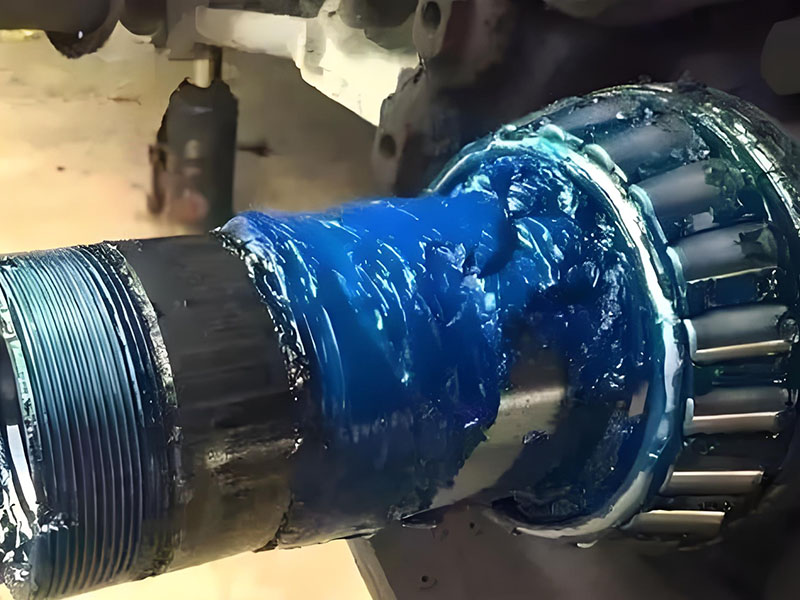
- Lubrication – Lubrication reduces friction, dissipates heat, and prevents metal-to-metal contact. For normal operating conditions, grease lubrication is typically sufficient, with typical regreasing intervals ranging from three to six months under normal operating conditions. For high-speed operation where grease speed limits are exceeded, oil lubrication is required.
- Alignment and Sealing – Proper alignment prevents uneven load distribution and premature wear. Misalignment during assembly is a common cause of noise, increased torque, and reduced bearing life. Seals and shields should be regularly inspected to prevent ingress of contaminants such as dust, dirt, and moisture.
- Inspection and Condition Monitoring – Routine inspections should include visual checks for damage or wear, vibration analysis, and temperature monitoring. Unusual noise or temperature increases can indicate impending failure. Keeping detailed records of inspection results, lubrication schedules, and replacement history supports predictive maintenance strategies.
Common Failure Modes and Prevention
Understanding how radial bearings fail helps engineers implement effective preventive measures. Below are the most common failure modes, their typical causes, and recommended prevention strategies.
- Fatigue / Spalling – Surface material flakes off due to cyclic stress. Causes: excessive load, inadequate lubrication, or improper mounting. Prevention: use correct bearing size, maintain proper lubrication, and follow mounting procedures.
- Wear – Gradual material loss from rolling elements or raceways. Causes: abrasive contaminants (dust, sand) or poor lubricant film. Prevention: use effective seals, keep working environment clean, and replace lubricant at scheduled intervals.
- Corrosion – Rust or chemical attack on bearing surfaces. Causes: moisture ingress, aggressive coolants, or improper storage. Prevention: use sealed bearings in wet environments, apply corrosion-inhibiting grease, and store bearings in dry conditions.
- Electrical Erosion – Fluting or pitting caused by electrical current passing through the bearing. Causes: stray currents from variable frequency drives (VFDs) or poor grounding. Prevention: install shaft grounding rings or use insulated bearings in VFD-driven motors.
- Contamination – Particles entering the bearing cause indentation and wear. Causes: dirty assembly environment, failed seals, or contaminated lubricant. Prevention: maintain cleanliness during installation, inspect seals regularly, and use filtered lubricant.
- Overheating – Bearing temperature exceeds design limits. Causes: over-lubrication, incorrect lubricant viscosity, or excessive preload. Prevention: follow lubricant quantity guidelines, select correct lubricant grade, and adjust bearing internal clearance as needed.
Conclusion
Radial bearings are fundamental components in virtually every rotating machine, from electric motors and automotive systems to industrial equipment and household appliances. Their ability to support radial loads with low friction, high reliability, and cost-effective operation makes them indispensable in modern engineering. Understanding the distinctions between ball bearings and roller bearings—and selecting the appropriate type for specific load and speed requirements—ensures optimal machinery performance. Regular maintenance, including proper lubrication, alignment, and condition monitoring, combined with awareness of common failure modes, is essential for maximizing bearing service life and preventing costly unplanned downtime.
Frequently Asked Questions (FAQs)
Q1: What is the difference between radial and thrust bearings?
A1: Radial bearings are designed primarily to support radial loads (forces perpendicular to the shaft axis). Thrust bearings, by contrast, support axial loads (forces parallel to the shaft axis). Bearings with a contact angle of 45° or less are classified as radial bearings, while those with a larger contact angle are thrust bearings.
Q2: What types of radial bearings are best for high-speed applications?
A2: Deep groove ball bearings offer the highest speed capability among radial bearing types due to their point contact design and low friction characteristics. Cylindrical roller bearings also provide moderate to high speed capability with higher radial load capacity.
Q3: Can radial bearings handle axial loads?
A3: Yes, many radial bearings can accommodate some axial load. Deep groove ball bearings support moderate axial loads in both directions. Angular contact ball bearings handle higher axial loads but only in one direction per bearing. Cylindrical roller bearings, however, have minimal or no axial load capacity.
Q4: How do I know when a radial bearing needs replacement?
A4: Signs of bearing failure include abnormal noise (grinding or squealing), excessive vibration, increased operating temperature, and reduced rotational smoothness. Regular vibration analysis and temperature monitoring help detect these warning signs before catastrophic failure occurs.
Q5: What causes radial bearing failure?
A5: Common causes include inadequate or contaminated lubrication, improper installation or misalignment, excessive load or speed, ingress of contaminants (dust, moisture, debris), and material fatigue leading to spalling of raceways or rolling elements. For a detailed breakdown, refer to the “Common Failure Modes and Prevention” section above.