Quick Answer
A wheel hub assembly connects each wheel to your vehicle’s chassis. Its seven key components work together as a single unit:
- Wheel hub – structural backbone of the assembly
- Wheel studs – secure the wheel and brake rotor
- Wheel bearings – enable smooth, low-friction rotation
- Oil seals – keep contaminants out and grease in
- Dust caps – protect the outboard opening
- ABS wheel speed sensors – monitor wheel speed for braking systems
- Mounting flange and hardware – attach the assembly to the vehicle
Most modern assemblies are unitized – pre-greased, pre-sealed, and non-serviceable. Average service life is 85,000 to 100,000 miles under normal driving conditions.
Your wheels don’t just bolt onto your car and spin freely. Between your vehicle’s chassis and each wheel sits a precisely engineered component called the wheel hub assembly. This assembly bears your vehicle’s weight, enables smooth wheel rotation, and communicates with your braking system.
This guide covers every key component of a wheel hub assembly: what each part is, what it does, and how it fits into the complete unit.
The Wheel Hub
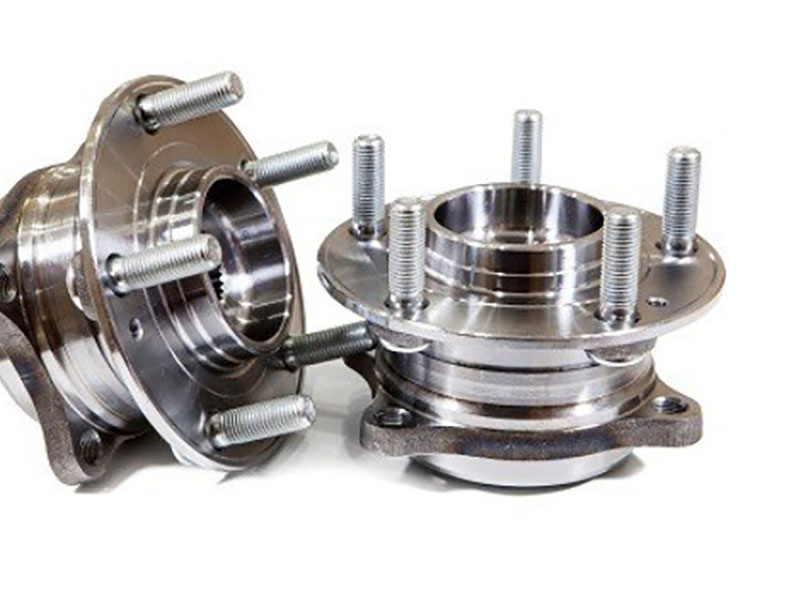
The wheel hub is the structural backbone of the entire assembly. It is a disc-shaped metal component, typically forged or cast from high-strength steel or ductile iron, with a raised center section.
The hub serves as the central mounting point for the wheel and houses the bearing assembly within its center bore. Key features include:
- Integrated wheel studs – The studs are pressed or cast directly into the hub flange.
- Brake rotor mounting surface – The rotor sits on the hub’s outboard face.
- Vehicle attachment point – The hub’s inboard side bolts to the steering knuckle (front) or axle flange (rear).
In older vehicle designs, the hub and bearing were separate components that could be serviced individually. Today, most passenger vehicles use a unitized design where the hub and bearing are manufactured as a single pre-assembled unit. If the bearing fails, you replace the entire hub assembly rather than pressing in a new bearing.
Wheel Studs
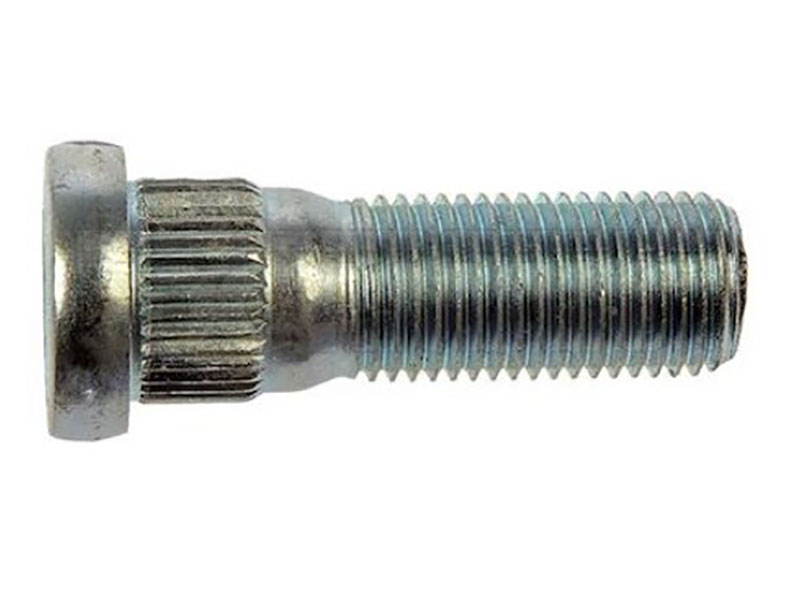
Wheel studs are the threaded bolts permanently integrated into the wheel hub. They are typically made of hardened steel and are pressed or cast into the hub flange.
What they do:
- The brake rotor slides over the studs first, followed by the wheel itself.
- Lug nuts thread onto the studs to clamp the wheel and rotor securely to the hub.
- Most passenger vehicle hub assemblies include four or five studs; heavy-duty applications may have more.
Important distinction: While most hub assemblies do include wheel studs, not all do. If you are purchasing a replacement assembly, confirm whether studs are included. Manufacturers recommend never reusing old studs with a new hub assembly – the threads may be stretched or damaged, compromising wheel retention.
Wheel Bearings
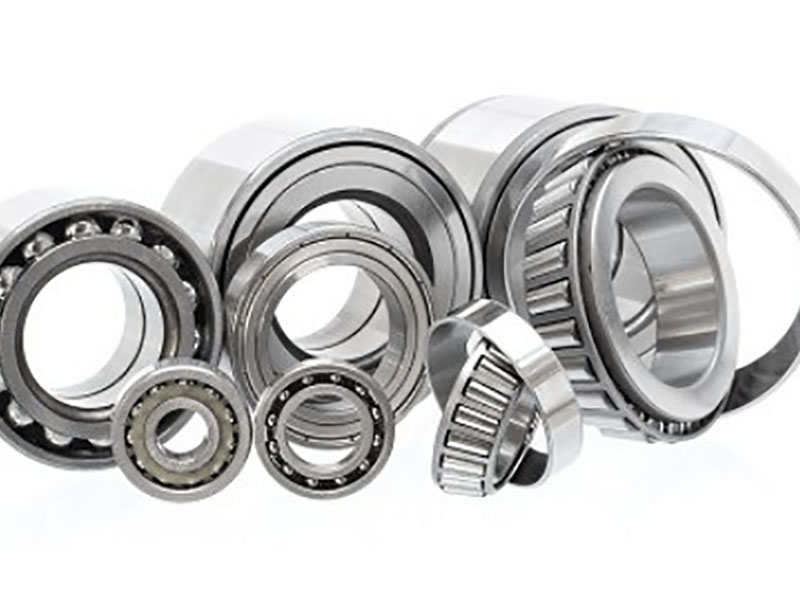
The wheel bearing is the component that enables the wheel to rotate smoothly with minimal friction. It is arguably the most critical component in the entire assembly.
Structure: A wheel bearing consists of rolling elements (steel balls or tapered rollers), inner and outer races (hardened steel rings), a cage or retainer (keeps rolling elements evenly spaced), grease (factory-packed lubricant), and integrated seals (keep lubricant in and contaminants out).
Position in the assembly: The bearing assembly fits snugly inside the hub’s center bore and mounts onto the vehicle’s axle stub shaft (front) or spindle (rear). The hub rotates around the bearing’s stationary inner race, enabling the wheel to spin while the vehicle remains supported.
Load carrying capacity: Wheel bearings carry significant loads – both the static weight of the vehicle and dynamic forces generated by cornering, braking, and acceleration. These dynamic loads can multiply well beyond the vehicle’s static weight, which is why bearing material quality and engineering precision are critical to durability.
Unitized design: Modern hub assemblies use unitized bearings – they are pre-set, pre-greased, and sealed at the factory. They cannot be repacked, adjusted, or individually serviced. When a bearing fails, the entire hub assembly must be replaced.
Oil Seals
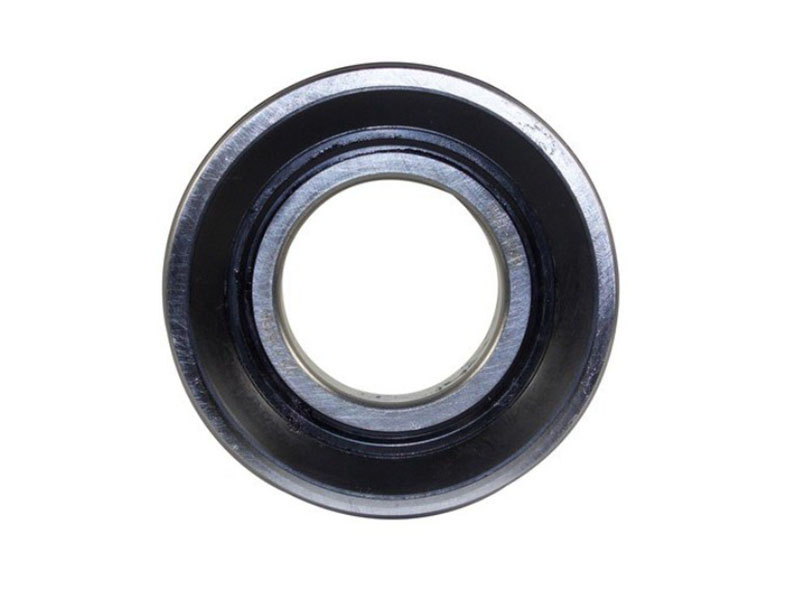
Oil seals (also called grease seals) are rubber or synthetic elastomer components positioned at the inboard and outboard sides of the bearing cavity.
They serve two critical functions:
- Contaminant exclusion – They prevent water, dirt, mud, and road debris from entering the bearing cavity.
- Lubricant retention – They keep the factory-packed grease inside the bearing assembly, ensuring proper lubrication throughout the bearing’s service life.
Without effective seals, the bearing grease quickly degrades from contamination, and the highly polished bearing surfaces suffer accelerated wear. In regions that use road salt during winter, seal failure is especially problematic – salt water is corrosive and rapidly damages bearing steel.
Because modern hub assemblies are unitized and sealed at the factory, you cannot replace the seals individually. If a seal fails and contamination occurs, the entire hub assembly must be replaced.
Dust Caps
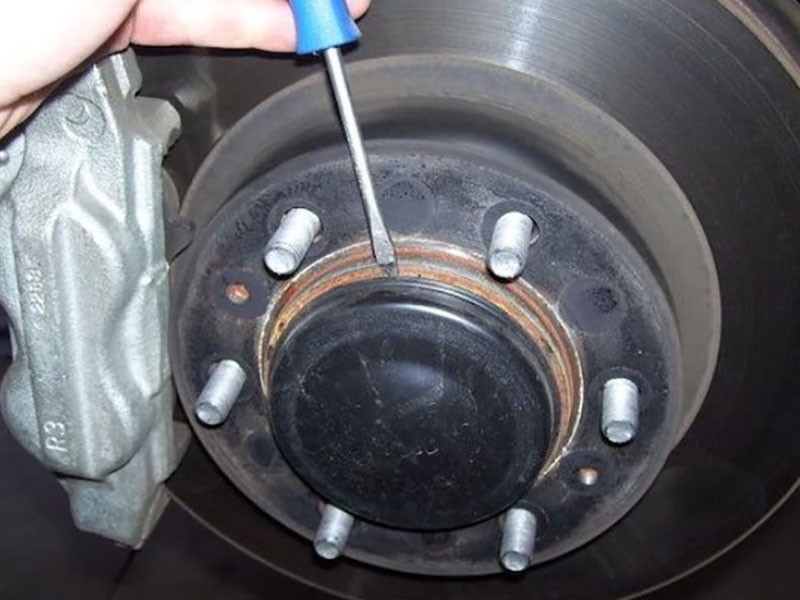
The wheel hub assembly has an opening on its outboard side – the side facing away from the vehicle. This opening provides access to the axle retaining nut during installation and service.
The dust cap (also called a grease cap or hub cap) is a simple metal or plastic cover that fits over this opening.
What it protects against:
- Dirt, water, and debris entering the assembly through the outboard opening
- Grease leaking out of the bearing cavity
- Corrosion of the axle nut and spindle threads
Despite its simplicity, the dust cap is essential for maintaining the bearing’s sealed environment. A missing, loose, or damaged dust cap leaves the bearing exposed to the elements and significantly accelerates failure.
ABS Wheel Speed Sensor
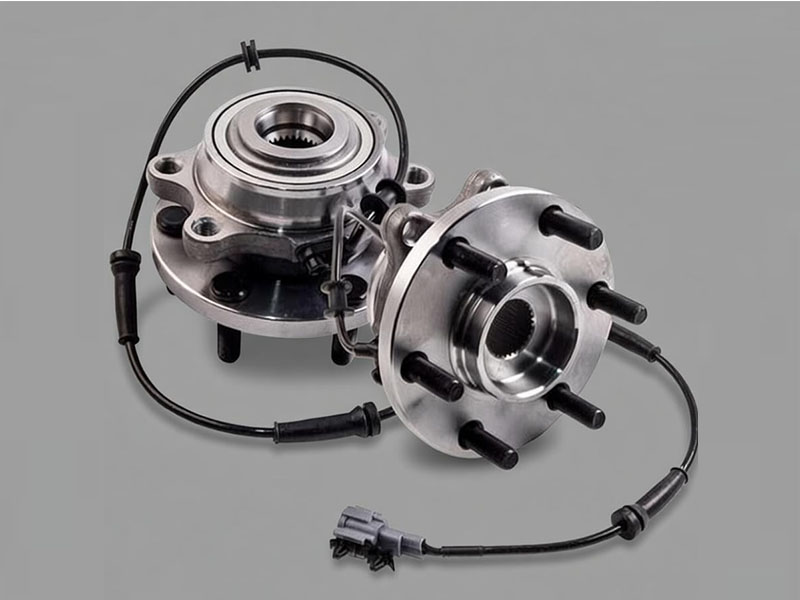
Modern wheel hub assemblies almost always integrate an ABS (Anti-lock Braking System) wheel speed sensor.
What the sensor does: The sensor continuously monitors the rotational speed of each individual wheel. It transmits this data to the vehicle’s ABS control module. The system uses this information for anti-lock braking (detects if a wheel is about to lock up and modulates brake pressure), traction control (TCS) (detects wheel slip during acceleration), and electronic stability control (ESC) (detects and corrects loss of steering control).
Integrated design: In many modern vehicles, the ABS wheel speed sensor is integrated directly into the hub assembly. The sensor’s tone ring (a toothed or magnetic ring) is permanently attached to the bearing’s rotating component. The sensor itself is a sealed unit that plugs into the vehicle’s wiring harness.
If the sensor or tone ring fails, the ABS warning light illuminates on the dashboard. In integrated designs, you cannot replace the sensor separately – you replace the entire hub assembly.
Mounting Flange and Hardware
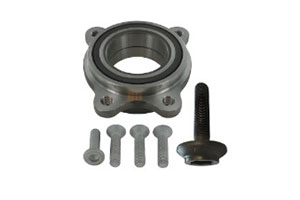
The mounting flange is the structural surface that bolts the hub assembly to the vehicle’s steering knuckle (front axle) or axle flange (rear axle). It provides a precisely machined, stable mounting surface that positions the wheel and brake components correctly.
The flange includes mounting bolt holes (typically three or four), a pilot diameter (machined centering surface), and attachment hardware (bolts that secure the assembly to the vehicle).
Because modern hub assemblies are pre-assembled and pre-adjusted at the factory, installation requires only bolting the unit in place and torquing the fasteners to specification. Manufacturers recommend using a calibrated torque wrench – not an impact wrench – to avoid damaging threads or over-stressing components. Timken and other major bearing manufacturers explicitly warn against using impact wrenches during installation.
Conclusion
A wheel hub assembly is a precision-engineered system of seven interdependent components:
| Component | Core Function |
|---|---|
| Wheel hub | Structural backbone; houses the bearing |
| Wheel studs | Secure the wheel and brake rotor |
| Wheel bearings | Enable smooth, low-friction rotation |
| Oil seals | Keep contaminants out; keep grease in |
| Dust cap | Protects the outboard axle nut opening |
| ABS sensor | Monitors wheel speed for brake and stability systems |
| Mounting flange | Attaches the assembly to the vehicle |
Modern unitized hub assemblies are factory-sealed, pre-greased, and designed to last 85,000 to 100,000 miles under normal conditions. They require no maintenance – no repacking, no adjustment, no additional lubrication. However, they are also non-serviceable: when any component fails, you replace the entire assembly.
Understanding each component helps you make informed replacement decisions.
FAQs
Q1: What’s the difference between a wheel hub assembly and a wheel bearing?
A: A wheel bearing is the rotating component that enables smooth wheel motion. A wheel hub assembly is a complete, pre-assembled unit that includes the bearing, hub, flange, seals, dust cap, and often the ABS sensor. In modern vehicles, the hub assembly replaces the older concept of a separate, serviceable bearing.
Q2: Do I need to add grease to a wheel hub assembly?
A: No. Unitized hub assemblies come pre-greased and sealed from the factory. They require no maintenance, repacking, or additional lubrication throughout their service life.
Q3: How long does a wheel hub assembly last?
A: The average sealed wheel hub assembly lasts 85,000 to 100,000 miles under normal driving conditions. Some can last the lifetime of the vehicle, but factors like pothole impacts, seal failure, and installation errors can cause premature failure. Common failure modes include brinelling (impact damage that dents bearing races), contamination (water or debris degrading the grease), spalling (metal fatigue causing material to flake off races), and damage from improper installation.
Q4: Do all hub assemblies come with wheel studs?
A: Most do, but not all. Always verify before purchasing. And if you are replacing a hub assembly, never reuse old studs – use the new studs supplied with the assembly.
Q5: Can I use an impact wrench to install a hub assembly?
A: No. Use a calibrated torque wrench following the vehicle manufacturer’s torque specifications. Impact wrenches can damage threads, distort bearings, and leave fasteners either under-torqued or over-torqued.
Q6: Are all aftermarket hub assemblies the same quality?
A: No. Premium brands meet or exceed OE specifications. Some suppliers meet only basic dimensional requirements but may use inferior materials or manufacturing tolerances. Choose reputable manufacturers who engineer to OE or higher standards.
Q7: Does the ABS sensor come with a replacement hub assembly?
A: In many cases, yes – but not always. When the sensor is integrated into the unit, it comes as part of the assembly. When the sensor is externally mounted, it may not. If the integrated sensor fails, replacement costs typically range from $250 to $600+ per wheel, as the entire hub assembly must be replaced.
Q8: How do I know if a wheel hub assembly is failing?
A: Common symptoms include a humming, rumbling, or growling noise that increases with vehicle speed; steering wheel vibration, especially at highway speeds; the vehicle pulling to one side during braking; and the ABS warning light illuminating on the dashboard. For a physical check, lift the vehicle, grab the wheel at the 12 and 6 o’clock positions, and rock it gently. Any noticeable play indicates bearing wear. For precise diagnosis, measure hub face runout with a dial indicator – if runout exceeds 0.004 inches (0.1 mm), the hub assembly or bearing is likely worn and requires replacement. This 0.004-inch (0.1 mm) limit is a common diagnostic reference found in many vehicle service manuals.