Quick Answer: McGill bearings trace their history to Valparaiso, Indiana, where the Crescent Company relocated in 1905 and became McGill Manufacturing Company in 1910. McGill Metal Company entered the bearing supply chain in the early 1920s, and McGill formed its Bearing Division in 1925. The first bearings carried the Shubert trademark before the McGill name took over in late 1926. MULTI-ROL followed in 1930, CAMROL in 1937, Emerson ownership in 1990, and Regal Rexnord in 2021.
The McGill name appears on cam followers, needle roller bearings, and heavy-duty bearing assemblies that have served machinery for decades, yet the history of McGill bearings did not begin with a bearing maker. The sequence that matters for identification runs from a Chicago electrical-goods workshop to a Valparaiso plant, a bearing division created in the 1920s, and a set of dated product families whose launch years and patents still help place older parts in time.
Early Origins: Crescent Company and McGill Manufacturing (1905-1919)
James H. McGill founded the Crescent Company in Chicago, Illinois, before the business moved to Valparaiso, Indiana, in 1905. McGill traces its manufacturing history to that relocation year, which is the date used in the company’s own centennial record.
Early Crescent output was electrical rather than mechanical: lighting guards, spools, lamp-socket handles, and a coloring liquid for incandescent lamps. No bearings were produced at this stage, which is why the McGill name reaches bearing catalogs later than the company’s founding story suggests.
The Crescent Company was renamed McGill Manufacturing Company on December 1, 1910. Nine years later, in 1919, McGill established the McGill Metal Company with a new plant on North Lafayette Street in Valparaiso, and metalworking replaced electrical goods as the productive center of the business.
How McGill Entered the Bearing Business (Early 1920s-1926)
McGill Metal Company made aluminum-bronze precision ball retainers and supplied them to the Strom Bearing Company in Chicago, where they went into high-precision bearings. The company was therefore a bearing supplier before it was a bearing maker.
After Strom’s bearing business was sold, several former Strom employees moved to Valparaiso and encouraged McGill to use its aluminum-bronze retainers to build complete bearings. Bearing production was planned around 1924, and the McGill Bearing Division is dated to 1925.
The earliest McGill bearings carried the Shubert trademark. By late 1926 the products were marked McGill, so a single bearing family can legitimately show either name depending on its production window.
A local Porter County historical record dates the ball-bearing plant groundbreaking to February 8, 1926, with a first shipment of ball bearings to Rolls-Royce on May 15, 1926. That shipment is a useful anchor because it shows full bearing output running within a year of the division’s formal start.
In 1930 McGill Manufacturing Company absorbed McGill Metal Company, which had produced precision ball and roller bearings along with aluminum-bronze die castings. The two corporate names in older documents therefore describe one manufacturing operation, not competing companies.
Product Innovations That Built McGill’s Bearing Reputation
From 1930 onward the bearing history is easiest to read through product families: needle roller bearings, cam follower bearings, heavy-duty needle bearings, sealing systems, and later CAMROL variants. Introduction dates below come from the company’s product timeline, and patent dates are kept separate from launch dates because the two rarely coincide.
MULTI-ROL Needle Roller Bearings (1930)
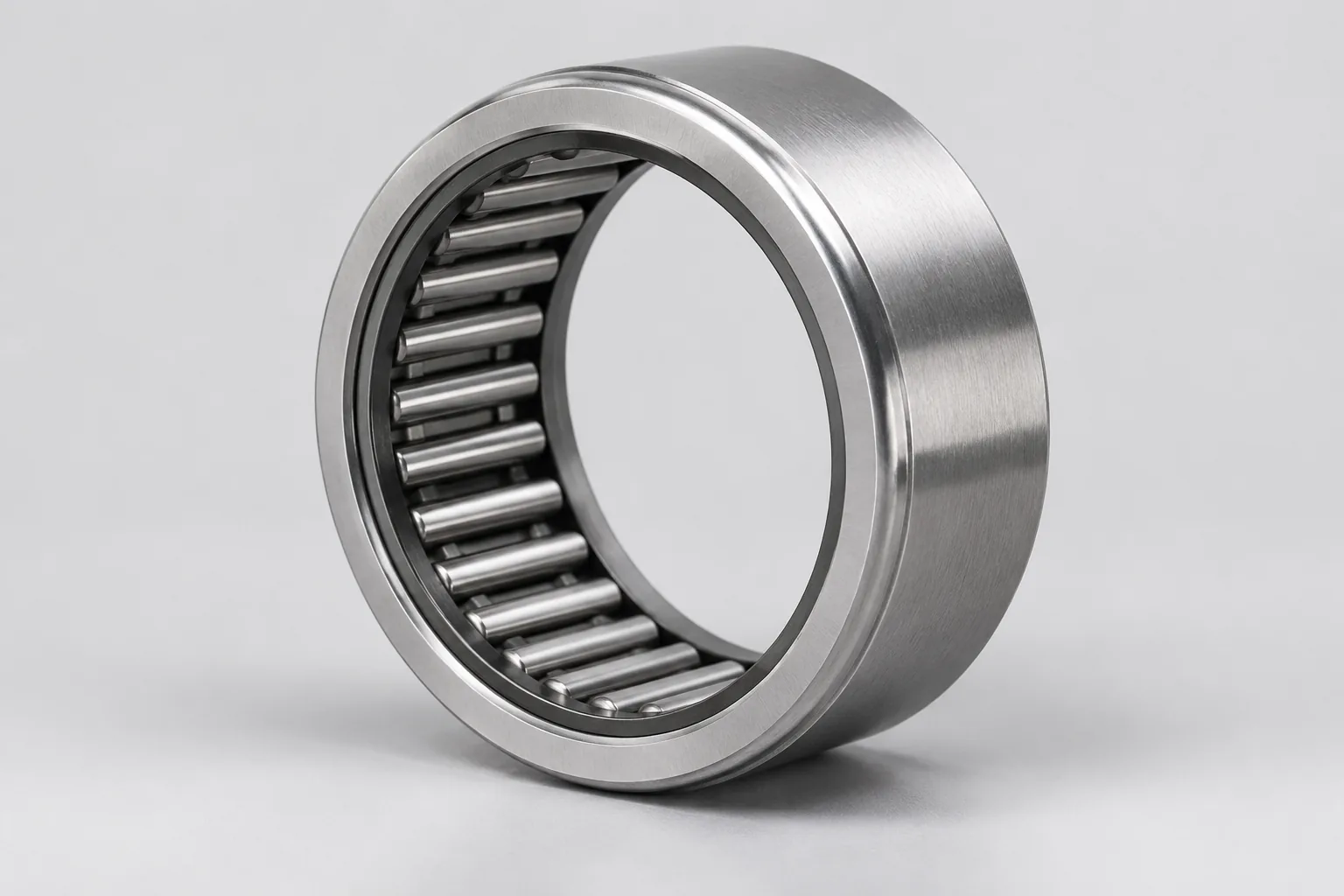
MULTI-ROL is listed as a 1930 innovation. Historical descriptions identify it as an early self-contained, full-complement needle roller bearing.
CAMROL Cam Follower Bearings (1937)
The first CAMROL cam follower bearing is listed as a 1937 product. The series was designed for cam follower and track roller applications, and early CAMROL designs used full-complement needle rollers to raise radial load capacity and absorb impact loads in cam mechanisms.
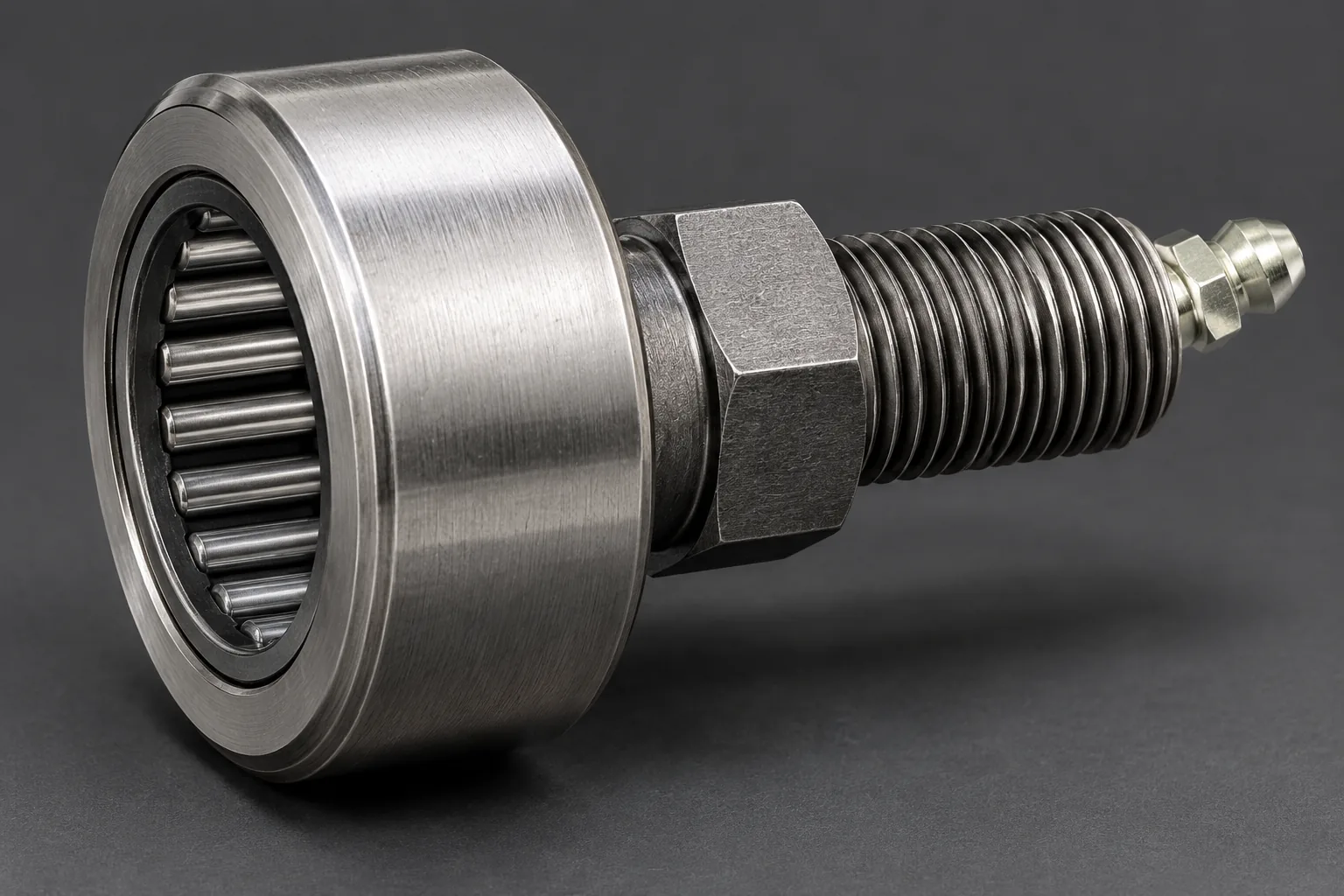
U.S. Patent 2,099,660, titled “Bearing,” was filed on November 21, 1936, issued on November 16, 1937, and assigned to McGill Manufacturing. The product launch year and the patent dates are separate milestones: a 1937 issue date does not mean the part entered the catalog in the same month.
GUIDEROL Heavy-Duty Needle Bearings (1956)
GUIDEROL heavy-duty needle roller bearings are listed as a 1956 innovation and use a center-guided, full-complement roller design. A related McGill patent, U.S. Patent 2,770,508 for a cam follower bearing, was filed on March 7, 1955, and issued on November 13, 1956, covering an improved sealed roller cam follower.
Sealing and Lubrication Innovations (1964-1974)
Sealing and lubricant retention became the defining theme of the following decade, with each development listed against a single year:
- 1964 – NYLAPLATE seal.
- 1967 – SPHERE-ROL-related development.
- 1973 – LAMBDA seal.
- 1974 – LUBRI-DISC seal.
Later CAMROL and Product-Line Expansions (1992-2000)
The CAMROL family was extended repeatedly in the last decade of the century:
- 1992 – LUBRI-DISC+.
- 1993 – Metric CAMROL.
- 1998 – Special-Duty CAMROL.
- 1999 – Heavy-Duty CAMROL.
- 2000 – CRES stainless-steel CAMROL.
Manufacturing Expansion and the Culver Plant (1965-1966)
In 1965 McGill announced plans for a plant in Culver, Indiana. The design called for about 60,000 square feet of manufacturing space and 10,000 square feet of office space, with initial production planned for 1966.
Over time McGill operated or established facilities in Valparaiso, Malden, Culver, and Monticello in Indiana, and also in El Paso, Texas, and Taiwan. No verified dates are attached here to the later El Paso and Taiwan sites, so their opening years should not be inferred from the older Indiana timeline.
Corporate Ownership Changes: Emerson, Regal Beloit, and Regal Rexnord
1990: McGill Manufacturing was sold to Emerson Electric. Valparaiso subsequently became the headquarters of Emerson’s Power Transmission Division.
January 30, 2015: Emerson completed the sale of its Power Transmission Solutions business to Regal Beloit Corporation for $1.4 billion. The transaction included McGill together with Browning, Kop-Flex, Morse, Rollway, and Sealmaster.
2021: Regal Beloit completed its merger with Rexnord’s Process & Motion Control business and changed its legal name to Regal Rexnord Corporation, so McGill became part of Regal Rexnord.
This ownership record ends in 2021. Where McGill products are manufactured today is a separate question that this history does not answer, and older documents should be read against the ownership period they belong to.
Centennial and Historical Legacy
On August 5, 2005, McGill held an open house and lunch at its Valparaiso plant to mark its 100th anniversary. The centennial was entered into the U.S. Congressional Record on July 29, 2005.
Valparaiso, Indiana, remains the location most closely tied to McGill’s manufacturing past and to the development of its bearing line, so place names in old paperwork usually point back there.
McGill Bearing History Timeline
- 1905 – Crescent Company moved from Chicago to Valparaiso, Indiana.
- 1910 – Business renamed McGill Manufacturing Company.
- 1919 – McGill Metal Company established in Valparaiso.
- 1925 – McGill Bearing Division established.
- 1926 – Bearings marked McGill by late 1926; May 15 shipment to Rolls-Royce.
- 1930 – MULTI-ROL needle bearing introduced; McGill Metal Company absorbed.
- 1937 – CAMROL cam follower bearing introduced; U.S. Patent 2,099,660 issued.
- 1956 – GUIDEROL heavy-duty needle bearings introduced; U.S. Patent 2,770,508 issued.
- 1964-1974 – NYLAPLATE, SPHERE-ROL-related development, LAMBDA, and LUBRI-DISC seals.
- 1965-1966 – Culver, Indiana, plant announced and planned for initial production.
- 1990 – Emerson acquired McGill.
- 2005 – McGill celebrated 100 years of manufacturing.
- 2015 – Regal Beloit acquired Emerson’s Power Transmission Solutions business, including McGill.
- 2021 – McGill became part of Regal Rexnord Corporation.
Conclusion
The history of McGill bearings follows a company that arrived at bearings through metalwork rather than through its founding trade: a 1905 move to Valparaiso, a 1910 renaming, aluminum-bronze retainers supplied to another bearing maker, a 1925 Bearing Division, and then dated product families – MULTI-ROL in 1930, CAMROL in 1937, GUIDEROL in 1956, and sealing developments through 1974. Ownership moved to Emerson in 1990, Regal Beloit in 2015, and Regal Rexnord in 2021. When identifying an older McGill bearing, match the marking, the product-era details and any patent reference before treating a modern listing as a direct replacement.
FAQs
Q1: When did McGill start making bearings?
A: Planning began around 1924 and the McGill Bearing Division is dated to 1925, which is the correct answer for the formal start. Output followed quickly: the ball-bearing plant broke ground on February 8, 1926, and bearings shipped to Rolls-Royce on May 15, 1926. The earliest units carried the Shubert trademark, with the McGill marking appearing by late 1926.
Q2: What was the first brand name on McGill bearings?
A: Shubert. McGill’s first bearings were sold under that mark, and only by late 1926 did the products carry the McGill name. A bearing with the Shubert mark therefore belongs to the earliest production window rather than to a later or unrelated product line.
Q3: How do the MULTI-ROL, CAMROL, and GUIDEROL lines differ?
A: MULTI-ROL, listed in 1930, is an early self-contained full-complement needle roller bearing. CAMROL, listed in 1937, is a cam follower and track roller series that used full-complement needle rollers for radial capacity and impact loads. GUIDEROL, listed in 1956, is a heavy-duty needle roller bearing with a center-guided full-complement roller design.
Q4: Who owns the McGill brand today?
A: McGill became part of Regal Rexnord Corporation in 2021, after Emerson acquired McGill Manufacturing in 1990 and Regal Beloit bought Emerson’s Power Transmission Solutions business on January 30, 2015 for $1.4 billion. The verified record ends with the 2021 merger, so current plant locations and product availability should be confirmed separately.
Q5: Do the CAMROL patent dates match its launch year?
A: Not exactly, which is why both dates matter. The first CAMROL cam follower bearing is listed as a 1937 product, while U.S. Patent 2,099,660 was filed on November 21, 1936, issued on November 16, 1937, and assigned to McGill Manufacturing. A related sealed roller cam follower patent, U.S. Patent 2,770,508, was filed on March 7, 1955 and issued on November 13, 1956.