Quick Answer
A u-joint failure typically begins with warning signs like clunking noises when shifting gears, vibrations at highway speeds, or squeaking at low speeds. If ignored, the u-joint can fail completely—causing the driveshaft to disconnect, transmission or differential seals to leak, bearings to fail, and potentially leading to a collision. U-joints generally last around 100,000 miles (160,000 km) under normal conditions. Replacement u-joints cost $15-$70 for parts, but ignoring a failing joint can lead to thousands of dollars in repairs.
U-joint failure is a serious issue. When a u-joint on your vehicle fails, you could be left stranded on the side of the road. The u-joint is a small part, but it can cause thousands of dollars in repairs if it completely fails.
But failure doesn’t happen all at once. There are warning signs. And when you understand what causes u-joint failure—and what happens when it finally fails—you can catch the problem early and avoid catastrophic damage.
Let’s walk through the causes, the symptoms, and the consequences.
Common Causes of U-Joint Failure
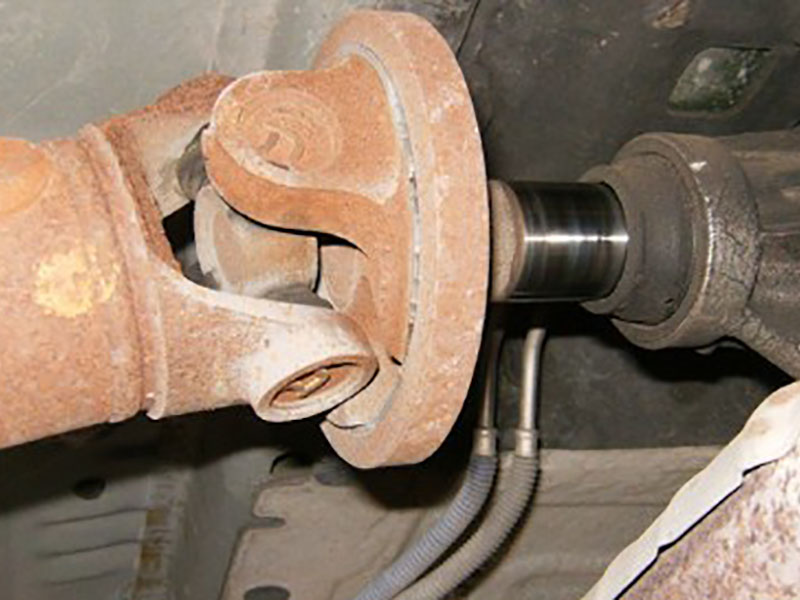
U-joints fail for a few specific reasons. Understanding these causes helps you prevent premature failure.
- High mileage. U-joints typically last about 100,000 miles (160,000 km). Some may last the lifetime of the vehicle under ideal conditions, but many fail from normal wear and tear over time.
- Accident-related misalignment. If the vehicle has been in several accidents, the driveline may become misaligned. This puts uneven stress on u-joints and accelerates wear.
- Loss of lubrication. This applies to both greaseable and maintenance-free u-joints. Greaseable u-joints need regular greasing. Maintenance-free u-joints have sealed grease, but contamination or vibration can still cause lubrication failure.
- Excessive operating angles. For vibration-free performance, the operating angle should generally be kept at or below 3 degrees. Angles above 3 degrees can shorten u-joint life and may cause vibration. This is a common issue on lifted vehicles, where the operating angle often exceeds the recommended limit.
- Long-term high loads. Frequent towing, off-roading, or carrying heavy payloads puts extra strain on u-joints. When subjected to high levels of strain for long periods, the metal components can become thin and develop cracks.
- Driveshaft damage. Even minor damage like a small dent to the driveshaft can cause vibration at higher speeds. That vibration constantly puts stress on the u-joint bearings.
- Seal failure. Cracked rubber seals allow dirt and moisture to seep into u-joints, causing them to wear out faster. Water entering the joint can displace the grease, causing needle bearings to rust and seize.
Warning Signs of a Failing U-Joint
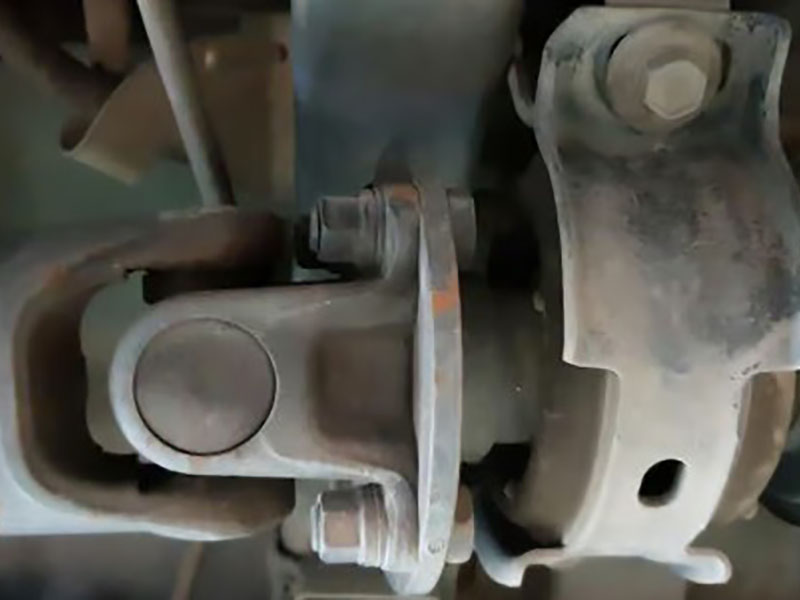
When you notice the signs of a failing u-joint, it’s already too late to save that joint—it will need replacement. But replacing it immediately can prevent other problems.
Shaking and Vibration
If you notice shaking or vibration when driving, it could mean your u-joint is about to fail. When a u-joint fails, the driveshaft can start moving outside of its normal rotation—it becomes too loose. This causes drivetrain vibration that becomes particularly noticeable at higher speeds.
The driveshaft rotates 3 to 4 times faster than the wheels, so u-joint vibration tends to be a higher-frequency vibration than an out-of-balance wheel. Before assuming it’s the u-joint, check your tires for balance and alignment issues. If there are none, the problem is likely a faulty u-joint.
You can sometimes feel this vibration through the floorboards and shift lever.
Unusual Noises
- Clunking when shifting. One of the most common signs is a loud clunking sound when putting the car into drive or reverse. This happens when shifting from forward to reverse or reverse to forward.
- Vibration during acceleration or deceleration. A failing u-joint often produces vibration when you accelerate or decelerate.
- Metal-on-metal banging. This is a sign that the u-joint will completely fail very soon. When a u-joint finally fails, it will make a loud popping sound—and may literally fall apart.
- Squeaking at low speeds. A high-pitched squeak at low speeds (typically under 5-10 mph) indicates dry u-joints. The squeak usually cannot be heard once the vehicle moves faster than that range because other vehicle noise drowns it out.
- Grinding, chirping, or clanging. These sounds can also indicate u-joint problems.
What Happens When a U-Joint Fails
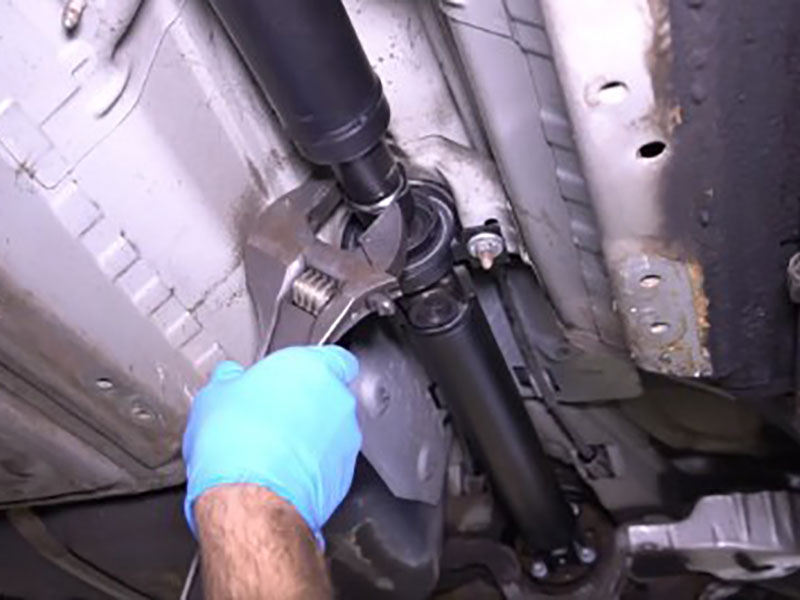
When a u-joint completely fails, your vehicle breaks down and stops moving. But that’s just the beginning. Here’s what actually happens.
Driveshaft Disconnection
This is why your vehicle stops moving after a u-joint fails. The driveshaft can’t transfer power to the axle. The driveshaft is usually still connected at one end, but is completely free at the end where the u-joint failed.
The driveshaft assembly can come loose and even fall off. In that case, the entire driveshaft may need to be replaced. If the driveshaft falls off while you’re moving, it can bang on the bottom of the vehicle and damage other parts.
Transmission/Transfer Case Output Shaft Seal Failure
Excessive vibration causes the driveshaft’s output shaft to rotate out of round. This leads to failure of the transmission’s rear seal. Fluid leaks out, and if the transmission loses some fluid, it can’t shift properly—it may only do hard shifts. If the fluid gets low enough, the transmission will fail completely. The same thing can happen to a transfer case.
Pinion Seal Failure
A bad u-joint at the rear of the driveshaft can ruin the pinion seal in the same way. The excessive vibration causes the pinion seal to fail. When that happens, gear lube leaks out of the differential. This can lead to significant damage to the ring and pinion assembly.
Bearing Failure
If vibrations go on long enough, they can damage multiple bearings. The excessive vibration from a bad u-joint can cause the following bearings to fail:
- Pinion bearing
- Transfer case output bearing
- Transmission output bearing (if there is no transfer case)
Broken Driveshaft
A bad u-joint will eventually fall apart if it’s not replaced. When they fall apart—which happens while you’re moving—the driveshaft becomes disconnected from the transmission or differential.
This damages the driveshaft and possibly other parts under the vehicle. The yoke can also become twisted or damaged, which may require replacement along with the driveshaft itself.
Serious Collision
U-joints tend to fail completely during hard acceleration. A catastrophic failure on a highway on-ramp, for example, can be a big problem. When that happens, the vehicle won’t have power and might cause a serious collision with the car(s) behind. If this happens while you’re driving, you may lose control of your vehicle.
Conclusion
U-joint failure leads to expensive repairs. It also makes driving dangerous and difficult for you and everyone else on the road.
Here’s what you need to remember:
- Replace u-joints at the first sign of trouble. When you hear clunking, feel vibration, or notice squeaking, don’t wait.
- Inspect u-joints regularly. At minimum, check them twice a year—or every time you change the oil.
- Quality matters. Since the u-joint is an extremely important part, quality should matter a lot when shopping for replacements.
A replacement u-joint costs anywhere from $15 to $70. Ignoring a failing joint can cost thousands in transmission repairs, differential repairs, driveshaft replacement, and tow bills. The choice is clear: when in doubt, change it out.
FAQs
Q1: How long do u-joints typically last?
A: Under normal conditions, u-joints typically last about 100,000 miles (160,000 km). Some may last the lifetime of the vehicle under ideal conditions, but many fail from normal wear and tear. Factors like heavy towing, off-roading, lack of lubrication, and excessive drivetrain angles can shorten their lifespan.
Q2: Can I drive with a bad u-joint?
A: You shouldn’t. Driving with a failing u-joint causes more strain on other components in the drivetrain system. It can lead to transmission failure, differential damage, driveshaft damage, and unsafe driving conditions. In the worst case, the u-joint fails completely while you’re moving, and you may lose control of your vehicle.
Q3: What does a failing u-joint sound like?
A: Common sounds include: a loud clunking noise when shifting from drive to reverse or reverse to drive; vibration during acceleration or deceleration; loud metal-on-metal banging—a sign of imminent complete failure; squeaking at low speeds (typically under 5-10 mph); and grinding, chirping, or clanging noises.
Q4: How much does it cost to replace a u-joint?
A: Replacement u-joints themselves cost between $15 and $70 for most vehicles. With labor, the total cost typically ranges from $200 to $500 for most domestic vehicles. However, if you ignore a failing u-joint and it causes transmission or differential damage, repairs can cost thousands of dollars.
Q5: What causes a u-joint to fail prematurely?
A: Common causes include: lack of lubrication—applies to both greaseable and maintenance-free u-joints; long-term high loads like frequent towing or off-roading; excessive operating angles—common on lifted vehicles; driveshaft imbalance or damage; cracked seals allowing dirt and moisture to enter; and loose bolts from corrosion, excessive jolting, or improper torquing.