Quick Answer: A cam follower is a component that rides on a cam profile, usually as a bearing-supported roller or a sliding element, and converts the cam’s rotary motion into controlled linear, oscillating, or reciprocating motion. It keeps the driven part on the intended timing and displacement path, carries the contact load, and reduces friction through rolling contact in most bearing-type designs. Its exact behavior depends on the cam profile, follower type, mounting stiffness, lubrication, and load conditions.
Cam followers appear in valve trains, cam indexers, packaging lines, and many other cyclic machines. Readers often ask two practical questions: what the follower actually does, and why its bearing arrangement matters. The answer starts with the cam profile and the contact conditions that transfer motion to the driven part.
How a Cam Follower Works
A cam is a rotating or oscillating part whose profile changes the distance from its center. The follower rides on that profile, so its position is set by the cam shape and rotation angle. The cam acts as a moving track, and the follower converts the track’s rise, dwell, and return into the motion required by the machine.
The follower must stay in contact with the cam through the full cycle. A spring, gravity, preload, or mechanical linkage can provide the contact force. If contact is lost during deceleration or return, the follower may separate from the profile and then strike it, producing impact, noise, and timing error.
Cam Profile and Follower Motion
The profile defines the output motion curve. A rise section moves the follower outward, a dwell section holds position, and a return section brings it back. Follower displacement, velocity, and acceleration are dictated by the cam profile and operating speed. The follower must remain in contact throughout the cycle to avoid impact, noise, and loss of timing.
Rolling Contact and Friction Reduction
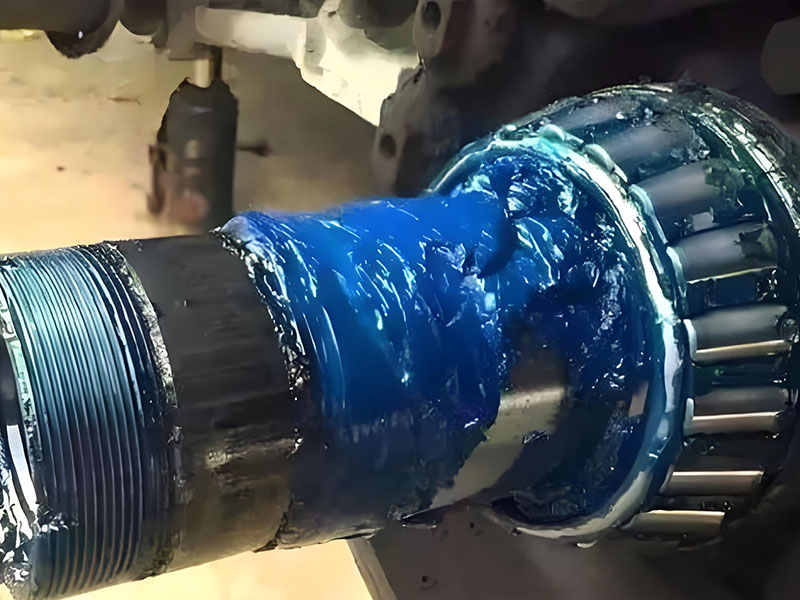
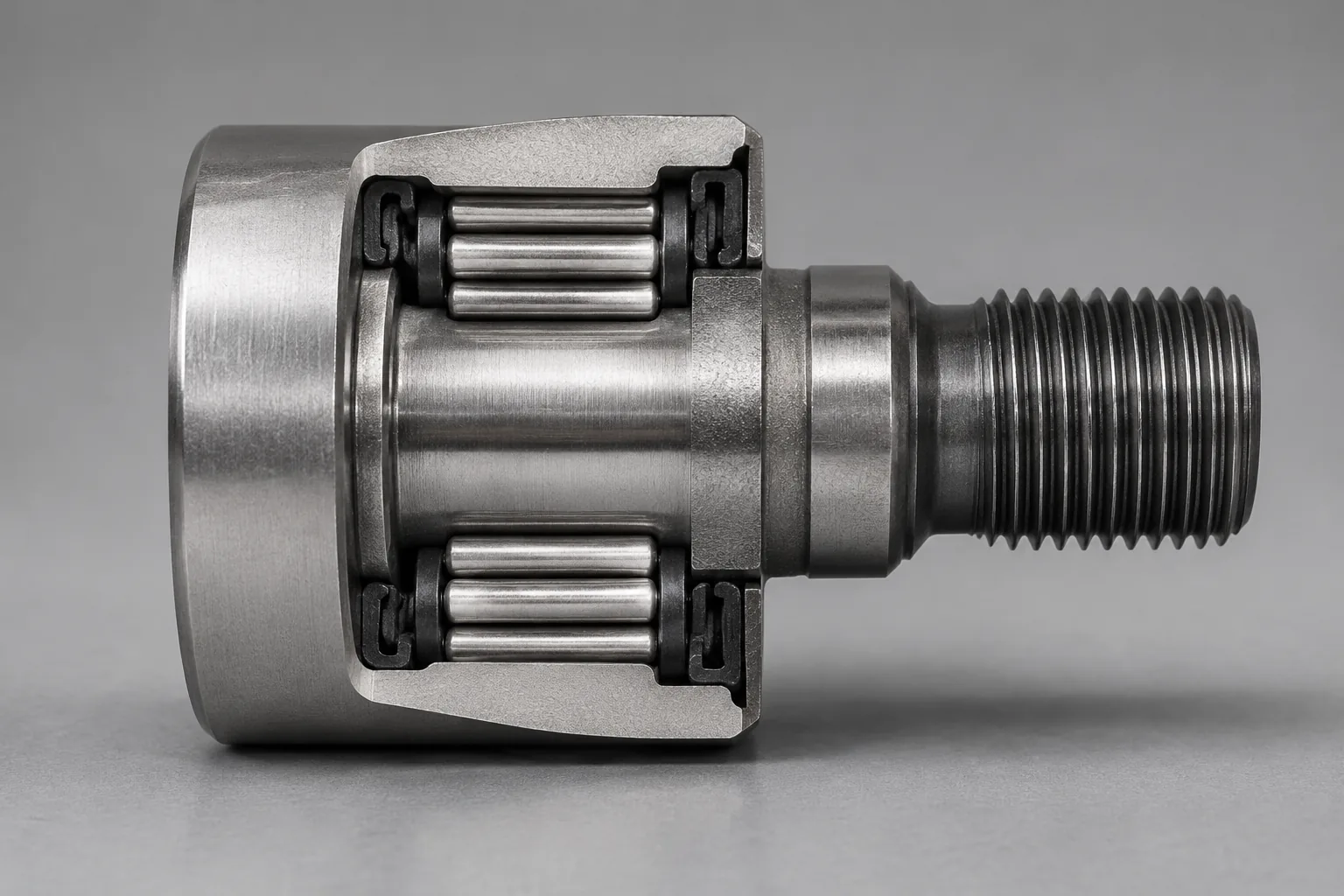
Most bearing-type cam followers use a roller or needle bearing between the outer ring and the stud or inner race. The outer ring rolls along the cam instead of sliding. Rolling contact generally lowers driving torque and heat generation compared with plain sliding contact, but the result depends on lubrication, load, and surface condition. The bearing arrangement must support the radial load from cam contact and any side loads from the mechanism.
Keeping the Follower in Contact
Contact force is a design variable, not a detail. Too little force can allow separation, impact loading, noise, and inaccurate motion. Too much force increases friction, wear, and bearing load. The correct contact force depends on the cam profile, speed, inertia of the driven parts, and the spring or linkage design.
Key Functions of a Cam Follower
Within a mechanism, the cam follower performs several connected jobs. The list below separates them so the effect of each one is clear.
Motion Conversion and Timing
The follower translates the cam’s rotational position into a precise follower position at each angle. That position controls the sequence and timing of operations such as valve opening, indexing, clamping, or feeding. It allows a simple rotary input to produce complex cyclic motion without a separate linkage system.
Load Transmission and Support
The follower carries the contact force between cam and follower and transfers it to the machine frame or linkage. Stud-type followers typically mount through a stud, while yoke-type followers are supported at both ends for higher stability. Load direction, shock, and vibration influence the bearing type and mounting choice.
Friction Reduction and Wear Control
Rolling elements reduce sliding friction at the cam-follower interface. Seals and lubrication retain grease and exclude contaminants in dirty or washdown environments. The cam surface and follower outer ring are both wear surfaces and must be compatible with the application.
Precision Positioning and Repeatability
A cam follower helps reproduce the cam profile repeatedly over many cycles. Backlash, bearing clearance, deflection, and wear affect positional accuracy. Precision applications may require matched cam profile quality, stiff mounting, and controlled preload.
Common Types of Cam Followers
Cam followers are available in several mounting and bearing configurations. The choice depends on load direction, available space, speed, and environment. The term cam follower is sometimes used broadly for any roller that follows a track, so confirm the specific configuration before selecting a part.
Stud-Type Cam Followers
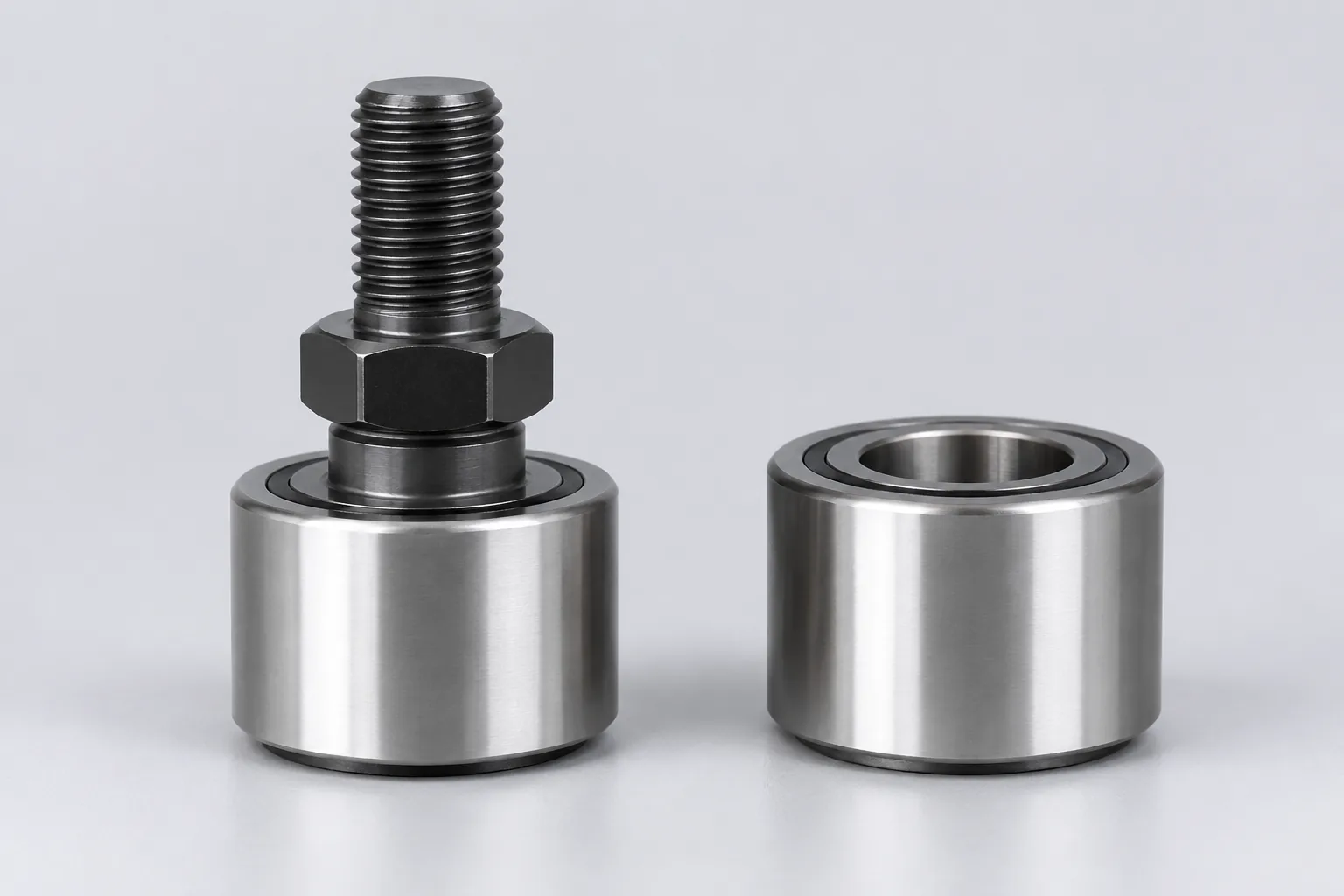
A stud-type cam follower has an integral threaded stud for cantilever mounting. It is commonly used where space is limited and mounting from one side is practical. Stud strength, thread size, and tightening method affect load capacity and fatigue life.
Yoke-Type Cam Followers
A yoke-type cam follower is supported on both sides by a yoke or bracket. The double-supported arrangement can improve stiffness and load capacity compared with a cantilevered stud. It requires a suitable shaft, bore, and lubrication arrangement.
Roller and Needle-Bearing Cam Followers
Roller followers use a cylindrical outer ring to contact the cam or track. Needle bearings provide a compact rolling element arrangement for radial loads. Sealed or shielded versions help retain lubricant and exclude dirt.
Plain or Sliding Followers
Plain followers rely on sliding contact rather than a rolling bearing. They may be used in low-speed, low-cost, or high-temperature situations where rolling bearings are unsuitable. Sliding followers generally have different friction, wear, and lubrication requirements from rolling cam followers.
Where Cam Followers Are Used
Cam followers appear in engines, industrial machinery, automation, packaging, printing, and other cyclic mechanisms. Application requirements vary widely in load, speed, lubrication, contamination, and duty cycle. The same basic function applies: follow a cam or track and transfer controlled motion.
Automotive and Engine Mechanisms
Cam followers are used in valve trains and other engine mechanisms to follow cam lobes. Engine applications involve high cycle counts, lubrication dependence, and dynamic loads. Materials, surface finish, and lubrication are critical in these environments.
Industrial Automation and Indexing
Used in cam indexers, transfer mechanisms, clamps, and cyclic automation equipment, cam followers require repeatable motion and reliable operation over many cycles. Mounting stiffness and alignment affect indexing accuracy.
Packaging, Printing, and Food Processing
Cam followers guide and synchronize motion in packaging, printing, and processing machinery. Washdown, dust, and food-safety requirements may call for sealed, stainless, or specially lubricated versions. Contamination and cleaning practices affect lubricant life and corrosion resistance.
Other Machinery Applications
Examples include CNC equipment, textile machinery, agricultural equipment, and general mechanical linkages. The required follower type depends on space, load direction, speed, and maintenance access. Application-specific validation is needed before selecting a cam follower.
Cam Follower vs. Alternative Followers
Rolling cam followers generally reduce friction and wear compared with plain sliding followers. Plain followers may be simpler and more compact but can require more lubrication and may wear faster. The right choice depends on speed, load, temperature, contamination, cost, and required life.
Rolling vs. Sliding Contact
Rolling contact uses balls or rollers to reduce sliding friction. Sliding contact depends on a lubricant film or low-friction material. Rolling followers often suit higher speed and lower friction loss, while sliding followers may suit simple low-speed mechanisms.
Cam Follower vs. Track Roller
The terms cam follower and track roller are sometimes used interchangeably but may differ in mounting, profile, and bearing design. A cam follower is typically intended to follow a cam profile; a track roller may follow a linear track or guide. Confirm the manufacturer’s definition and load ratings for the specific part.
Selection Criteria for Cam Followers
Selecting a cam follower starts with the motion and the load path, not with a catalog number. Use the following checks before comparing candidate parts.
- Cam profile and motion: match the follower to the profile, load magnitude and direction, speed, acceleration, and duty cycle.
- Mounting style: choose stud-type or yoke-type mounting based on space, stiffness, and support conditions.
- Bearing and outer ring: select the bearing type, outer ring profile, material, seals, and lubrication for the operating environment.
- Ratings and life: verify dynamic load rating, static load rating, speed limit, and life requirements from manufacturer data.
Selection values apply only to the specific cam profile, mounting, lubrication, and operating conditions. Shock loads, oscillating motion, and high acceleration may require additional application review. High-temperature, vacuum, washdown, or corrosive environments may require non-standard materials and lubricants.
Installation, Lubrication, and Maintenance
Correct installation protects the bearing and preserves motion accuracy. Maintenance then focuses on contact conditions, lubrication, and early signs of wear.
Mounting and Alignment
The follower axis should be parallel to the cam axis where the design requires it. Misalignment can concentrate load on one side of the roller and cause uneven wear. Stud-type followers must be tightened and supported according to the manufacturer’s instructions. Where a lubrication hole is provided, follow the specified orientation; some designs call for the hole in the unloaded zone.
Lubrication Practices
Grease or oil selection must suit load, speed, temperature, and contamination conditions. Sealed-for-life followers may not require relubrication, while relubricable types need a defined schedule. Excess or insufficient lubricant can both cause problems; follow the manufacturer’s recommendation.
Inspection and Replacement Signs
Watch for increased noise, vibration, heat, backlash, or visible roller damage. Replace followers showing flat spots, spalling, seal failure, or significant wear. Investigate the root cause before replacement to avoid repeated failures.
Common Failure Modes and How to Recognize Them
Typical failure modes include wear, lubrication breakdown, contamination, misalignment, overload, and fatigue spalling. Symptoms may include noise, vibration, heat, rough motion, and loss of timing accuracy. Root causes often involve incorrect selection, poor mounting, inadequate lubrication, or a changed operating condition.
Wear and Flat Spots
Wear and flat spots occur when the outer ring or cam surface wears unevenly. Causes can include insufficient lubrication, contamination, excessive load, or sliding instead of rolling. They may produce noise and inaccurate motion.
Lubrication Failure and Contamination
Lubricant breakdown increases friction, heat, and wear. Dirt, water, and process contamination can damage seals and bearing surfaces. Sealed versions and appropriate relubrication can improve reliability in dirty environments.
Misalignment and Overload
Misalignment causes edge loading and uneven wear. Overload can lead to raceway damage, roller deformation, or fatigue spalling. Correct mounting, load review, and suitable safety factors reduce risk.
Materials, Standards, and Performance Notes
Cam followers are commonly made from bearing steels. Stainless steel and special coatings are available for corrosion resistance. Material and coating selection depends on corrosion, temperature, load, and cleaning requirements.
Seals, shields, and lubrication choice affect performance in dust, water, and washdown conditions. Size systems commonly include ISO, metric, and inch-series designations. Performance claims should be verified against manufacturer data and the applicable standard for the specific part.
Conclusion
A cam follower does more than roll against a cam. It converts rotary input into controlled motion, maintains timing, carries contact load, and provides a replaceable wear interface. The practical result depends on the cam profile, follower type, mounting stiffness, lubrication, and operating conditions. Before replacing a follower, check alignment, contamination, lubrication, and load rather than treating the bearing as an isolated part.
FAQs
Q1: What is the main purpose of a cam follower?
A: Its main purpose is to follow a cam profile and transfer the cam’s motion to a driven part while maintaining timing and displacement. It also carries the contact load and, in rolling designs, reduces friction at the cam interface.
Q2: How does a cam follower differ from a normal bearing?
A: A cam follower is a bearing-supported component packaged for a cam or track application, often with a stud, yoke, or roller outer ring. A normal bearing is a more general machine element; the housing, mounting, and outer ring profile determine whether it can follow a cam safely.
Q3: Do cam followers need lubrication?
A: Many cam followers are lubricated for life, while relubricable types need a schedule based on load, speed, temperature, and contamination. Follow the manufacturer’s instruction for grease type, quantity, and interval; both excess and insufficient lubricant can cause problems.
Q4: What causes cam follower failure?
A: Common causes include lubrication breakdown, contamination, misalignment, overload, and fatigue. Symptoms such as noise, vibration, heat, or rough motion indicate a need for inspection, but they do not prove a single root cause.
Q5: How do I choose between stud-type and yoke-type cam followers?
A: Choose stud-type mounting when a cantilevered, one-side installation fits the space and load path. Choose yoke-type when both-side support, higher stiffness, or better load capacity is needed and the bracket can accommodate it.
Q6: Can cam followers operate at high speed?
A: Some can, but speed capability depends on bearing type, cage design, lubrication, load, and heat generation. Verify the speed limit and application conditions in the manufacturer’s data rather than assuming a rolling follower is suitable for every high-speed duty.
Q7: What materials are cam followers made from?
A: Bearing steels are common, and stainless steel or special coatings may be offered for corrosion resistance. The final choice depends on load, temperature, cleaning, and contamination; confirm the material and coating for the specific part.