Quick Answer: Sprockets and gears both transmit rotary motion through teeth, but they are not interchangeable. A sprocket engages a chain or track, while a gear meshes directly with another gear. Sprockets suit long center distances, easy field replacement, and cost-sensitive layouts. Gears suit compact, precise, high-torque drives with low backlash and sealed lubrication. Neither part is universally better; the right choice depends on layout, speed, accuracy, load, environment, and maintenance.
A sprocket and a gear can look similar because both are toothed rotating parts that carry power. The similarity stops at the tooth form and the part each one is designed to mate with. A sprocket is built around a chain or track interface. A gear is built around direct tooth-to-tooth contact with another gear.
That single difference shapes layout, ratio, accuracy, lubrication, maintenance, and cost. The comparison below separates those effects so the choice is based on the drive, not on the shape of the part.
What Is A Sprocket?
A sprocket is a toothed or grooved wheel that engages a chain or track. The teeth drive the chain, are driven by it, guide it, or keep it aligned. The chain or track is a flexible intermediate part, so the sprocket does not need a matching toothed wheel at the other end to transmit motion.
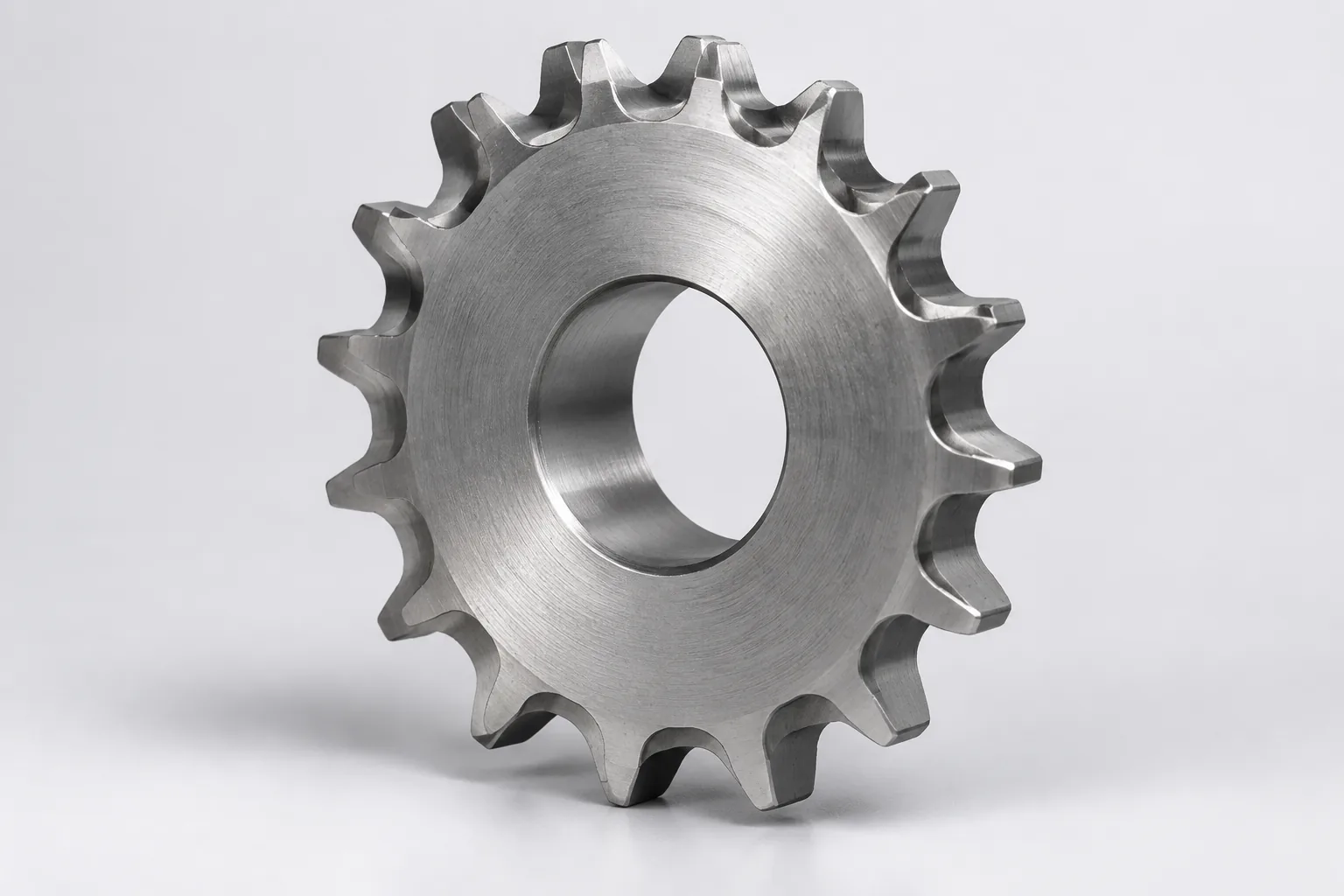
The main geometry of a sprocket is defined by a small set of linked parameters:
- Tooth count: the number of teeth around the sprocket, which sets the speed ratio when paired with another sprocket.
- Pitch: the spacing between chain joints, which must match the mating part.
- Pitch diameter: the effective diameter at which the chain runs.
- Roller or link fit: the seat that accepts the chain roller or bushing.
- Tooth profile: the shape that guides engagement and shares load across the engaged teeth.
Common forms include roller chain sprockets, engineering and conveyor chain sprockets, and double pitch sprockets. A timing belt pulley is a related part that engages a toothed belt and uses a belt tooth profile and pitch system rather than a chain roller and link system.
What Is A Gear?
A gear is a toothed wheel that meshes directly with another gear. Torque passes from one tooth flank to the next without a chain, belt, or other flexible intermediate part. The pair is usually designed as a set, because the tooth form, center distance, and ratio depend on both members.
Gear geometry is defined by:
- Module or diametral pitch: the tooth size system used to define the gear.
- Tooth count: the number of teeth on the gear, which sets the ratio with its mate.
- Pressure angle: the angle that governs tooth contact and load direction.
- Pitch circle: the reference circle used to set center distance and ratio.
- Center distance: the fixed distance between the two gear axes for a given pair.
Common gear forms include spur, helical, bevel, worm, and rack. Each form serves a different shaft arrangement or motion type, from parallel shafts to right-angle drives and rotary-to-linear movement.
Sprockets Vs. Gears: Side-By-Side Comparison
The table compares the practical dimensions that usually decide the layout. It is an overview; actual performance depends on design, material, load, alignment, lubrication, and operating conditions.
| Decision dimension | Sprocket drive | Gear drive |
|---|---|---|
| Mating part | Chain or track | Another gear |
| Tooth form | Profile matched to chain or track pitch | Conjugate gear tooth profile |
| Center distance | Long and adjustable; needs tensioning or adjustment | Fixed by pitch circles; long distances need idlers, shafts, or a rack |
| Ratio | Driven tooth count divided by driver tooth count for a simple stage | Driven tooth count divided by driver tooth count; multi-stage trains can compound the ratio |
| Load capacity | Shared across engaged teeth and chain links; chain elongates with wear | High compact capacity; pitting or tooth breakage can affect the pair |
| Efficiency | High in a well-maintained drive; exact losses depend on design and condition | Generally high; exact losses depend on design and condition |
| Noise and vibration | Roller impact and chain vibration are common sources | Gear mesh and tooth contact are common sources |
| Lubrication | Chain lubrication and retensioning after elongation | Oil or grease with oil-level and condition control |
| Maintenance | Inspect elongation, tension, lubrication, and tooth wear | Inspect wear, pitting, lubrication, and alignment |
| Cost | Standard pitch and tooth series; often economical at long centers | Higher unit cost, tighter tooth machining, and a matched pair |
The most important difference is the mating part. A sprocket tooth engages a flexible chain, belt, or track. A gear tooth engages another gear tooth directly. That difference controls how the drive is laid out, how accurate it can be, and how it is maintained.
Difference 1: How Motion Is Transmitted
In a sprocket drive, torque passes through the chain rollers or links as they seat against the sprocket teeth. The arc of chain contact on the sprocket, usually called the wrap angle, affects how many teeth share the load at once. More wrap and more engaged teeth generally spread the load better, provided the chain is correctly tensioned and aligned.
In a gear drive, torque passes through direct contact between conjugate tooth flanks. The number of tooth pairs in contact depends on the contact ratio, which is set by the gear design. There is no flexible intermediate part to absorb misalignment or shock, so the housing, shafts, and bearings must hold the pair in the intended position.
A sprocket system can tolerate some misalignment between sprocket and chain; a gear pair needs precise center distance and shaft parallelism or intersection. That tolerance is limited. It applies only when chain tension, lubrication, and sprocket wear remain within the drive manufacturer’s specified range. A worn or loose chain can jump teeth, and a misaligned gear pair can concentrate load on one edge of the tooth.
A timing belt pulley behaves more like a sprocket in this respect because it also uses a flexible intermediate part. It is not a gear, and it does not mate directly with another toothed wheel.
Difference 2: Center Distance, Layout, And Ratio
A chain and sprocket drive can span a long center distance and can be adjusted by moving one shaft or by using a tensioner. That makes it useful when the drive points are far apart or when the layout must be assembled on site. The ratio of a simple single-stage chain drive is set by the tooth counts, not by the center distance.
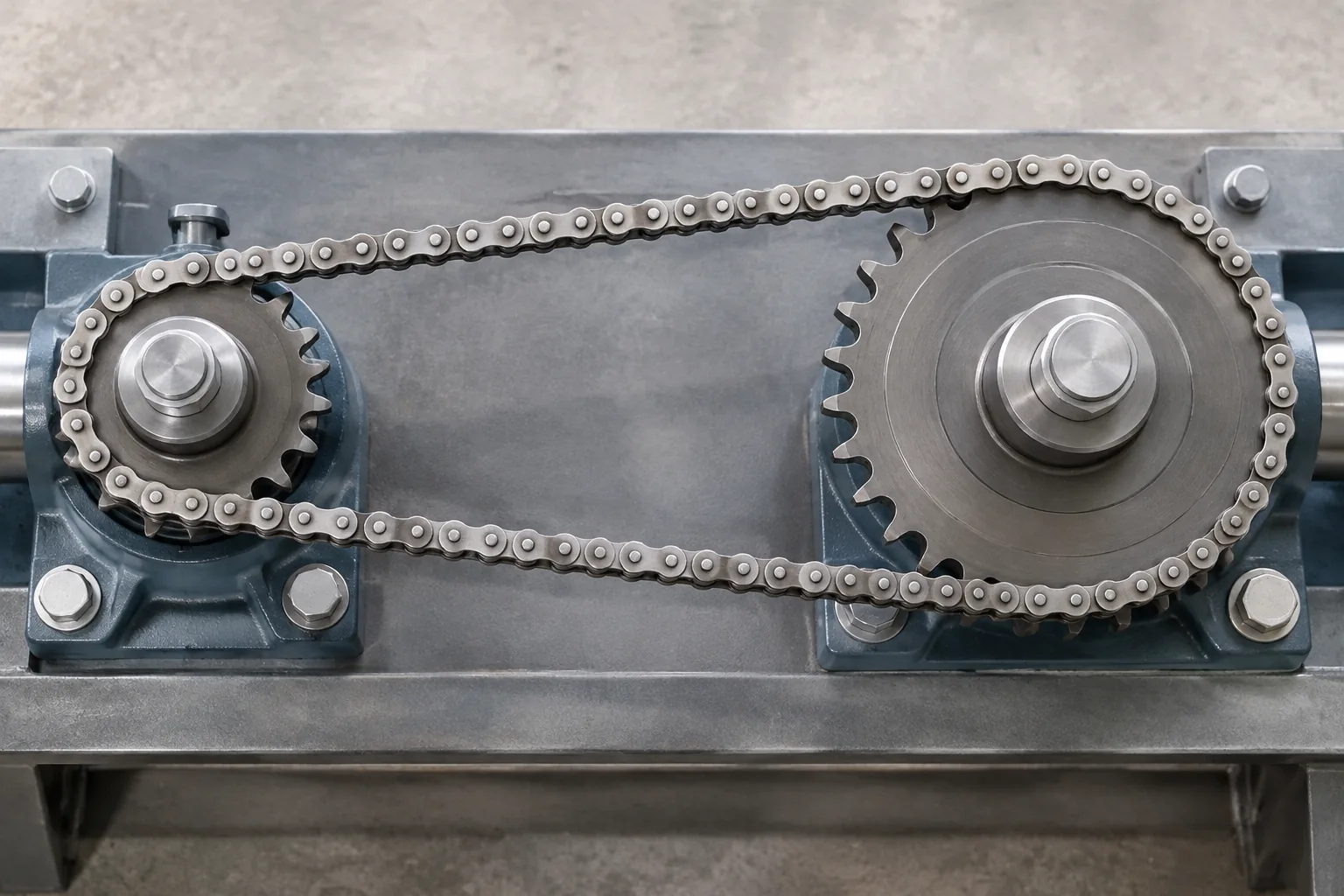
For a simple stage, ratio equals driven tooth count divided by driver tooth count. If the driven sprocket has more teeth than the driver, speed falls and torque rises, less any losses. Changing the center distance does not change that ratio as long as the same two sprockets and the same chain pitch are used.
A gear pair is different. The center distance is fixed by the pitch circles of the two gears. A long distance usually requires idler gears, a jackshaft, a gear train, or a rack and pinion arrangement. The ratio is still set by tooth counts, but a multi-stage gear train can produce a large reduction in a small space by compounding several stages.
Chain drives need tensioning or adjustment and enough wrap on the sprocket; gear drives need the center distance and alignment built into the housing. Those requirements belong in the layout decision from the start, not in a later field adjustment.
Difference 3: Speed, Torque, And Indexing Accuracy
Gears are usually chosen when the drive must be compact, carry high torque, and hold a precise ratio with low backlash. Positioning accuracy depends on gear quality, tooth finish, bearing support, and backlash. A high-quality gear pair can provide low backlash and high repeatability, but the housing and bearings must support that level of accuracy.
Sprocket and chain drives are common at moderate speeds and long center distances where cost and layout flexibility matter. When a chain drive is used for positioning, chain elongation and backlash affect accuracy. A worn chain can change the effective ratio and introduce lost motion that is difficult to remove without retensioning or replacement.
At higher speeds, a chain forms a polygon around the sprocket rather than a perfect circle. This is called polygonal effect or chordal action. The effective radius changes slightly as each tooth engages, which can add vibration and speed variation. The effect is stronger with small sprocket tooth counts and becomes more important as speed rises.
A well-designed gear drive is generally smoother, while a sprocket drive can also run smoothly when it uses enough teeth, good alignment, and correct tension. A timing belt pulley can provide better positioning than a chain over a long center distance when it is specified for the load and environment.
Difference 4: Efficiency, Noise, Lubrication, And Maintenance
- Efficiency: A gear pair is generally the more efficient of the two, while a well-maintained chain drive remains efficient. Timing belts are also efficient. Exact losses depend on design, load, lubrication, and alignment, so no single value fits every drive.
- Noise: Gear noise is related to tooth form, surface finish, contact ratio, and housing stiffness. Chain noise comes from roller impact, chain vibration, and the polygonal effect. Both can be reduced by good design, but they produce different sound patterns.
- Lubrication: Gears need the specified oil or grease, correct oil level, and clean lubricant. Chain drives need chain lubrication and retensioning as the chain elongates. A dry or contaminated chain wears quickly, and incorrect gear lubricant can lead to scoring or pitting.
- Maintenance: Chain maintenance focuses on elongation, tension, lubrication, and sprocket tooth wear. Gear maintenance focuses on tooth wear, pitting, lubricant condition, and alignment. The two inspection routines are not interchangeable.
Difference 5: Load Capacity, Shock, And Wear Life
A gear pair can carry high torque in a compact package, but the teeth are in direct contact. Pitting, scoring, or tooth breakage can affect the pair, and a damaged gear often requires replacement of both members to restore proper mesh. Load sharing depends on tooth contact and alignment, not on a flexible chain.
A chain drive shares load across several engaged teeth and chain links. That can help with moderate shock and small misalignment, and it is one reason chain drives are common on conveyors, agricultural equipment, and two-wheelers. The trade-off is that the chain elongates as it wears, so tension and pitch must be checked over time.
Life is driven by lubrication, contamination, alignment, load fluctuations, and correct selection factors. A drive selected only by shaft size and nominal torque can fail early if the service factor, shock load, and duty cycle are ignored. Gears and sprockets should both be selected against the actual application conditions, not against a simple torque match.
Difference 6: Cost, Sourcing, And Standardization
Sprockets and chains are commonly organized by pitch and tooth count series, which makes replacement and layout changes easier. For long center distances, a chain drive is often more economical than a gear train because it avoids multiple shafts, idlers, and a large housing. Standard parts can also shorten lead time when the drive uses a common pitch and tooth count.
Gears usually cost more per part because the tooth form is machined to tighter tolerances and the pair must be matched. A gearbox also adds housing, bearings, seals, and lubrication, so the purchase price reflects the complete transmission, not just the gears. A timing belt pulley and belt can be a middle path where cleanliness, lower noise, or synchronous motion matters more than raw chain load capacity.
Compare total cost of ownership, not only the part price. Include lubrication, spare parts, downtime, installation labor, and the cost of retensioning or replacing a stretched chain. A cheaper part that wears early or requires frequent adjustment is not the lower-cost choice.
Common Types Of Sprockets And Gears
The form of the part follows the layout. Sprockets are shaped by the chain or belt they carry, while gears are shaped by the shaft arrangement and the motion they must produce.
Sprocket Types And Where They Fit
- Roller chain sprockets: general power transmission, conveyors, agricultural machinery, and two-wheelers.
- Engineering and conveyor chain sprockets: heavy conveyors and bulk material handling where the chain carries the load.
- Double pitch sprockets: long-center conveyors and drives that use a double pitch chain series.
- Idler and tensioner sprockets: guidance, tension control, and changes in chain direction.
- Timing belt pulleys: clean, low-noise, or synchronous positioning drives. A timing belt pulley is a pulley, not a chain sprocket.
Gear Types And Where They Fit
- Spur gears: parallel shafts, simple layouts, and moderate speeds.
- Helical gears: parallel shafts with smoother meshing and higher load capacity than a simple spur pair.
- Bevel gears: intersecting shafts, often at right angles.
- Worm gears: right-angle shafts with high reduction and, in some designs, self-locking behavior.
- Rack and pinion: conversion between rotary motion and linear motion.
Typical Uses: When Sprockets Are The Practical Choice
A sprocket drive is a practical choice when the layout needs distance, adjustment, or easy field service. It is common in conveyors, chain drives, agricultural machinery, two-wheelers, and material handling because the chain can follow a route that a rigid gear train cannot.
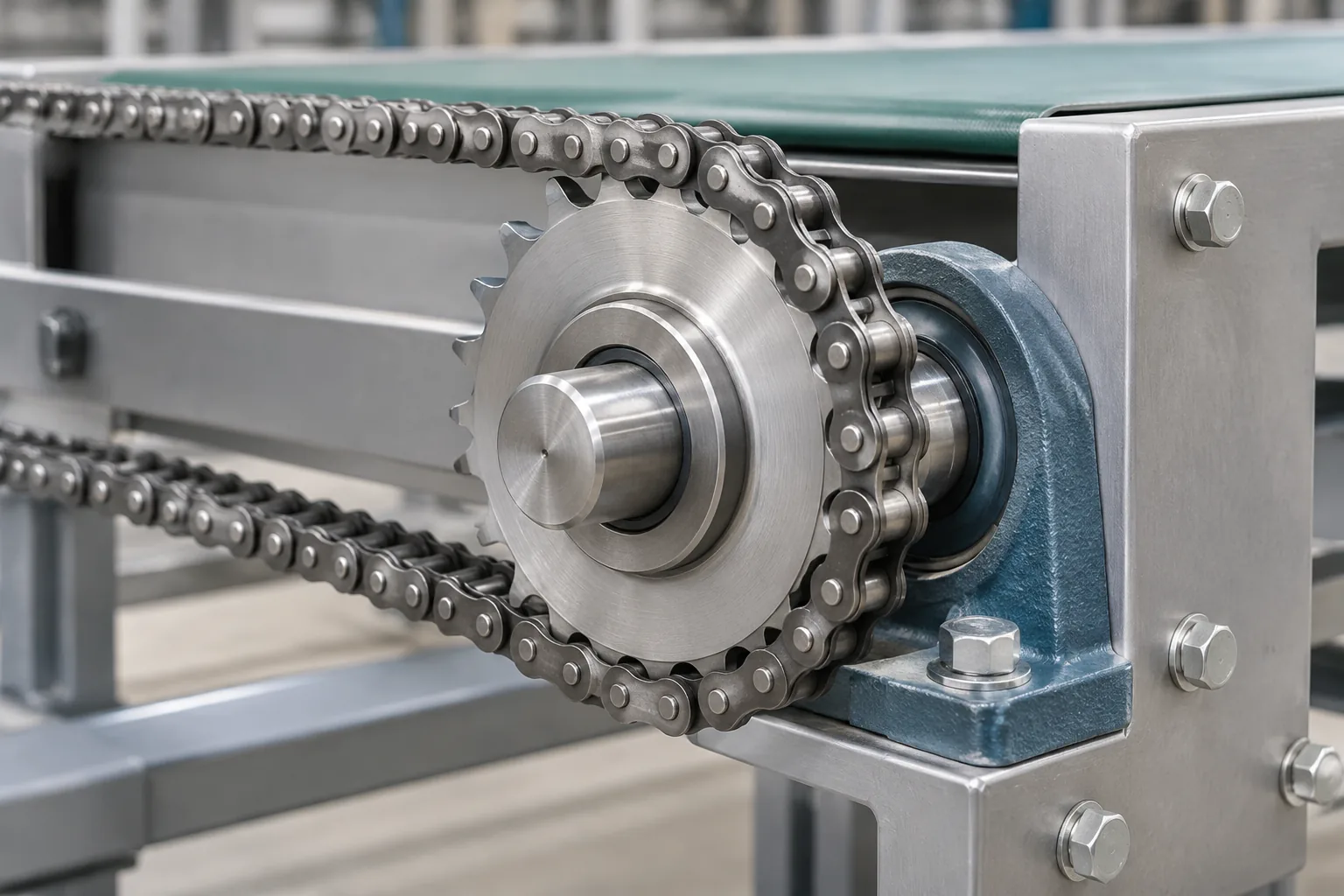
- Long center distances or distributed drive points where a compact gearbox would need extra shafts or idlers.
- Conveyors, chain drives, agricultural equipment, two-wheelers, and material handling where the drive must follow the machine layout.
- Some misalignment, contamination, or impact where the chain can absorb part of the disturbance and the drive is designed for it.
- Quick field replacement or center distance adjustment where downtime and service access matter.
These advantages depend on adequate wrap, reasonable alignment, and lubrication that meets the drive requirements. A chain drive that is loose, dry, or badly aligned can wear quickly and jump teeth. High-speed or precise indexing applications may be better served by a timing belt or a gear drive.
Typical Uses: When Gears Are The Practical Choice
Gears are the practical choice when the drive must be compact, precise, and capable of high torque density. They are common in gearmotors, machine tools, automotive transmissions, robot joints, and precision positioning systems. An enclosed gearbox also keeps lubricant in and contamination out, which supports long service when the lubricant is maintained.
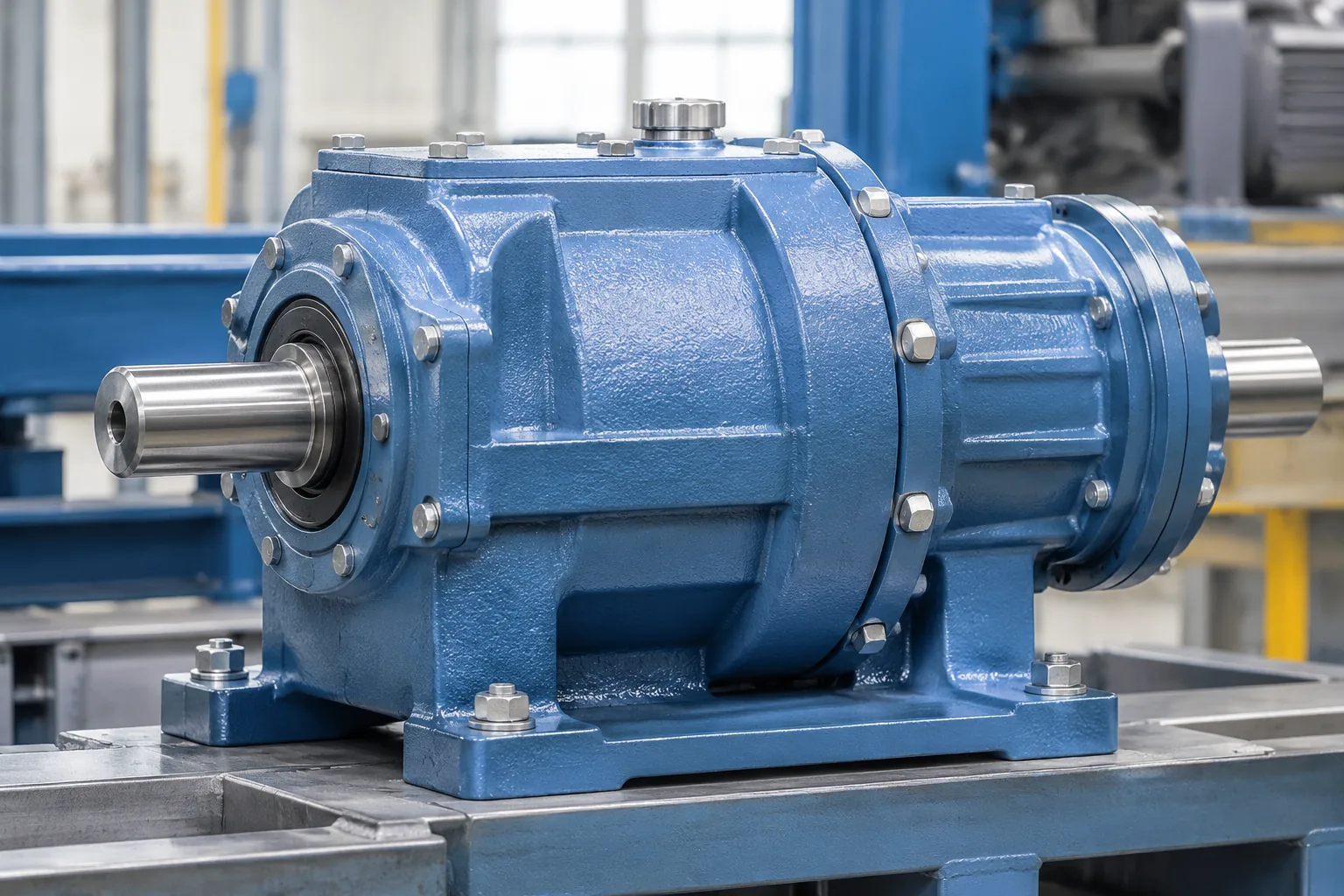
- Compact, high torque density where space around the shafts is limited.
- Precise ratio, low backlash, or high repeatability where lost motion affects the result.
- Short center distances and enclosed, lubricated housings where alignment can be controlled.
- Multi-stage reduction, intersecting or skew shafts, or large reduction ratios that would be difficult to package with a chain drive.
Gears need accurate center distance, alignment, and maintained lubrication. A gearbox almost always uses gears rather than chain sprockets because the housing can hold the pair in alignment, keep the lubricant in place, and package several stages in a small space.
When To Choose Which: A Decision Guide
Start with the layout, then move through speed and accuracy, torque and space, environment, maintenance, and cost. The order matters because a later advantage cannot rescue a layout that does not fit. There is no single better part; the trade-off belongs to the application.
Choose A Sprocket When…
- The center distance is long or must be adjustable and a compact gearbox layout is not practical.
- The system can accept chain tensioning, lubrication, and elongation checks as part of normal service.
- Easy part replacement and field maintenance are more important than a sealed gear housing.
- Some misalignment, shock, or dirty conditions are present and the drive is selected for them.
The condition is that high speed or precise positioning within tight tolerances is not the main constraint. If cleanliness or noise is critical, a timing belt pulley may be a better answer than a chain sprocket.
Choose A Gear When…
- Space is tight and torque density is high.
- Low backlash, precise ratio, or high repeatability is required.
- An enclosed, lubricated gearbox can hold alignment and keep lubricant in service.
- Multi-stage reduction, intersecting or skew shafts, or a large reduction ratio is needed.
The condition is that center distance and alignment can be held accurately and lubrication can be maintained. A gear pair that is misaligned or run with the wrong lubricant will not deliver its design advantage.
When A Timing Belt Pulley May Be The Better Answer
A timing belt pulley can provide synchronous transmission over a long center distance without chain lubrication. That can suit clean, low-noise, or positioning applications where a chain would need more attention. The trade-off is that belt load capacity, temperature limits, and contamination limits differ from chain drives, so the belt system must be selected for the actual duty.
A timing belt pulley is not a sprocket. It uses a belt tooth profile and pitch system, and the two cannot be interchanged on the same chain or belt. The similarity is functional, not dimensional.
Selection Checklist: What To Specify
Use the same checklist for either drive type so the comparison is based on the same inputs:
- Torque or power, speed, and load profile at the driven shaft, including starting, stopping, and shock.
- Space, center distance, alignment capability, and shaft support available in the machine.
- Required ratio, precision or backlash, and speed smoothness for the process.
- Environment: dust, water, temperature, cleanliness, and noise limits.
- Lubrication method, maintenance interval, and spare parts availability.
- Applicable standards, regulatory requirements, and fail-safe needs.
The design inputs are power, speed, ratio, center distance, environment, life target, and maintenance interval. Missing any one of them can make a valid part choice look wrong in service.
Common Mistakes To Avoid
- Treating a sprocket as a gear or trying to mesh a sprocket directly with a gear. The tooth forms and pitch systems are not designed for that.
- Swapping parts from a different pitch or tooth system without rechecking center distance, chain length, and tension.
- Choosing too few sprocket teeth to reduce noise or cost while ignoring the polygonal effect and the added vibration at speed.
- Neglecting lubrication and contamination until the chain or gear teeth show wear, pitting, or scoring.
- Mismatching a gear pair or ignoring backlash when the drive needs precise motion.
- Selecting by nominal torque only without the service factor and actual duty cycle.
Conclusion
The sprockets vs. gears decision comes down to the mating part and the layout. A sprocket works with a chain, belt, or track and is strong where center distance, adjustment, field service, and cost matter. A gear works directly with another gear and is strong where space is tight and the drive needs high torque density, low backlash, and precise ratio.
Define the center distance, speed, accuracy, load, environment, maintenance plan, and total cost before choosing. Then verify the selected part against the actual duty, including tension, alignment, lubrication, and service factor. That sequence gives a safer choice than comparing the two parts by shape alone.
FAQs
Q1: Is a sprocket a gear?
A: No. A sprocket is designed to engage a chain, belt, or track, while a gear is designed to mesh directly with another gear. They can look similar, but their tooth forms and mating systems serve different drives.
Q2: Can a sprocket mesh with a gear?
A: No. A sprocket tooth profile and pitch are matched to a chain or belt, not to a gear tooth. Direct sprocket-to-gear contact is not a designed mesh and can cause rapid wear or tooth damage.
Q3: Which is more efficient, a gear drive or a chain sprocket drive?
A: A gear pair is generally the more efficient of the two, while a well-maintained chain drive remains efficient. The exact difference depends on design, load, lubrication, alignment, and condition, so a single value does not apply to every drive.
Q4: Which has lower maintenance cost, sprockets or gears?
A: It depends on the layout and duty. A chain sprocket drive often has lower part cost and is easier to replace in the field, but it needs tensioning, lubrication, and elongation checks. A gearbox has higher initial cost and tighter service requirements, but it can run longer in a sealed, well-lubricated housing when correctly specified.
Q5: When should I choose a sprocket instead of a gear?
A: Choose a sprocket when the center distance is long or adjustable, field replacement matters, and the system can support chain tensioning and lubrication. Do not choose it when high speed or precise positioning within tight tolerances is the main requirement.
Q6: Is a timing belt pulley the same as a sprocket?
A: No. A timing belt pulley uses a belt tooth profile and pitch system, while a chain sprocket uses a chain roller or link interface. They can serve a similar functional role, but they are not interchangeable on the same chain or belt.
Q7: Can a sprocket drive achieve a precise ratio like a gear train?
A: Yes, the ratio of a simple sprocket drive is set by tooth counts, just as it is for a gear pair. The practical difference is that a chain elongates and introduces backlash over time, while a gear train can hold a more precise ratio in a compact, rigid housing.
Q8: Why do bicycles use sprockets instead of gears?
A: A bicycle uses sprockets because a chain can transmit power across a long, changing center distance with light, simple, and cost-effective parts. It also allows the rear wheel position to move for adjustment and lets the rider change ratios with different sprocket sizes.
Q9: Can a chain drive tolerate more shock than a gear drive?
A: A chain drive can tolerate some shock and minor misalignment because several teeth and links share the load and the chain adds flexibility. That does not replace correct selection. The drive still needs the right service factor, tension, alignment, and lubrication.
Q10: Can a gear be used with a roller chain?
A: No. A roller chain needs a sprocket with a matching pitch and tooth profile. A gear is designed for direct tooth contact with another gear, so it cannot serve as a chain sprocket.