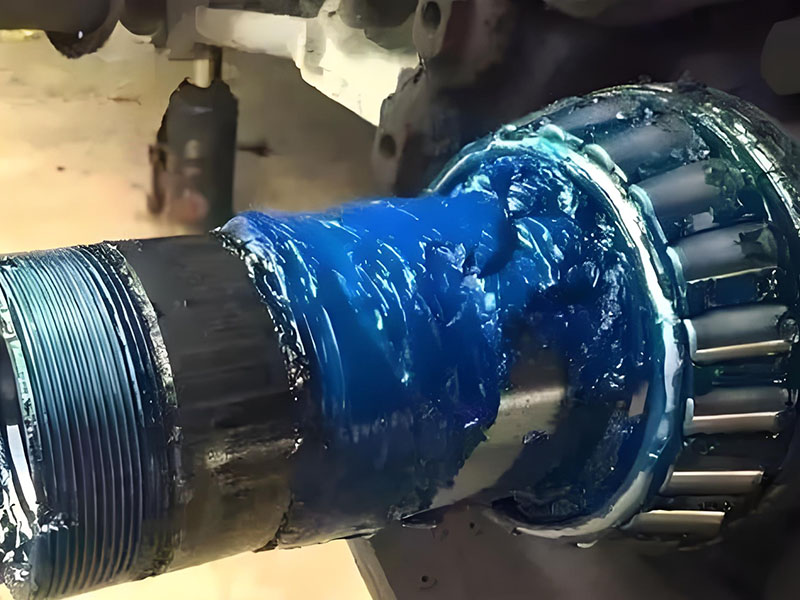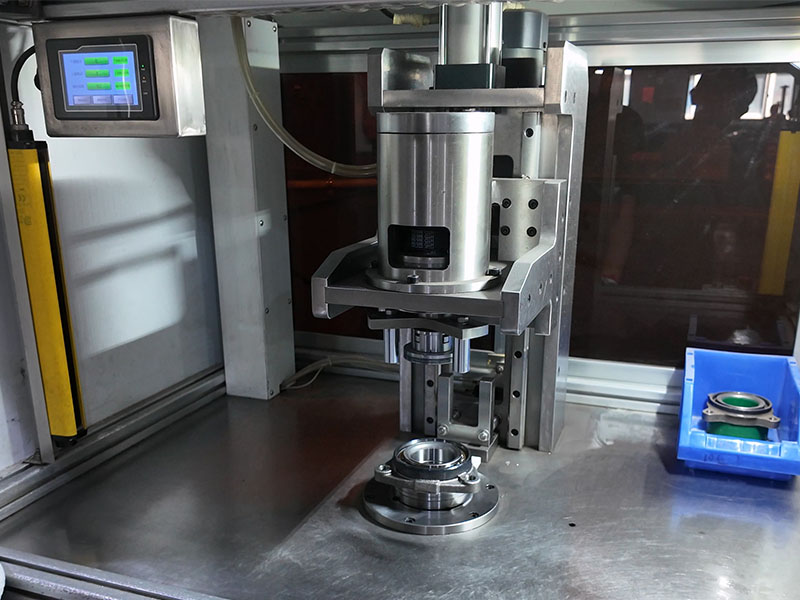
Are you designing a gearbox that needs to handle both radial shaft loads and axial thrust forces—or a mining conveyor where shaft misalignment is unavoidable? Selecting the right roller bearing type directly affects equipment reliability, maintenance frequency, and operational costs. When comparing tapered roller bearing vs spherical roller bearing, the choice fundamentally depends on whether your application prioritizes precision and combined loads (TRB) or self-alignment and heavy radial loads (SRB). Tapered roller bearings and spherical roller bearings are two of the most widely used bearing types in heavy-duty industrial applications, yet they are built on fundamentally different engineering principles. This guide provides a side-by-side tapered roller bearing vs spherical roller bearing comparison, covering design differences, load capacity, misalignment tolerance, speed capability, and selection criteria.
Quick Overview: Tapered vs Spherical Roller Bearings
| Feature | Tapered Roller Bearing | Spherical Roller Bearing |
|---|---|---|
| Roller shape | Truncated cone (tapered) | Barrel-shaped (symmetrical) |
| Raceway geometry | Tapered inner and outer rings | Spherical outer ring, two inner raceways |
| Self-aligning capability | None (requires precise alignment) | Yes (typically 1.5°–3°) |
| Primary load type | Combined radial + unidirectional axial | Heavy radial + moderate bidirectional axial |
| Speed capability | Moderate to high | Low to moderate |
| Friction level | Lower | Higher |
| Installation | Complex (requires clearance adjustment) | Simpler (pre-set clearance available) |
| Typical applications | Automotive wheel hubs, gearboxes, machine tool spindles | Mining crushers, wind turbines, vibrating screens |
Tapered Roller Bearings: Design and Performance Characteristics
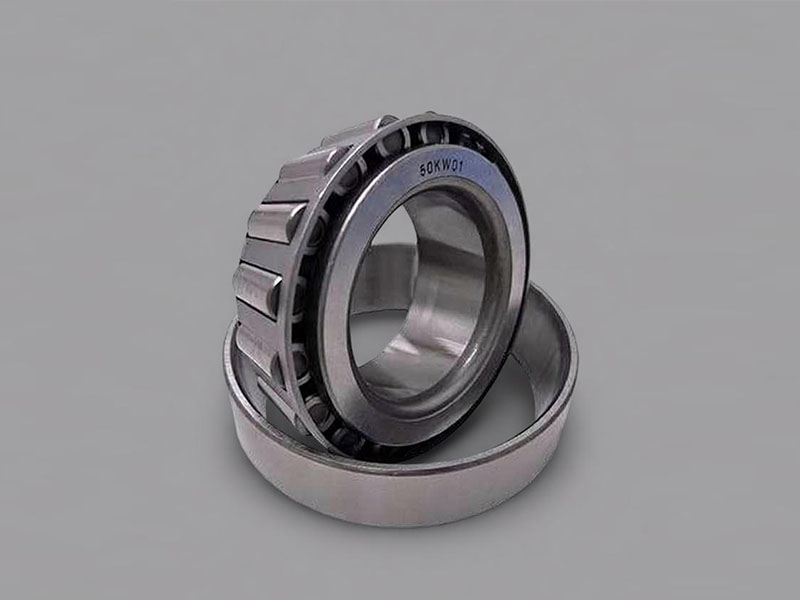
Tapered roller bearing advantages and disadvantages stem directly from their tapered geometry. Tapered roller bearings consist of an inner ring (cone), an outer ring (cup), and tapered rollers arranged between them. The raceways of both rings are tapered, and the apex of the roller’s cone meets at a common point on the bearing axis. This geometry ensures pure rolling motion between the rollers and raceways, minimizing friction and wear.
Load Capacity and Handling. The line contact between tapered rollers and raceways provides high load-carrying capacity relative to bearing size. Tapered roller bearings excel in applications requiring simultaneous radial and axial load. Their angular contact design allows them to accommodate a wide range of axial-to-radial load ratios. When mounted in opposed pairs (face-to-face or back-to-back), they can handle bidirectional axial loads and provide adjustable system rigidity.
Speed and Precision. Tapered roller bearings generally achieve higher limiting speeds than spherical roller bearings due to their lower internal friction. For example, a 75mm bore tapered roller bearing (e.g., 30215 series) may have a limiting speed of 5,000 rpm under oil lubrication. Their separable design allows for adjustable internal clearance or preload during installation, enabling precise control over bearing stiffness and positional accuracy. This makes them the preferred choice for precision rotating applications such as machine tool spindles and automotive transmission shafts.
Limitations. Tapered roller bearings have limited tolerance for misalignment. If shaft deflection or housing inaccuracy exceeds a few minutes of arc, edge loading occurs, leading to stress concentration, abnormal wear, and premature failure. Installation requires careful clearance adjustment and precise alignment, making assembly more complex than with pre-set, self-aligning bearing types.
Spherical Roller Bearings: Design and Performance Characteristics
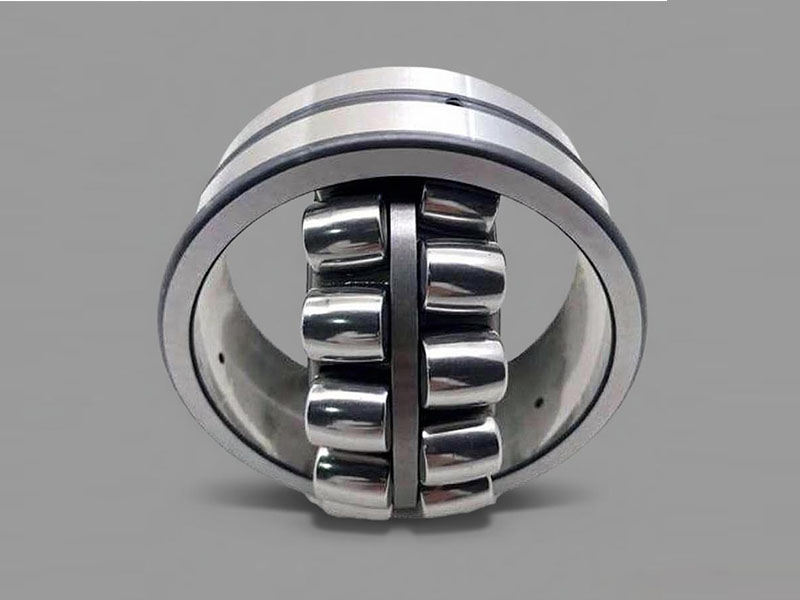
Understanding spherical roller bearing pros and cons requires examining its self-aligning raceway. Spherical roller bearings feature two rows of symmetrical barrel-shaped rollers running on a common spherical raceway on the outer ring. The inner ring has two raceways, while the outer ring’s spherical geometry allows the inner ring and rollers to pivot relative to the outer ring. This design gives spherical roller bearings their defining characteristic: self-alignment capability.
Load Capacity and Self-Alignment. Spherical roller bearings are engineered primarily for extremely heavy radial loads. They can also accommodate moderate bidirectional axial loads, though their axial load is secondary to their radial strength. The spherical outer ring raceway allows angular misalignment typically in the range of 1.5° to 3°, depending on bearing series and size. This self-aligning feature compensates for shaft deflection, mounting errors, housing deformation, and vibration-induced misalignment without increasing bearing stress.
Speed Limitations. Due to internal sliding friction between rollers and guide flanges, spherical roller bearings have lower speed ratings than tapered roller bearings of comparable size. A 75mm bore spherical roller bearing (e.g., 22215 series) typically limits to 3,000 rpm under oil lubrication—significantly lower than a tapered roller bearing of similar dimensions. Spherical roller bearings are generally better suited for low- to medium-speed applications where load capacity and alignment tolerance take priority over rotational speed.
Limitations. Spherical roller bearings have higher frictional resistance than tapered roller bearings, which can reduce efficiency in some applications. Their complex design makes them more expensive to manufacture, and they require more radial space than tapered roller bearings of equivalent load capacity. Additionally, spherical roller bearings do not offer adjustable preload—their internal clearance is factory-set and cannot be modified during installation.
Key Differences Between Tapered and Spherical Roller Bearings
To understand tapered roller bearing vs spherical roller bearing differences, each performance dimension must be examined separately. The difference between tapered and spherical roller bearing becomes clear across four critical areas: load handling, speed and precision, misalignment tolerance, and installation requirements.
Load Handling Comparison. Tapered roller bearings are the superior choice for applications requiring combined radial and unidirectional axial loads. Their angular contact geometry enables efficient transmission of both load components along the contact line between rollers and raceways. Spherical roller bearings, by contrast, are optimized for pure radial loads. While they can accommodate moderate axial loads in both directions, their axial capacity is limited compared to tapered roller bearings.
Speed and Precision Comparison. Tapered roller bearings offer higher speed capability and greater precision. Their tapered design minimizes sliding between rolling elements and raceways, reducing friction and heat generation at elevated speeds. The ability to adjust internal clearance or apply preload allows tapered roller bearings to achieve high stiffness and positional accuracy. Spherical roller bearings sacrifice speed and precision for self-alignment. They operate effectively at low to moderate speeds but generate more heat under high-speed conditions.
Misalignment Tolerance Comparison. This is the most significant differentiator between the two bearing types. Spherical roller bearings can accommodate angular misalignment of 1.5° to 3°, making them indispensable in applications where shaft deflection, housing inaccuracies, or vibration-induced alignment changes are unavoidable. Tapered roller bearings have virtually no misalignment tolerance—they require precise alignment during installation and maintain that alignment throughout operation. Any deviation leads to edge loading and accelerated failure.
Installation and Maintenance Comparison. Tapered roller bearings require more complex installation. Because they are separable components, the inner ring assembly and outer ring must be carefully positioned to achieve the correct internal clearance or preload. Installation typically involves adjusting a locknut or using shims to set bearing play. Spherical roller bearings are simpler to install—they come as inseparable assemblies with factory-set internal clearance. Their self-aligning nature reduces the precision required during mounting, though proper lubrication and temperature monitoring remain essential for longevity.
How to Choose Between Tapered and Spherical Roller Bearings
When to use tapered roller bearing vs spherical roller bearing depends on four key factors: load type, misalignment risk, speed requirement, and installation complexity. Use the following guidelines to make your selection.
- Choose tapered roller bearing when: Your application has significant axial (thrust) load; high rotational speed is required; shaft alignment can be precisely controlled; adjustable preload or clearance is needed. Common examples: automotive wheel hubs, gearboxes, machine tool spindles.
- Choose spherical roller bearing when: Your primary load is heavy radial with only incidental axial load; shaft misalignment or deflection is unavoidable (>0.1°); vibration and shock loads are present; simpler installation without clearance adjustment is preferred. Common examples: mining crushers, vibrating screens, wind turbine main shafts, long conveyor systems.
Decision Reference Table
| Application Scenario | Recommended Bearing | Rationale |
|---|---|---|
| Automotive wheel hub | Tapered roller bearing | Combined radial (vehicle weight) + axial (cornering) loads; high precision required |
| Automotive transmission / differential | Tapered roller bearing (paired) | Handles gear thrust loads; adjustable preload for rigidity |
| Mining crusher / vibrating screen | Spherical roller bearing | Heavy radial loads; shock loads; vibration-induced misalignment |
| Wind turbine main shaft | Spherical roller bearing | Fluctuating loads; tower deflection causes alignment changes |
| Industrial gearbox | Tapered roller bearing | Combined loads; high precision; moderate to high speeds |
| Conveyor system with long shaft | Spherical roller bearing | Shaft deflection expected; primarily radial loads |
| Machine tool spindle | Tapered roller bearing | High precision; adjustable preload; high stiffness required |
| Agricultural equipment (tractor axle) | Tapered roller bearing | Combined loads; dust resistance; moderate speeds |
Application-Specific Recommendations
Automotive Industry. For wheel hubs, transmissions, and differentials, tapered roller bearings are the standard choice. Their ability to handle combined radial and axial loads while maintaining precision under variable operating conditions makes them ideal for passenger vehicles and commercial trucks. DUHUI Bearing specializes in automotive wheel bearings with two decades of manufacturing experience.
Heavy Machinery and Mining. Crushers, vibrating screens, and conveyor systems operate under extreme radial loads, shock loads, and vibration. Shaft deflection and housing misalignment are common. Spherical roller bearings are the preferred solution in these environments due to their self-aligning capability and robust design.
Wind Energy. Wind turbine main shafts and gearboxes experience fluctuating loads and tower deflection that causes shaft misalignment. Spherical roller bearings accommodate these alignment changes while supporting the heavy radial loads from rotor blades.
Industrial Gearboxes. Tapered roller bearings are commonly used on gearbox input and output shafts where combined radial and axial loads from gear tooth engagement must be managed with high precision.
Conclusion
When evaluating tapered roller bearing vs spherical roller bearing, the correct choice aligns bearing characteristics with application demands. Tapered roller bearings deliver high precision, adjustable preload, and superior combined load handling—ideal for automotive wheel hubs, gearboxes, and machine tool spindles where axial loads are significant and alignment can be precisely controlled. Spherical roller bearings offer self-alignment, high radial load capacity, and robustness under shock and vibration—essential for mining equipment, wind turbines, and long-shaft conveyors where misalignment is unavoidable.
Frequently Asked Questions
Q1: Which bearing has better high-speed capability, tapered or spherical roller bearing?
A: Tapered roller bearings generally achieve higher limiting speeds than spherical roller bearings. For example, a 75mm bore tapered roller bearing (e.g., 30215 series) may have a limiting speed of 5,000 rpm under oil lubrication, while a comparable spherical roller bearing (e.g., 22215 series) of the same bore size typically limits to 3,000 rpm due to internal sliding friction between rollers and guide flanges. The tapered design creates line contact with lower internal friction, reducing heat generation at elevated speeds. For very high-speed applications, angular contact ball bearings may be preferred over both roller bearing types.
Q2: Can a spherical roller bearing handle axial loads?
A: Yes, spherical roller bearings can accommodate moderate bidirectional axial loads. However, their design is optimized primarily for extremely heavy radial loads. If axial loads are the dominant force in your application, tapered roller bearings or dedicated thrust bearings are more suitable. The axial load capacity of a spherical roller bearing is generally secondary to its radial load rating.
Q3: Why are tapered roller bearings usually installed in pairs?
A: A single tapered roller bearing can only accommodate axial load in one direction. To handle bidirectional axial loads or provide rigid shaft positioning, two tapered roller bearings must be mounted in an opposed configuration (face-to-face, back-to-back, or in tandem). This paired arrangement also allows adjustment of internal clearance or preload to optimize system stiffness.
Q4: How much misalignment can a spherical roller bearing tolerate?
A: Standard spherical roller bearings can accommodate angular misalignment of 1.5° to 3°, depending on the bearing series and size. This self-aligning capability compensates for shaft deflection, mounting errors, housing deformation, and vibration-induced alignment changes. Some specialized series offer higher misalignment tolerance. By comparison, tapered roller bearings have virtually no misalignment tolerance—even minor angular errors cause edge loading and premature failure.
Q5: Are spherical roller bearings more expensive than tapered roller bearings?
A: For a given size and load rating, spherical roller bearings are typically more expensive. Their complex manufacturing process—particularly the precision grinding of spherical outer ring raceways and the two-row roller configuration—contributes to higher production costs. However, total lifecycle cost must be considered: spherical roller bearings may reduce installation time and maintenance requirements in misalignment-prone applications, while tapered roller bearings offer lower initial cost for precision-aligned installations.
Q6: Can I replace a spherical roller bearing with a tapered roller bearing?
A: Direct replacement is not recommended without engineering review. If the original application required self-alignment due to shaft deflection or housing inaccuracies, replacing with a tapered roller bearing would require redesigning the mounting structure and ensuring precise alignment within minutes of arc. Conversely, replacing a tapered roller bearing with a spherical roller bearing in a precision application would sacrifice positional accuracy and preload adjustability. Always evaluate load direction, misalignment tolerance, speed requirements, and space constraints before considering substitution.