Quick Answer
A bad wheel hub assembly typically reveals itself through a roaring or growling noise that increases with vehicle speed, often becoming noticeable above 50 mph. Other warning signs include a vibrating steering wheel, vehicle pulling to one side during braking, uneven brake pad wear, and an illuminated ABS or traction control light. To confirm diagnosis, lift the vehicle, grab the tire at the top and bottom (12 and 6 o’clock positions) to check for play, then remove the wheel and spin the hub by hand to feel for roughness or resistance. A dial indicator reading exceeding 0.004 inches (0.10 mm) of brake rotor lateral runout can indicate a worn hub flange or bearing. Do not drive on a failed bearing – it can cause wheel lock-up or separation.
Wheel hub assemblies are engineered to endure 100,000 miles or more of normal driving. Many factory-installed units outlast the vehicle itself. Yet premature failure remains a common issue across all makes and models. On average, a sealed wheel bearing and hub assembly delivers roughly 85,000 to 100,000 miles of service life under typical operating conditions.
Throughout this article, the terms “wheel hub assembly” and “wheel bearing” are used synonymously. On most modern vehicles, the bearing and hub are manufactured as a single integrated unit, making the two terms practically interchangeable in everyday workshop language.
How do you determine whether your vehicle actually has a failing wheel hub assembly? This guide provides a systematic diagnostic approach, from initial symptom recognition through hands-on physical inspection.
What Are the Causes of a Bad Wheel Hub Assembly
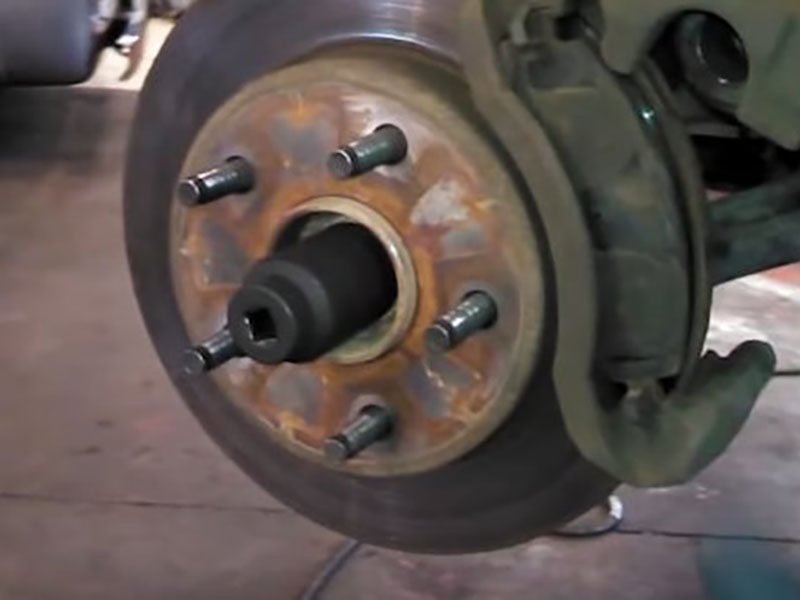
Several factors can shorten the service life of a wheel hub assembly. Understanding these causes helps you identify potential risks and take preventive measures.
- Contamination: Water, mud, fine dust, and winter road salt can breach the seals and abrade the precision-ground internal surfaces.
- Impact damage: Repeated encounters with potholes, curb strikes, or other road-surface irregularities shorten bearing life significantly.
- Improper installation: Using incorrect torque specifications during fitting is one of the most frequent causes of premature failure.
- Excessive stress: Heavy towing, hard cornering, and operation on rough unpaved roads push bearings beyond their intended load limits.
- Wheel misalignment: Incorrect alignment angles place uneven lateral loads on the bearing, accelerating wear on one side.
What Are the Symptoms of a Bad Wheel Hub Assembly
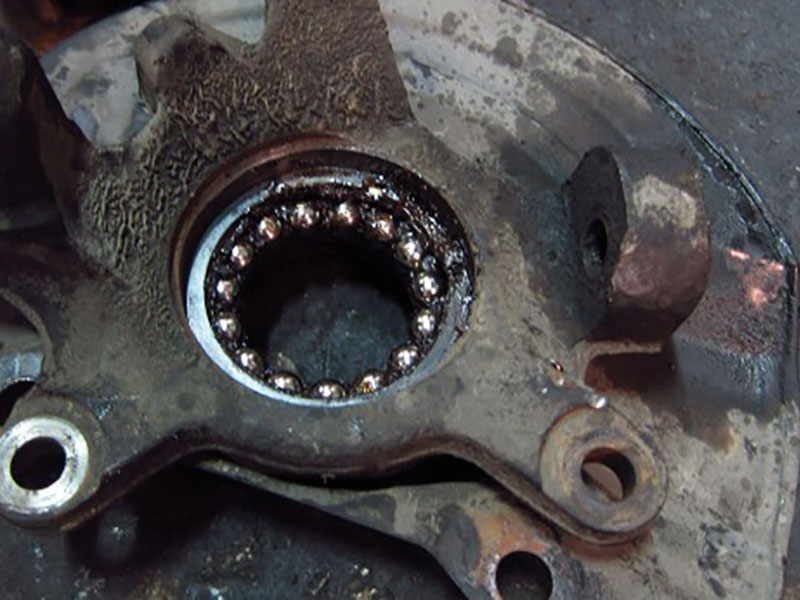
A deteriorating wheel hub assembly typically gives multiple warning signals before complete failure occurs. Recognizing these early indicators allows you to address the problem before it becomes a safety-critical issue. If any of the following symptoms appear, promptly inspect every wheel hub assembly on the vehicle.
Auditory Symptoms
- A roaring, rumbling, or growling sound whose volume rises with road speed
- A grinding noise that seems to originate from the wheel area
- Cyclical chirping or humming – a subtler sign that less experienced technicians often overlook
- Knocking or clicking during low-to-moderate-speed turns
Tactile and Handling Symptoms
- Vibration or looseness transmitted through the steering wheel
- The vehicle pulling to one side under braking
- Excessive free play in the steering wheel’s normal range of motion
Visual and Electronic Symptoms
- Uneven wear patterns on brake pads and rotors
- Irregular tire wear – often the earliest physical evidence, appearing even before the bearing becomes audible
- ABS warning lamp illuminating on the instrument panel (modern hub assemblies incorporate integrated wheel-speed sensors)
- The traction control light may also activate in some cases
Take action promptly: If you notice one or more of these warning signs, schedule a diagnostic inspection without delay. A failing hub assembly presents a genuine safety hazard – total separation from the vehicle is possible if the issue is left unaddressed.
How to Diagnose a Bad Wheel Hub by Sound
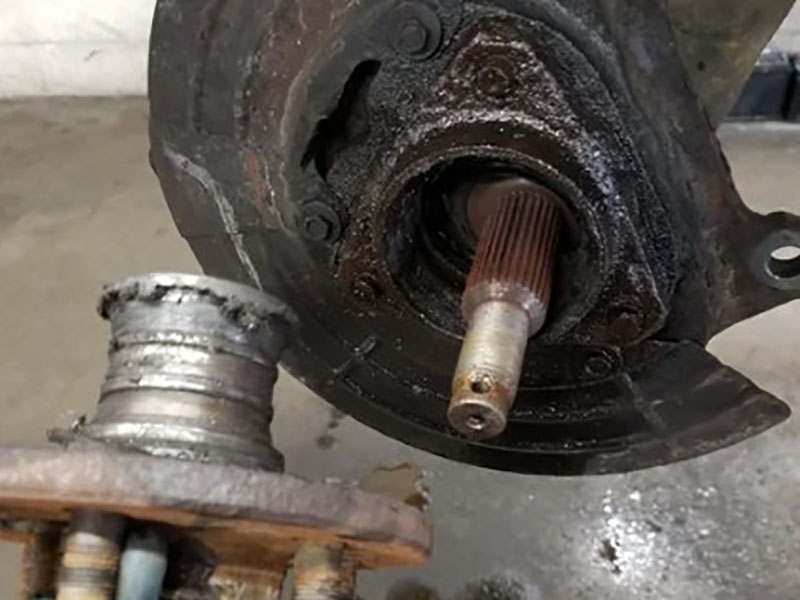
A failing wheel bearing typically announces itself through a pronounced roaring noise at highway speeds. During your test drive, accelerate past 50 mph and listen carefully. The sound is often most perceptible in the 20-to-50 mph range.
Characterizing the Noise
Drivers commonly report a steady hum, drone, or low growl that intensifies as speed climbs. A less frequent pattern includes grinding noises or clicking sounds – these tend to emerge during low-speed turns.
Pinpointing the Affected Side
To save diagnostic time, narrow the noise down to a specific axle or corner. Here is the technique:
- Turn the steering wheel left: The vehicle’s weight transfers to the right side, increasing load on the right-side bearings. If the noise grows louder, a right-side bearing is likely at fault.
- Turn the steering wheel right: Weight shifts to the left. If the sound intensifies, suspect a left-side bearing problem.
The bearing positioned on the outside of the turn bears more weight, so a faulty right-front bearing becomes loudest during a left-hand turn.
A Critical Nuance
A wheel spinning freely in the air carries zero load. Many failing bearings generate noise exclusively when supporting the vehicle’s weight at road speeds. Relying solely on a free-spin test will miss these cases – you must drive the vehicle to get the full diagnostic picture.
How to Check a Wheel Hub Assembly for Play and Roughness
The hands-on inspection process is methodical and straightforward. Follow these steps in order:
Step 1: Safely Raise the Vehicle
Use a hydraulic jack to lift the vehicle, then support it securely on jack stands. Place wheel chocks against the wheels remaining on the ground to prevent unintended movement.
Step 2: The Rocking Test (Wheel Attached)
Keep the wheel installed. Position one hand at the top of the tire (12 o’clock) and the other at the bottom (6 o’clock). Push and pull firmly, alternating directions, to detect any play or looseness.
- A small amount of movement is normal.
- Significant play accompanied by a clunking sound indicates the bearing requires replacement.
- Critical: Early-stage bearing failure often presents no detectable play at all.
Some technicians also check at the 3 and 9 o’clock positions. Looseness found there may point to tie rod ends or ball joints rather than a wheel bearing problem – a useful distinction during diagnosis.
Step 3: Remove the Wheel and Caliper
If you detected play:
- Take off the tire and wheel.
- Remove one caliper slide pin and tilt the caliper away from the rotor. Alternatively, detach the caliper completely – this prevents the brake pads from dragging during the hub spin test.
Step 4: Spin the Hub by Hand
Rotate the hub manually and monitor for unusual resistance, roughness, or vibration. Any roughness or inconsistent rotation may indicate internal contamination or bearing surface damage.
To establish a reference point, repeat this spin test on all hubs across the vehicle. Comparing them side by side helps identify which unit deviates from normal.
Step 5: Precision Measurement with a Dial Indicator (Optional)
For a more precise diagnosis, you can measure the brake rotor’s lateral runout using a dial indicator. Mount the dial indicator’s plunger against the rotor surface, approximately 4.7 inches (12 cm) from its center. Slowly rotate the hub and rotor assembly and read the dial indicator. Industry standards often specify that lateral runout should not exceed 0.004 inches (0.10 mm). Excessive runout here can be a strong indicator of a worn or damaged wheel hub assembly, as it points to issues with the hub flange or bearing.
How to Tell If It’s the Wheel Bearing or Something Else
Worn ball joints and tie rod ends can produce symptoms that overlap with wheel bearing failure. The table below clarifies the differences:
| Component | Typical Symptoms | Key Differentiator |
|---|---|---|
| Wheel hub bearing | Continuous growling/humming that intensifies with speed; sound varies during turns | Noise is audible on straight, level roads and grows progressively louder as speed increases |
| Ball joint | Clunking over bumps; sensation that the wheel is loosely attached | Noise occurs mainly over irregular surfaces and expansion joints – not a constant sound |
| Tie rod end | Vague, wandering steering feel; play at 3 and 9 o’clock positions | Steering lacks precision; the car wanders without corresponding steering input |
| Cupped/scalloped tires | Drone or hum similar to a worn bearing | The noise does not change during turns; tire tread shows a wavy, scalloped pattern on visual inspection |
The critical distinction: A failing wheel bearing produces continuous noise even on smooth, straight pavement – and the volume tracks directly with vehicle speed. Suspension and steering issues tend to manifest as looseness, vagueness, or noise triggered by bumps. Cupped tires can sound remarkably like a bad bearing, so visually inspect the tread before condemning the hub.
Conclusion
Effective diagnosis of a bad wheel hub assembly follows a logical sequence: road test, sound localization, and physical inspection. Keep these takeaways in mind:
- Listen first: A roaring or growling sound above 50 mph is the most reliable initial warning
- Turn to locate: Louder noise on left turns = right-side issue; louder on right turns = left-side issue
- Rock to check: Lift the vehicle, grasp the tire at 12 and 6 o’clock, and assess for play – but understand that play may be absent in early-stage failures
- Spin to detect roughness: Remove the wheel and caliper, turn the hub by hand, and feel for abnormal resistance
- Measure to confirm: A dial indicator reading beyond 0.004 inches (0.10 mm) brake rotor lateral runout suggests the hub flange or bearing is no longer serviceable
Never continue driving on a confirmed bad bearing. As the noise intensifies, internal degradation accelerates. Total failure can result in wheel lock-up or separation from the vehicle – an extremely hazardous scenario that may cause loss of control and serious injury.
For professional-grade replacement wheel hub assemblies, explore our product range. Should you have further questions about diagnosing hub assembly issues, consult a qualified technician or reach out to us directly for expert assistance.
FAQs
Q1: How can I identify which wheel bearing has failed?
A: A road test helps pinpoint the failing side. Turning left intensifies the noise – suspect the right side (weight shifts rightward). Turning right intensifies the noise – suspect the left side (weight shifts leftward). The bearing on the outside of the turn carries more load, making its failure more audible.
Q2: Is it safe to keep driving on a bad wheel bearing?
A: No. Driving on a failed bearing is unsafe. While the vehicle may cover a short distance – perhaps a few dozen miles at most – failure can occur abruptly and without further warning. The wheel may lock up or detach, posing a serious collision risk. Arrange for inspection and replacement immediately.
Q3: Should I replace wheel hub assemblies in pairs?
A: Replacing both sides on the same axle is not strictly mandatory, but it is strongly recommended for higher-mileage vehicles. Performance balance: A new, tight hub paired with a worn, high-mileage counterpart can promote uneven brake and tire wear. Prevent repeat repairs: If one side failed at 120,000 miles, the opposite side has covered the exact same distance under the same conditions. Replacing both now avoids a return visit in a few weeks when the other bearing inevitably fails.
Q4: What causes wheel hub bearings to fail prematurely?
A: Common contributing factors include repeated impacts from potholes, curbs, and rough road surfaces; moisture, salt, dirt, and dust penetrating the seals; incorrect torque application during installation; chronic overloading from towing or aggressive cornering; improper wheel alignment producing uneven lateral loads; and normal end-of-life wear – even under ideal conditions, expect 85,000 to 100,000 miles.
Q5: If there is no play during the rocking test, is the bearing healthy?
A: Not necessarily. Early-stage bearing degradation often produces no detectable play. A freely spinning wheel carries no load, and many failing bearings only manifest noise under load at road speeds. If you hear a roar while driving but find no play on the lift, the bearing may still be failing.
Q6: What does a bad wheel bearing sound like in practice?
A: Common acoustic signatures include a growling or humming tone that rises with speed; a grinding sound emanating from the wheel area; knocking or clicking during turns at low speeds; and a cyclical chirp – a subtler sign worth noting. Most people describe the sound as a steady hum, drone, or low growl that gets louder the faster you go.
Q7: Can a bad wheel bearing trigger the ABS warning light?
A: Yes. Many modern hub assemblies embed the ABS sensor directly into the unit. As the bearing wears, excessive play or metallic debris from the failing bearing can interfere with the sensor, generating erratic wheel-speed signals. The ABS module interprets these irregular readings as impossible wheel behavior and illuminates the warning light. If either ABS or traction control light appears alongside bearing noise, the hub assembly is a likely culprit.