Quick Answer: Choose between 6203 and 6204 based on your shaft size first. A 6203 fits a 17 mm shaft with a 40 mm outer diameter and 12 mm width. A 6204 fits a 20 mm shaft with a 47 mm outer diameter and 14 mm width. The 6204 carries heavier loads (Cr 12.8 kN vs 9.55 kN), while the 6203 runs faster (grease limit 18,000 rpm vs 15,000 rpm). Light duty and high speed call for the 6203. Heavy loads and moderate speeds favor the 6204. Match your shaft, then check your load and speed.
If you have ever stood in front of a bearing cabinet wondering whether to grab a 6203 or a 6204, you are not alone. They look nearly identical at a glance. Both are deep groove ball bearings. Both are widely used in motors, pumps, and industrial equipment. But they are not interchangeable.
The wrong choice can mean vibration issues, overheating, or early failure — sometimes within hours. The right choice runs quietly for years. Getting it right starts with understanding what makes these two bearings different beyond their size.
This guide walks you through those differences step by step. You will learn how to read the bearing code, what the numbers actually mean for your machine, and exactly how to decide which one belongs on your shaft.
6203 and 6204 Bearing Numbers: What They Mean
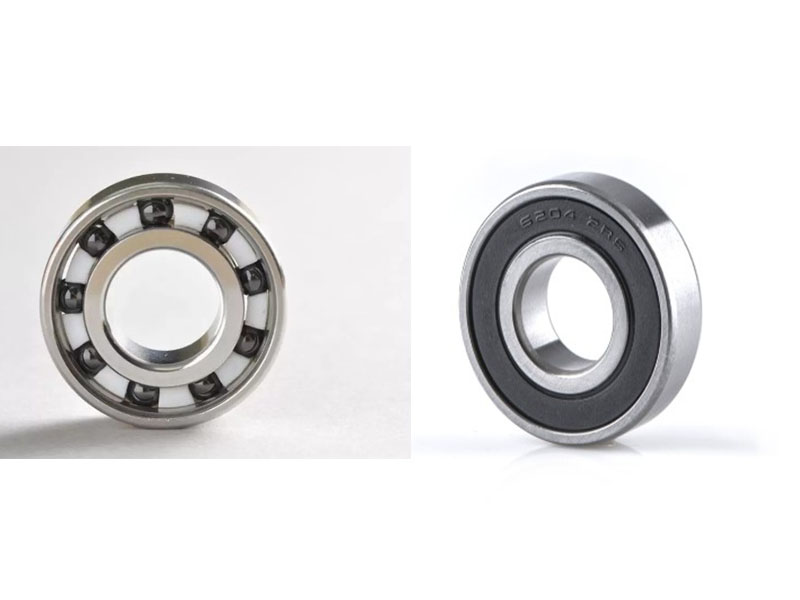
Start with the numbers. The “62” series means a single-row deep groove ball bearing with medium dimensions. This is the workhorse family — versatile enough for automotive alternators, conveyor rollers, and household appliances alike.
The last two digits are where the real difference hides:
- 03 means the bore is 17 mm (for the 6203)
- 04 means the bore is 20 mm (for the 6204)
The suffix after the number tells you how the bearing is sealed:
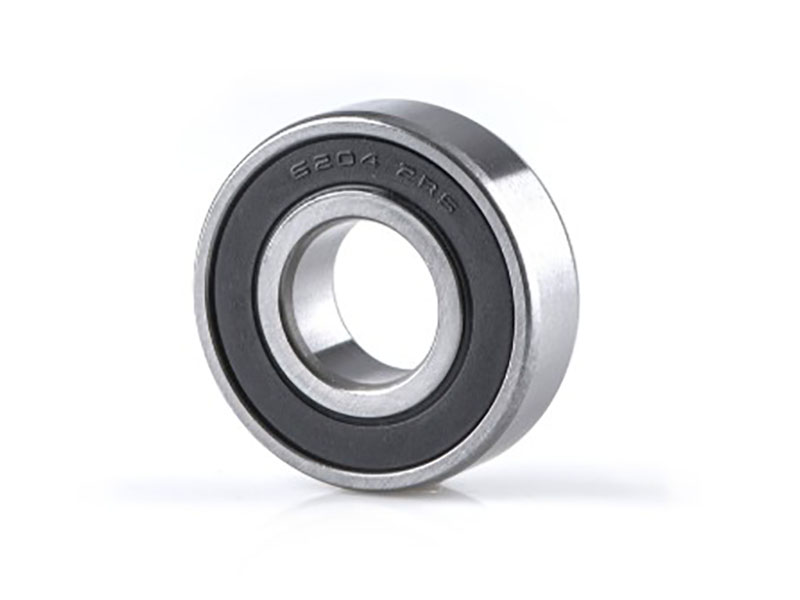
- 2RS — rubber seal on both sides. Best protection against dust and moisture.
- RS — rubber seal on one side only.
- ZZ — metal shield on both sides. Lighter contact than rubber, allows higher speeds.
- No suffix — open bearing, no seals or shields. Used in oil-lubricated systems.
A 6203-2RS is a 17 mm bearing with rubber seals. A 6204-ZZ is a 20 mm bearing with metal shields. The suffix matters as much as the number for your application.
Key Differences Between 6203 and 6204 Bearings
Dimensional Profile
The most visible difference is size. The 6204 is bigger in every direction.
| Specification | 6203 | 6204 |
|---|---|---|
| Bore diameter | 17 mm | 20 mm |
| Outer diameter | 40 mm | 47 mm |
| Width | 12 mm | 14 mm |
| Weight | ~65 g | ~105 g |
| Chamfer (r min.) | 0.6 mm | 1.0 mm |
That extra 3 mm of bore, 7 mm of outer diameter, and 2 mm of width make the 6204 about 60% heavier than the 6203. That weight difference matters in portable equipment or high-speed rotating assemblies where every gram affects balance and inertia.
Speed Capability: Which One Spins Faster
Smaller bearings spin faster. This is a physics reality. The 6203 has less rolling mass and generates less heat at high RPM.
| Lubrication | 6203 Limit | 6204 Limit |
|---|---|---|
| Grease (open bearing) | 18,000 rpm | 15,000 rpm |
| Oil (open bearing) | 22,000 rpm | 18,000 rpm |
The 6203 gives you a 3,000 rpm advantage in grease applications and a 4,000 rpm edge with oil. For applications above 17,000 rpm, the 6203 is usually your only option between these two.
Sealed versions run slower — often 20-30% lower than the figures above because of seal friction. If you need both speed and protection, consider ZZ (shielded) rather than RS or 2RS.
Load Capacity: 6203 vs 6204 Comparison
The 6204 compensates for its lower speed with higher load capacity. More steel means more strength.
| Load Rating | 6203 | 6204 |
|---|---|---|
| Dynamic (Cr) | 9.55 kN | 12.80 kN |
| Static (Cor) | 4.80 kN | 6.65 kN |
| Ball diameter | 6.747 mm | 7.938 mm |
The 6204 carries about 34% more dynamic load than the 6203. That difference comes from the larger rolling elements and thicker rings. For applications with shock loads, heavy radial pressure, or continuous operation near capacity, the 6204 provides a wider safety margin.
Sealing Options: 2RS, ZZ, and Open Explained
Both bearings share the same seal options, but your choice changes the performance envelope significantly.
- Open — maximum speed, oil lubrication only, clean environments.
- ZZ (metal shield) — good speed, moderate protection, dry and clean settings.
- RS / 2RS (rubber seal) — best protection, lower speed, wet or dusty conditions.
For a 6204 running in a dusty agricultural setting, 2RS is essential. For a 6203 in a computer fan, an open or ZZ version makes more sense. The seal choice can alter the bearing’s effective speed limit by thousands of RPM, so decide based on environment, not habit.
Materials and Construction Standards
Both models use 52100 chrome steel (GCr15 in Chinese standards) as the standard material. Stainless steel variants are available for both when corrosion resistance is required.
Cage material varies by application:
- Pressed steel — standard, durable, handles heavy loads
- Polymer — lighter, quieter, better for higher speeds
- Brass — heavy-duty, high-temperature applications
In our Zhejiang facility, we machine these bearings to ISO tolerance classes P0 through P6. The 6203 and 6204 share the same production lines, but we adjust grinding parameters based on the larger ring size of the 6204 to maintain consistent roundness and surface finish across both models.
Price and Total Cost of Ownership
The 6203 costs less upfront — smaller ring blanks, less grinding time, lighter packaging. But purchase price is only part of the equation.
Total cost of ownership includes:
- How long the bearing lasts in your specific load condition
- How often you need to replace it
- The cost of downtime during replacement
- Labor for installation
A 6204 that costs 20% more but lasts twice as long in a heavy application is the cheaper bearing in the long run. A 6203 that saves you $2 per unit but fails twice as often in a high-speed application is the more expensive choice. Do the math for your specific duty cycle.
How to Choose Between 6203 and 6204 Bearings
Three Questions to Ask Before You Decide
Three questions decide the answer every time:
- Shaft diameter — is it 17 mm or 20 mm? If neither, you need a different bearing series.
- Load type and magnitude — radial, axial, shock, continuous, or intermittent?
- Operating speed — peak RPM, continuous RPM, and how fast you accelerate.
Once you have those answers, the decision narrows quickly.
Decision Flow: A Step-by-Step Guide
- Measure your shaft
- 17 mm -> 6203 is your only option
- 20 mm -> 6204 is your only option
- If both fit, check your load
- Heavy or shock loads -> 6204
- Light to medium loads -> proceed to Step 3
- Check your speed
- Continuous > 17,000 rpm -> 6203
- 15,000 – 17,000 rpm -> either, depends on load margin
- < 15,000 rpm -> either, load becomes primary
- Check your environment
- Dust, moisture, or washdown -> 2RS
- Clean, dry, moderate speed -> ZZ
- High speed, controlled environment -> Open
Selection Guide by Load Type
| Load Type | Recommended | Reasoning |
|---|---|---|
| Light radial, low inertia | 6203 | Lower friction, less heat |
| Heavy radial, continuous duty | 6204 | Higher Cr rating, more material margin |
| Shock loads or impact | 6204 | Higher static capacity absorbs peaks |
| Combined radial + axial | Both, with 6204 preferred for heavier axial | Check axial load limits for your specific version |
| High-vibration environments | 6204 | Heavier section damping, longer life |
Selection Guide by Speed Range
| Speed Range | Recommended | Reasoning |
|---|---|---|
| Above 18,000 rpm | 6203 | 6204 cannot safely reach this range in most configurations |
| 15,000 – 18,000 rpm | 6203 preferred | 6204 may work if load is very light |
| 10,000 – 15,000 rpm | Both viable | Load becomes the deciding factor |
| Below 10,000 rpm | Both viable | Cost and availability often decide |
Selection Guide by Environment
| Environment | Seal Choice | Bearing Compatibility |
|---|---|---|
| Clean, indoor, oil bath | Open | Both models available open |
| Clean, indoor, grease | ZZ | Both available with metal shields |
| Dusty workshop or construction | 2RS | Both available with rubber seals |
| Wet or washdown conditions | 2RS | Both available, check grease compatibility |
| High-speed, clean | Open or ZZ | 6203 preferred for highest speeds |
Real-World Application Examples
Over two decades of manufacturing bearings for automotive and industrial customers in Zhejiang, we see certain patterns repeat.
Alternators and starters — almost always 6203. The 17 mm shaft is standard for many small automotive components, and the speed demands exceed what a 6204 can deliver reliably.
Wheel hub assemblies — typically 6204 or larger. The load from vehicle weight and road impacts makes the 6204 the minimum entry point.
Washing machine drive motors — we ship both. Smaller models with compact frames use 6203 on the rotor shaft. Larger capacity machines often use 6204 for the drum support bearings.
Agricultural sprayer pumps — 6203 with 2RS seals. The load is moderate, speed is high, and exposure to chemicals demands full rubber sealing.
Conveyor drive rollers — 6204 with ZZ shields. Continuous load, moderate speed, and dry indoor conditions favor the higher load rating.
Industrial cooling fans — 6203 open type. High speed, clean air, and oil-mist lubrication make open bearings the most reliable choice.
Common Selection Mistakes to Avoid
Mistake 1: “Bigger is always better.”
Not true. A 6204 in a high-speed fan will overheat and fail faster than a 6203. Size must match the application, not your instinct to overbuild.
Mistake 2: “The cheaper one saves money.”
Only if it lasts as long. We have seen customers replace 6203 bearings three times in a year because they ignored load data. One 6204 would have cost more initially but run for two years. Price per piece is deceptive. Cost per operating hour is what matters.
Mistake 3: “All sealed bearings are the same.”
2RS rubber seals create friction. That friction generates heat. Heat reduces grease life and speed capability. If your application does not need maximum sealing, ZZ or open bearings can double your speed range.
Mistake 4: “I can just use an adapter sleeve.”
This is a repair shop shortcut, not a design solution. Adapters introduce imbalance, reduce concentricity, and create wear points. If your design uses a 17 mm shaft, use a 6203. If you need a 6204, design a 20 mm shaft from the start.
Conclusion: 6203 or 6204 — Which One Should You Choose
The 6203 and 6204 are different tools for different jobs. Neither is superior to the other.
Use the 6203 when:
- Your shaft is 17 mm
- Your load is light to moderate
- Your speed is high (above 17,000 rpm)
- You need a compact, lightweight bearing
Use the 6204 when:
- Your shaft is 20 mm
- Your load is heavy or includes shock
- Your speed is moderate (under 17,000 rpm)
- You have space for a larger bearing
And always match your seal to your environment — not to what you have in stock.
For over 20 years, DUHUI Bearing has manufactured both 6203 and 6204 bearings for customers across automotive, industrial, and agricultural sectors. Our facility in Zhejiang produces these bearings to ISO standards, with tolerance classes available from P0 to P6. We see the consequences of misapplication regularly — overheating, vibration, early failure. Choose carefully, and your bearing will outlast your machine’s warranty. Choose poorly, and you will be replacing it sooner than you expect.
If you are uncertain about your specific application, measure your shaft, note your operating speed, and check your load. Those three numbers tell the whole story.
Frequently Asked Questions About 6203 and 6204 Bearings
Q1: Can I replace a 6203 with a 6204?
A: No, not without changing the shaft. The 6203 fits 17 mm. The 6204 fits 20 mm. They are not dimensionally compatible.
Q2: What do the letters 2RS and ZZ mean?
A: 2RS means rubber seals on both sides — maximum protection against dust and moisture. ZZ means metal shields on both sides — lighter contact, lower friction, higher speed.
Q3: Does the 6204 always last longer than the 6203?
A: No. Longevity depends on your load and speed. A 6204 under heavy load outlasts a 6203 under the same load. But a 6203 at 20,000 rpm outlasts a 6204 at 20,000 rpm — because the 6204 will overheat.
Q4: What is the grease speed limit for sealed versions?
A: Sealed 2RS bearings typically run 20-30% slower than open bearings due to seal drag. A 6204-2RS may have a grease limit around 11,000 rpm. Always check your manufacturer’s datasheet for the exact number.
Q5: How do I know if my equipment uses 6203 or 6204?
A: Measure the shaft where the bearing sits. If it is 17 mm, you need a 6203. If it is 20 mm, you need a 6204. If you do not have calipers, check the old bearing’s part number or your equipment manual.
Q6: Are stainless steel versions available for both?
A: Yes. Both 6203 and 6204 can be ordered in 440C or 304 stainless steel for corrosive environments like food processing or marine applications.
Q7: What does “deep groove” mean?
A: It refers to the raceway geometry. The grooves are deeper than those in angular contact or cylindrical bearings, which allows the bearing to handle some axial load in addition to the primary radial load.
Q8: Can I use oil lubrication on sealed bearings?
A: No. Sealed bearings come pre-filled with grease. Oil is used with open bearings only. Adding oil to a sealed bearing can wash out the grease and cause premature failure.