Quick Answer
Most u-joints last about 100,000 miles (160,000 km) under normal driving conditions. Some last the lifetime of the vehicle. However, actual lifespan varies widely based on lubrication, driving conditions, vehicle modifications, and maintenance habits. Check your u-joints at every oil change and replace them immediately if you notice clunking noises, vibrations, or any play in the driveshaft.
If you’re asking, “How often should U-joints be replaced?” you’re already thinking critically about your vehicle’s drivetrain health. Generally, universal joints (U-joints) should be inspected regularly and replaced when signs of wear appear – typically around 100,000 miles (160,000 km) under normal conditions. However, this is not a one-size-fits-all rule. The actual replacement interval depends heavily on driving conditions, vehicle type, maintenance habits, and component quality. Ignoring a worn U-joint can lead to vibrations, strange noises, and even catastrophic driveline failure. In this guide, we’ll help you understand the signs of wear, the factors that affect U-joint life, and how to ensure your vehicle stays safe and reliable.
What Are U-Joints and Their Role in Your Vehicle?
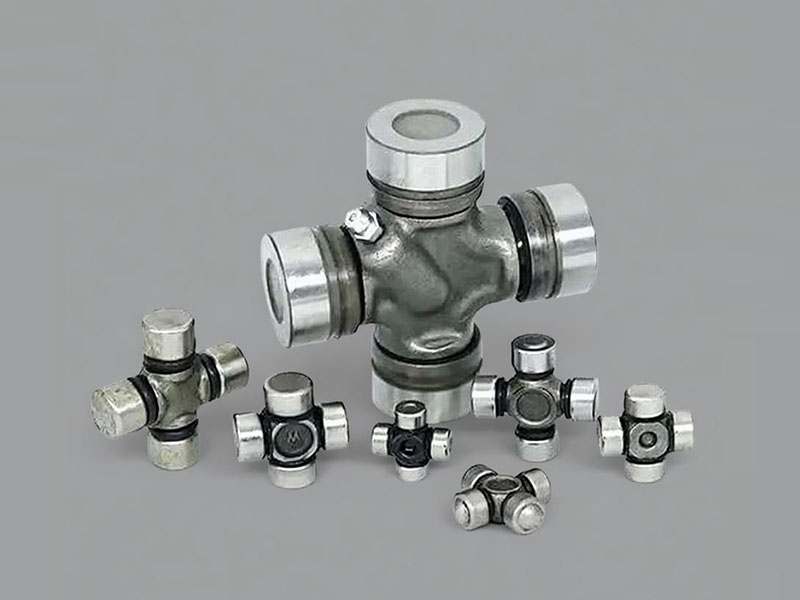
U-joints, or universal joints, are critical components found on the driveshafts of most rear-wheel-drive and four-wheel-drive vehicles. They allow the driveshaft to flex and transmit power at varying angles as your suspension moves up and down. Essentially, they connect the transmission to the differential, enabling smooth power transfer even when the axle isn’t perfectly aligned with the transmission.
A typical rear-wheel-drive vehicle has two or three u-joints. Some vehicles with a long wheelbase, such as buses, have three or more. Vehicles with a two-piece driveshaft usually have three u-joints – one at each end and one in the middle. The more u-joints a vehicle has, the higher the chance that one will fail.
Given their constant motion and exposure to stress, dirt, and moisture, U-joints are wear items that require periodic attention.
How Long Do U-Joints Typically Last?
On average, u-joints last about 100,000 miles (160,000 km). Under normal driving conditions – regular commuting, highway driving, and proper maintenance – they can last the lifetime of the vehicle. Some u-joints last 75,000 to 125,000 miles, and in some cases even longer.
However, several factors can dramatically shorten this lifespan. Driving conditions, lubrication habits, vehicle type, and component quality all play a role. While the 100,000-mile mark is a good rule of thumb, the best answer to “how often should U-joints be replaced?” is: follow your vehicle manufacturer’s recommendations, but also pay attention to the warning signs outlined below.
What Causes U-Joints to Wear Out Prematurely?
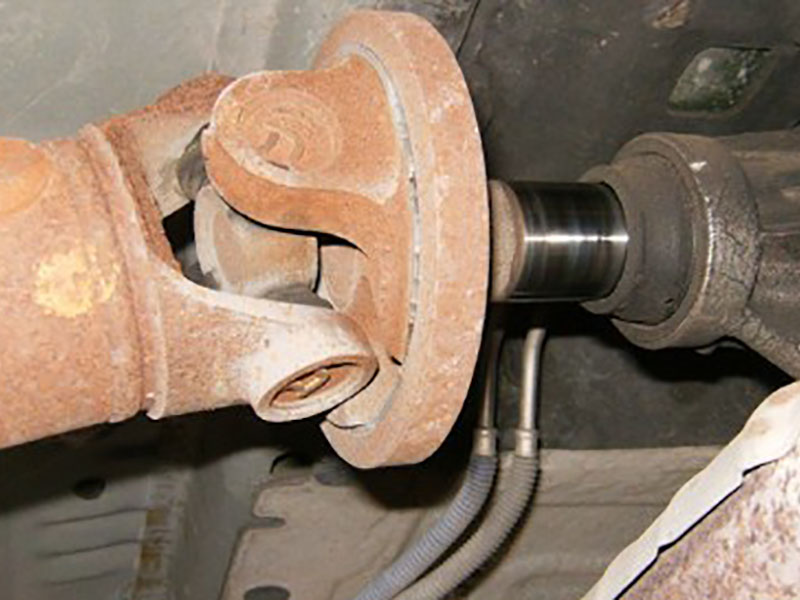
Understanding why U-joints fail can help you prevent premature wear. The most common culprits include:
- Lack of Lubrication: Insufficient grease causes metal-on-metal contact, leading to rapid wear, heat buildup, and seizing. The common rule of thumb is to grease a greaseable u-joint every 5,000 miles. At a minimum, you should grease them at least once per year. However, always refer to your vehicle manufacturer’s specific recommendation, as lubrication intervals can vary significantly between different vehicles and u-joint types. If your u-joints have a grease zerk (fitting), they need periodic greasing. If there’s no zerk in sight, they are permanently sealed or maintenance-free units.
- Angle Misalignment / Lift Kits: Incorrect driveline angles, often caused by lifted suspensions or improper installation, place constant stress on the U-joint, wearing it out unevenly. Changing your vehicle’s ride height changes the u-joint operating angles. The greater the operating angle, the more the u-joint moves with each rotation of the driveshaft.
- Loose Connections: Worn or loose retaining clips, yokes, or bolts can allow the U-joint to move excessively, accelerating wear. This usually happens because of corrosion, excessive vibration, or improper torquing.
- Heavy Use and Towing: Frequent stop-and-go traffic, towing heavy loads, off-roading, or driving on rough roads puts extra stress on U-joints. This is especially common on trucks and SUVs used for towing or off-road driving.
- Engine Power Modifications: If you’ve made engine modifications to increase power, the stock u-joints may not be up to the task of carrying that extra power through the driveline. U-joint manufacturers calculate lifespan based on average torque and horsepower over roughly 100,000 miles. That life expectancy goes down as you increase torque and horsepower.
- Driveshaft Damage: Even minor damage to the driveshaft – such as a small dent from road debris – can cause vibration at speed, which leads to premature u-joint wear.
How Do I Know If My U-Joints Are Bad?
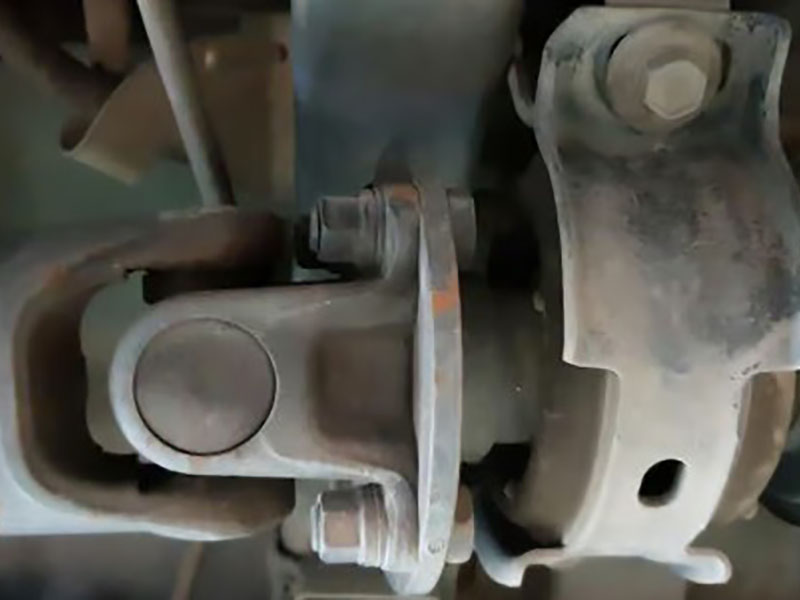
Catching a failing u-joint early is the key to avoiding expensive repairs. Here are the most common warning signs:
- Clunking or Banging Noise: A loud clunk or bang when shifting from reverse to drive (or vice versa) is one of the most common symptoms. This noise indicates excessive clearance in the u-joint bearings. A metal-on-metal banging sound is a sign that the u-joint will fail completely very soon.
- Vibration While Driving: Vibrations felt through the whole vehicle – especially at highway speeds – are a classic sign of a bad u-joint. The driveshaft vibrates because it isn’t held tightly by the worn u-joints. Vibration may also occur during acceleration or deceleration.
- Squeaking or Chirping Noise: A high-pitched squeak or chirp when starting to move (forward or reverse) is often one of the earliest signs. This is typically caused by metal-on-metal contact due to insufficient grease. The noise will change with vehicle speed.
- Fluid Leaks: Leaking from the rear pinion seal or transmission seal can indicate a failing u-joint. The excessive vibration from a bad u-joint causes the driveshaft’s stub shaft to rotate out of round, which damages seals and allows fluid to escape.
- Rust or Grease Leakage: Visible rust or grease leaking from the u-joint seals indicates contamination or loss of lubrication. Once contaminants enter the bearing surfaces, failure is usually not far behind.
- Driveshaft Play: You can check for this yourself: grab the driveshaft near the u-joint and try to move it up, down, and side to side. There should be no movement. Any play – even a small amount – indicates worn u-joints that need replacement. U-joint maximum end play is typically around 0.006 inches (0.15 mm); more than that will result in failure.
How to Diagnose Failing U-Joints
Regular inspection is key. Here are three ways to check your U-joints:
- Visual Inspection: Safely raise the vehicle and inspect the U-joints. Look for rust around the bearing caps, missing or damaged grease fittings, and any signs of grease leakage.
- Physical Check: Grab the driveshaft near the U-joint and try to move it up and down or side to side. Any noticeable play or looseness indicates a worn joint. Also, check for seized joints that won’t pivot smoothly.
- Road Test Diagnosis: Drive slowly in a parking lot, turning the steering wheel fully and listening for clicks. On the road, note any vibrations that occur at specific speeds or when accelerating or decelerating.
What Happens If You Ignore a Bad U-Joint?
A u-joint may seem like a small and insignificant part, but its failure can cause catastrophic damage. Here’s what happens when you ignore the warning signs:
- Vehicle Breakdown: When a u-joint finally fails, the driveshaft will no longer be able to spin. That means the wheels won’t turn anymore. The driveshaft can become disconnected from the transmission or differential while you’re moving. You’ll be stranded and facing a tow truck bill of hundreds of dollars.
- Transmission Damage: The vibrations caused by a bad u-joint cause the driveshaft’s stub shaft to rotate out of round. This causes the transmission’s rear seal to fail. Fluid leaks out, and if the transmission loses enough fluid, it will eventually fail completely. The same thing can happen to a transfer case.
- Differential Damage: A bad u-joint at the rear of the driveshaft can ruin the pinion seal. When that happens, gear lube leaks out of the differential. This can lead to significant damage to the ring and pinion assembly.
- Bearing Damage: If vibrations continue long enough, they can damage the transmission output bearing, transfer case output bearing, or pinion bearing. These are expensive components to replace.
- Broken Driveshaft: A bad u-joint will eventually fall apart if it’s not replaced. When it falls apart while you’re driving, the driveshaft becomes disconnected, damaging the driveshaft itself and possibly other components under the vehicle. You’ll face emergency repair costs far exceeding the price of a simple u-joint replacement.
- Safety Hazard: U-joints tend to fail during hard acceleration. A catastrophic failure on a highway on-ramp, for example, can be a serious problem. When that happens, your vehicle loses power, and you could cause a serious collision with vehicles behind you. In the worst case, a complete u-joint failure can cause loss of vehicle control.
How Much Does U-Joint Replacement Cost?
The u-joint itself is relatively inexpensive. Most replacement parts cost between $15 and $70. However, if you ignore a failing u-joint and it causes transmission, differential, or driveshaft damage, repair costs can run into the thousands.
Professional installation with labor typically ranges from $250 to $500 total, depending on the vehicle and local labor rates. If you’re comfortable with DIY work, you can save the labor cost by replacing them yourself – just make sure you have the right tools and a service manual for your vehicle.
Replacement Tips: What to Keep in Mind
- Replace in Pairs: If one of your u-joints has failed, replace them in pairs – even if the other one seems like it’s still good. If one has failed, the other doesn’t have long to live.
- Replace Promptly: If you notice any symptoms, replace the u-joint(s) immediately. Don’t wait for complete failure. When in doubt, change it out.
- Check Other Components: Before replacing u-joints, inspect the yoke and driveshaft for wear or damage. If these are worn, a new u-joint will fail prematurely. This prevents unnecessary replacements and ensures you address the root cause of any driveline issues.
Common Myths and Mistakes in U-Joint Maintenance
Avoid these common pitfalls to ensure your U-joints last and perform correctly:
- Myth 1: “If It’s Not Making Noise, It’s Fine.” Internal wear can occur long before noise develops. Regular physical inspections are essential. By the time you hear noise, the joint may already be close to failure.
- Myth 2: “More Grease Is Always Better.” Over-greasing a U-joint can blow out the seals, allowing contaminants in. Grease slowly until you see it purge slightly from the seals, then stop.
- Myth 3: “Just Replace the U-Joint, Not the Related Parts.” Always inspect the yoke and driveshaft for wear or damage. If these are worn, a new U-joint will fail prematurely.
Conclusion
So, how often should u-joints be replaced? On average, expect about 100,000 miles (160,000 km) under normal conditions – but that’s just an average. Some u-joints last 75,000 to 125,000 miles, and in some cases even longer. Others fail much sooner due to poor lubrication, lift kits, heavy towing, or power modifications.
The real answer is: replace them when they need it – not on a fixed schedule. The best approach is regular inspection. Check your u-joints at every oil change. Look for play, listen for noises, and feel for vibrations. If you find any movement in the driveshaft or hear any clunking, don’t wait – replace the u-joints immediately.
Regular u-joint maintenance is the cheapest insurance policy you can buy for your drivetrain. A $50 part can prevent thousands of dollars in transmission, differential, and driveshaft damage. Don’t let a small component cause a big problem. Mark your calendar: check u-joints at every oil change, or at least twice a year (spring and fall) to stay ahead of potential issues.
FAQs
Q1: How many miles do u-joints typically last?
A: On average, u-joints last about 100,000 miles (160,000 km). Under normal driving conditions, they can last the lifetime of the vehicle. Some u-joints can even last 75,000 to 125,000 miles or more.
Q2: Can I drive with a bad u-joint?
A: Technically you can, but only as far as the nearest repair shop. Continuing to drive with a bad u-joint can cause severe vibration, damage to bearings and seals, driveshaft damage, and eventually complete breakdown. In worst-case scenarios, it can cause a serious collision.
Q3: How much does it cost to replace a u-joint?
A: The u-joint itself is relatively inexpensive. Most replacement parts cost between $15 and $70. However, if you ignore a failing u-joint and it causes transmission, differential, or driveshaft damage, repair costs can run into the thousands. Professional installation with labor typically ranges from $250 to $500 total.
Q4: How do I inspect my u-joints?
A:
- Set the parking brake and safely lift the vehicle
- Locate the driveshaft
- Grab the driveshaft near the u-joint and try to move it up, down, and side to side
- Rotate the driveshaft slowly by hand and feel for binding or play
- Visually inspect for rust, grease leakage, or missing retaining rings
Any movement indicates worn u-joints that need replacement.
Q5: Do all u-joints need to be greased?
A: No. There are two types:
- Greaseable u-joints (with a grease zerk) – need regular greasing, typically every 5,000 miles or at every other oil change
- Permanently lubricated / sealed u-joints (no zerk) – sealed for life and require no maintenance
If your u-joints have a zerk fitting, grease them regularly. If not, they’re maintenance-free.
Q6: What causes u-joints to fail prematurely?
A: The main causes include:
- Improper lubrication (or lack of greasing)
- Suspension lifts that change driveline angles
- Loose or improperly torqued bolts
- Frequent off-roading or heavy towing
- Engine power modifications
- Driveshaft damage or imbalance
- Corrosion