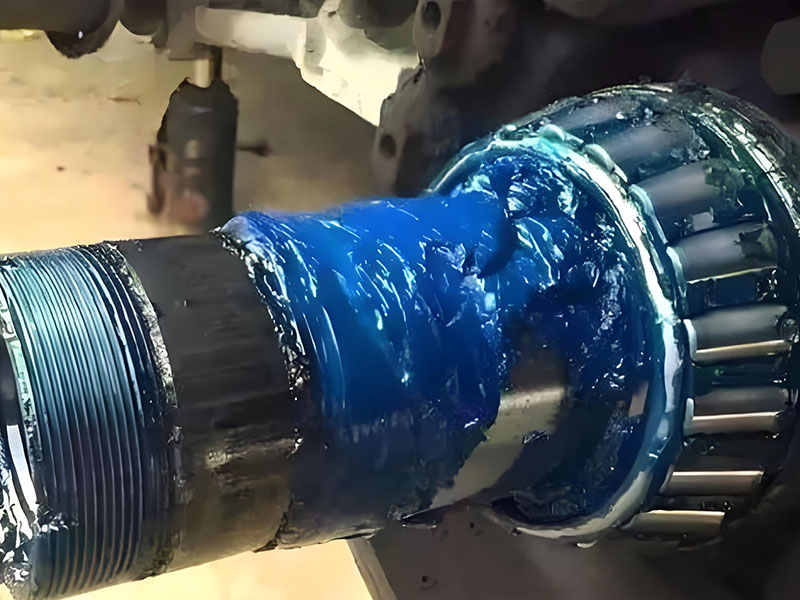
Quick Answer: Bearing wear is the gradual removal or transfer of material from rolling and sliding contact surfaces, and it ranks among the most frequently identified causes of bearing failure. ISO 15243:2017 divides wear into abrasive wear, driven by contaminants and poor lubrication, and adhesive wear, driven by sliding and lubricant film breakdown. Both alter surface geometry, lift vibration and temperature, and can end in spalling.
A bearing can run for months and still fail early when its contact surfaces slowly lose material. Wear sits behind many complaints about noise, heat, and lost preload, yet it is often mistaken for fatigue or corrosion. Knowing how the main wear modes form, which operating conditions drive them, and when a worn bearing has passed its usable limit is what separates a quick fix from a repeat failure.
What Is Bearing Wear?
Bearing wear is the progressive removal or transfer of material where rolling elements, raceways, flanges, and cages meet. At a microscopic level, asperities on two components that slide, or that roll with some sliding, interact and detach material. The loss is small at first and easy to miss during a routine check, but it changes the geometry that carries load.
The reference classification for this damage is ISO 15243:2017. It is the second edition, published in March 2017 as a 53-page document, prepared by ISO/TC 4/SC 4, reviewed in 2022, and currently under revision. It sorts in-service damage on steel rolling bearings by appearance, characteristics, and probable cause, and it places wear in two categories: abrasive wear and adhesive wear.
The same standard defines failure: a bearing has failed when damage prevents it from meeting its intended performance or marks the end of its service life. That definition matters, because a worn bearing may still turn freely while no longer holding preload or positioning the shaft correctly.
Wear differs from rolling contact fatigue, corrosion, and electrical erosion. Fatigue begins with cyclic stress and produces cracks that grow into spalls; corrosion comes from moisture or aggressive media; electrical erosion follows current passing through the rolling contact. Wear is material loss or transfer driven by contact and contamination, though the modes can meet, since advanced wear creates the stress concentrations that later spall.
When surface appearance alone cannot settle the root cause, ISO 15243 directs the analyst to cross-section examination, metallographic structure analysis, electron microscopy, chemical analysis, or spectroscopy instead of a visual verdict.
How Common Is Bearing Wear?
Wear is not an exotic mode. In one large bearing manufacturer’s survey of damaged bearings classified by ISO failure mode, abrasive wear was the single most frequently identified category. The five leading modes were:
- Abrasive wear: 26%
- Surface-initiated fatigue: 16%
- Moisture corrosion: 14%
- Adhesive wear: 7%
- Electrical erosion: 7%
Together those five modes account for roughly 70% of the identified failure modes in that dataset. The shares describe one company’s inspection results rather than a global average for every industry, so read them as a scale indicator, not a specification.
Types of Bearing Wear
ISO 15243 separates wear into two categories that both remove or redistribute material but arise from different mechanisms and leave different signatures. Abrasive wear is contaminant and lubrication driven; adhesive wear is sliding and film-breakdown driven. Mixing them up leads to the wrong countermeasure: extra filtration will not cure a smearing problem caused by sliding.
Abrasive Wear
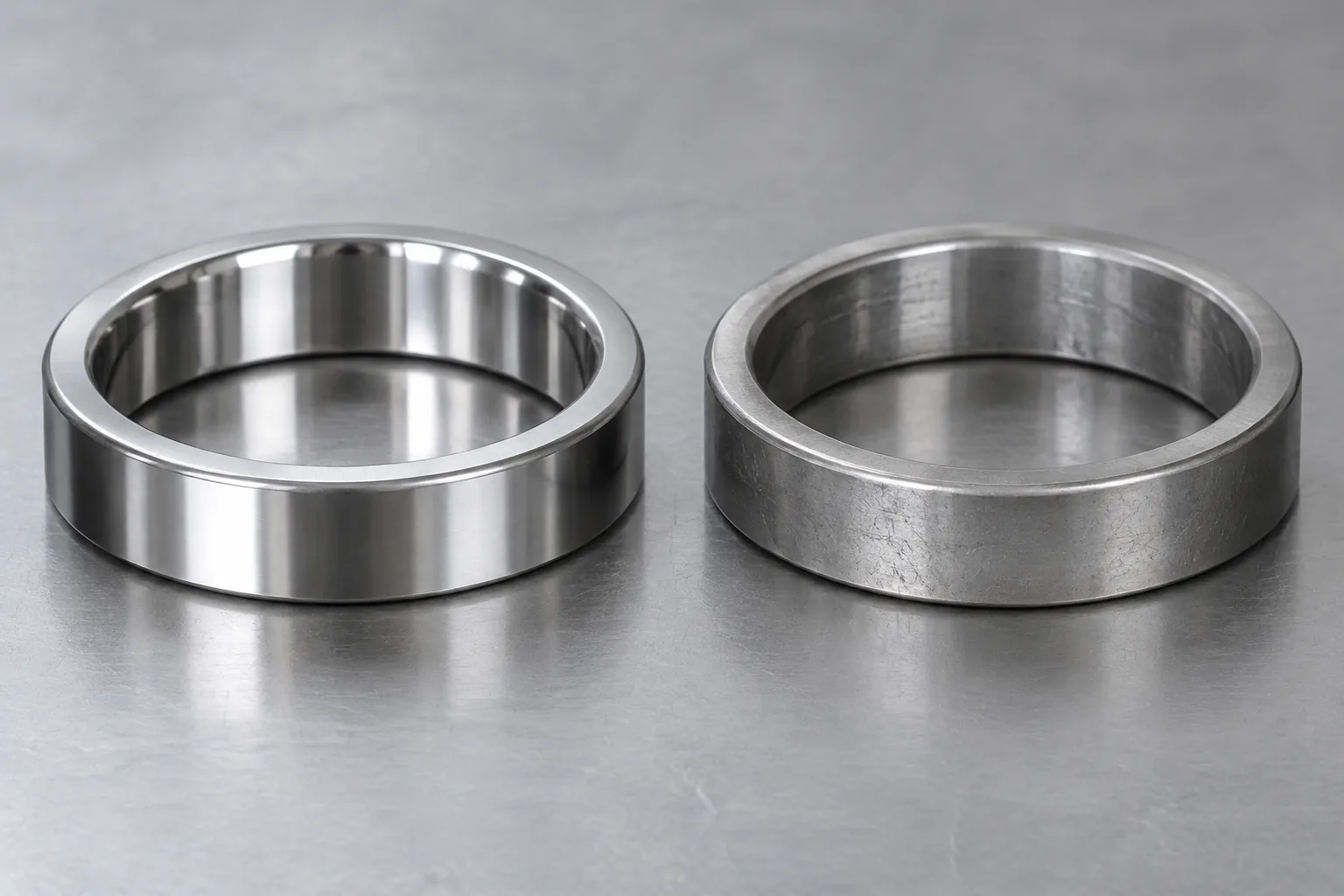
Abrasive wear is the progressive removal of material, mainly associated with insufficient lubrication and solid contaminants entering the bearing. Hard particles plow through the contact, wearing raceways, rolling elements, and cage pockets, and progressively destroying the microgeometry that the lubricant film depends on.
The mode accelerates itself. Particles released by wear further degrade the oil film, so film formation becomes harder, contact becomes more severe, and more material is removed. A slow start can therefore turn into a fast decline.
Appearance usually runs dull and matte, but there is an important exception: very fine, hard particles such as cement dust can polish a surface to a mirror-like finish. A bright raceway does not prove that a bearing is healthy.
Adhesive Wear (Smearing, Skidding, Galling)
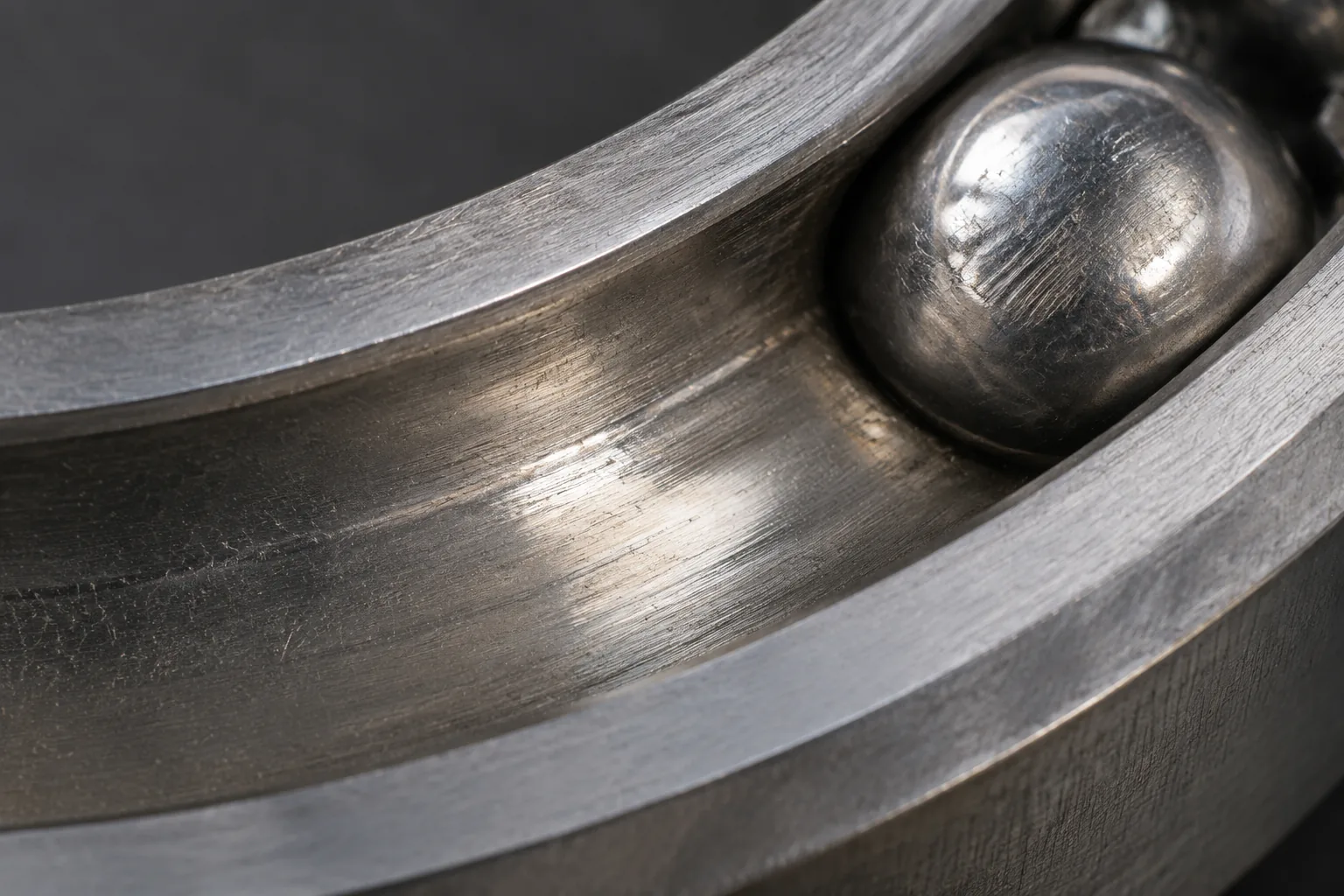
Adhesive wear occurs when bearing components slide against each other and the lubricant film ruptures. Material transfers from one contact surface to the other, friction heat builds, and the surface may be locally tempered or rehardened, leaving a stress concentration that can later support spalling. The same damage appears in service under the names smearing, skidding, and galling.
Typical conditions include:
- Light load combined with high speed
- Poor or marginal lubrication
- Excessive internal clearance
- Rapid acceleration and sliding as rolling elements re-enter the loaded zone
Visually, adhesive wear often starts as bright areas, then turns dull, with smeared, torn, or transferred material. Damage analysts describe smearing as a series of micro-seizures produced by oil-film breakdown, sliding, or both.
Common Causes and Contributing Factors
Bearing wear is usually multi-factor. A failed seal admits particles, the particles consume lubricant film, film loss raises temperature, and heat thins the lubricant further. Diagnosis should trace that chain rather than blame a single culprit.
Contaminants and Lubrication
Root causes of abrasive wear include:
- Seal failure
- Insufficient filtration
- Particles introduced during assembly or maintenance
- Metallic debris from adjacent gears
- Insufficient lubricant quantity
- Incorrect lubricant viscosity
- Water or condensate ingress
Lubrication-related contributors to wear include the wrong grease or oil viscosity, insufficient oil flow, high load at low speed producing a very thin film, and excessive operating temperature.
Four contamination parameters govern how fast wear proceeds: particle size, concentration, hardness, and lubricant film thickness. Raising size, concentration, or hardness generally worsens wear, while a thicker film or a higher-viscosity lubricant reduces wear at a given contamination level.
Material hardness explains why the cage often shows damage first. Rings and rolling elements are usually hardened to about 60 HRC, while many metal cages are made from unhardened steel sheet or brass. Under poor lubrication the cage can become the first component with obvious wear.
Filtration helps, yet no universal rating exists. In industrial oil-lubricated applications exposed to particle contamination, filters rated around 40 μm are common; the correct rating still follows bearing contact size, contamination sensitivity, and the equipment’s requirements.
Fit, Creep, and Operating Conditions
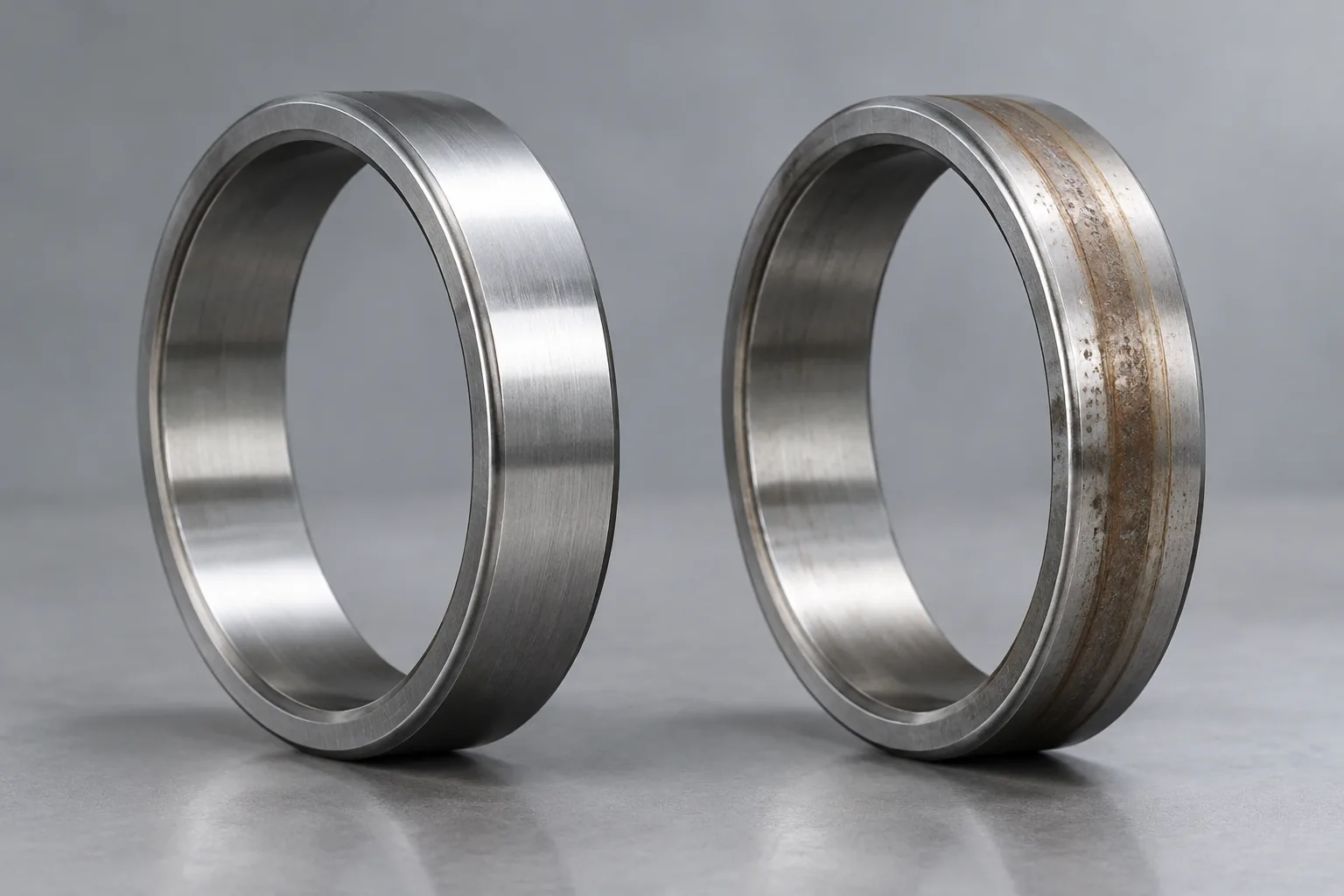
Where a ring rotates on its shaft or housing seat, the fit surface wears and vibration follows, and severe cases can end in ring fracture or seizure. This creep is a wear problem on the seat rather than inside the raceway. A slight interference fit usually helps prevent creep, but excessive interference can consume internal clearance, raise temperature, and cause early failure.
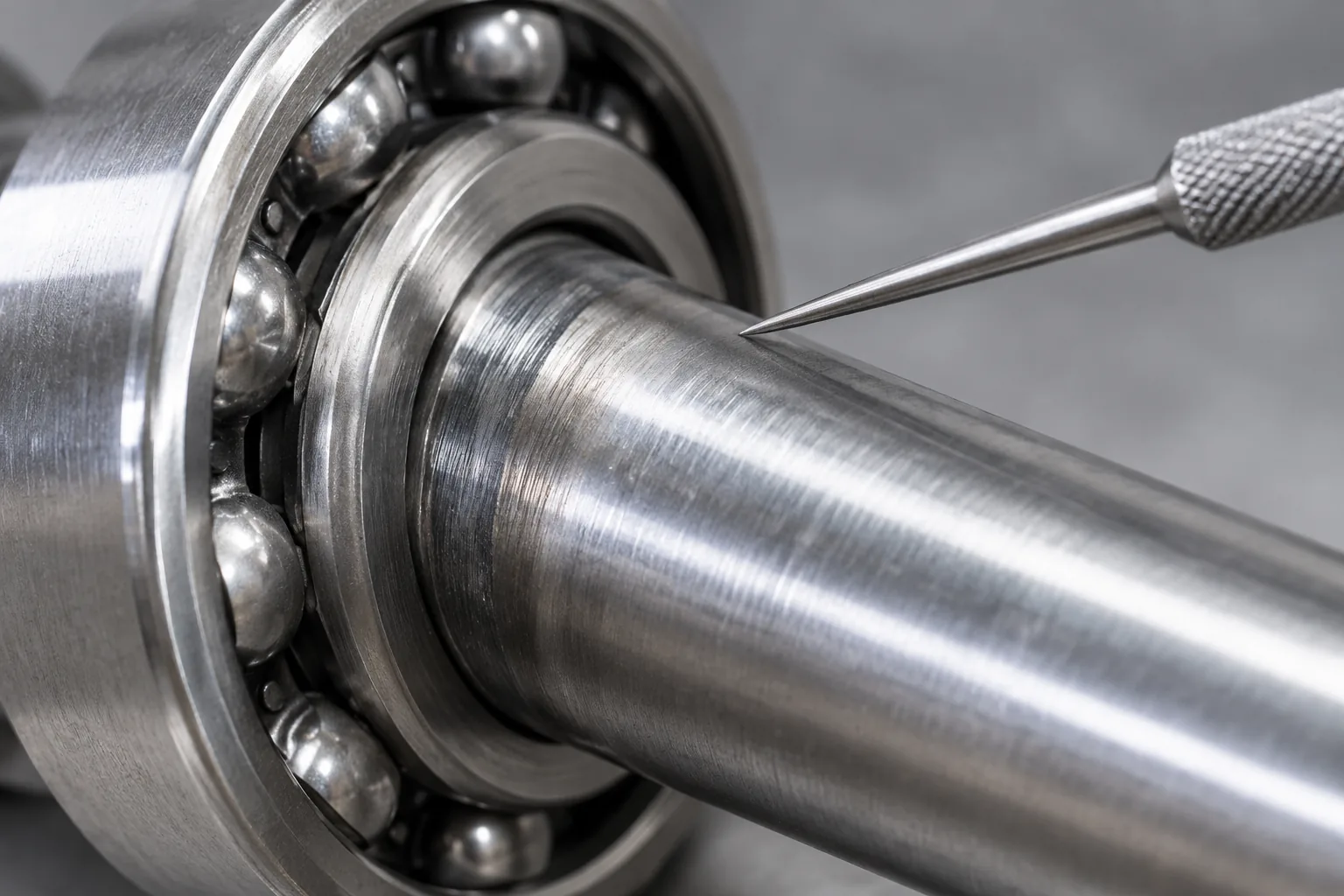
Application notes from bearing makers point to several further contributors: a lubricant film that cannot carry the load, fine hard particles or water suspended in the lubricant, and uneven wear caused by incorrect adjustment of tapered roller bearings.
Fit values are application-specific. Load direction, rotation, shaft and housing material, and bearing type all shift the correct interference, so no single number transfers across applications.
How Bearing Wear Progresses
Wear rarely stops at a cosmetic stage. The typical sequence runs:
- Abrasive wear begins at the contact surfaces
- The first spall appears
- The spall extends
- Vibration and noise rise, along with temperature
- The inner ring develops a fatigue fracture
- Catastrophic failure follows, with secondary damage to surrounding parts
Because abrasive wear is self-accelerating, early damage can stay subtle long before vibration or temperature readings change. One form of light damage, often called peeling, starts as a dull or cloudy patch; microcracks extend roughly 5-10 μm below the surface, fine particles then detach, and broad light flaking follows.
Symptoms and Diagnosis of Bearing Wear
Inspection signs to look for include:
- Dull or rough contact areas
- Lubricant darkened by wear debris
- Yellow-tinted lubricant where a brass cage is wearing
- Hardened grease
- Reduced preload or increased internal clearance
- Scratches on rolling elements from foreign particles
Condition monitoring during operation should track vibration, temperature, and noise. Envelope acceleration analysis can reveal early defects before ordinary vibration monitoring, listening, or temperature rise picks them up.
Broadband vibration standards such as the ISO 20816 series assess machine vibration severity measured at bearings, bearing housings, or casings. They do not identify a specific rolling bearing wear mode, so mode recognition should combine spectrum analysis, envelope analysis, lubricant analysis, and inspection of dismantled parts.
Bright or polished surfaces need careful interpretation, since fine hard contaminants can polish a surface instead of roughening it.
Inspection, Rejection, and Reuse Criteria
Field judgment benefits from a simple tactile test. Source guidance for railway bearings sets rejection thresholds: if wear ridges or grooves on a running surface can be felt with a fingernail or a blunt probe, the bearing should be scrapped, and any adhesive smearing detectable by fingernail is also grounds for rejection.
Reuse assessment should also reject bearings with:
- Obvious smearing on raceways, flanges, or rolling elements
- Severe cage wear or loose rivets
- Clear ring creep marks
Where a bearing is a candidate for continued service, check internal clearance growth and dimensional tolerance degradation as well.
Mirror-polished wear is the awkward case. It may be acceptable in some situations, but only if the future operating environment stays clean. A mirror-like raceway should be judged on contamination history and on whether damage can be felt, not on appearance alone. These thresholds are source-specific examples, and final decisions belong with the bearing maker’s application-specific inspection standard.
Prevention and Maintenance Practices
- Control contamination with effective seals, appropriate filtration, clean assembly, and removal of metallic debris from adjacent components.
- Maintain the lubricant film with the correct grease or oil viscosity, adequate flow, and temperature control; thicker films and higher viscosity reduce wear at a given contamination level.
- Set fits to stop creep without the excessive interference that removes internal clearance.
- Monitor condition using vibration, temperature, noise, and envelope acceleration, and inspect lubricant color, debris, and grease condition during service.
Filtration ratings and lubricant choices must match bearing size, speed, load, temperature, and contamination exposure. A rating copied from another machine may not fit the application and can repeat a failure.
Conclusion
Bearing wear is a progressive loss or transfer of material that starts small and compounds. Abrasive wear from particles and thin lubricant films, and adhesive wear from sliding contact, both change surface geometry, and both can lead to spalling, temperature rise, and seizure if left in service. The practical response is a chain of checks: confirm the wear mode, trace the contamination or film-breakdown cause, set fits and lubrication correctly, and trend vibration, temperature, and noise over time. When ridges or smearing can be felt, replacement is the safer decision.
FAQs
Q1: What is the difference between abrasive and adhesive bearing wear?
A: Abrasive wear removes material when hard particles or insufficient lubrication cut into the contact surfaces, leaving dull tracks that may also appear polished. Adhesive wear transfers material between surfaces when the lubricant film ruptures and sliding occurs, producing smearing, tearing, or galling. Abrasive wear points to filtration and lubricant supply; adhesive wear points to sliding, clearance, load, and film strength.
Q2: Can a polished bearing surface still be worn?
A: Yes. Very fine, hard particles such as cement dust can polish a raceway to a mirror-like finish instead of roughening it, and material has still been lost. Judge the surface with a tactile check and the contamination history rather than gloss alone, because a bright track can hide a change in geometry.
Q3: How can I tell whether wear is caused by contamination or poor lubrication?
A: Read the debris and the wear pattern together. Darkened lubricant, scratches on rolling elements, and hard particles in the grease point to contamination; a thin, degraded, or insufficient film with discoloration points to lubrication. Both often appear at once, since particles consume the film that would otherwise protect the surface.
Q4: When should a worn bearing be replaced?
A: Replace it when wear ridges or grooves can be felt with a fingernail or blunt probe, when smearing is detectable by touch, when cages are badly worn or rivets are loose, or when creep marks appear on a ring. Growth in internal clearance and loss of dimensional tolerance also justify replacement instead of reuse.
Q5: Does a rise in vibration prove bearing wear?
A: No. Vibration can come from unbalance, misalignment, looseness, or a damaged seat, and a worn bearing may run quietly until clearances grow. Use spectrum and envelope analysis together with lubricant checks to link vibration to a specific contact condition rather than assuming wear.
Q6: What filtration rating helps reduce bearing wear?
A: There is no single number. In industrial oil-lubricated systems exposed to particle contamination, filters rated around 40 μm are common, but the correct rating depends on bearing contact size, contamination sensitivity, and equipment requirements. Finer filtration helps only when the lubricant and the seals support it.