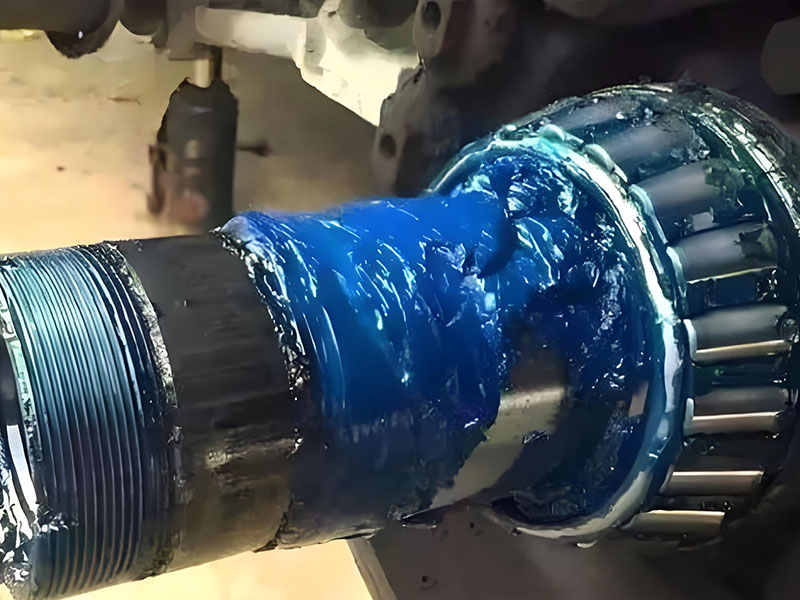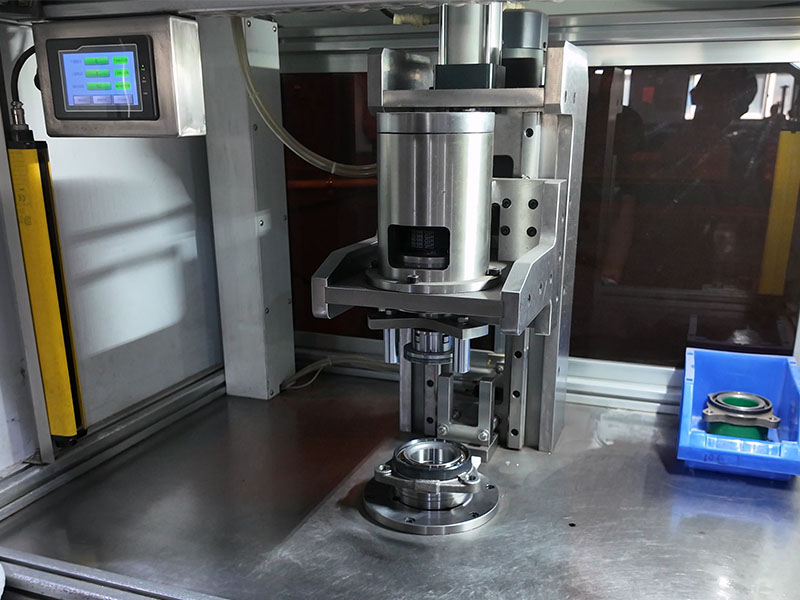
Quick Answer: Choose needle bearing grease by starting with the bearing manufacturer’s specified grease, then verify base oil viscosity, NLGI consistency, thickener and base oil type, temperature limits, speed factor, water exposure, and relubrication plan. Needle bearings hold little grease, so the wrong fill quantity or an unverified substitute can cause starvation, churning, or early failure. Use standards and certifications only as filters, not as approval for a specific bearing.
Needle bearing grease is the lubricant that forms a separating film between the rolling and sliding surfaces of a needle roller bearing, reducing friction and wear while helping protect against corrosion and contamination. For industrial radial and thrust needle roller bearings, including pre-greased, sealed, and relubricated bearings, the selection has to be defensible rather than convenient. The decision hierarchy matters: the bearing manufacturer’s requirement comes first, validated grease data sheet performance comes second, and generic standards are filters only. This is not a universal product recommendation. Final selection depends on bearing type, operating conditions, and supplier approval.
Start With the Bearing Manufacturer’s Grease Requirement
Pre-filled or sealed needle bearings should use the original grease unless the bearing manufacturer approves a substitute. For relubrication, use the same lubricant as the factory fill where specified. A bearing manufacturer’s relubrication guidance warns that using a different lubricant can risk bearing failure. Treat OEM fill and relubrication instructions as the highest-priority input before applying generic NLGI or certification rules.
If the original grease is unavailable, obtain written approval from the bearing or grease manufacturer and validate the alternative. Do not treat a similar consistency grade or a general-purpose label as equivalent approval.
Collect These Operating Conditions Before Selecting Grease
Record the real duty cycle before comparing products. Start with these inputs:
- Bearing model and structure, radial or thrust type, and cage or full-complement design.
- Speed n, mean diameter dm, and speed factor n*dm.
- Actual bearing temperature, load and shock, vibration or oscillation, water and contaminants, axial direction, seal material, and relubrication method and interval.
Use actual bearing temperature rather than ambient temperature when checking grease, seal, and cage limits. Published selection guidance lists temperature, pressure conditions, speed, water, and moisture as core grease selection conditions, and needle bearing catalogs identify n, dm, load, temperature, water, contamination, and relubrication as key inputs. Collect data for startup, shutdown, idle periods, and cleaning or washdown cycles when relevant.
Why Needle Bearings Need a Specific Grease Review
Needle bearings have small internal spaces, so the amount of grease they can hold is limited. Wide needle bearings can make grease distribution through the bearing difficult. Full-complement designs may experience roller sliding and roller skewing, and needle bearings are often used in oscillating duty. Pay particular attention to wide bearings, full-complement rollers, and oscillating or micro-motion applications.
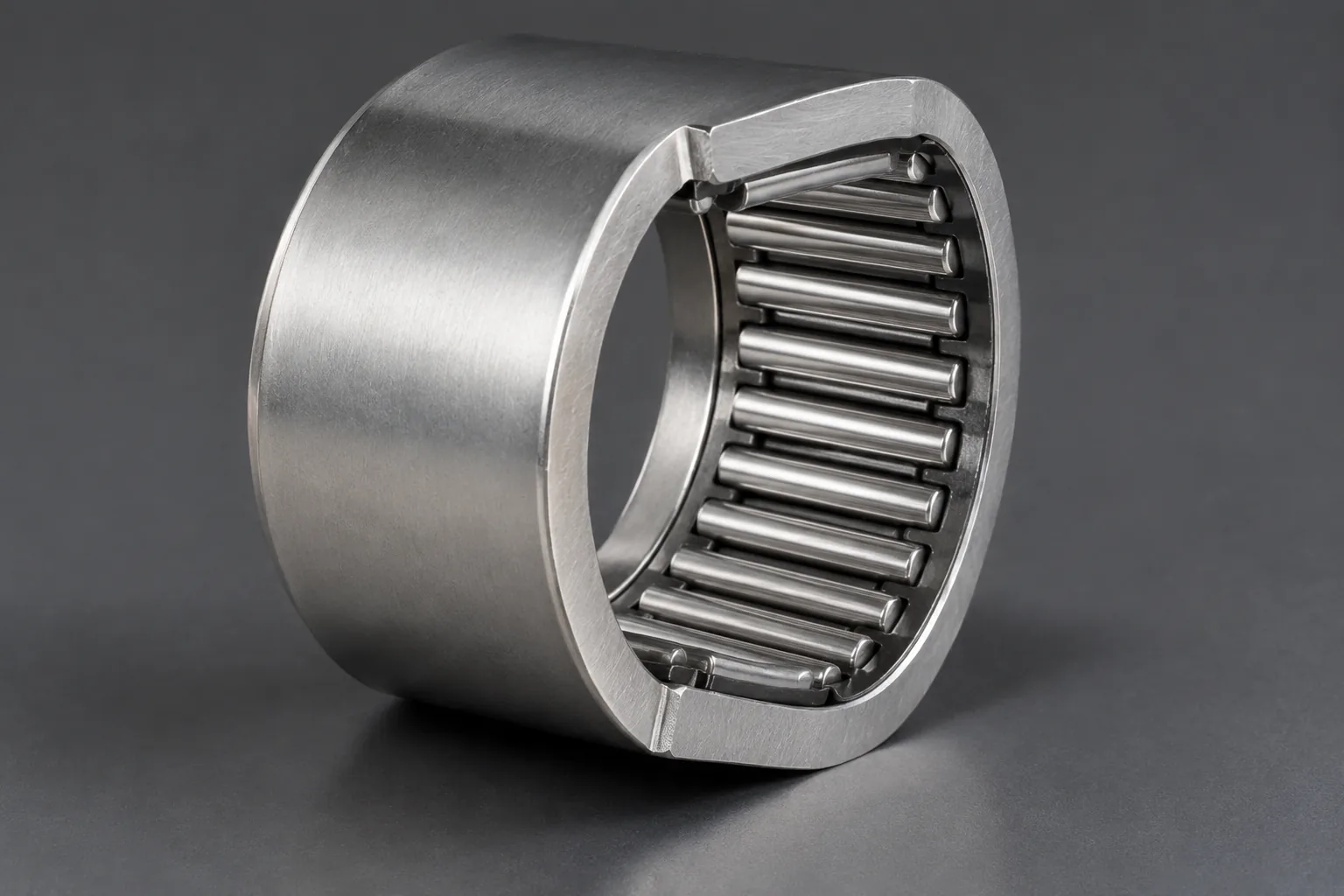
Special bearing designs with solid lubricants require dedicated design review and are not equivalent to standard grease selection.
Base Oil Viscosity: Match Speed, Temperature, and Load
Use lower base oil viscosity for low temperature or high speed, and higher base oil viscosity for high temperature or heavy load. Check both 40°C and 100°C kinematic viscosity in the grease data sheet. Do not use NLGI consistency grade as a substitute for base oil viscosity. Base oil viscosity strongly affects the permissible speed range and the lubricant film.
Consistency is mainly determined by thickener type and concentration, not by base oil viscosity. A harder NLGI grease does not mean a higher-viscosity base oil. For heavy or shock loads, verify extreme-pressure or anti-wear performance; for long relubrication intervals, consider oxidation stability. Base oil viscosity must be checked against actual bearing temperature, speed factor, load, and lubricant film requirements.
NLGI Consistency: Use It as a Handling and Retention Guide, Not a Performance Grade
NLGI grade describes worked penetration at 25°C/77°F under ASTM D217, with ISO 2137 as the corresponding international method. Higher NLGI numbers mean harder grease. NLGI 1 is 310-340, NLGI 2 is 265-295, and NLGI 3 is 220-250 in 0.1 mm penetration units. One bearing manufacturer recommends NLGI 1, 2, or 3 for rolling bearings under DIN 51818. A needle bearing catalog maps NLGI 0 to centralized lubrication, NLGI 1 to centralized lubrication or low temperature, NLGI 2 to general use, and NLGI 3 to general use and higher temperature.
Softer grease can feed better but may churn, raise temperature, and leak. High-speed applications should use mechanically stable, relatively harder grease. Use NLGI grade to screen handling, retention, and general application fit, then verify base oil viscosity, temperature, speed, and load. NLGI grade is not a performance certification and does not define base oil viscosity or OEM approval.
Thickener and Base Oil Type: Balance Temperature, Water, and Compatibility
Lithium soap grease generally offers heat resistance, water resistance, and mechanical stability; calcium soap has good water resistance but poor heat resistance; sodium soap has good heat resistance but poor water resistance. Non-soap thickeners often provide better heat resistance, but the full grease data sheet still governs.
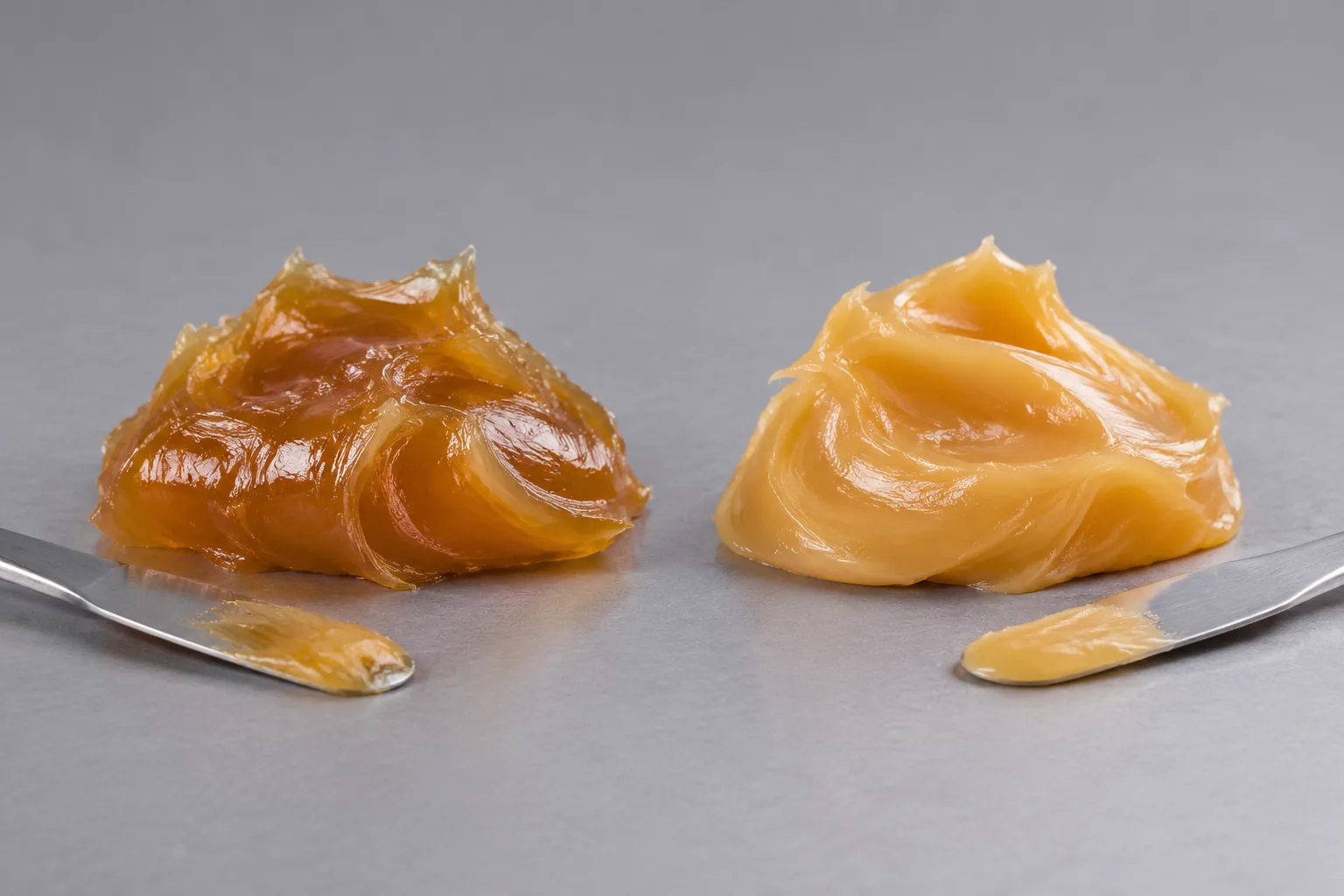
Mineral oil is a common base oil. Synthetic base oils such as ester, silicone, polyglycol, or fluorinated oils may be used for low-temperature flow, high-temperature stability, or special performance. Verify compatibility with seals, cages, plastics, elastomers, coatings, light metals, and nonferrous metals before selecting a synthetic or specialty grease. A published recommendation for certain radial and thrust needle roller cage assemblies names KP2K-30, a DIN 51825 lithium soap grease. Its temperature and performance range must be confirmed from the product technical data sheet.
Check thickener and base oil type when the application involves high temperature, water, low temperature, or material compatibility concerns. Do not assume that a thickener family alone proves compatibility; confirm with the grease supplier and bearing OEM.
Temperature: Check Grease Range Against Bearing Temperature, Then Seals and Cages
The grease rated temperature range must cover the actual bearing temperature, not only the ambient temperature. Older needle bearing catalog guidance suggests the grease operating range should extend at least about 20°C/35°F beyond the application minimum and maximum temperatures. Check seal and cage limits because they may be reached before the bearing steel limit. Drop point alone does not define the maximum continuous operating temperature.
Typical standard needle bearing rings and rolling elements are usually stable to 120°C/250°F; drawn cup needle bearings are usually stable to 140°C/285°F, but grease, cage, or seals may limit first. Common seal material limits are:
- NBR: about -40 to +100°C, short-time +120°C.
- PUR: about -30 to +100°C.
- FKM: about -30 to +200°C, short-time +230°C.
Aviation examples show how application-specific a grease range can be: MIL-PRF-23827 Type I / NATO G354 grease covers -73 to +121°C, and MIL-PRF-81322 / NATO G395 covers -54 to +177°C. These are specific aerospace references and should not be presented as general industrial needle bearing recommendations. Use the highest expected bearing temperature, including startup, transient, and blocked-cooling conditions.
Speed and Lubrication Method: Use n*dm and Consider Oil When Grease Cannot Cool
Use the speed factor n*dm to screen grease suitability, where n is rotational speed and dm is bearing mean diameter. For radial needle bearings with a cage, a bearing factor of 3 is used; recommended n*dm limits decrease from about 350,000 to 100,000 mm/min as load increases. For thrust needle bearings, the bearing factor is 10; recommended n*dm limits are about 100,000, 60,000, or 30,000 mm/min depending on load range.
Grease does not provide effective cooling. If heat must be removed, oil may be the better lubrication method. Consider oil lubrication when surrounding components are already oil-lubricated or when the required grease relubrication interval is impractically short. Needle bearing catalogs classify grease lubrication as low to medium speed and oil lubrication as covering higher speeds. Do not respond to high speed or heat only by changing to a higher NLGI grade; evaluate oil lubrication or a different lubrication method.
Water, Contamination, and Oscillation: Select for the Real Environment
In wet, washdown, humid, or outdoor conditions, check water washout, rust protection, and mechanical stability test data rather than so-called waterproof claims. Common tests are ASTM D1264 water washout, ASTM D1743 rust protection, and ASTM D1831 roll stability. NLGI GC-LB certification uses ASTM D4170 for fretting wear with a mass loss limit of no more than 10 mg.
Frequent micro-oscillation, vibration, or vibration during standstill increases the risk of fretting wear. A solid-grease needle bearing introduced on 24 June 2021 for motorcycle swingarm pivots was described as resisting leakage from vibration, centrifugal force, and moisture and eliminating periodic relubrication and grease nipples. That is a specialized bearing design, not evidence that ordinary solid grease can replace any needle bearing lubricant.
Grease Compatibility: Avoid Mixing Unless Verified
The safest rule is not to mix different grease brands or thickener systems. Even with the same thickener type, different additives can degrade mixed grease performance; verify by test or manufacturer confirmation. Mixing may be considered only when base oil type, thickener type, and NLGI grade are the same and base oil viscosity differs by no more than one ISO VG grade.
Check compatibility with rust preventives, thermoplastics, thermosets, elastomers, light metals, nonferrous metals, and coatings. Changing grease brand, thickener system, or base oil type, or re-greasing a bearing with unknown prior grease, requires extra care. If any mixing condition is not met, consult the grease manufacturer or run compatibility testing before use.
Fill Quantity and Relubrication: Prevent Overfilling and Plan a Purge Path
Excess grease increases churning losses, friction heat, and bearing temperature. Newly greased bearings normally need a run-in period so excess grease can redistribute or be expelled; temperature should fall after run-in. Use bearing OEM fill quantities first; general rolling bearing formulas are starting points, not needle-bearing-specific approvals.
For side relubrication, a general initial fill is 40% of bearing housing free space; relubrication amount Gp = 0.005DB, with Gp in grams, D in mm outside diameter, and B in mm total width. For an inner-ring or outer-ring center hole, a general initial fill is 20%; relubrication amount Gp = 0.002DB. A needle bearing catalog gives relubrication amount typically 20%-80% of the initial fill.
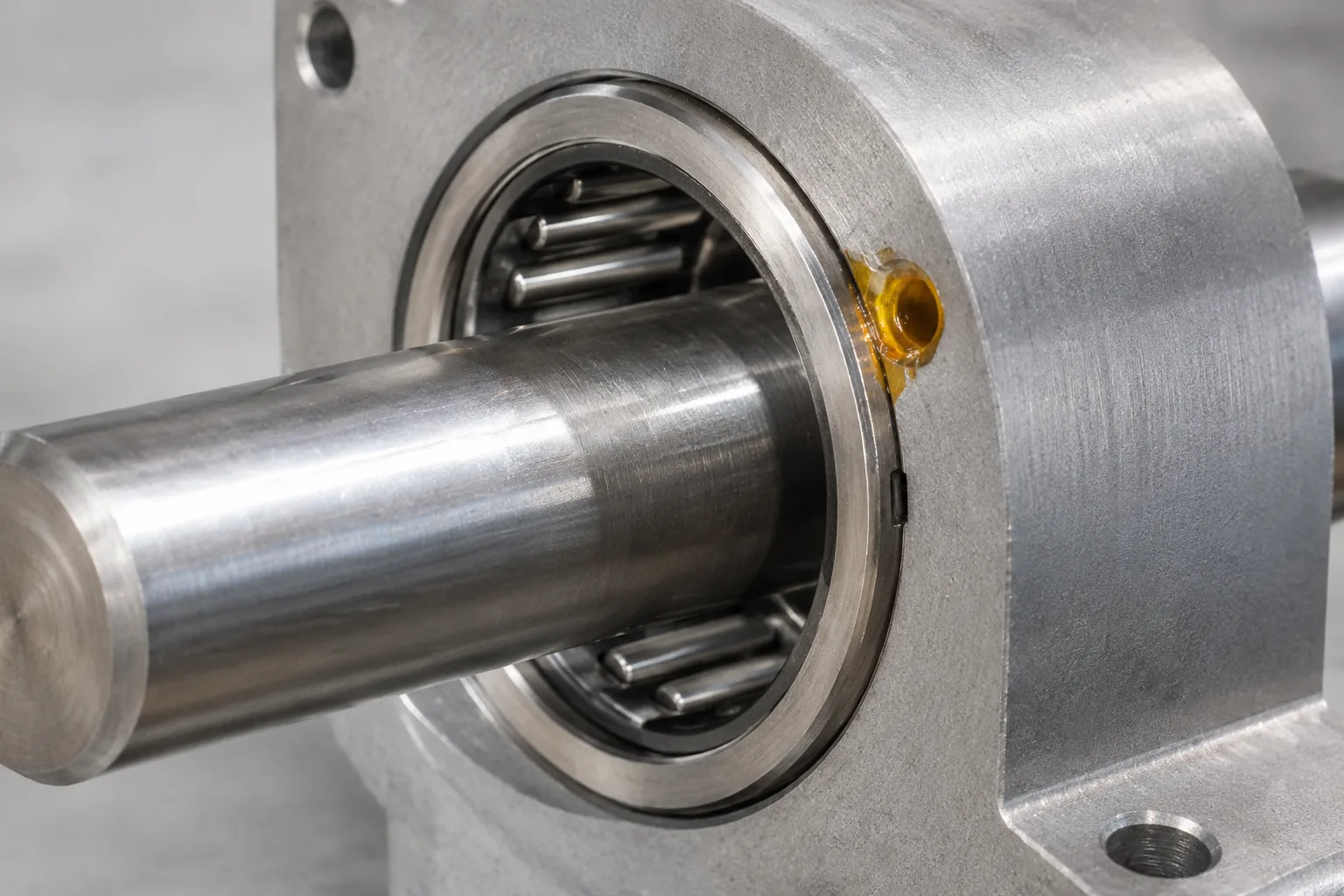
Relubricate while the bearing is rotating and at operating temperature where possible, and ensure old grease has a clear exit path. Thrust needle bearings with grease lubrication should move grease from the inner side to the outer side, even at low speed; thrust bearings usually need more frequent relubrication. Related needle cage assemblies should be relubricated at intervals not longer than one year, and also after long shutdowns or in high-humidity conditions. Small needle bearing internal spaces make overfilling especially risky.
Standards and Certifications: Use Them as Filters, Not Approvals
DIN 51825 classifies rolling bearing greases; type K is a common rolling bearing grease class where applicable. DIN 51818, ASTM D217, and ISO 2137 classify consistency or penetration and do not certify performance in a specific needle bearing. ASTM D4950-22 was updated on 24 January 2023 and applies to automotive chassis and wheel bearing service grease, not as a universal industrial needle bearing standard.
NLGI GC certification requirements include drop point at least 220°C, 80°C water washout no more than 15%, oil separation no more than 6%, four-ball wear scar no more than 0.9 mm, and high-temperature life at least 80 h. NLGI HPM certification may include WR for enhanced water resistance, CR for enhanced corrosion resistance, HL for enhanced load carrying, and LT for enhanced low-temperature performance. GC-LB is an automotive wheel bearing category and should not be presented as universal needle bearing approval. HPM marks are screening aids, not OEM approvals.
A Practical Selection Sequence for Needle Bearing Grease
Use a consistent sequence for new designs, grease conversions, and relubrication reviews:
- Confirm the bearing OEM grease, fill quantity, and relubrication requirement.
- Collect bearing type, speed n, mean diameter dm, n*dm, actual temperature, load, shock, water, contamination, oscillation, seal material, and relubrication method.
- Set base oil viscosity and verify 40°C and 100°C viscosity, EP or anti-wear needs, and oxidation stability.
- Select NLGI consistency and thickener or base oil type for temperature, water, and compatibility.
- Check temperature limits for grease, seal, cage, and bearing; check speed factor and whether oil lubrication is more suitable.
- Verify water and fretting performance, grease compatibility, fill quantity, and relubrication plan.
- Validate the final choice with the grease supplier and bearing OEM before release.
For safety-critical, high-cost, or high-downtime applications, require application-specific validation or testing.
Application-Based Starting Points
Use these as starting filters for discussion with the bearing and grease manufacturers, not as final approvals. Every starting point still requires verification of OEM approval, base oil viscosity, temperature, speed factor, water exposure, and compatibility.
Normal Industrial, Ambient Temperature, Medium Speed
Start with a manufacturer-approved NLGI 2 lithium or lithium-complex rolling bearing grease. Verify base oil viscosity, actual bearing temperature, speed factor, and relubrication interval before finalizing.
High Speed or Low Temperature
Prefer lower base oil viscosity, good low-temperature torque, and high mechanical stability. Check n*dm limits and whether grease can adequately manage heat. High-speed grease should have good mechanical stability and relatively harder consistency.
Low Speed, Heavy Load, or Shock Load
Prefer higher base oil viscosity and verified extreme-pressure or anti-wear performance. Confirm that the EP additives are compatible with the bearing materials and operating conditions.
Washdown, Humid, or Outdoor Duty
Prefer low water washout, verified rust protection, and compatibility with seals and adjacent materials. Do not rely on a general waterproof claim; use test data and supplier confirmation. Check ASTM D1264 water washout and ASTM D1743 rust protection data where available.
High Temperature
Check grease life, base oil oxidation stability, thickener system, seal material, and cage temperature limits. Use drop point only as one data point, not as the maximum continuous operating temperature. Apply the temperature margin guidance of about 20°C/35°F beyond application extremes.
Heat Removal, Very Short Relubrication Interval, or Existing Oil System
Evaluate oil lubrication instead of continuing to upgrade grease. Consider oil when heat must be carried away, when surrounding equipment already uses oil, or when grease relubrication is impractical. Grease does not provide effective cooling, and oil lubrication is the practical choice for higher speed or heat removal needs.
Conclusion
Needle bearing grease selection is a chain of evidence, not a single label. Start with the bearing manufacturer’s requirement, then collect real operating conditions and verify base oil viscosity, NLGI consistency, thickener and base oil type, temperature limits, speed factor, water exposure, compatibility, fill quantity, and relubrication plan. Use standards and certifications as screening filters. For safety-critical, high-cost, or high-downtime applications, require application-specific validation before release.
FAQs
Q1: Is NLGI 2 grease universally suitable for needle bearings?
A: No. NLGI 2 describes consistency only. A suitable needle bearing grease must also match the bearing manufacturer’s requirement, base oil viscosity, temperature range, speed factor, load, water exposure, and relubrication plan.
Q2: What happens if I mix two needle bearing greases?
A: Mixed greases can thicken, soften, separate, or lose additive performance. Avoid mixing unless base oil type, thickener type, and NLGI grade match and base oil viscosity differs by no more than one ISO VG grade. Otherwise, get manufacturer confirmation or run compatibility testing.
Q3: How much grease should I put in a needle bearing?
A: Use the bearing OEM fill quantity first. General rolling bearing guidance gives 40% of housing free space for side relubrication and 20% for filling through a ring center hole, with relubrication amounts Gp = 0.005DB or Gp = 0.002DB. Needle bearing catalogs often use 20%-80% of initial fill for relubrication. Overfilling small needle bearings can raise temperature and churning losses.
Q4: Does a higher NLGI grade mean better load capacity?
A: No. Higher NLGI numbers mean harder grease, not higher base oil viscosity or better load capacity. For heavy or shock loads, verify base oil viscosity and extreme-pressure or anti-wear performance, and confirm material compatibility.
Q5: Can grease cool a high-speed needle bearing?
A: Grease does not provide effective cooling. If heat must be removed, if surrounding equipment already uses oil, or if grease relubrication would be impractically frequent, evaluate oil lubrication instead of moving to a harder grease.
Q6: Which temperature should I use when checking grease limits?
A: Use the actual bearing temperature, not ambient temperature. Apply a margin of about 20°C/35°F beyond the application extremes where guidance allows, and check seal and cage limits. Drop point is only one data point and is not the maximum continuous operating temperature.
Q7: How often should needle bearings be relubricated?
A: Follow the bearing OEM and application-specific interval. Related needle cage assemblies should be relubricated at intervals not longer than one year, and also after long shutdowns or in high-humidity conditions. Thrust needle bearings usually need more frequent relubrication, and the old grease must have a clear exit path.
Q8: Are aviation grease specifications suitable for industrial needle bearings?
A: Not automatically. Aviation specifications such as MIL-PRF-23827 Type I / NATO G354 and MIL-PRF-81322 / NATO G395 cover specific aerospace ranges, but they are not general industrial recommendations. Confirm the bearing OEM requirement and the actual application conditions before using any specialty grease.