Quick Answer: Wheel alignment can affect wheel-bearing life, but the effect is usually indirect. Small toe or camber errors mainly cause uneven tire wear, pulling, and handling changes. A large camber angle, bent suspension or steering parts, hub mounting skew, or impact damage can change axial load or internal load distribution and may shorten bearing life. Alignment alone does not prove bearing damage.
Wheel alignment and wheel-bearing condition are related, but the relationship is easier to misread than it looks. Wheel alignment is a suspension-geometry setting; bearing misalignment is a mounting and load-path condition. A car can have a poor alignment reading and a healthy bearing, or a noisy bearing and an alignment that is close to specification. The useful question is not whether alignment and bearings are connected, but which alignment condition, component damage, or bearing fault is actually present. The cause of the misalignment matters because a bent or worn part can affect both the alignment reading and the bearing load.
Short Answer: Alignment Matters, but Usually Indirectly
Mild toe or camber error is mainly a tire and handling issue. It typically shows up as uneven tire wear, a pull, or a change in steering feel. That does not make it a direct bearing-failure cause.
The bearing risk rises when the alignment error is large or when it comes from something structural: a bent suspension arm, a deformed steering knuckle, a wheel hub that does not sit square, or impact damage. Those conditions can change the axial load on the bearing or disturb the internal load distribution. In that situation, alignment is a symptom of a mechanical problem that can also shorten bearing service life.
Bearing noise still needs its own diagnosis. Alignment condition alone does not prove bearing damage, and a noisy bearing can have several causes.
Wheel Alignment and Bearing Misalignment Are Not the Same
Wheel alignment is a suspension-geometry measurement; bearing misalignment is a mounting and load-path condition. Wheel alignment covers the main angles: toe, camber, and caster, and should follow the vehicle manufacturer’s specifications.
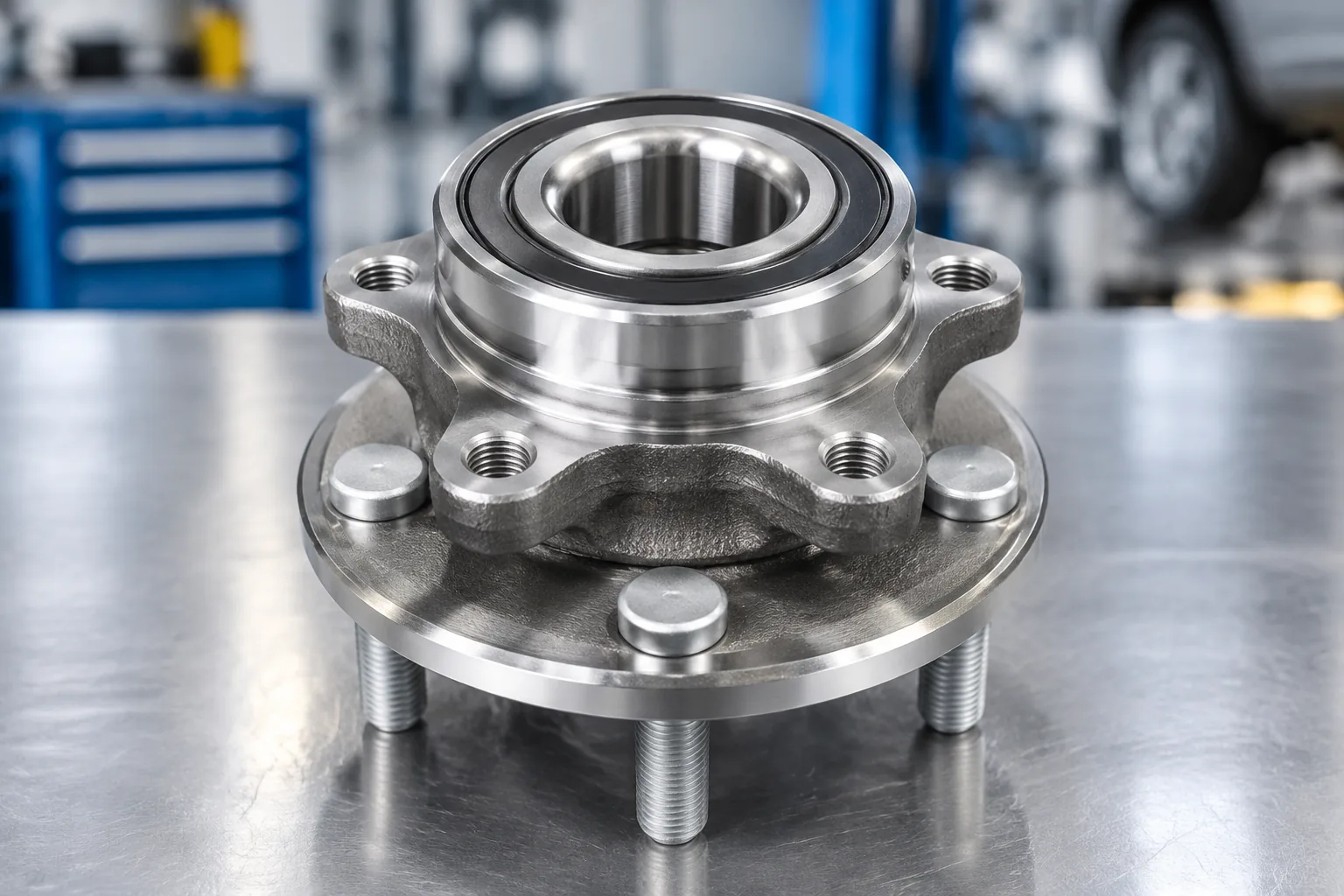
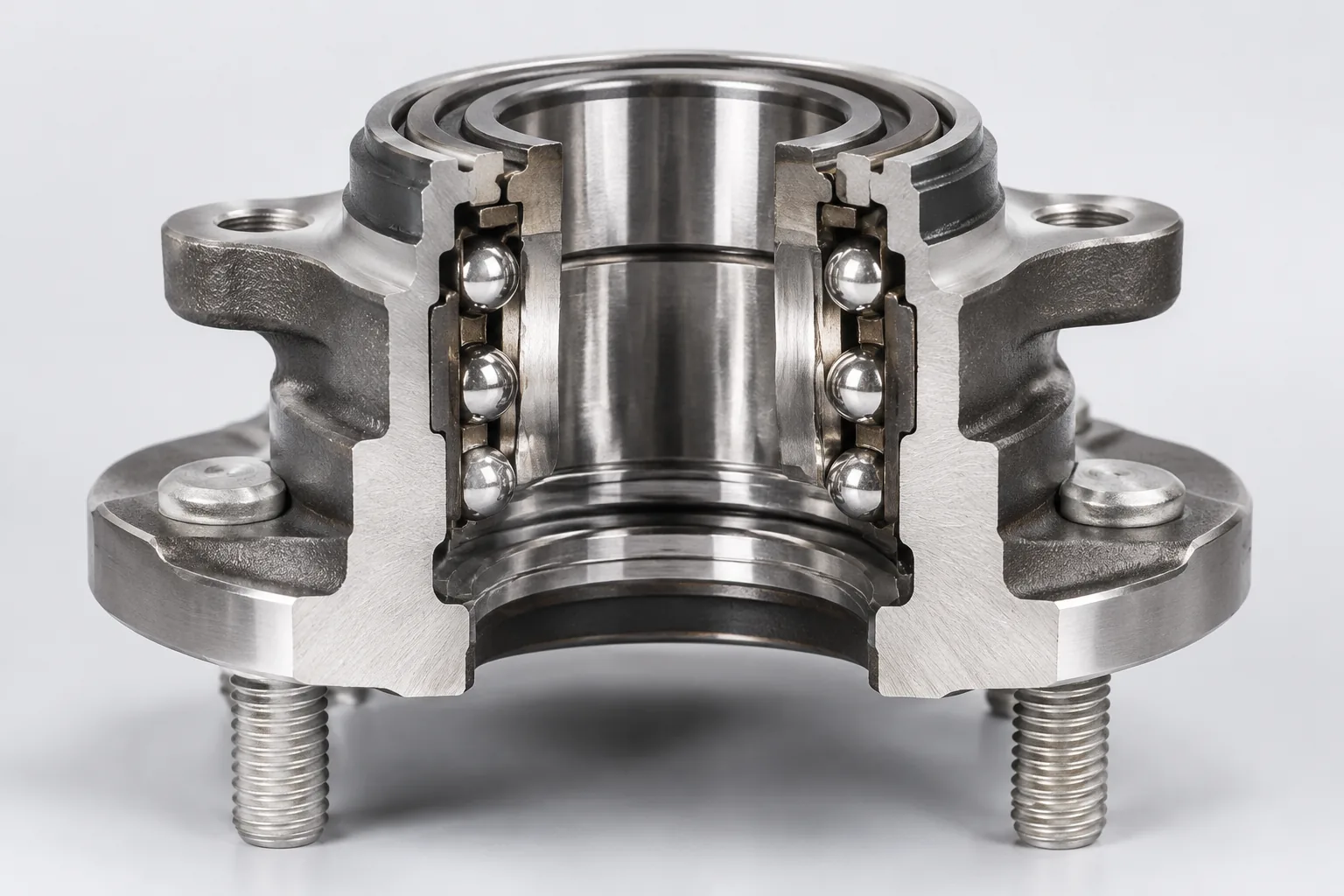
Bearing misalignment describes an angular deviation between the bearing inner and outer rings, or between the shaft and its housing. According to SKF, angular offset between a hub-bearing unit’s inner and outer rings introduces extra forces, creates running noise, and shortens bearing service life. Timken notes that correct shaft-to-housing alignment is essential, because angular offset under moderate or heavy load can generate high edge-contact stresses where the rolling elements meet the raceways.
Timken’s reference rating condition for tapered roller bearings includes 0.0005 radian of misalignment, equal to about 0.0286 degrees. That is a bearing engineering reference value, not an automotive four-wheel alignment tolerance. Do not use it as a camber or toe specification. A vehicle alignment reading is not a direct measurement of bearing misalignment.
Which Alignment Angles Matter Most to Wheel Bearings?
Camber has the clearest published link to wheel-bearing axial load among the common alignment angles. According to SKF, camber’s effect on wheel-bearing load can normally be disregarded, yet a substantial camber angle introduces an axial load component that has to be included in the bearing-load calculation.
Toe mainly affects tire scrub and vehicle tracking. It is less directly connected to wheel-bearing load than a large camber angle. Caster is one of the main alignment angles, but published bearing guidance does not establish a direct caster-to-bearing-load relationship, so it should not be presented as a bearing-load factor without vehicle-specific data.
The practical reading is straightforward: slight camber is usually a limited bearing concern, while a large camber angle or a camber error caused by bent parts deserves closer inspection.
How Severe Misalignment or Damaged Parts Increase Bearing Load
Large camber, a bent suspension or steering knuckle, wheel-hub mounting skew, or impact damage can alter bearing axial load or internal load distribution. The alignment reading may be the first visible sign, but the bearing load changes because the mounting geometry or the related parts are no longer correct.
SKF cautions that even minor wear at the bearing housing or axle can create misalignment and shorten service life. Common causes of misalignment include hitting potholes, striking curbs, and minor collisions. Schaeffler identifies potholes, curb strikes, overloading, and installation mistakes among the factors that shorten wheel-bearing life.
A single impact can both change alignment and damage a bearing. The two conditions may share a cause rather than have a simple one-way relationship. When replacing a wheel bearing, inspect the bearing housing and axle because small wear can create misalignment.
Can a Bad Wheel Bearing Cause Alignment Problems?
Yes. The causal direction can be reversed: a failing wheel bearing can affect measured wheel alignment or vehicle handling. SKF technical bulletin TT 08-011 (April 2008) notes that a hub-bearing unit with excessive end play or wear noise can affect handling or alignment. If end play exceeds manufacturer specifications, replace the hub assembly.
Timken notes that incorrect adjustable-bearing settings can influence camber and toe. For commercial-vehicle adjustable bearings, Timken gives an end-play range of 0.001 to 0.005 in (0.0254 to 0.127 mm) and requires dial-indicator confirmation. The vehicle manufacturer’s specification still governs. That range is not a universal passenger-car specification.
What Wheel Alignment Cannot Fix
A wheel alignment cannot repair an already damaged bearing, a bent hub, a worn knuckle, or excessive bearing end play. SKF recommends checking the spindle assembly, axle joints, wheel flanges, and frame for damage. Alignment inspection can help reveal bent parts, but a hub-bearing unit with excessive end play needs replacement.
Bearing noise may stem from overload, impact damage, contamination, inadequate lubrication, wrong installation, incorrect preload, or damage to nearby components. Alignment readings by themselves cannot pinpoint why a bearing is noisy.
ISO 15243:2017 covers rolling-bearing damage and failure terms, characteristics, and causes. The second edition was published in March 2017 and confirmed in 2022. It is a failure-analysis reference; it does not set automotive toe or camber limits.
Practical Inspection and Next Steps
After a curb strike, pothole impact, or collision, check both alignment and wheel-end condition rather than assuming only one part is affected.
- If bearing noise, play, or roughness is present, diagnose the bearing and hub assembly before treating alignment as the only problem.
- If hub-bearing end play exceeds the manufacturer’s specification, replace the hub assembly rather than relying on an alignment adjustment.
- When a bearing is replaced, inspect the bearing housing and axle for wear that could create misalignment.
- Use the vehicle manufacturer’s alignment specifications and bearing end-play specifications; do not substitute generic bearing reference values for vehicle service limits.
A vehicle with normal alignment can still have a damaged bearing. Inspection order should follow the symptoms: alignment complaints, bearing noise, impact history, or a combination of these.
Conclusion
Wheel alignment can affect wheel bearings, but usually indirectly and mainly when the misalignment is severe or caused by damaged suspension, steering, hub, or mounting parts. Mild toe or camber errors are more directly linked to tire wear, pull, and handling changes. Considerable camber and structural misalignment are more likely to increase bearing axial load or disturb load distribution.
A bad bearing can also affect alignment readings, so diagnosis must consider both directions. Alignment cannot repair a damaged bearing, bent hub, worn knuckle, or excessive end play. The safe next step is to inspect wheel-end condition, verify manufacturer specifications, replace out-of-specification parts, and then perform alignment as needed.
FAQs
Q1: Does wheel alignment affect wheel bearings?
A: Yes, but usually indirectly. Minor alignment errors mainly affect tires and handling, while severe camber or misalignment caused by damaged parts can increase bearing load or disturb load distribution. Alignment condition alone does not prove bearing damage.
Q2: Is camber or toe worse for wheel bearings?
A: Camber has the clearer published link to bearing axial load when the angle is considerable. Toe is more directly linked to tire scrub and tracking. A large camber angle caused by bent parts should be inspected as a mounting and load-path problem, not just as a tire-wear setting.
Q3: Can a bad wheel bearing cause bad alignment?
A: Yes. Excessive hub-bearing end play or wear can affect handling or alignment readings, and improper adjustable-bearing settings can affect camber and toe. If end play is outside the manufacturer’s specification, the hub assembly needs replacement.
Q4: Will an alignment fix a noisy wheel bearing?
A: No. Alignment cannot repair bearing damage, contamination, poor lubrication, incorrect installation, or excessive end play. Noise requires diagnosis of the bearing, hub, and related wheel-end parts.
Q5: What should I check after hitting a curb or pothole?
A: Check alignment and wheel-end condition, including the bearings, hub, knuckle, housing, and axle. One impact can affect both alignment and bearing condition, so replacing or adjusting only one side of the problem may leave the other fault in place.