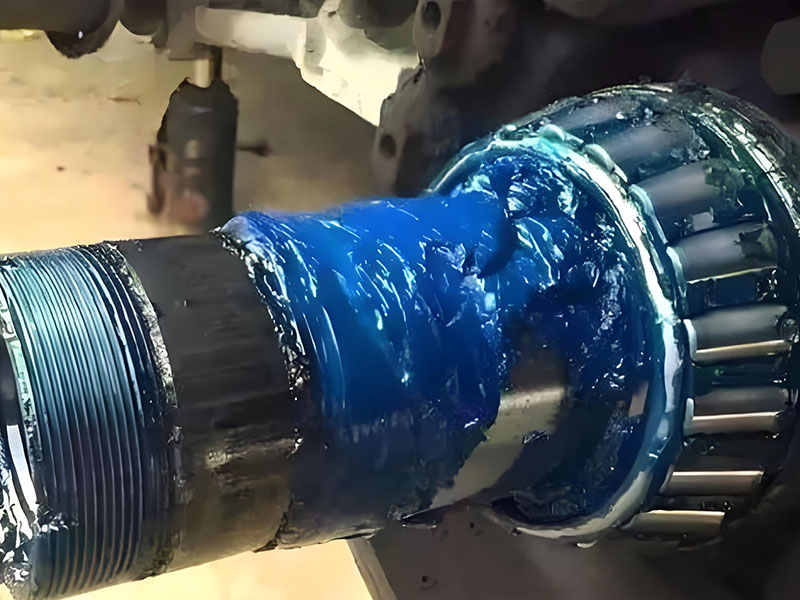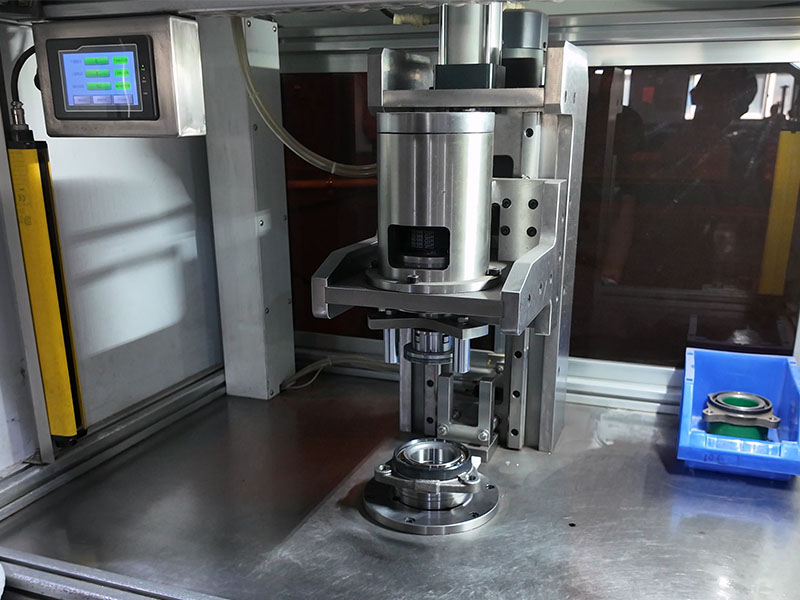
Quick Answer: A tale of two hub assemblies often comes down to two parts that fit the same vehicle but are built to different levels of control. One is an NTN-manufactured assembly tied to OE specifications; the other is a white-box unit identified only by a 3 x 4 inch part-number and barcode label. Matching dimensions confirm physical fit, not steel cleanliness, heat treatment, raceway finish, seal performance or sensor compatibility.
The practical question behind A Tale of Two Hub Assemblies is whether a cheaper white-box hub assembly can substitute for an OE-linked one on the same vehicle. A caliper does not settle that question. This comparison looks at the criteria that change durability, sealing, sensor behavior and installed cost: internal design parameters, steel and heat treatment, raceway finish, seal type, encoder and harness fitment, plant-level quality controls, installation torque and warranty coverage.
A Tale of Two Hub Assemblies: What Separates OE From White-Box
Both parts in this comparison are sealed, pre-set wheel hub assemblies that bolt into the same knuckle and carry the same wheel. The difference lies in how the internal geometry, materials, heat treatment and sealing were established. This comparison uses publicly described NTN and BCA information and general hub assembly engineering. It does not claim that every unbranded hub assembly is deficient.
The OE Path: An NTN-Manufactured Assembly
The first assembly is manufactured by NTN, a tier-one OE wheel hub supplier and the parent company of the BCA Bearings aftermarket brand since 1996. Because the design is fixed by the OE drawing, preload, grease, seal and encoder choices are set by specification rather than by copying a sample.
NTN describes its wheel hub range as covering four architectures:
- GEN 1: two rows of rolling elements, with no on-site preload or alignment setting required.
- GEN 2: integrates flange, spigot or mounting features into the bearing rings.
- GEN 2.5: may be press-fit or roll-formed; the roll-formed version carries a factory-set preload.
- GEN 3: integrates the chassis mounting flange and the brake disc or wheel mounting flange into one unit.
These architecture descriptions apply to NTN’s own product families, not to every hub assembly on the market.
The White-Box Path: Reverse-Engineered Geometry
The second assembly is unbranded. Its packaging identifies the part only through a 3 x 4 inch label carrying a part number and barcode.
BCA states that low-cost white-box products are commonly produced by scanning and measuring an original part and reverse engineering it. That process can reproduce basic geometry, but it does not by itself transfer the OE machining tolerances, heat-treatment depth, material specification or seal material requirements. For the buyer, the external envelope can be correct while internal preload, raceway finish and sealing remain undefined.
Reverse engineering is described as a common practice for low-cost white-box products; it is not a statement that every unbranded assembly is reverse engineered.
Why Matching Dimensions Do Not Prove Equivalence
Two hub assemblies can be dimensionally interchangeable and still differ in durability, because the external envelope says nothing about what happens inside the rolling contact and at the sealing interface. NTN’s hub bearing selection documentation lists the design parameters that must be evaluated beyond outside dimensions:
- life
- stiffness
- strength
- internal clearance or preload
- bearing material
- grease
- seals
- magnetic encoder
- ABS sensor
Do not infer interchangeability from dimensions alone. Correct fitment depends on the catalogue application for the specific part number, not on a measured bore and bolt pattern. A dimension check remains necessary for physical fit; it is simply not sufficient as a quality or durability judgment.
What the NTN Laboratory Comparison Reported in White-Box Samples
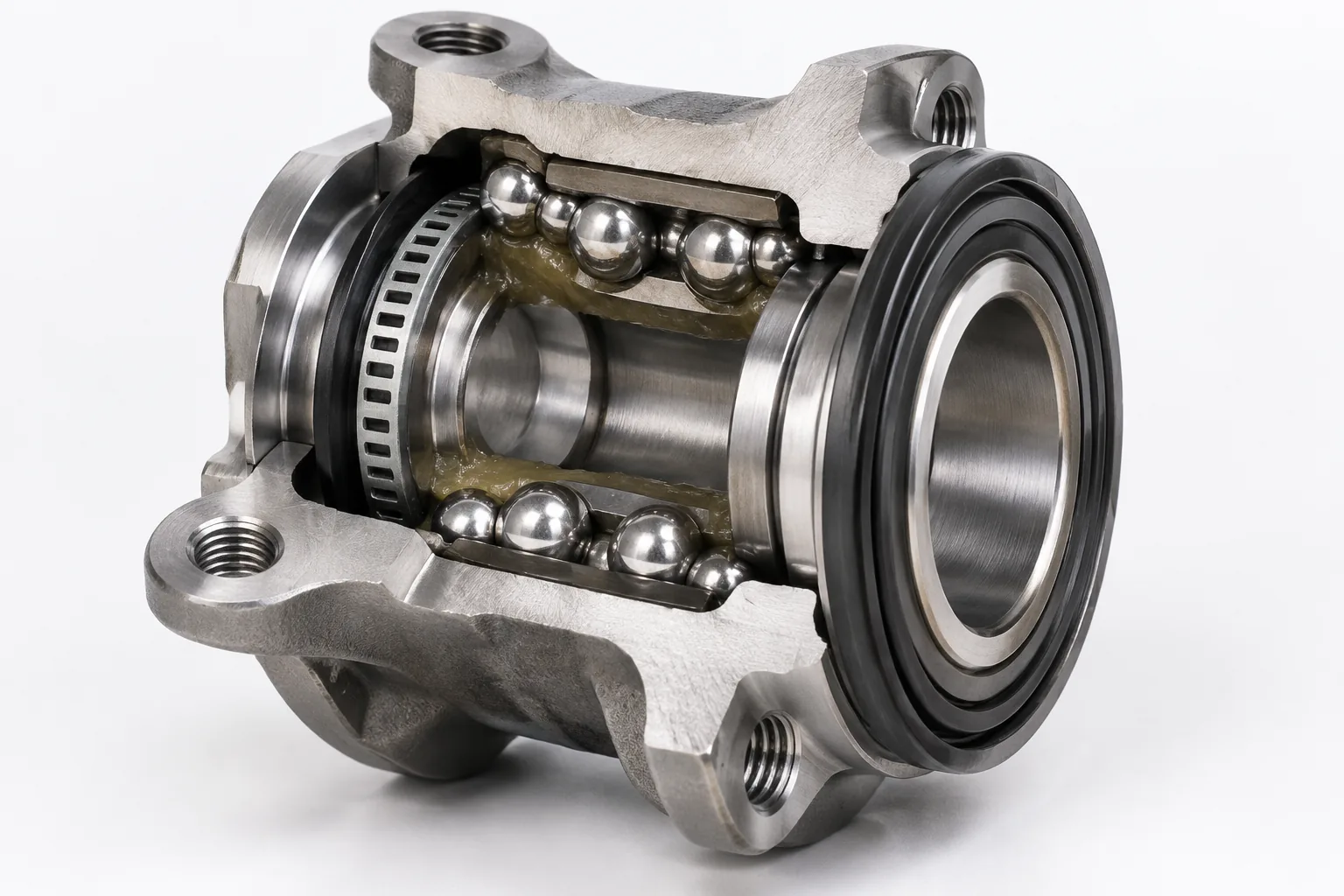
BCA published a comparison in which white-box samples were examined in an NTN laboratory. The reported finding was that the tested samples did not meet the internal tolerances applied to the OE-linked product. The reported defects fall into three groups:
- Non-metallic inclusions in lower-grade steel.
- Grain structure transition problems caused by inadequate heat treatment.
- Raceway scratches and out-of-tolerance surface roughness caused by insufficient finishing.
Each defect matters in a different way. Inclusions act as stress raisers in the rolling contact. Poor heat treatment leaves an inconsistent hardened zone beneath the raceway. Rough or scratched raceways raise contact stress and noise and shorten fatigue life.
The BCA page does not publish the brand, part number, sample quantity, specific tolerance values, test method or full laboratory report. The result should therefore be read as: BCA and NTN report that the white-box samples examined did not meet their internal laboratory tolerances. It is not a finding about all aftermarket or all unbranded hub assemblies.
Seals: Where Water Ingress Is Decided
Seal design is one of the largest controllable differences between two hub assemblies that look identical from outside. Water and road salt entering the bearing cavity start the damage that later appears as noise or play.
NTN technical documentation describes three common hub seal types:
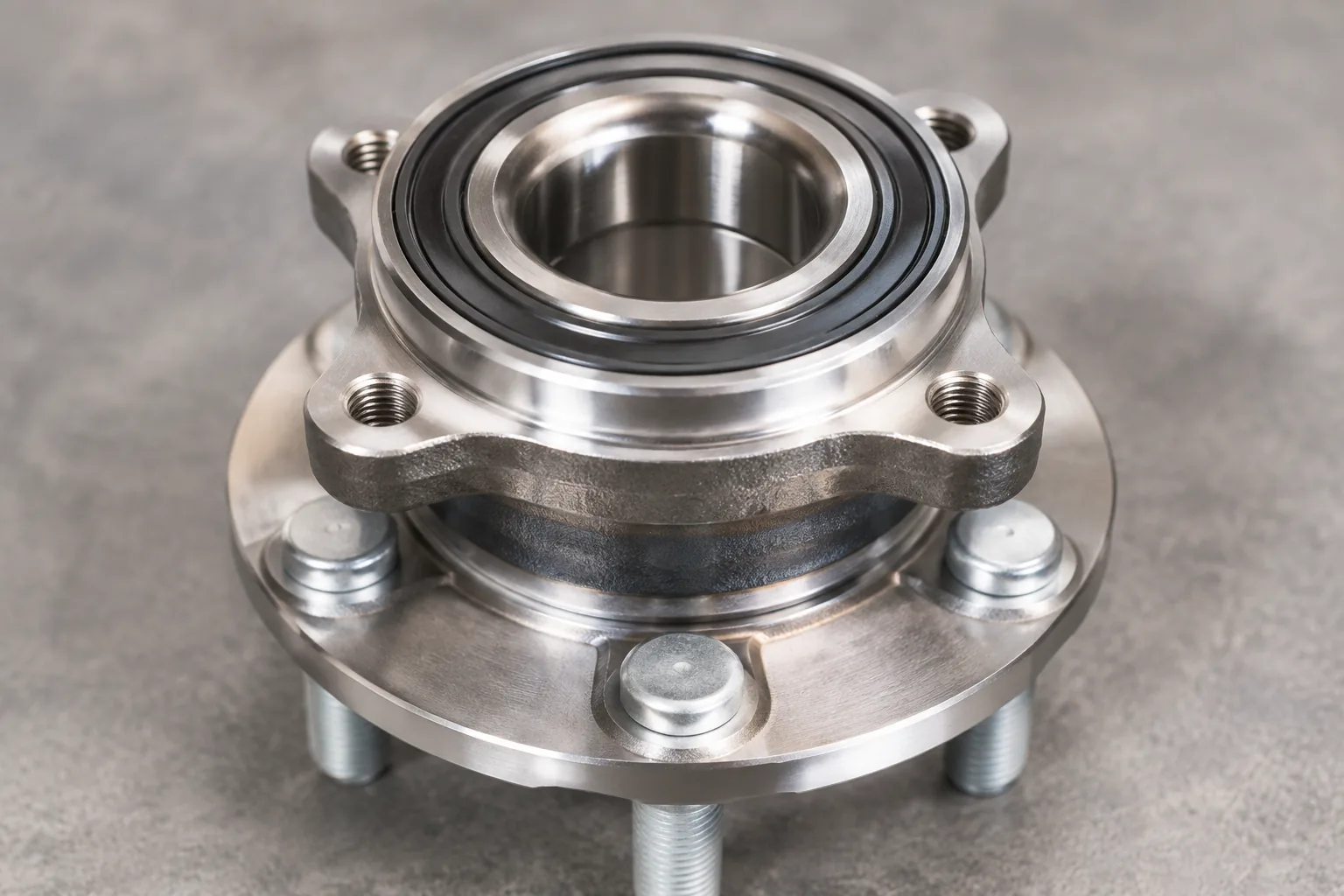
- 2-lip: a grease lip plus a dust lip.
- 3-lip: adds a side lip to the 2-lip layout.
- Highpack: adds a stainless steel slinger to the 3-lip sliding area to improve rust resistance.
In NTN’s water ingress test conditions, at 1,100 min-1 rotational speed with slurry containing 10 wt% JIS type 8 Kanto loam powder, the 2-lip seal reached 3-5 cycles. The 3-lip and Highpack seals each reached 15-20 cycles. These are design comparison values from one specific laboratory condition. They must not be converted into road mileage or a service interval.
Sensors, Encoders, and Harness Fitment
On ABS-equipped vehicles the hub assembly is also a sensing component, and mismatches there show up as warning lamps rather than as mechanical noise. NTN documentation states that GEN 2 and GEN 3 hubs can integrate the ABS sensor and magnetic encoder into the assembly. The direct effects are reduced axial installation space, better protection of the sensor and encoder from stone damage, dirty water and salt, and no need to set the air gap between sensor and encoder during installation.
BCA adds that application matching is not limited to the sensor. It also involves the dedicated rubber grommet and abrasion-resistant sleeve on the harness. A mismatched sensor or harness can trigger warning lamps or unwanted control-system intervention. That harness point is a stated product-technical position; no vehicle model or failure-rate data was published with it.
The Manufacturing Controls Behind Consistent Output
Consistency across production lots comes from a controlled process, not from a one-off sample that measured correctly. NTN states that it leads global OEM wheel hub assembly market share and that its Elgin, Illinois plant supplies more than 30% of North American OE automotive wheel hub demand. NTN describes that plant as the largest single-site wheel hub assembly manufacturing base in North America.
The related site details are:
- American NTN Bearing Mfg. Corp. is listed at 1500 Holmes Road, Elgin, Illinois 60123, USA. Wheel unit and HUR manufacturing also appear at 1700 Holmes Road, Elgin, Illinois 60123.
- NTN USA Corporation is listed at 1501 Woodfield Road, Schaumburg, Illinois 60173, USA.
- NTN Automotive Center is located at 39255 West 12 Mile Road, Farmington Hills, Michigan 48331.
The Elgin operation holds IATF 16949:2016 certification covering the design and manufacture of angular contact units, HUB and HUR bearings and steel balls. The certificate details are 10000837 IATF25, IATF number 0506705, issued 2024-03-20, valid to 2027-03-19, certified by DQS Inc./DQS Holding GmbH. Related North American design, manufacturing, testing and warehousing sites are listed on an ISO 9001:2015 certificate numbered 10634229, current issue date 2024-09-11, valid to 2027-09-10, certified by LRQA Limited.
IATF 16949 and ISO 9001 certify the quality management system and the scope of the listed sites. They are not a product certification of a specific hub’s life, load rating or vehicle application.
Installation and Warranty Realities That Decide the Value
The installed cost and the coverage behind the part belong in the comparison, because a cheaper unit that is installed incorrectly or excluded from warranty is not cheaper overall. Hub assemblies of this type are normally pre-set, pre-lubricated and pre-sealed, maintenance-free and non-serviceable units. On most assemblies the internal bearing or seal cannot be replaced separately.
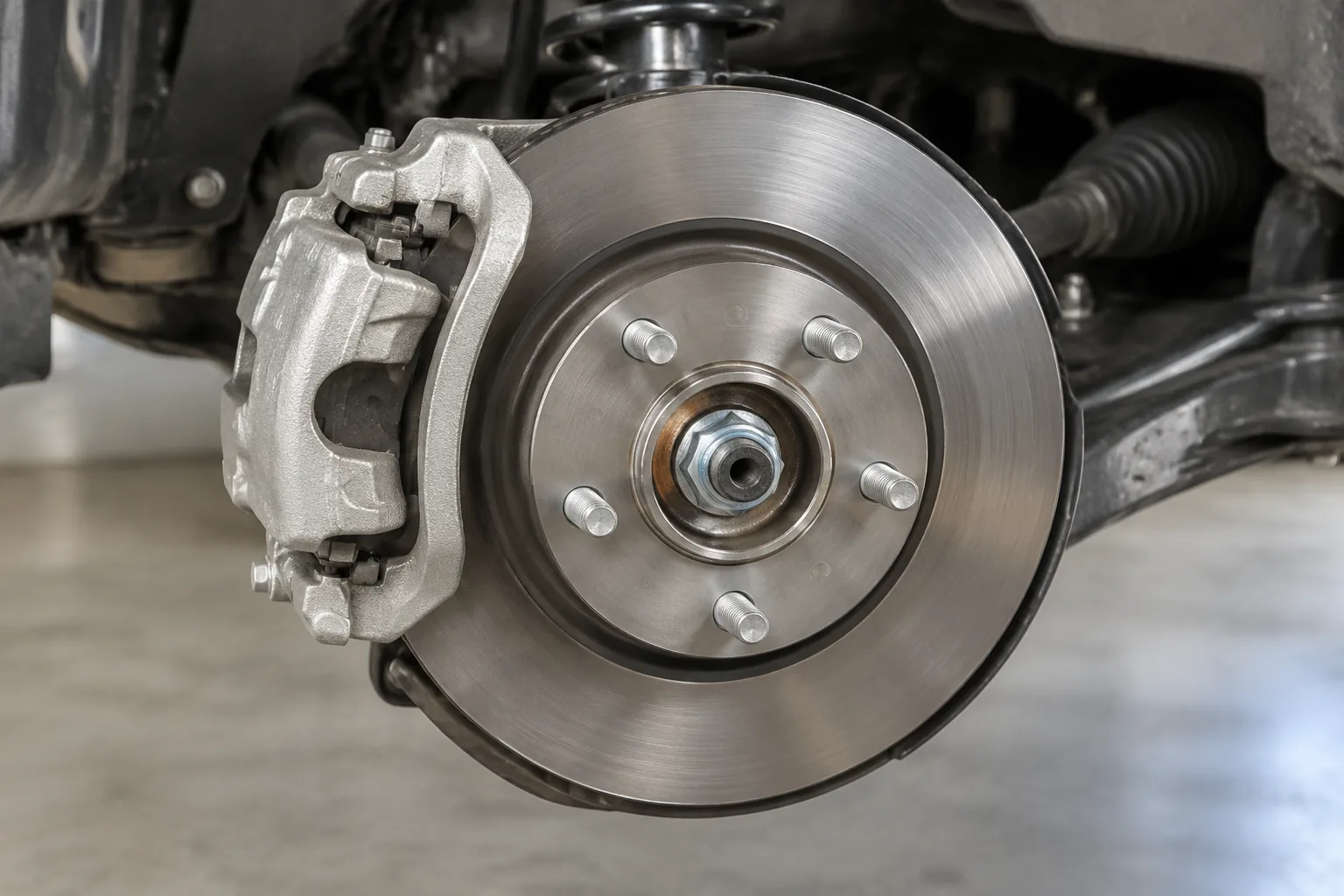
The axle nut should not be run down with an impact wrench. Use a certified, calibrated torque wrench and apply the vehicle manufacturer’s specified axle nut and wheel nut torque. Over-tightening or under-tightening can damage the thread, the nut or the assembly.
NTN and BCA’s current US limited warranty covers automotive aftermarket hubs and wheel bearings for 1 year from the date of purchase by the end user. It requires proof of purchase and excludes normal wear, incorrect installation, misuse, accident and improper repair.
How to Evaluate a Hub Assembly Before You Buy
Turn the comparison into a decision sequence:
- Confirm the part number against the vehicle application, not against a measured sample.
- Ask for the seal design and the encoder or sensor configuration.
- Ask which quality management system covers the producing plant.
- Check installation requirements and warranty terms.
Treat an unbranded package carrying only a part-number label as a request for documentation, not as proof of equivalence. Where a supplier cannot state material specification, heat-treatment control, seal type or sensor configuration, the buyer has no basis to assume OE-equivalent performance.
Conclusion
The tale of two hub assemblies is not settled by fit alone: two units that fit the same vehicle are not necessarily the same part. One follows an OE specification for steel, heat treatment, raceway finish, seal design and sensor integration; the other may only reproduce the geometry. Dimensions are necessary but not sufficient. Seal type determines water ingress resistance under stated test conditions, sensor and harness matching affects warning lamps, and plant-level quality management and a defined warranty support consistency.
Before fitting, verify the part number against the vehicle application and request the specifications and coverage that matter. Then install with a calibrated torque wrench to the vehicle manufacturer’s torque.
FAQs
Q1: Does a white-box hub assembly fail laboratory testing?
A: BCA reports that the white-box samples it examined did not meet its internal tolerances. The published comparison does not list sample quantity, tolerance values or test method, so the result applies to the examined samples, not to every unbranded hub assembly.
Q2: Is the 3-lip seal better than the 2-lip seal?
A: Under the cited water ingress test conditions, 3-lip and Highpack reached 15-20 cycles while 2-lip reached 3-5 cycles, so the 3-lip design offered more resistance in that test. The figures come from a specific slurry test and do not translate into road mileage.
Q3: Can I replace just the bearing inside a hub assembly?
A: Generally no. Hub assemblies of this type are supplied pre-set, pre-lubricated and pre-sealed as non-serviceable units, and on most assemblies the internal bearing or seal cannot be replaced separately.
Q4: Do I need a torque wrench for the axle nut?
A: Yes. Do not use an impact wrench; apply the vehicle manufacturer’s specified axle nut and wheel nut torque with a certified, calibrated torque wrench. Over-tightening or under-tightening can damage the thread, nut or assembly.
Q5: How can I tell whether a hub assembly is OE quality?
A: Confirm the part number against the vehicle application, ask for the seal design and encoder or sensor configuration, ask which quality management system covers the producing plant, and check installation requirements and warranty terms. A package carrying only a part-number label gives none of that.
Q6: Is a white-box hub assembly the same as an OE hub assembly if the dimensions match?
A: No. Matching bore and bolt pattern only confirms physical fit. NTN’s selection documentation lists life, stiffness, strength, internal clearance or preload, bearing material, grease, seals, magnetic encoder and ABS sensor as the parameters that must also be evaluated.
Q7: Does a mismatched ABS sensor or harness matter?
A: It can. BCA states that a mismatched sensor or harness can trigger warning lamps or unwanted control-system intervention, and notes that matching covers the harness rubber grommet and abrasion-resistant sleeve as well as the sensor itself. No vehicle model or failure-rate data was published with that position.
Q8: What does the NTN/BCA 1-year limited warranty cover?
A: It covers automotive aftermarket hubs and wheel bearings for 1 year from the end-user purchase date with proof of purchase, and excludes normal wear, incorrect installation, misuse, accident and improper repair.
Q9: Can the water ingress cycle figures be converted into mileage?
A: No. The 3-5 cycles for 2-lip and 15-20 cycles for 3-lip and Highpack were measured at 1,100 min-1 with slurry containing 10 wt% JIS type 8 Kanto loam powder. NTN presents them as a design comparison under those specific conditions, not as a road service interval.