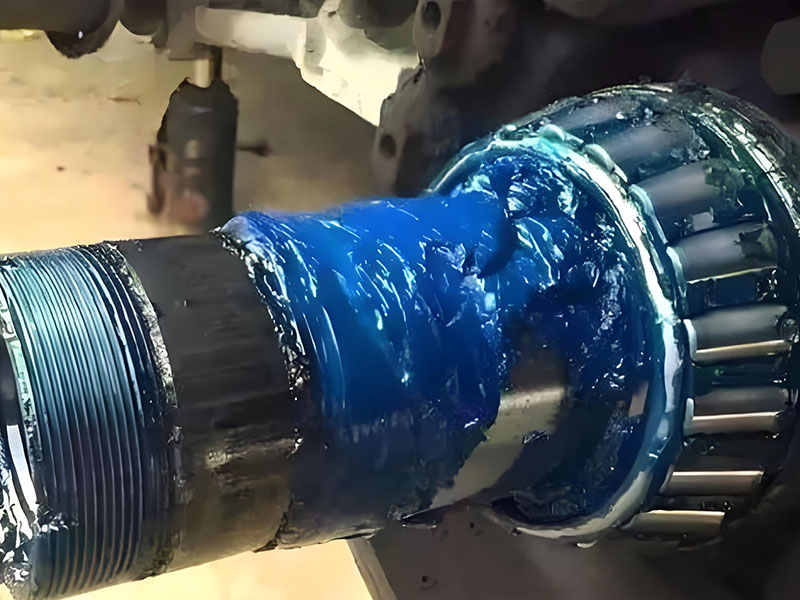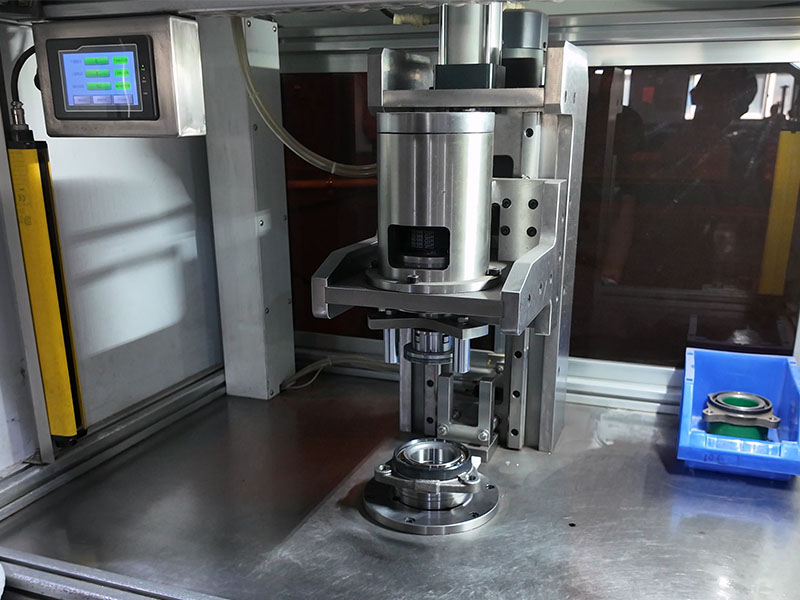
Quick Answer: Pillow block bearing maintenance is application-specific in service. Set relubrication intervals from speed, temperature, contamination, load, and operating hours, and follow the equipment maker’s instructions first. Control grease fill carefully, because both too little and too much grease can raise operating temperature. Inspect sound, temperature, vibration, seals, leakage, and lubricant condition against a baseline, and investigate persistent changes before replacing the unit.
Pillow block bearing maintenance keeps a housed bearing unit running without turning normal wear into premature failure. The work is not a single checklist copied from a calendar. It combines a lubrication plan, fill control, inspection, condition monitoring, and a clear rule for when to investigate or replace. Manufacturer instructions for the specific unit always take priority over generic intervals.
Pillow Block Bearing Maintenance: Set Intervals by Application, Not by a Fixed Calendar
No universal relubrication interval fits every pillow block. Published guidance from bearing makers ties frequency and amount to application experience, speed, temperature, contamination, environment, and operating hours. Use the equipment maker’s maintenance instructions first. Published intervals are initial baselines, not a schedule to apply blindly.
Keep grease-lubricated and oil-lubricated housings on separate maintenance procedures. A grease schedule does not transfer to an oil-lubricated unit, and an oil-level check does not replace grease fill control.
Tapered Roller Housed Units: Reference Intervals
For tapered roller bearing housed units, one published reference table assumes 8 hours of operation per day. Treat it as a starting point and adjust it for actual service. The same guidance defines low speed as below 25% of maximum speed and medium speed as 25% to 75% of maximum speed. High speed and high heat require extra caution.
| Exposure | Reference relubrication interval |
|---|---|
| Clean, no exposure | Low speed: annually. Medium speed: every 2 months. High speed: every 2 weeks. |
| Moderate exposure | Low speed: monthly. Medium speed: every 2 weeks. |
| Severe exposure | Low speed: weekly. Medium speed: weekly. |
Do not present this table as a universal pillow block relubrication schedule. It applies to tapered roller housed units under the stated assumptions, and the unit manufacturer’s instructions still control.
Ball Bearing Housed Units: General Guidance
General guidance for ball bearing housed units is less demanding in clean indoor service. Indoor units normally require no relubrication. Outdoor units typically require relubrication 2 to 3 times per year. Severe outdoor exposure may require monthly relubrication, while high contamination or frequent washdown may require weekly relubrication.
For this general guidance, the relubrication endpoint can be the first small grease escape at the seal lip. Specific product instructions override this guidance. Do not keep pumping after that point.
Temperature, Speed, Orientation, and Contamination Adjustments
Temperature changes the interval. Above 70°C (160°F), halve the relubrication interval for every 15°C (27°F) rise, up to the grease high-temperature limit. Below 70°C, double the interval for every approximately 15°C lower, to a maximum of two doublings.
Vertical shaft mounting calls for halving the relubrication interval. High vibration, shock loads, and liquid or particle contamination also require shorter intervals. Severe contamination may justify sealed bearings or continuous lubrication rather than a longer grease schedule.
Lubrication: Fill Amounts, Methods, and Endpoints
Lubrication maintenance must match the housing type: grease versus oil. Control initial fill, relubrication amount, and endpoint to avoid both under-lubrication and over-lubrication. After replacing a bearing insert, verify the lubrication path before returning the unit to service.
Initial Grease Fill for Split Pillow Block Housings
For SNL 2, 3, 5, and 6 series split pillow block housings, the bearing internal free space should be completely filled with grease. The housing free space is typically filled to 20% to 40% of its volume. When replenishing from the side through a grease nipple, initial fill may be about 40%.
High contamination combined with low speed may require 70% to 80% housing free-space fill. Do not apply those high fill percentages to high-speed equipment. Excess grease can increase churning and temperature rise.
Relubrication Amount and Overgreasing Control
Too little grease reduces lubricant film thickness and raises operating temperature. Too much grease causes churning, additional heat, and possible overheating. If a unit is overgreased, briefly remove the grease nipple to purge excess grease, then reinstall the nipple.
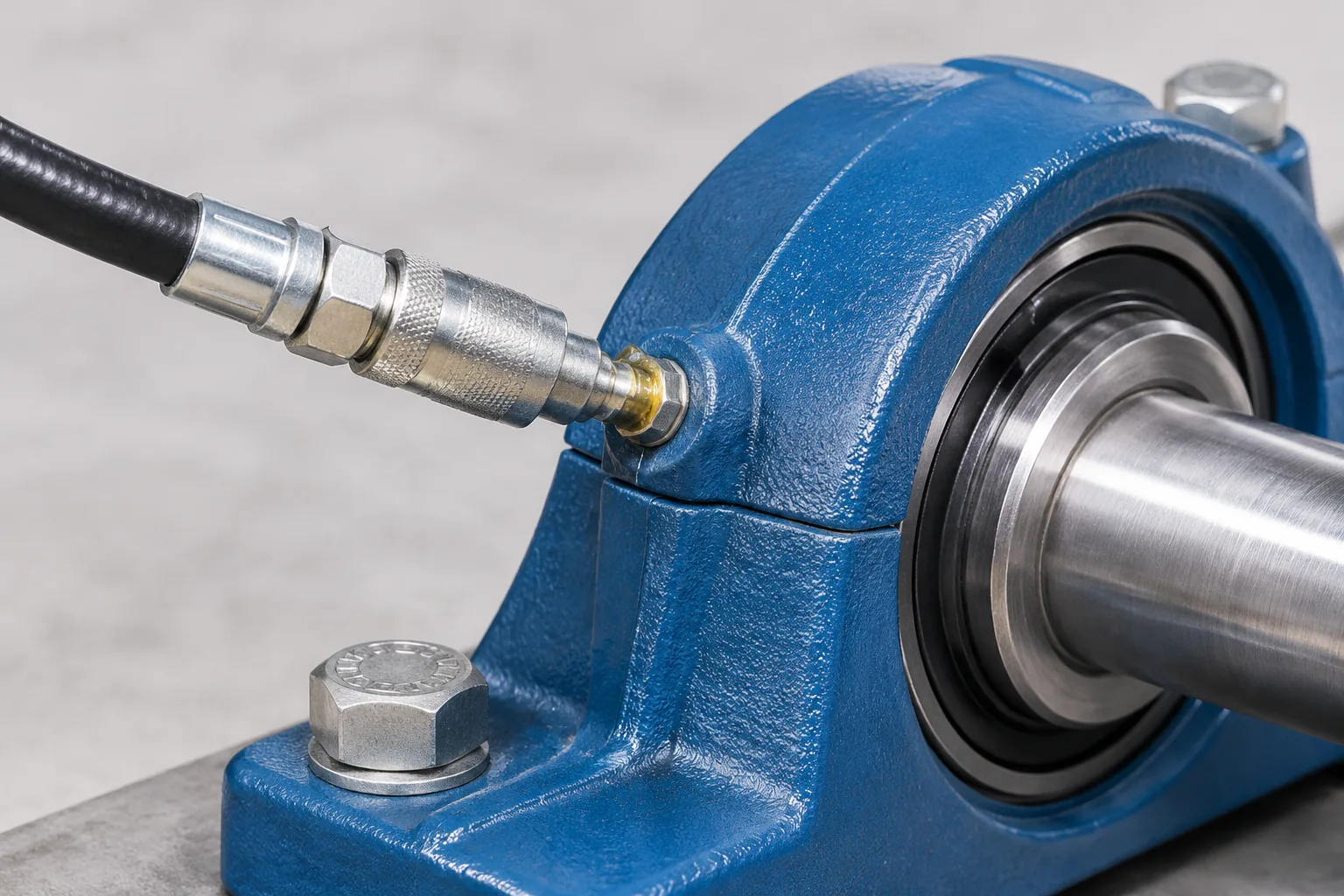
Purging grease through lip seals can damage sealing contact and admit water or contaminants. Do not grease until large amounts of old grease are discharged. Some mounted ball bearings may be relubricated while running, but the product instructions must be followed.
Insert Replacement: Match Lubrication Holes and Grooves
Different makers may place relubrication grooves or oil holes on the locking side or on the opposite side. If the bearing outer-ring oil hole does not align with the housing supply passage, grease cannot enter the bearing. Verify lubrication-hole alignment whenever replacing a mounted bearing insert.
Oil-Lubricated Pillow Blocks
For oil-lubricated pillow blocks, install the overflow cup on the descending side of shaft rotation to reduce oil leakage during operation. Fill through the top oil cup until the overflow cup is full, and maintain the oil level at the top of the overflow cup. Check and add oil only when the shaft is stationary to avoid overfilling.
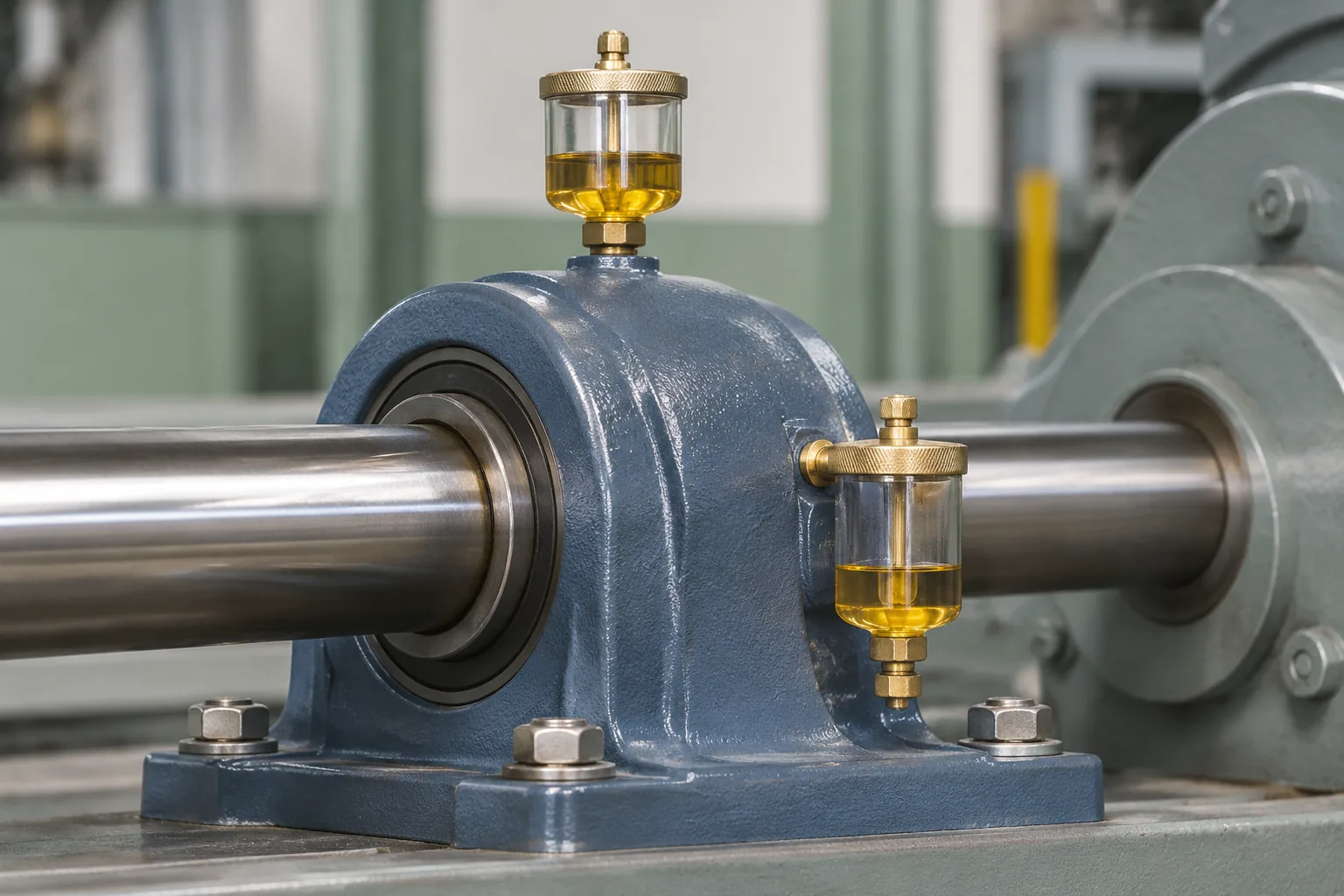
Use a high-quality automotive or turbine oil with an oxidation inhibitor. SAE 30 or an equivalent viscosity grade is a general reference. Do not apply grease-lubricated housing procedures to oil-lubricated housings. Oil lubrication requires appropriate oil seals or an oil-lubricated housing configuration.
Food-Grade Lubrication
H1 identifies lubricants permitted for incidental food contact. ISO 21469 is a hygiene-requirements certification for lubricants that may contact product incidentally; it is not the same as an H1 registration. Some housed units are factory-filled with aluminum-complex H1 food-grade grease for possible incidental food contact.
Do not assume all pillow block bearings are supplied with food-grade grease. For food and beverage equipment, confirm both the bearing and the lubricant compliance level.
Inspection and Condition Monitoring
Use multiple indicators: sound, temperature, vibration, seal condition, and lubricant appearance. Compare readings against a baseline and against current operating conditions, not against a single generic threshold. Relevant standards help with vibration evaluation and failure classification.
Routine Checks: Sound, Temperature, Vibration, and Visual
Listen for grinding, squealing, or irregular noise that may indicate poor bearing condition. Monitor temperature changes when operating conditions have not changed. During maintenance, check seals, leakage, and lubricant color. Cloudy oil may indicate water ingress; black oil may indicate contamination or carbonization.
Vibration and temperature monitoring can help identify imbalance, misalignment, mechanical looseness, bearing defects, lubrication problems, gear problems, belt problems, and coupling problems.
Post-Relubrication Temperature Rise
A natural temperature rise may persist for 1 to 2 days after relubrication. Evaluate the rise against the baseline trend, load, and operating conditions. A single elevated temperature reading is not sufficient to diagnose a fault. Persistent or abnormal temperature rise requires investigation.
Vibration Measurement and Evaluation
ISO 20816-1:2016 provides general guidelines for measuring and evaluating machine vibration on shafts, bearing housings, and non-rotating parts. It supports operating limits based on vibration amplitude and changes over time. There is no single universal vibration alarm value for all pillow block bearings; use application-specific limits and measurement conditions.
Fastener and Split-Housing Checks
For SONL pillow block housings, retighten the housing cap bolts and base connection bolts 1 to 2 days after installation to maintain the specified torque. Confirm that the housing cap and base carry the same serial number. Split housing caps and bases are not interchangeable between different housings.
Temperature Limits and Safety
Housed unit instructions state that bearings must not operate above 121°C (250°F). Overheated bearings may ignite explosive atmospheres containing flammable gas or dust. This 121°C limit is a product instruction, not a universal pillow block bearing rating. Confirm the specific bearing, housing, seal, and lubricant temperature limits for other products.
Failure Review and Replacement Decisions
ISO 15243:2017 classifies rolling bearing damage and failure modes by terms, appearance, and causes. The second edition was published in March 2017, was confirmed in 2022, and is under revision. Use it to support failure recording and root-cause analysis, not as a replacement-threshold table.
Record noise, temperature, vibration, lubricant condition, and seal condition before deciding to replace a bearing. Replace the bearing when inspection indicates damage beyond maintenance correction and OEM limits are exceeded. The standard helps organize the evidence; it does not by itself provide replacement thresholds.
Preventive Maintenance Checklist
- Confirm lubrication type and OEM instructions before servicing.
- Establish baseline temperature, vibration, and noise readings.
- Set relubrication intervals based on speed, temperature, contamination, load, and environment.
- Verify lubrication-hole alignment after insert replacement.
- Use the correct initial fill amount and avoid overgreasing.
- Retighten fasteners 1 to 2 days after installation where required.
- Inspect seals, leakage, and lubricant color.
- Record trends and compare them against baseline conditions.
- Before long shutdowns, add grease to reduce corrosion risk.
Conclusion
Effective pillow block bearing maintenance starts with the unit’s own instructions, then applies application-specific intervals for speed, temperature, contamination, load, and environment. Control grease or oil fill, verify lubrication paths after insert replacement, and watch sound, temperature, vibration, seals, and lubricant condition as a set. When trends change, investigate before damage progresses. Use failure classification to record what happened and to decide whether maintenance or replacement is the safe next step.
FAQs
Q1: How often should pillow block bearings be greased?
A: There is no fixed universal interval. Follow OEM guidance, then adjust for speed, temperature, contamination, environment, and operating hours. Published tables are starting points, not a calendar to apply to every unit.
Q2: How much grease should be added?
A: Initial fill depends on housing type. For SNL 2, 3, 5, and 6 series split housings, fill the bearing internal free space completely, fill housing free space to 20% to 40% normally, and use about 40% when replenishing from the side. High contamination with low speed may require 70% to 80%, but not in high-speed equipment.
Q3: Can pillow block bearings be overgreased?
A: Yes. Excess grease causes churning and heat, and purging grease through lip seals can damage sealing contact and admit water or contaminants. If overgreased, briefly remove the grease nipple to purge excess, then reinstall it.
Q4: What is the maximum operating temperature?
A: Housed unit instructions state a 121°C (250°F) limit, but this is a product instruction, not a universal rating. Confirm the specific bearing, housing, seal, and lubricant limits for the unit in service.
Q5: Do all pillow block bearings need relubrication?
A: No. General guidance says indoor ball bearing housed units normally need no relubrication, but product instructions control. Outdoor, severe, contaminated, or washdown service usually needs a shorter interval.
Q6: Can food-grade grease be used in any pillow block bearing?
A: No. H1 and ISO 21469 are distinct, and food-grade fill is product-specific. Confirm both the bearing and lubricant compliance level for food and beverage equipment.
Q7: How do I check pillow block bearing condition?
A: Check sound, temperature, vibration, seals, leakage, and lubricant color. Trend readings against a baseline and evaluate vibration with application-specific limits; a single reading or one symptom does not prove a specific fault.