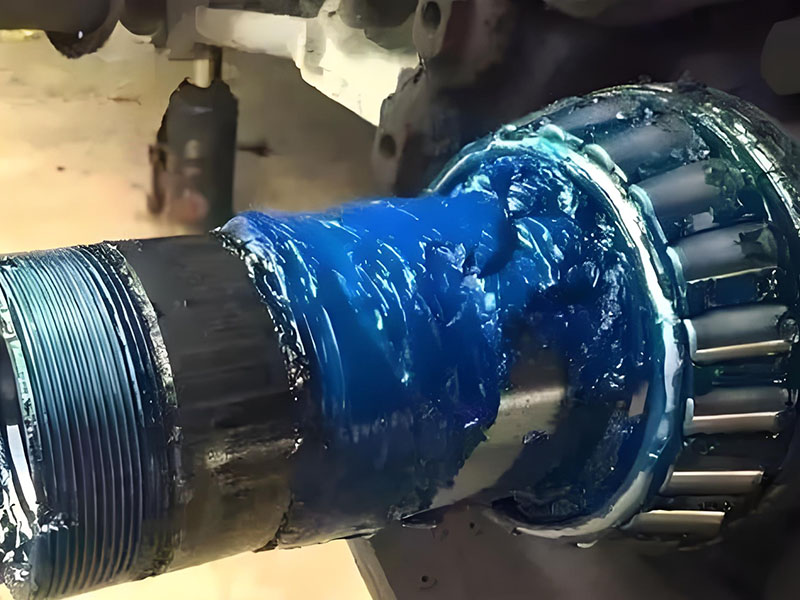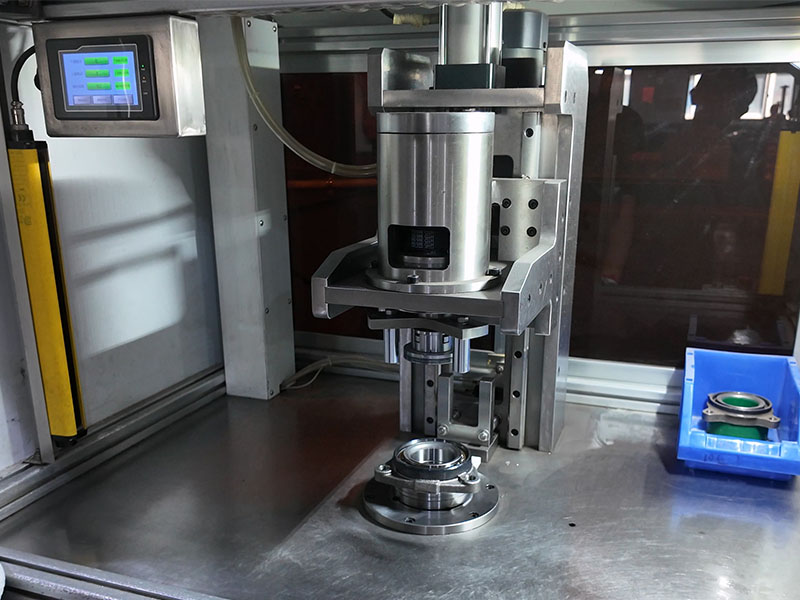
Quick Answer
A skeleton oil seal is a reinforced oil seal that uses a metal case or internal skeleton to support the rubber sealing body. Its main parts usually include a sealing lip, dust lip where required, rubber body, metal skeleton, and garter spring. Classification can be based on outside diameter structure, lip design, spring use, material, and application condition.
A skeleton oil seal is one of the most common oil seal designs in automotive and industrial equipment. The metal skeleton supports the shape of the elastomer seal so it can fit securely in the housing while the sealing lip contacts the rotating shaft.
Understanding structure and classification helps buyers choose the right seal for engines, transmissions, pumps, axles, bearing housings, and rotating machinery.
What Is A Skeleton Oil Seal?
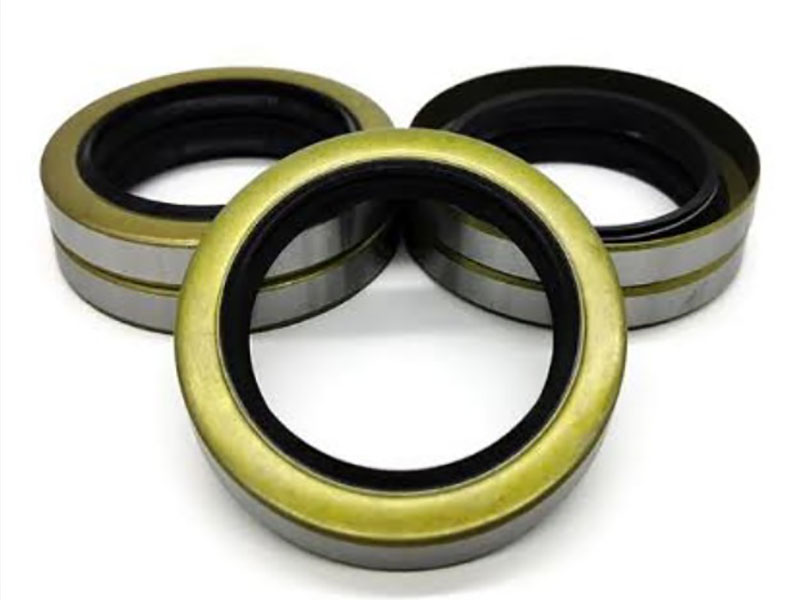
A skeleton oil seal is a radial shaft seal with metal reinforcement. The skeleton may be exposed, rubber-covered, or embedded depending on the seal design. Its purpose is to give the seal stable outside diameter support while allowing the lip to remain flexible.
The seal works by pressing the main lip against the shaft surface. This contact retains oil or grease and helps prevent leakage. Additional lips or design features can improve dust and water exclusion.
Main Structure Of A Skeleton Oil Seal
| Component | Function |
|---|---|
| Main sealing lip | Contacts the shaft and controls oil or grease leakage |
| Lip edge | Forms the sealing contact line on the shaft surface |
| Dust lip | Helps block external dust, mud, or water when included |
| Metal skeleton | Supports the seal shape and housing fit |
| Rubber body | Provides elasticity and bonding around the structure |
| Garter spring | Maintains lip contact force in many dynamic shaft seals |
Classification By Outside Diameter Structure
Skeleton oil seals can be classified by outside diameter construction. A rubber-covered outside diameter helps compensate for minor housing surface imperfections and improves static sealing. A metal outside diameter gives stronger rigid support in suitable precision bores.
The choice depends on housing material, bore finish, installation force, sealing reliability, and whether the seal may need easier removal later.
- Exposed metal outside diameter: the metal case contacts the housing bore and requires a suitable bore finish and fit.
- Rubber-covered outside diameter: elastomer covers the case and contributes to static sealing at the bore.
- Partly covered or combined construction: metal and elastomer are arranged for a specific housing and installation requirement.
Classification By Lip Design
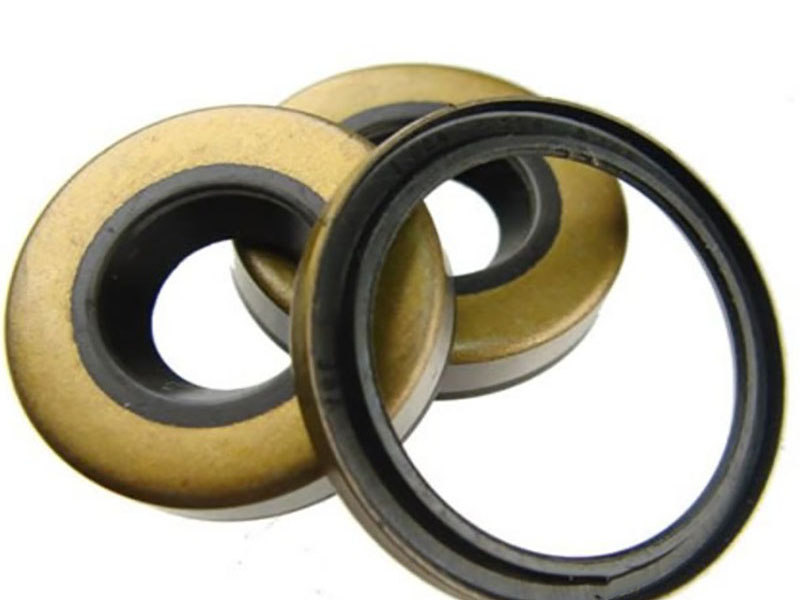
Lip design is one of the most important classifications because it affects sealing direction and contamination protection.
- Single-lip design: focuses mainly on retaining lubricant.
- Double-lip design: adds a dust lip to improve protection against external contamination.
- Spring-loaded lip: uses a garter spring to maintain lip pressure during operation.
- Non-spring lip: used in profiles engineered to provide the required contact without a garter spring; capability depends on the complete seal design.
Classification By Hydrodynamic Lip Features
The air side of the main lip may be plain or may include molded features intended to return a small amount of fluid toward the lubricant side during rotation. Directional features must match the shaft’s specified direction of rotation. Bidirectional and supplier-specific patterns also exist.
These features are not identified reliably by a single universal letter code. Use the manufacturer’s drawing because a code such as L, R, W, B, F, or Z can mean different things in different catalogs.
Classification By Material
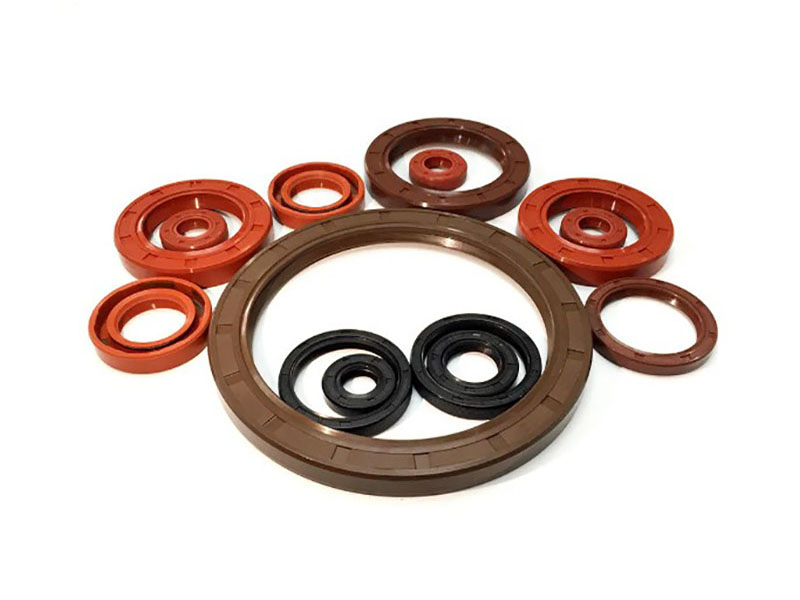
The rubber material must match the working environment. Common selection factors include oil type, grease type, temperature, shaft speed, water exposure, fuel exposure, and chemical compatibility.
Different elastomers offer different resistance to heat, oil, abrasion, and chemicals. Material should be selected from the application requirement or supplier specification, not by appearance alone.
Classification By Application Condition
Skeleton oil seals may be selected for engines, transmissions, wheel hubs, pumps, motors, gearboxes, and bearing housings. Application condition determines lip type, case type, material, and installation method.
For muddy or dusty environments, a dust lip or additional protective design may be important. For high-speed shafts, shaft surface finish, lubrication, heat generation, and lip material become more critical.
Installation Points
- Check the shaft for scratches, grooves, rust, or burrs.
- Clean the housing bore before installation.
- Confirm seal direction before pressing it into place.
- Use an installation tool that applies even force.
- Lubricate the lip when the application requires it.
- Do not damage the spring or lip edge during assembly.
Conclusion
A skeleton oil seal combines flexible sealing lips with metal reinforcement. Its structure supports shaft sealing, lubricant retention, and contamination exclusion. Correct classification by outside diameter, lip design, hydrodynamic features, material, and application condition helps avoid leakage and premature seal failure.
FAQs
Q1: Is a skeleton oil seal the same as an oil seal?
A: In many common uses, skeleton oil seal refers to a reinforced type of oil seal. Oil seal is the broader term, while skeleton oil seal describes the reinforced structure.
Q2: What does the metal skeleton do?
A: The metal skeleton supports seal shape, improves housing fit, and helps the seal stay stable during installation and operation.
Q3: Why do some oil seals have two lips?
A: A double-lip oil seal uses one main lip for lubricant retention and a secondary lip to help block dust, water, or external contamination.
Q4: How should I choose skeleton oil seal material?
A: Choose material according to lubricant, temperature, speed, chemical exposure, water or dust conditions, and supplier or drawing requirements.
Q5: What is the difference between a metal outside diameter and a rubber-covered oil seal?
A: A metal outside diameter provides a rigid case-to-bore fit in a suitable housing. A rubber-covered outside diameter adds an elastomer layer at the bore interface and may better accommodate certain housing materials or minor surface imperfections. Selection still depends on the specified bore, fit, and installation method.
Q6: What is a hydrodynamic return feature on an oil seal lip?
A: It is a molded surface feature intended to direct a small amount of fluid back toward the lubricant side while the shaft rotates. Directional features must match the specified rotation. A plain, directional, or bidirectional lip should be chosen from the seal drawing and operating conditions.
Q7: Do oil seal codes such as TC, TB, SC, L, or R mean the same for every brand?
A: No. Some codes are widely recognized within particular markets, but their exact case, lip, spring, or directional meaning can vary by supplier. Confirm the manufacturer’s cross-section drawing and code table before treating two coded seals as equivalent.
Q8: Does a double-lip skeleton oil seal always seal better?
A: Not automatically. A secondary lip can improve contaminant exclusion, but it may also add contact, friction, and lubrication requirements. The correct choice depends on whether the application needs dust protection, fluid separation, low friction, or another specific function.
Q9: Can a skeleton oil seal run without lubrication?
A: Many elastomeric radial shaft seals require compatible lubrication at the main lip during installation and operation. Dry running can increase heat and wear. Some special designs are engineered for different conditions, so use the seal manufacturer’s instructions instead of assuming every skeleton oil seal can run dry.