Quick Answer
Seal ring is a context-dependent term for an annular sealing element, while oil seal usually means a radial shaft seal that retains lubricant and excludes contaminants. A seal ring may work in a static, reciprocating, or rotary application. Correct selection depends on the exact seal type, movement, medium, pressure, temperature, dimensions, and installation space.
The difference between seal ring and oil seal is mainly scope and naming context. Seal ring can describe several kinds of annular sealing parts, while oil seal is commonly used for a radial shaft seal that controls oil or grease around a rotating shaft. Catalog terminology varies, so the name alone does not establish interchangeability.
Confusing these terms can lead to wrong part selection. A seal ring used in a static groove is not selected the same way as an oil seal around a crankshaft or axle shaft.
What Is A Seal Ring?
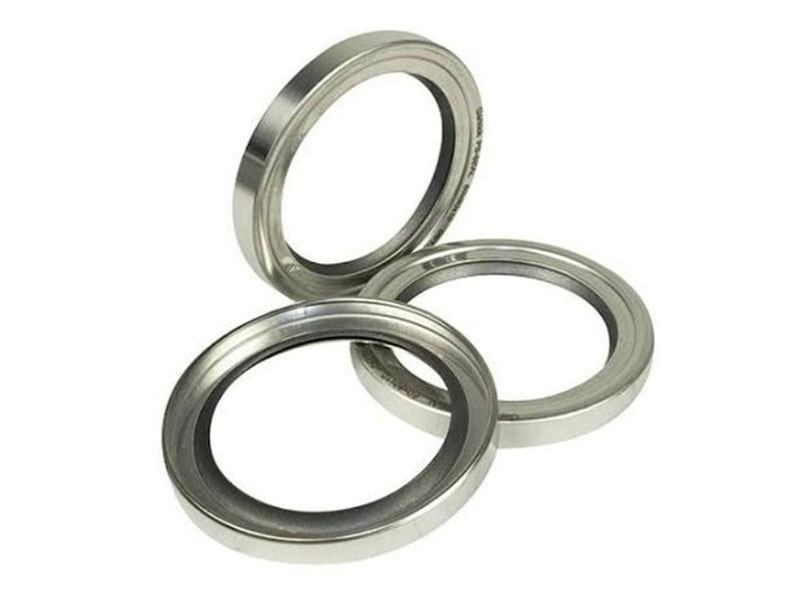
A seal ring is a ring-shaped component used to prevent leakage between surfaces or control media movement. Depending on the industry, the term may describe an O-ring, piston or rod sealing ring, mechanical seal ring, backup ring, or another annular element. It may seal oil, grease, air, gas, coolant, hydraulic fluid, or dust according to its design and material.
Seal rings can be used in static joints, reciprocating motion, rotary motion, pistons, grooves, flanges, connectors, and housings. The term includes many product types, so the exact design must be confirmed from the application.
What Is An Oil Seal?
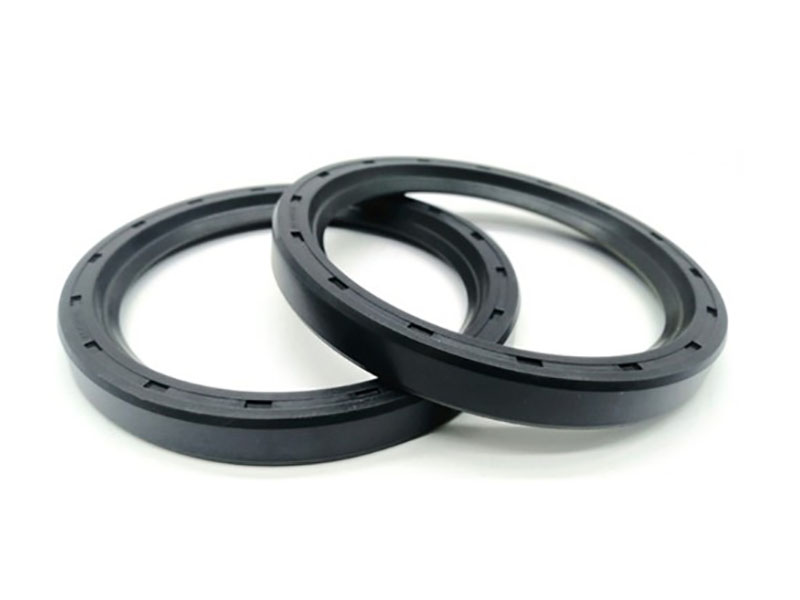
An oil seal is a sealing component used mainly around a shaft. It retains lubricant on one side and blocks dust, water, and other contaminants from the other side. Many oil seals include an elastomer sealing lip, metal case or skeleton, and sometimes a garter spring.
Oil seals are common in engines, transmissions, differentials, wheel hubs, pumps, motors, and bearing housings. They are selected by shaft diameter, housing bore, width, lip design, material, speed, temperature, and lubricant type.
Seal Ring vs Oil Seal Comparison
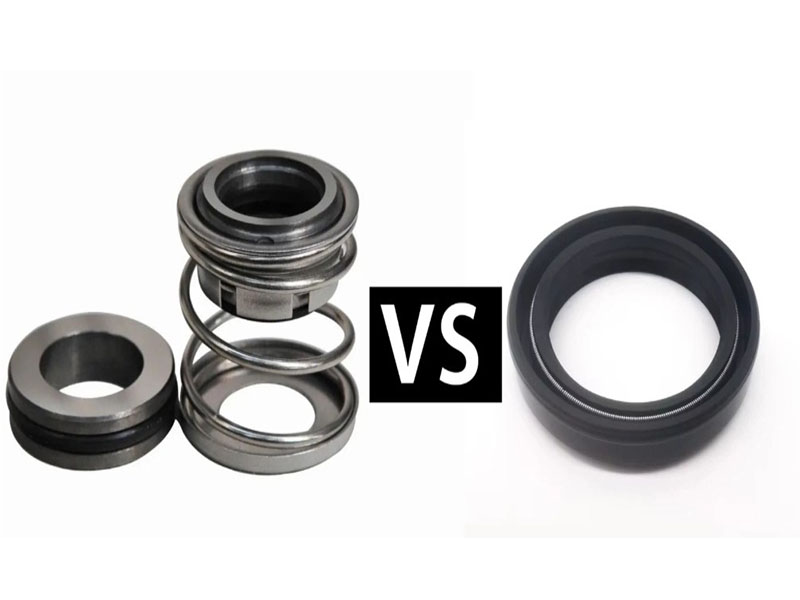
| Item | Seal Ring | Oil Seal |
|---|---|---|
| Meaning | Broad category of ring-shaped seals | Specific shaft seal for oil or grease control |
| Movement | Can be static, reciprocating, or rotary | Usually used around rotating shafts |
| Structure | Varies widely by application | Often includes lip, case, rubber body, and spring |
| Main purpose | Seal media between parts | Retain lubricant and exclude contamination |
| Common locations | Grooves, pistons, housings, connectors, flanges | Crankshafts, camshafts, transmissions, axles, hubs |
When To Use A Seal Ring
Use a seal ring when the application calls for a ring-shaped seal in a groove, joint, piston, connector, or housing. The selection depends on pressure, fluid, movement type, compression, groove geometry, material compatibility, and operating temperature.
A seal ring may look simple, but its cross-section, hardness, elasticity, and surface finish requirements can be very specific. Do not replace one seal ring with another only because the outside diameter looks similar.
When To Use An Oil Seal
Use an oil seal when a shaft passes through a housing and lubricant must be retained. Typical examples include crankshaft seals, camshaft seals, axle seals, transmission output seals, pump shaft seals, and bearing housing seals.
Oil seal selection must consider shaft speed, runout, shaft surface condition, installation depth, direction of pressure, and whether a dust lip is needed. A wrong lip material or wrong installation direction can cause leakage soon after repair.
Common Selection Mistakes
- Using seal ring and oil seal as interchangeable terms
- Selecting only by diameter and ignoring material or lip design
- Installing an oil seal in the wrong direction
- Reusing a removed oil seal after lip or case damage
- Ignoring shaft grooves, scratches, rust, or housing damage
Conclusion
Seal ring vs oil seal is a context-dependent classification difference. Seal ring can refer to several annular seal families, while oil seal usually identifies a radial shaft seal for lubricant retention and contamination exclusion. Correct selection requires the actual seal type, application, movement, medium, dimensions, material, and installation conditions.
FAQs
Q1: Is an oil seal a type of seal ring?
A: In broad generic usage, an oil seal may be grouped with annular sealing components. In many technical catalogs, however, radial shaft seals and other sealing rings are separate product families. Confirm the drawing and application rather than relying on the category name.
Q2: Can a seal ring replace an oil seal?
A: Usually no. An oil seal has a lip structure designed for shaft contact and lubricant retention. A general seal ring may not work in the same dynamic sealing condition.
Q3: What information is needed to buy an oil seal?
A: Shaft diameter, housing bore, seal width, material, lip type, rotation speed, lubricant, temperature, and application position are important selection details.
Q4: Why do seal terms vary by supplier?
A: Different industries use different names for similar sealing families. Confirm the drawing, dimensions, material, and application rather than relying on the name alone.
Q5: Is an O-ring a type of seal ring?
A: An O-ring is commonly treated as an annular sealing element and may be described broadly as a seal ring. However, the term seal ring can also refer to other cross-sections and materials. An O-ring should be selected by groove design, compression, medium, pressure, temperature, and motion.
Q6: What is the difference between a static and dynamic seal ring?
A: A static seal ring works between surfaces that do not move relative to each other during operation. A dynamic seal ring works with rotary or reciprocating movement. Dynamic service adds friction, wear, lubrication, speed, and surface-finish requirements that a static seal may not satisfy.
Q7: Can a standard oil seal handle pressure?
A: Pressure capability depends on the oil seal profile, material, support, shaft speed, and manufacturer rating. A standard radial shaft seal should not be assumed to work in a pressurized system. Use a pressure-capable design and verify the permitted operating conditions when pressure is present.
Q8: How can I identify an unknown seal ring or oil seal?
A: Start with the part number, application position, shaft or groove dimensions, housing dimensions, cross-section, material, lip direction, spring, and movement type. Compare these details with a manufacturer drawing or reliable catalog. Visual similarity alone is not enough for interchange confirmation.
Q9: Does a seal ring last longer than an oil seal?
A: Neither category has a universal life advantage. Service life depends on whether the seal design matches the movement, medium, pressure, temperature, surface condition, lubrication, contamination, and installation. Comparing two correctly selected products is more useful than comparing the category names.