Quick Answer: The inner race and outer race differ in three key ways: size, installation, and load path. The outer race has a larger diameter and is stationary, mounted in the housing. The inner race has a smaller diameter and rotates with the shaft. Both are made of the same chrome steel (SAE 52100) with identical groove designs. Understanding these differences helps you select and maintain bearings properly.
Ball bearings are essential components in mechanical systems across countless industries. They reduce friction between moving surfaces, handle radial and axial forces, and keep rotating machinery properly aligned. When inspecting a ball bearing, you will notice two key parts: the inner race and the outer race. These two rings work as a pair to confine the balls and give them smooth surfaces to roll against.
So what sets these two races apart? Although they share the same fundamental purpose, they differ in diameter, how they are mounted, their movement during operation, and the way forces travel through them. Knowing these differences matters for choosing the right bearing, installing it correctly, and keeping it in good working order.
This guide walks through the differences between inner and outer races in ball bearings. It covers what each one does, how they compare, the materials used, their production methods, and how their failure patterns differ.
What Are Bearing Races?
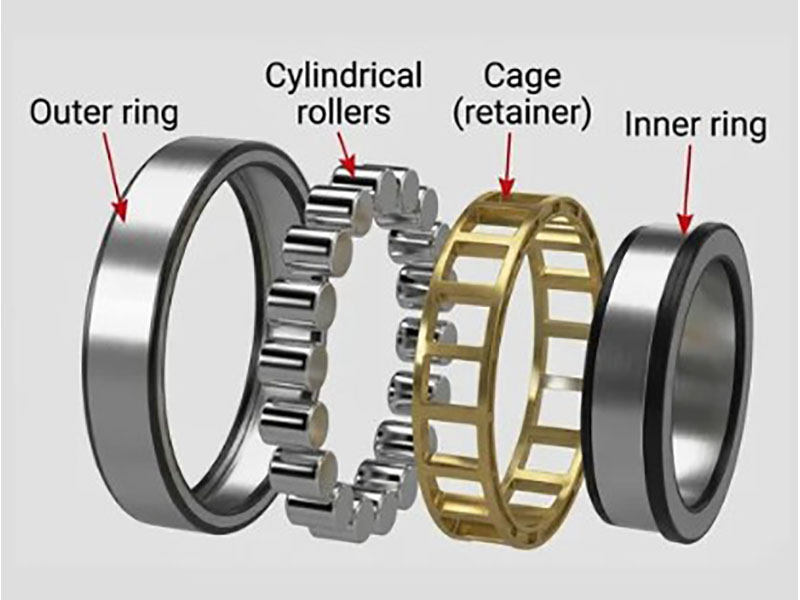
A race is a ring featuring a uniform groove machined into one face. This groove acts as a track that guides the balls as they roll. The race keeps the balls confined within the bearing and provides a consistent rolling surface.
Every ball bearing contains two races: an inner race and an outer race. These two rings sit concentrically, with one inside the other. The balls roll in the gap between them. The groove depth and radius on each race match the size of the balls used in that bearing.
These races serve two main jobs:
- Holding the balls in place: Without both an inner and an outer race, the balls would have nothing to contain them. They would simply fall out of position.
- Directing ball movement: The grooves keep the balls traveling in a steady, circular path, which reduces friction and prevents erratic motion.
Inner Race: Definition and Function
The inner race forms the inner boundary for the rolling elements. It is the smaller of the two rings and sits closest to the shaft.
Where and How It Mounts
You mount the inner race directly onto the rotating shaft. In typical setups, the inner race slides over the shaft until one of its side faces contacts a shoulder or flange machined into the shaft. The fit between the inner race and the shaft is usually an interference fit (press fit). This tight fit locks the inner race to the shaft so they turn together as one unit.
Getting the fit right is important. If the interference is too heavy, it can squeeze the inner race and reduce the bearing’s internal clearance. In some cases, it can even create unwanted preload, which generates extra heat and shortens bearing life. Always work within the fit tolerances that the bearing manufacturer specifies.
What It Does
The inner race takes the load coming from the shaft and passes it along to the balls. As the shaft spins, the inner race spins with it. The balls roll over the groove on the outer face of the inner race. Depending on the bearing design and the application, the inner race may see radial loads, axial loads, or a combination of both.
Groove Location
On the inner race, the groove lies on the outside diameter of the ring. This is the surface that the balls actually touch and roll against.
Outer Race: Definition and Function
The outer race forms the outer boundary for the rolling elements. It is the larger of the two rings and sits outside the balls.
Where and How It Mounts
You mount the outer race inside the housing or bearing support. In most designs, the outer race presses into a bore in the housing. One of its side faces typically seats against a shoulder inside the housing. Unlike the inner race, the outer race stays fixed in position during operation.
The housing bore also needs proper tolerances. A bore that is too tight can distort the outer race, which affects the bearing’s internal geometry and can lead to early failure.
What It Does
The outer race takes the load from the balls and spreads it out to the housing structure. While the inner race spins and the balls roll around, the outer race remains still. It simply distributes the force it receives from the rolling balls across the housing bore.
Groove Location
On the outer race, the groove lies on the inside diameter of the ring. This is the surface the balls contact as they roll.
Inner vs Outer Races: 5 Key Differences and What They Share
1. Diameter
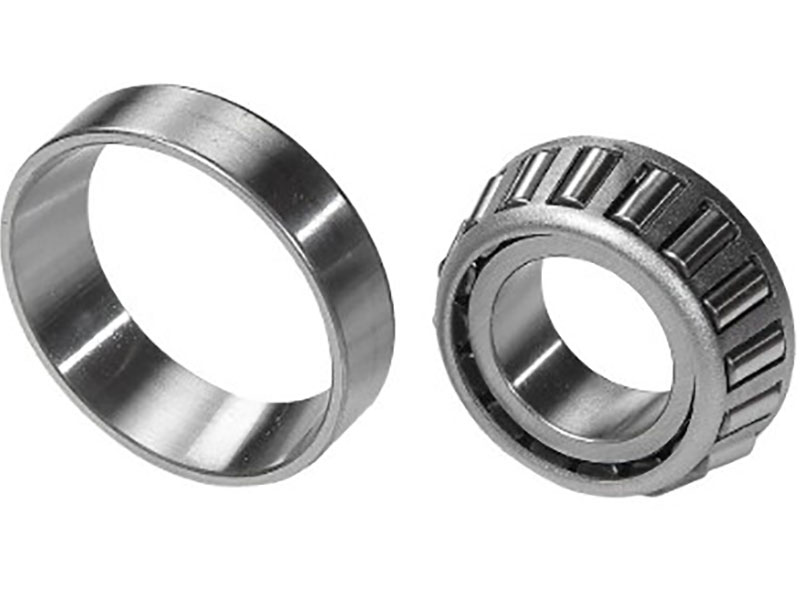
The clearest difference is their size. The outer race has a larger diameter because it goes around the outside of the balls. The inner race has a smaller diameter because it sits on the inside.
Consider a common 6206 deep groove ball bearing. Its inner diameter measures 30 mm, and its outer diameter measures 62 mm. The raceway diameters follow the same pattern: the inner raceway is smaller, and the outer raceway is larger. While the exact numbers shift from one bearing size to another, the outer race is always physically bigger.
2. Mounting Method
| Factor | Inner Race | Outer Race |
|---|---|---|
| What it attaches to | The shaft | The housing |
| Type of fit | Press fit onto shaft | Press fit into housing bore |
| Location relative to balls | Inside them | Outside them |
The inner race attaches to the rotating shaft, while the outer race attaches to the stationary housing.
3. Motion During Operation
In standard applications:
- Inner race: Turns together with the shaft
- Outer race: Stays fixed in the housing
This holds true for most setups. Some specialty designs, like wheel hub bearings, reverse this arrangement. But for standard radial ball bearings, the pattern above is the rule.
4. How Force Travels
The path that forces take through the bearing differs between the two races:
- Inner race: Collects force from the shaft and sends it to the balls
- Outer race: Collects force from the balls and sends it to the housing
Put simply, the force moves in this order: shaft -> inner race -> balls -> outer race -> housing.
5. Groove Location
- Inner race: The groove is cut into the outside diameter
- Outer race: The groove is cut into the inside diameter
6. What They Share
Even with their differences, the two races have two main things in common:
- They use the same material, typically SAE 52100 chrome steel, which gives them identical hardness and resistance to fatigue.
- They have matching groove designs, with the same groove radius in relation to the ball size.
Materials for Inner and Outer Races: Same or Different?
Nearly all bearing races come from SAE 52100 chrome steel. This material goes by different names in other regions: 100Cr6 in Europe, SUJ2 in Japan, and GCr15 in China.
Properties of SAE 52100
SAE 52100 is a high-carbon steel alloyed with about 1% carbon and 1.5% chromium. Here are its key specifications:
| Property | Value |
|---|---|
| Hardness range | 60-67 HRC at room temperature |
| Maximum continuous use temperature | Up to 150°C (300°F), depends on heat treatment |
| Load-carrying ability | Serves as the baseline standard for bearing steels |
| Resistance to wear | Excellent |
| Resistance to rolling fatigue | High |
Other Material Options
While SAE 52100 dominates the market, some specialty uses call for different materials:
- AISI 440C stainless steel: Offers corrosion resistance. Its load capacity runs slightly below SAE 52100 at room temperature.
- AISI M50 steel: Appears in demanding roles like aircraft engines. With about 4% molybdenum, it keeps its strength at high temperatures. It delivers about twice the reliability of SAE 52100 in hot environments, though it costs significantly more.
- Ceramics (silicon nitride): Show up in lightweight, high-speed, or electrically insulating bearings. Hybrid bearings combine ceramic rolling elements with steel races.
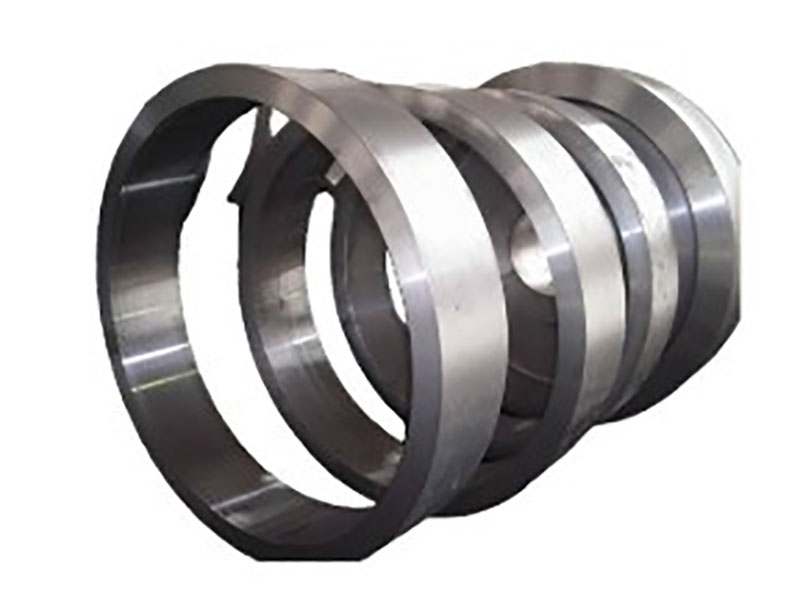
Manufacturing Process: Shared by Both Races
The production steps for inner and outer races are identical. The following process applies to both rings and ensures they meet the required dimensions, hardness, and surface quality.
- Rough Machining: The steel stock goes through turning and milling operations to bring it close to its final ring shape. This gives the race its basic geometry.
- Heat Treatment: The machined rings undergo quenching and tempering. This raises their hardness to the 60-67 HRC range. Heat treatment also improves wear resistance and fatigue strength.
- Grinding: Grinding brings the races to their final dimensions and surface finish. The raceways are ground with very tight tolerances to ensure accurate geometry.
- Final Finishing: Operations like honing and lapping follow grinding. These steps produce the extremely smooth surface finish that races need. The surface quality of the raceway has a direct impact on how long the bearing lasts and how well it performs.
Failure Patterns: Inner vs Outer Race
Both races can fail, but the patterns differ because they experience different motion and stress conditions. Knowing these patterns helps with diagnosing problems and planning maintenance.
How the Inner Race Fails
The inner race turns with the shaft and sees repeated stress cycles. Common failure types include:
- Contact fatigue spalling: This tops the list for inner race failures. Small pieces flake off the raceway surface from the repeated pounding of the rolling balls.
- Flaking: Often traces back to overload, misalignment from poor mounting, moment loads, dirt or debris getting in, water contamination, or poor lubrication. The inner race is especially vulnerable because the interference fit adds hoop stress to the ring.
- Ridged marks: These can show up from electrical pitting. Stray currents passing through the bearing leave distinctive patterns on the raceway.
How the Outer Race Fails
The outer race stays still and feels localized stress at particular points rather than around the whole ring. Common failure types include:
- Contact fatigue spalling: This happens on outer raceways too, usually at the point where the load is greatest.
- Wear: The outer race tends to wear more than the inner race. The housing fit and its stationary position contribute to this.Localized damage: Because the outer race sees stress in specific zones rather than cycling around the full circumference, it can develop a worn groove on one side under axial thrust loads.
Failure Comparison Table
| Aspect | Inner Race | Outer Race |
|---|---|---|
| Most frequent failure | Contact fatigue spalling | Contact fatigue spalling |
| Wear tendency | Lower | Higher |
| How stress spreads | Cyclic around entire circumference | Concentrated at load zone |
| What makes it worse | Hoop stress from fit, misalignment, lube problems | Housing fit, axial loads, contamination |
| How hard to inspect | Harder (needs shaft disassembly) | Easier (visible when housing opens) |
Conclusion
The inner and outer races in a ball bearing fill complementary but separate roles. The inner race is the smaller ring that mounts onto the spinning shaft and passes load from the shaft to the balls. The outer race is the larger ring that mounts into the fixed housing and passes load from the balls to the housing structure.
To sum up their differences:
- Diameter: The outer race is always larger
- Mounting: Inner race goes on the shaft; outer race goes in the housing
- Movement: Inner race rotates; outer race stays still
- Force path: Inner race takes from shaft; outer race gives to housing
- Groove position: Inner race groove on outside diameter; outer race groove on inside diameter
Both races come from SAE 52100 chrome steel with matching groove designs and go through the same production steps. Understanding these points helps engineers choose bearings wisely and spot failure modes before they cause major problems.
For automotive bearing work, getting the installation right matters a great deal. The inner race needs the correct press fit on the shaft, and the outer race needs proper seating in the housing bore. Watch fit tolerances carefully, since too much interference can eat up internal clearance or create unwanted preload. Regular checks on both raceways for spalling, wear, or flaking can catch issues early and extend bearing life.
FAQs
Q1: Do inner and outer races use the same material?
Yes. Both races come from the same material in nearly all cases – SAE 52100 chrome steel, which is the standard bearing steel. They share the same hardness, wear resistance, and fatigue life characteristics.
Q2: Which one moves – the inner race or the outer race?
In standard applications, the inner race turns with the shaft, and the outer race stays fixed in the housing. Some special applications, like hub bearings for vehicles, may reverse this. The setup depends on the specific design.
Q3: How can I tell the inner race from the outer race by sight?
The inner race has a smaller diameter and goes onto the shaft. The outer race has a larger diameter and fits into the housing bore. Also, the inner race has its groove on the outside, while the outer race has its groove on the inside. Looking at which surface it mounts to is another quick clue.
Q4: Can a bearing work with only one race?
No. The bearing needs both races to confine the balls. Without both rings, the balls have nothing to keep them in place, and the bearing simply cannot function.
Q5: What failure type is most common for bearing races?
Contact fatigue spalling ranks as the most common failure for both races. This happens when repeated stress cycles cause tiny pieces of the raceway surface to flake off. The inner race faces extra risk because the interference fit adds hoop stress on top of the rolling contact stress.
Q6: Is the groove design the same for both races?
Yes. Both races use the same groove profile. The groove radius is slightly larger than the ball radius to allow proper rolling contact. The design follows the same standard for both rings.
Q7: Can I put the inner race in the housing and the outer race on the shaft?
This is not the standard arrangement for most ball bearings. Some specialty bearings do reverse the roles, but for conventional radial ball bearings, the inner race goes on the shaft and the outer race goes in the housing. Check the manufacturer’s instructions for your specific bearing.