Quick Answer
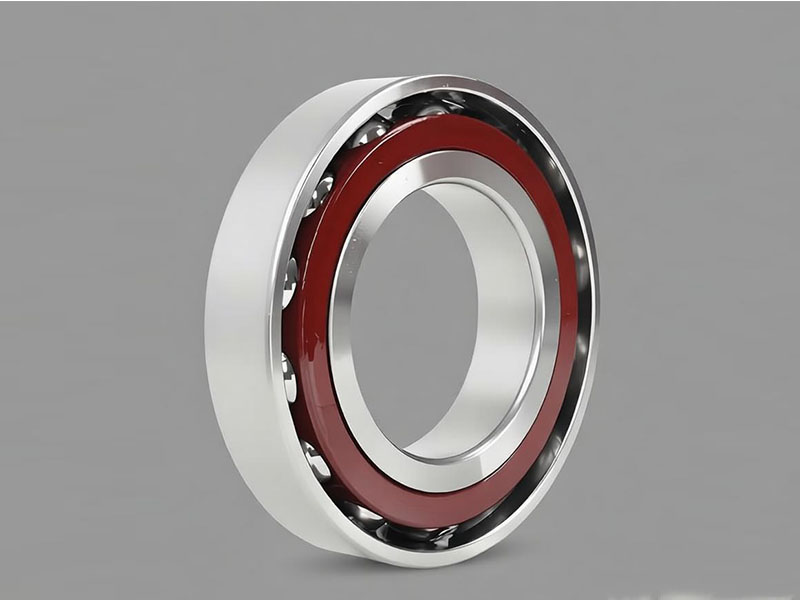
Angular contact ball bearings feature offset raceways that create a contact angle (typically 15°, 25°, 30°, or 40°), enabling them to support combined radial and axial loads simultaneously. Key advantages include high-speed capability, excellent axial load capacity (increasing with contact angle), high rigidity, and multiple pairing options. However, single-row versions handle axial loads in only one direction, they require precise installation and pairing, have very limited misalignment tolerance, and demand careful preload management. Choose them for high-speed precision applications like machine tool spindles, pumps, and robotics.
Angular contact ball bearings are a specialized class of rolling bearings that excel where standard deep groove ball bearings fall short—applications demanding high-speed operation, precision, and the ability to handle significant axial loads alongside radial forces.
Unlike deep groove ball bearings, which have symmetrical raceways, angular contact bearings feature offset inner and outer ring raceways that create a defined contact angle. This angle—typically 10° to 45°—determines the bearing’s load-handling characteristics. The larger the contact angle, the higher the axial load capacity, but the lower the radial load capacity and speed capability.
This article explores what angular contact ball bearings are, how they work, and—most importantly—their advantages and disadvantages. Whether you are selecting bearings for a machine tool spindle, a high-speed pump, or a robotics application, understanding these trade-offs is essential for making the right choice.
What Is an Angular Contact Ball Bearing and How Does It Work?
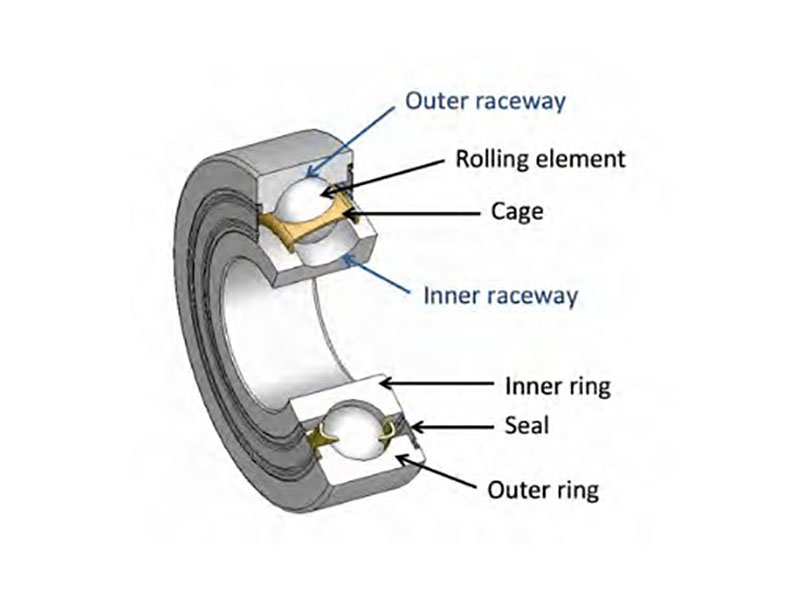
An angular contact ball bearing is a rolling-element bearing with inner and outer ring raceways that are displaced relative to each other in the direction of the bearing axis. This displacement creates a contact angle—the angle between the line joining the ball’s contact points with the raceways and a line perpendicular to the bearing axis.
Basic structure: Like deep groove ball bearings, angular contact bearings consist of an inner ring, an outer ring, a cage, and balls. However, the asymmetric raceway design means one side of each ring has a higher shoulder than the other. The outer ring thickness differs between the marked and unmarked sides—a useful visual identifier. This design allows more balls to be incorporated, increasing load capacity.
Contact angles and their effects:
| Contact Angle | Typical Designation | Axial Capacity | Speed Capability | Best Suited For |
|---|---|---|---|---|
| 15° | C-type (e.g., 7000C) | Lower | Highest | Ultra-high-speed spindles, high-speed motors |
| 25°–30° | AC-type (e.g., 7000AC) | Moderate | High | Balanced radial and axial loads |
| 40° | B-type (e.g., 7000B) | Highest | Lower | Heavy axial load applications |
As the contact angle increases, axial load capacity and axial rigidity increase—but speed capability and service life decrease.
Main types:
- Single-row: Most common; handles axial load in one direction only. Requires pairing with another bearing for bidirectional thrust.
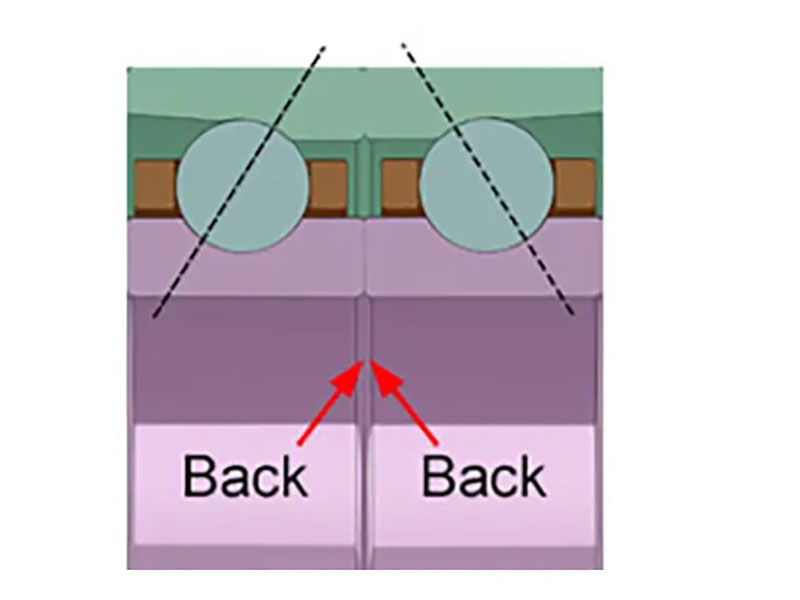
- Double-row: Corresponds to two single-row bearings in a back-to-back arrangement; handles axial loads in both directions and high radial loads. Requires less axial space than paired singles.
- Four-point contact: Features four contact points that support radial and axial loads in both directions.
- Sealed: Includes rubber seals for contamination protection.
Installation and pairing: Single-row angular contact ball bearings are always adjusted against a second bearing or used in sets. Three standard pairing arrangements are available:
| Arrangement | Code | Characteristics |
|---|---|---|
| Back-to-back (DB) | DB | Highest tilting moment rigidity; handles bidirectional axial loads |
| Face-to-face (DF) | DF | Allows more misalignment; handles bidirectional axial loads |
| Tandem (DT) | DT | Maximum axial load capacity in one direction |
Preload requirements: Angular contact ball bearings are typically installed in pairs and require preload. Preload is applied by grinding one bearing ring’s end face or using spacer rings of different thicknesses between the inner and outer rings. Two preloading methods exist: positional preload and constant pressure preload. Proper preload eliminates internal clearance, increases rigidity, and prevents ball skidding.
Advantages of Angular Contact Ball Bearings
Pro 1. Excellent combined load capacity
Angular contact ball bearings can simultaneously support radial loads and significant axial loads in one direction. The contact angle directs the axial load into a radial force component transmitted through the balls—this is what enables combined load support. This makes them ideal for applications where both load types are present—unlike deep groove bearings, which have limited axial capacity.
Pro 2. High axial rigidity and precision
The contact angle design provides superior axial stiffness. Larger contact angles deliver higher axial rigidity. This makes angular contact bearings the preferred choice for machine tool spindles and other precision applications where deflection must be minimized.
Pro 3. High-speed capability
Small contact angle (15°) models achieve extremely high rotational speeds. Under oil lubrication, speeds can exceed 30,000 RPM for certain sizes. This speed capability is unmatched by most other bearing types with similar load capacity.
Pro 4. Adjustable preload
Preload can be precisely adjusted to optimize stiffness, eliminate internal clearance, and prevent ball skidding. This flexibility allows engineers to tune bearing performance for specific operating conditions—a significant advantage over fixed-clearance bearings.
Pro 5. Multiple pairing arrangements
DB (back-to-back), DF (face-to-face), and DT (tandem) configurations provide flexible solutions for different load directions and stiffness requirements. This versatility means a single bearing series can address a wide range of application needs.
Pro 6. High load-carrying capacity (D design)
D design bearings contain the maximum number and size of balls. Their close conformity between balls and raceways provides relatively high stiffness and the highest possible load-carrying capacity among precision angular contact bearings.
Pro 7. Compact design (double-row)
Double-row angular contact bearings correspond to a pair of single-row bearings in back-to-back arrangement while requiring less axial space. This saves valuable real estate in compact machinery designs.
Pro 8. Extended service life
Super-clean steel can extend bearing service life by up to 80% compared to standard steel. Combined with proper selection, installation, and maintenance, angular contact bearings offer long, reliable operation in demanding applications.
Disadvantages of Angular Contact Ball Bearings
Con 1. Unidirectional axial load (single-row)
Single-row angular contact ball bearings can only accommodate axial loads in one direction. For bidirectional axial loads, you must use double-row bearings, four-point contact bearings, or pair two single-row bearings—adding cost and complexity.
Con 2. Extremely limited misalignment tolerance
Angular contact bearings are designed for precise shaft alignment and cannot compensate for angular errors or shaft deflection. The rigid raceway geometry forces balls to run in a fixed path; any misalignment creates uneven load distribution across the rolling elements. This leads to localized stress concentrations, increased noise and vibration, accelerated raceway wear, and eventual premature failure. Precise shaft and housing alignment is mandatory.
Con 3. Complex installation
Installation requires precise pairing and preload adjustment. Unlike deep groove bearings, which are simply pressed into place, angular contact bearings demand:
- Correct pairing arrangement selection (DB/DF/DT)
- Accurate preload application
- Careful measurement and adjustment
This complexity increases installation time and requires skilled technicians.
Con 4. Vulnerability to improper preload and contamination
Angular contact bearings face several reliability challenges that require vigilant management. When preload is insufficient, balls slide instead of roll—this skidding generates friction and localized wear on raceways and balls. When preload is excessive, rolling resistance increases, temperatures rise, and lubricant breaks down prematurely. Beyond preload issues, contamination from abrasive particles accelerates surface fatigue, leading to spalling and reduced service life. Operating in dirty environments without effective sealing compounds these problems significantly.
Con 5. Higher friction than deep groove bearings
The contact angle design creates higher friction compared to deep groove ball bearings. While this is acceptable for most precision applications, it can be a drawback in energy-sensitive or low-torque designs where minimizing rotational resistance is a priority.
Con 6. Higher cost
Precision manufacturing, matched pairs, and tighter tolerances make angular contact bearings more expensive than deep groove ball bearings of comparable size. Universal grinding for duplex mounting adds further cost.
Con 7. Larger overall dimensions
Angular contact bearings have a larger rotary section, increasing overall dimensions and footprint. This reduces compactness compared to other bearing types, which can be a limitation in space-constrained designs.
Conclusion
Angular contact ball bearings are the premier choice for high-speed, high-precision applications requiring simultaneous radial and axial load support. Their ability to deliver exceptional axial rigidity, combined with flexible pairing options and adjustable preload, makes them indispensable in machine tool spindles, robotics, pumps, and compressors.
Choose angular contact ball bearings when:
- Loads combine radial and significant axial components
- High rotational speeds are required
- Axial rigidity and precision are critical
- You can accommodate precise installation and preload
Consider alternatives when:
- Axial loads are bidirectional and you want to avoid paired mounting—use double-row or four-point contact
- Shaft misalignment cannot be controlled—use self-aligning bearings
- Cost is the primary constraint—deep groove bearings are simpler and cheaper
- Installation expertise is unavailable—deep groove bearings are much easier to install
For most precision rotating machinery, angular contact ball bearings offer an optimal balance of performance, rigidity, and speed. Understanding their limitations—particularly the unidirectional axial load requirement and complex installation—is the key to successful application and long service life.
At DUHUI Bearing, we have been manufacturing automotive and precision bearings since 2003, serving customers in over 60 countries. Our angular contact ball bearings are produced to international standards with precision grades up to P4 and above. Whether you need standard sizes or custom configurations, we are here to help you find the right bearing solution for your application.
Frequently Asked Questions (FAQs)
Q1: Can angular contact ball bearings handle bidirectional axial loads?
Single-row angular contact ball bearings cannot—they handle axial loads in one direction only. To accommodate bidirectional axial loads, use double-row angular contact bearings, four-point contact bearings, or pair two single-row bearings in DB (back-to-back) or DF (face-to-face) arrangements.
Q2: Does a larger contact angle always mean better performance?
Not necessarily. As the contact angle increases, axial load capacity and axial rigidity increase. However, speed capability and service life decrease. Choose 15° for high-speed, low-axial-load applications; choose 40° for heavy axial loads at moderate speeds.
Q3: Why must angular contact ball bearings be used in pairs?
Single-row angular contact bearings generate a radial force component when carrying axial loads. This force must be balanced by a second bearing mounted in opposition. Pairing is standard practice—DB, DF, or DT arrangements provide the necessary counterforce and load distribution.
Q4: Can angular contact ball bearings handle pure radial loads?
Yes. When subjected to pure radial load (or no load), the balls contact the raceways at four points. However, angular contact bearings are optimized for combined loads—if your application is purely radial, deep groove bearings may be a more cost-effective choice.
Q5: What are the typical applications of angular contact ball bearings?
Angular contact ball bearings are used in machine tool spindles (machining centers, milling machines, boring machines, PCB drilling), servo and robotics gearboxes, industrial pumps, compressors, ball screws, high-speed motors, precision rotary tables, and renewable energy equipment.
Q6: What are the common reliability challenges with angular contact ball bearings?
The three most frequent issues are: skidding from insufficient preload—balls slide instead of roll, causing friction and surface wear; overheating from excessive preload or drag—higher rolling resistance raises temperatures and degrades lubricant; and contamination-related spalling—abrasive particles in the lubricant create stress concentrations that lead to fatigue and flaking. Regular condition monitoring, proper sealing, and correct preload settings prevent these problems.
Q7: Can 15° and 25° contact angle bearings be used interchangeably?
Not recommended. They differ fundamentally in preload requirements, load distribution, and thermal expansion characteristics. Interchanging them will lead to improper preload, altered stiffness, and premature failure. Always use the contact angle specified for your application.
Q8: What is the difference between angular contact ball bearings and deep groove ball bearings?
Deep groove bearings are simpler, cheaper, and handle bidirectional axial loads. Angular contact bearings offer superior axial capacity, rigidity, and speed—but require more complex installation and are typically used in pairs.
| Feature | Angular Contact | Deep Groove |
|---|---|---|
| Contact angle | Yes (15°–40°) | No (0°) |
| Axial load direction | One direction (single-row) | Both directions |
| Axial load capacity | High | Moderate (25–35% of C₀) |
| Installation | Complex (pairing + preload required) | Simple |
| Cost | Higher | Lower |
| Typical use | Spindles, precision machinery | General-purpose machinery |
Q9: What is the maximum speed limit for angular contact ball bearings?
Speed capability depends on contact angle, size, lubrication, and sealing. 15° contact angle models in oil lubrication can exceed 30,000 RPM for smaller sizes. 40° contact angle models have significantly lower speed capability. Sealed versions run slower than open bearings due to seal friction.