Quick Answer: Mechanical vs. Hydraulic Clutch Bearings
Which one requires less pedal effort? Hydraulic. The CSC (concentric slave cylinder) uses fluid pressure to multiply force, so the pedal feels lighter than most mechanical linkages.
Which one needs regular adjustment? Mechanical. As the clutch disc wears, mechanical systems require manual cable or linkage adjustment. Hydraulic systems (constant-contact design) self-adjust automatically.
Which one costs more to replace? Hydraulic. A CSC unit costs more than a mechanical release bearing, and replacing it requires removing the transmission—the same labor as a full clutch job.
How to choose? For a classic car restoration or tight budget, mechanical works. For a modern daily driver or performance vehicle, hydraulic offers lighter feel and less maintenance.
The clutch release bearing—sometimes called a throwout bearing—connects the driver’s pedal input to the pressure plate, allowing the clutch to disengage for gear changes. When comparing mechanical vs. hydraulic clutch bearings, the core question is not which type is universally better, but how they differ in operation, maintenance, and driving feel.
This article examines the working principles, advantages, and limitations of both mechanical release bearings and hydraulic concentric slave cylinder (CSC) systems. A direct comparison of key differences is provided, followed by practical criteria to help vehicle owners and technicians select the appropriate type for their specific application.
Mechanical Clutch Bearings
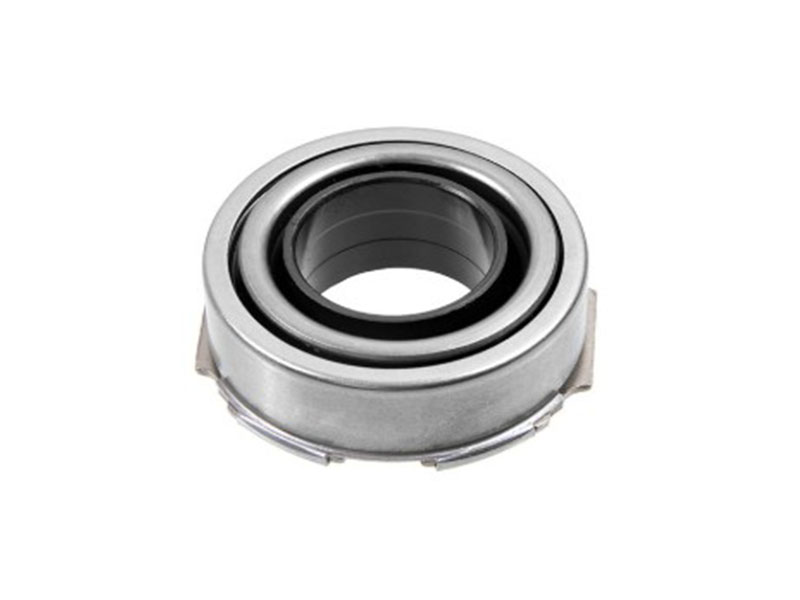
In mechanical systems, the release bearing is actuated by a clutch fork that pivots on a ball stud inside the bellhousing. The fork is moved by a linkage—either a system of rods and bellcranks (commonly called a Z-bar), a steel cable connecting directly from the clutch pedal to the fork, or in some configurations, an external hydraulic cylinder that pushes the fork. The release bearing mounts on a guide sleeve and is pushed forward by the fork when the clutch pedal is depressed, pressing against the pressure plate diaphragm spring to release the clutch.
This design places the bearing separately from the actuation mechanism, and the fork itself experiences wear at its pivot points over time.
Advantages of Mechanical Clutch Bearings
- Simplicity and low component cost – Mechanical linkage uses relatively few parts, making it affordable to manufacture and replace. This straightforward design has fewer potential leak points compared to hydraulic systems.
- Direct pedal feedback – Because the connection from pedal to bearing is physical, drivers often report more direct and linear engagement feedback.
- No hydraulic fluid or bleeding – Mechanical systems do not require fluid handling or bleeding procedures, simplifying maintenance.
Limitations of Mechanical Clutch Bearings
- Higher pedal effort – Pedal force travels through multiple mechanical joints, each introducing friction.
- Regular maintenance required – Mechanical linkages require periodic lubrication at pivot points and manual adjustment to maintain proper free play as the clutch disc wears.
- No automatic wear compensation – The engagement point changes over time and must be manually corrected via cable tension or linkage length.
Common Failure Indicators
When a mechanical release bearing begins to fail, typical symptoms include a grinding or whining noise that occurs only when the clutch pedal is depressed. A slightly damaged bearing produces a whining sound under pressure, while severe damage results in loud grinding noises. Lubricant loss or ingress of dust and water into the bearing accelerates internal damage.
Hydraulic Clutch Bearings (Concentric Slave Cylinder / CSC)
How Hydraulic Systems Work
Hydraulic release systems use a master cylinder at the pedal and a slave cylinder at the transmission, connected by fluid lines. Pressing the clutch pedal pressurizes brake-type fluid that moves the slave piston and, consequently, the release mechanism.
The concentric slave cylinder (CSC) integrates the hydraulic slave cylinder and release bearing into a single unit. The CSC mounts directly on the transmission input shaft inside the bellhousing and acts directly on the pressure plate diaphragm spring, entirely eliminating the clutch fork, guide sleeve, and associated hardware.
Two Design Types: Constant-Contact vs. Intermittent
Hydraulic release bearings fall into two basic designs. Constant-contact bearings remain in light contact with the pressure plate fingers at all times. An internal spring provides this preload, which automatically compensates for clutch disc wear. Most original equipment manufacturers use this design because it requires no periodic adjustment.
Intermittent bearings only contact the pressure plate fingers when the clutch pedal is depressed. They retract fully when the pedal is released. Intermittent designs are better suited for high-performance or track use, as they offer a wider adjustment range and operate more quietly than constant-contact units. The choice between these two affects pedal feel, noise, and maintenance requirements.
Advantages of Hydraulic Clutch Bearings
- Lighter pedal effort – Hydraulic force multiplication reduces the effort required at the pedal, making clutch operation less tiring, particularly in stop-and-go traffic.
- Smoother, more consistent engagement – Hydraulic transmission eliminates friction and binding common in mechanical linkages, resulting in more precise and repeatable clutch engagement.
- Self-adjusting operation – Constant-contact designs automatically compensate for clutch disc wear, keeping pedal engagement consistent throughout the bearing’s service life.
- Compact and lightweight – CSC systems eliminate the fork and guide tube, reducing component count and overall weight compared to conventional fork-and-bearing setups.
Limitations of Hydraulic Clutch Bearings
- Higher component cost – CSC units are more expensive to manufacture and purchase than conventional mechanical release bearings.
- Labor-intensive replacement – Because the CSC is mounted on the transmission input shaft, replacement requires removing the transmission—the same labor as a full clutch replacement.
- Fluid leak risk – CSC units rely on rubber seals to contain hydraulic fluid. Over time, heat can cause seal failure. Leaking fluid may contaminate the clutch disc, leading to slip and eventual clutch failure.
- Precision installation required – Hydraulic release bearings require a specific air gap between the bearing face and the pressure plate fingers. Excessive gap causes incomplete release; insufficient gap leads to constant bearing loading and rapid failure.
- Bleeding requirement – Air trapped in the hydraulic circuit makes the clutch pedal feel spongy and reduces release effectiveness. Proper bleeding is essential after any hydraulic system service.
- Installation sensitivity – CSC units are prone to damage during installation or bleeding if not handled correctly. Over-travel, pre-compression, misalignment, or incorrect fluid can lead to immediate seal failure. Most CSC failures occur during or immediately after fitting or bleeding.
Common Failure Indicators
A failing hydraulic release bearing often produces noise similar to mechanical systems—squealing, grinding, or chirping when the pedal is depressed. Additional signs include a spongy pedal feel (indicating air in the system), a pedal that slowly sinks toward the floor (indicating internal seal leakage), or clutch slip from fluid contamination.
Mechanical vs. Hydraulic Clutch Bearings: Key Differences
| Aspect | Mechanical Release Bearing | Hydraulic Release Bearing (CSC) |
|---|---|---|
| Actuation method | Clutch fork via linkage (rods, cable, or Z-bar) | Hydraulic pressure directly to integrated bearing |
| Integration | Separate bearing, fork, guide tube | Bearing, piston, and cylinder integrated into one unit |
| Pedal effort | Generally heavier | Generally lighter |
| Wear compensation | None—manual adjustment required | Self-adjusting in constant-contact designs |
| Engagement feel | Direct but engagement point may change with wear | Smooth, consistent throughout service life |
| Failure modes | Fork wear, pivot wear, bearing seizure | Seal leakage, hydraulic contamination, bearing seizure |
| Service difficulty | Easier—bearing can be replaced independently (transmission removal still required) | More difficult—entire CSC must be replaced (transmission removal required) |
| System weight | Heavier (multiple separate components) | Lighter (integrated design reduces component count) |
| Cost | Lower component cost | Higher component cost |
| Typical applications | Older vehicles, classic cars, motorcycles | Most modern passenger cars and performance vehicles |
How to Choose the Right Clutch Bearing Type
When a mechanical clutch bearing may be appropriate:
- The vehicle is a classic or vintage model, and maintaining original equipment configuration is a priority
- The existing mechanical linkage is in good working order
- Budget is a primary constraint, and lower parts cost is important
- The driver prefers direct clutch engagement feedback and does not mind periodic linkage maintenance
When a hydraulic clutch bearing (CSC) may be appropriate:
- The vehicle is a modern passenger car or performance vehicle, where hydraulic actuation is the OEM standard
- Lighter pedal effort and reduced driver fatigue are priorities for daily driving or extended use
- Consistent clutch engagement point without periodic adjustment is desired
For most drivers of modern vehicles, hydraulic CSC systems offer compelling advantages: lighter pedal effort, self-adjusting operation that maintains consistent engagement throughout the clutch’s service life, and reduced maintenance demands. The decision ultimately depends on the vehicle’s original configuration and the owner’s preferences.
Regardless of which type is selected, the release bearing is a wear item. Industry best practice is to replace the release bearing whenever the clutch disc and pressure plate are replaced—typically between 150,000 and 250,000 km depending on driving conditions. The labor to remove the transmission is the major cost; replacing the bearing at the same time prevents paying that labor again later for a failed bearing.
Conclusion
Neither mechanical nor hydraulic release bearings are universally superior. Mechanical release bearings offer simpler construction, lower cost, and direct pedal feedback, but require regular adjustment and lack automatic wear compensation. Hydraulic CSC systems provide lighter pedal effort, self-adjusting operation, and a more consistent engagement feel, though at a higher component cost and with potential fluid-related failure modes. The appropriate choice depends on the vehicle’s original design and the owner’s priorities regarding maintenance, pedal feel, and budget.
Frequently Asked Questions
Q1: What is the main difference between mechanical and hydraulic clutch bearings?
A mechanical release bearing is actuated by a clutch fork moved by linkage (rods, cable, or Z-bar). A hydraulic release bearing (CSC) integrates the bearing and hydraulic cylinder into one unit mounted on the transmission input shaft and is actuated by hydraulic fluid pressure from the clutch master cylinder.
Q2: Is a hydraulic clutch bearing lighter than a mechanical one?
Generally, yes. Hydraulic systems provide force multiplication through fluid pressure, reducing the effort required at the pedal. The difference can be particularly noticeable in stop-and-go traffic.
Q3: Do I need to adjust a hydraulic clutch bearing?
In constant-contact designs (most modern CSC systems), no manual adjustment is required—the system self-adjusts as the clutch wears. In intermittent-style hydraulic bearings used in some performance applications, specific air gap clearance must be set at installation, but ongoing adjustment is not needed.
Q4: Which type is more durable?
Both systems have different failure modes. Mechanical systems are subject to linkage friction and wear over time but have no fluid-related failure risks. Hydraulic systems eliminate mechanical friction but introduce potential for seal leaks and fluid contamination. Modern CSCs from reputable manufacturers are highly reliable when properly installed and maintained.
Q5: Do I need to replace the release bearing every time I replace the clutch?
Yes. It is industry standard practice to replace the release bearing whenever the clutch disc and pressure plate are replaced, regardless of whether the bearing appears functional. The labor to remove the transmission is the major cost; replacing the bearing at the same time prevents paying that labor again later for a failed bearing.
Q6: What happens if I don’t set the air gap correctly on a hydraulic release bearing?
Excessive air gap prevents complete clutch release, making gear engagement difficult or impossible. Insufficient air gap can cause the bearing to be constantly loaded, leading to accelerated bearing wear, clutch slip, and potential CSC seal damage.
Q7: How do I know if my release bearing is failing?
Common symptoms include grinding, chirping, or whining noise that occurs only when the clutch pedal is depressed. Other signs include a vibrating or pulsating pedal feel, difficulty shifting gears, or a pedal that feels heavier than normal.
Q8: Why do most modern cars use hydraulic clutch bearings?
Manufacturers favor hydraulic CSC systems for several reasons: self-adjusting operation reduces warranty claims related to improper adjustment, compact packaging simplifies assembly, lighter pedal effort improves driver comfort, and consistent engagement feel provides a more refined driving experience.
Q9: What is the typical service life of a clutch release bearing?
A properly maintained release bearing often lasts between 150,000 and 250,000 kilometers (approximately 90,000 to 155,000 miles). Driving habits and operating conditions significantly affect this range.
Q10: Does driving habits affect release bearing life?
Yes. The release bearing is an axial-load component that only rotates when the clutch is disengaged. Resting a foot on the clutch pedal while driving—even with light pressure—keeps the bearing in contact with the pressure plate, causing unnecessary wear. Similarly, sitting at traffic lights with the clutch pedal depressed and the transmission in gear also accelerates bearing fatigue. Proper habits (removing foot from pedal when not shifting) can significantly extend release bearing service life.