Quick answer: A tensioner bearing is a sealed deep groove ball bearing inside the tensioner pulley that keeps your serpentine or timing belt tight. Replace the complete tensioner assembly — not just the bearing — every 60,000–90,000 miles together with the belt. Typical 2026 replacement cost: $125–$380 at independent shops for serpentine belt tensioners (timing belt tensioners run $400–$700+ as part of a timing job). Never regrease or spray lubricants on a noisy bearing – replace the entire assembly instead.
A tensioner bearing is a sealed rolling element bearing installed inside the pulley of a belt tensioner. It allows the tensioner pulley to rotate smoothly while withstanding the radial and axial loads generated by belt tension. When the bearing fails, unusual noises or pulley wobble occur. If ignored, a seized tensioner bearing can cause belt damage, accessory failure, and in timing belt systems, catastrophic engine destruction. This guide explains how to diagnose failing tensioner bearings, understand construction, and follow best practices for replacement—including what it costs and why you should replace the complete tensioner assembly.
What Is a Tensioner Bearing? (Definition and Core Purpose)
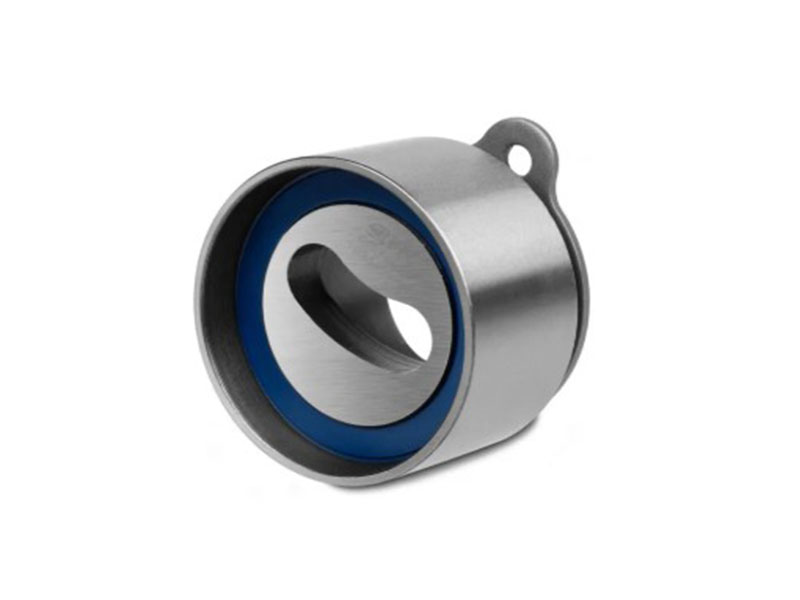
What exactly is a tensioner bearing, and how does it differ from an idler bearing?
A tensioner bearing is a deep groove ball bearing with integral seals, pre-lubricated with high-temperature grease. It is pressed into the tensioner pulley wheel and supports the rotating pulley on the tensioner arm. The bearing must operate at high rotational speeds, endure vibration, and resist contamination from dust, oil, and moisture inside the engine compartment.
Key distinction: A tensioner bearing sits on a spring-loaded or hydraulic arm that constantly adjusts belt tension. An idler bearing is fixed and only redirects the belt path. They are not interchangeable because the tensioner bearing experiences dynamic load variations.
Basic Construction
A typical tensioner bearing consists of:
- Inner ring – hardened steel, fits onto a shaft or stud.
- Outer ring – hardened steel, pressed into the pulley wheel.
- Rolling elements – steel balls arranged in a single or double row.
- Cage – polymer or steel, evenly spaces the balls.
- Grease – high-temperature, lithium-complex or synthetic, formulated for long life.
- Contact seals – rubber (nitrile or fluorocarbon) on both sides, preventing grease leakage and contaminant ingress.
The bearing is not serviceable. Seals are not intended to be removed for regreasing.
Types of Tensioner Bearings
By design:
- Single-row deep groove ball bearing – most common, handles radial and moderate axial loads.
- Double-row ball bearing – higher load capacity, used in heavy-duty tensioners.
- Integrated bearing with pulley – bearing and plastic pulley molded together as a single unit; common in modern serpentine tensioners.
By application:
- Timing belt tensioner bearing – operates inside timing cover; critical for engine synchronization. Failure often bends valves.
- Serpentine belt tensioner bearing – exposed to engine bay environment; often larger diameter. Failure causes loss of power steering, alternator, and A/C.
Tensioner Bearing vs. Idler Bearing
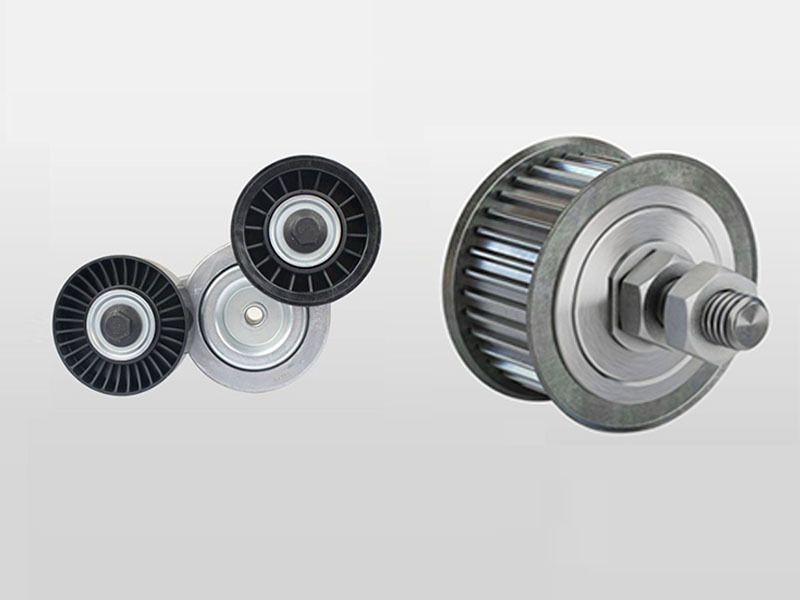
Both are typically deep groove ball bearings with seals. Differences lie in operating conditions:
| Feature | Tensioner Bearing | Idler Bearing |
|---|---|---|
| Load variation | Varies as tensioner arm moves | Relatively constant |
| Misalignment risk | Higher (due to arm pivot wear) | Lower (fixed mounting) |
| Replacement interval | Same as belt change | Same as belt change |
| Interchangeability | Not recommended; load ratings may differ | |
Although bearings may look identical, the tensioner bearing is subjected to dynamic loading from the spring or hydraulic actuator. Always use the exact replacement specified by the tensioner manufacturer.
How to Diagnose a Failing Tensioner Bearing (Noises & Inspection)
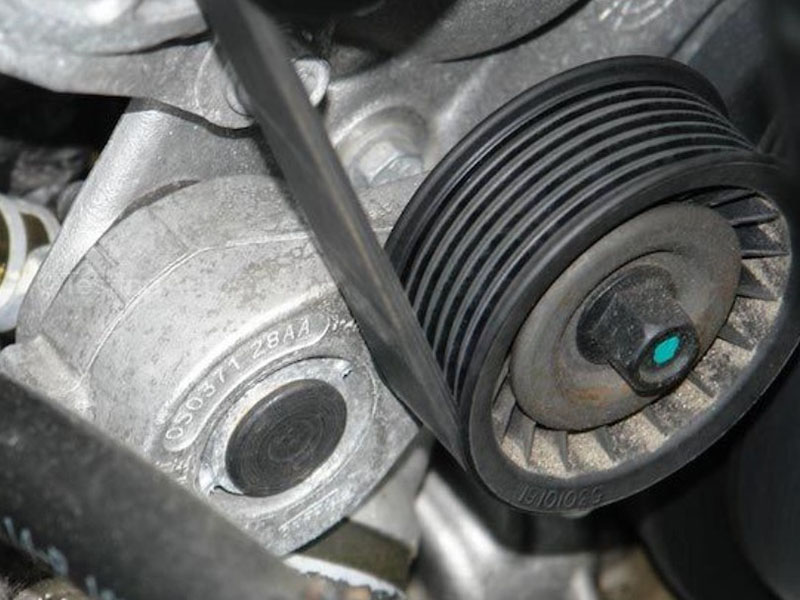
What does a bad tensioner bearing sound like? How do you check it without special tools?
Step 1 – Listen for Unusual Noises While the Engine Runs
Start the engine and listen near the belt drive area. Common failure sounds include:
- Grinding or rumbling – raceway or ball spalling. Most common failure noise.
- Squealing or screeching – loss of lubrication, metal-to-metal contact.
- Clicking or rattling – damaged cage or excessive ball clearance.
- Continuous sand-like or grinding sound – contamination or advanced wear.
Pro diagnostic tip: Use a mechanic’s stethoscope or a long screwdriver (handle to ear, tip on tensioner bolt) to isolate the noise. Compare with idler pulleys and alternator bearing. If the noise is loudest at the tensioner, the bearing is likely bad.
Step 2 – Remove the Belt and Perform a Physical Inspection
Turn off engine, remove the drive belt using a tensioner tool. Then:
- Spin the pulley – a healthy bearing rotates smoothly with slight resistance from grease. Any roughness, notchiness, or noise means the bearing is damaged.
- Check for lateral play – try to rock the pulley side to side. More than 0.5 mm of movement indicates bearing wear.
- Look for red/brown dust – around the bearing seal. This reddish-brown powder is typically caused by moisture ingress leading to grease degradation and corrosion, producing iron oxide. It indicates seal failure and internal bearing damage.
- Check seal condition – cracks, tears, or visible grease leakage mean the bearing is contaminated and will fail soon.
- Over-rotation test – if the pulley spins freely more than 1–2 full rotations with almost no resistance, the grease has dried out. Replacement is needed.
Common Root Causes of Bearing Failure
- Grease starvation – high operating temperature evaporates oil from grease.
- Contamination – dirt or water past degraded seals.
- Improper installation – pressing on the wrong ring or hammering causes brinelling.
- Misalignment – bent tensioner arm imposes edge loading on the bearing.
- Overload – incorrect belt tension (too high) exceeds bearing load rating.
WARNING – Do not ignore a failing tensioner bearing. Driving with a bad bearing can lead to belt breakage, loss of power steering, alternator failure, or engine overheating. In timing belt systems, sudden failure often destroys the engine.
When to Replace a Tensioner Bearing (Interval & Complete Assembly vs. Bearing-Only)
What is the recommended replacement interval, and why should you replace the whole tensioner?
Recommended Replacement Interval
Tensioner bearings are replaced as part of the tensioner assembly when the drive belt is changed. Industry practice: replace the entire tensioner assembly every 60,000–90,000 miles (96,000–145,000 km) or per vehicle manufacturer recommendation. For timing belt systems, always replace the tensioner together with the timing belt and water pump.
Why Replace the Complete Tensioner Assembly (Not Just the Bearing)
Replacing only the bearing while reusing the tensioner arm and spring is risky. The spring may have lost tension, the arm pivot may be worn, and the damper (if present) may have degraded. A new bearing installed in a worn tensioner will not restore proper belt tension and will fail prematurely. Therefore, most professional technicians replace the complete tensioner assembly, not just the bearing.
Exception: Some DIYers replace only the bearing in pressed-into-pulley designs when the tensioner arm and spring are known to be in excellent condition. But this requires a hydraulic press and precise technique. For most vehicles, a complete tensioner assembly is the correct and safer choice.
How Much Does Tensioner Bearing Replacement Cost? (2026 Estimate)
What is the typical price for replacing a tensioner bearing or complete tensioner assembly?
Costs vary by vehicle, region, and shop type. Below are real-world estimates for serpentine belt systems (most common). Timing belt tensioner replacement is more expensive because it requires disassembling the front of the engine.
Serpentine Belt Tensioner Assembly Replacement
- Parts (complete tensioner assembly with pulley and bearing): $40–$150 (aftermarket) / $80–$250 (OEM)
- Labor: 0.5–1.5 hours at $100–$150/hour → $50–$225
- Total (independent shop): $125–$380
- Total (dealership): $200–$500+
Timing Belt Tensioner Bearing Replacement
- Usually replaced as part of a timing belt kit (belt + tensioner + idler pulleys + water pump).
- Parts (full kit): $150–$400
- Labor: 3–6 hours → $300–$900
- Total (independent shop): $400–$700+ (often $800–$1,200 with water pump)
Can You Replace Only the Bearing to Save Money?
Yes, a standalone tensioner bearing costs only $7–$25. However, professional mechanics strongly advise against it. A worn spring, damper, or pivot will destroy the new bearing within months. Replacing the complete assembly is more reliable and often cheaper in the long run.
Money-saving tip: Buy a complete tensioner assembly from a reputable aftermarket brand. Avoid “pulley-only repair kits” that exclude the arm and spring. Always replace idler pulleys at the same time to avoid double labor later.
How to Replace a Tensioner Bearing (Step-by-Step DIY Procedure)
How do you correctly replace a tensioner bearing or complete tensioner assembly?
- Remove the drive belt using a tensioner tool (a long breaker bar or specialized serpentine belt tool).
- Inspect the tensioner movement – the arm should move smoothly with steady spring resistance. Any sticking or looseness means replace the whole tensioner.
- Remove the tensioner assembly from the engine (usually 2–3 bolts).
- Install the new tensioner assembly (recommended):
– Position the new assembly and hand-start bolts.
– Use a torque wrench to tighten bolts to manufacturer specification — typical range is 18–22 N·m (13–16 lb-ft), but always verify in your vehicle’s service manual.
– Over-tightening can damage the bearing or housing; under-tightening causes loosening and misalignment. - If you must replace only the bearing (not recommended, but possible):
– Use a hydraulic press or arbor press, never a hammer.
– Apply force only to the ring that is being interference-fitted (inner ring for shaft fit, outer ring for housing fit).
– Never press through the balls; use a proper sleeve.
– Do not reuse old seals or attempt to repack grease.
– After installation, the pulley should spin freely with slight drag – no roughness or noise. - Reinstall the drive belt, double-check routing against the diagram under the hood.
- Start the engine and verify no noises. Let it idle and listen. Re-check belt tension if needed.
How to Choose a Quality Replacement Tensioner Bearing (No Brand Promotion)
What specs matter when buying a tensioner bearing or tensioner assembly?
- Seals: Look for contact rubber seals (designation “2RS” or “LLU”). Shielded bearings (“ZZ”) offer less contamination protection for tensioner applications.
- Grease: Should be specified for –40°C to +150°C, with high-speed capability. Common grease types include polyurea or synthetic hydrocarbon.
- Material: Chrome steel (AISI 52100) for rings and balls. Heat-treated for hardness.
- Precision class: At least ABEC-1 (ISO P0) for standard automotive use. Higher precision (ABEC-3) not necessary but acceptable.
- Noise rating: Bearings intended for tensioner applications often have a “low noise” specification. Verify with supplier.
- Compatibility: The bearing must match OE dimensions (bore, OD, width) and load rating. Do not substitute a generic bearing without confirming specifications.
Avoid bearings sold as “pulley repair kits” that include only the bearing and a new pulley without the tensioner arm. In almost all cases, the spring and damper are already worn.
Conclusion
A tensioner bearing is a sealed deep groove ball bearing that enables smooth rotation of the tensioner pulley under high loads and temperatures. It wears out due to grease degradation, seal aging, fatigue, or contamination. Tensioner bearings are typically replaced as part of the complete tensioner assembly when the drive belt is changed, at intervals of 60,000–90,000 miles. Failure signs include grinding noises, rough rotation, lateral play, and reddish-brown dust at the seal (caused by moisture ingress and corrosion). Inspection involves removing the belt and spinning the pulley by hand. When selecting a replacement, prioritize a sealed bearing with high-temperature grease and OE-compatible specifications. Replacing the complete tensioner assembly is more reliable and often cheaper in the long run than replacing only the bearing. Regular tensioner bearing replacement prevents belt failures, accessory loss, and engine damage.
Frequently Asked Questions (FAQs)
Q1: Can I replace only the tensioner bearing instead of the whole tensioner?
A1: Technically possible on some designs, but not recommended. The spring and damper wear at similar rates. Reusing a weak spring with a new bearing will cause incorrect belt tension and premature failure. Replace the complete tensioner assembly.
Q2: How long does a tensioner bearing last?
A2: Typically 60,000–90,000 miles (96,000–145,000 km) or 5–7 years, matching the belt replacement interval. High temperatures and contamination shorten life.
Q3: What noise does a bad tensioner bearing make?
A3: Grinding, rumbling, or a continuous sand-like sound. In advanced stages, squealing or screeching.
Q4: Can I regrease a tensioner bearing?
A4: No. Tensioner bearings are sealed and not designed for regreasing. Attempting to remove seals damages them, and the grease type may be incompatible. Replace the bearing.
Q5: How do I check a tensioner bearing for wear?
A5: Remove the belt, spin the pulley by hand. Feel for roughness, listen for grinding. Check lateral play by rocking the pulley. Look for red/brown dust around the seal.
Q6: What is the red dust around the bearing seal?
A6: It is typically caused by moisture ingress leading to grease degradation and corrosion, producing iron oxide (reddish-brown powder). This indicates seal failure and internal bearing damage requiring replacement.
Q7: Can I use any deep groove ball bearing as a tensioner bearing?
A7: No. Tensioner bearings require specific internal clearance, grease type, and seal material for high-temperature, high-speed, and vibration environments. Use the bearing specified by the tensioner or vehicle manufacturer.
Q8: How tight should a new tensioner bearing spin?
A8: A new bearing has grease that provides slight drag. It should not spin freely like a skateboard wheel. If it spins more than 1–2 rotations with no resistance, the grease is insufficient or the wrong type.
Q9: What causes a tensioner bearing to seize?
A9: Complete loss of grease (leakage or evaporation) followed by metal-to-metal contact, overheating, and cold welding. Contaminants (dust, sand) can also accelerate seizure.
Q10: Should I replace idler bearings at the same time?
A10: Yes. Idler bearings have similar service life and are often replaced together with the tensioner bearing as part of a belt kit. This ensures all rotating components have matched wear.