Ball bearing balls determine the performance limits of any bearing assembly. Engineers frequently ask: what are ball bearing balls made of? Which material performs best in high-speed applications? What is the difference between ceramic and steel balls? This guide covers the technical specifications, comparative properties, and industrial applications of chrome steel, stainless steel, glass, and ceramic bearing balls to support informed material selection.
Ball bearing ball materials at a glance:
- Chrome steel (100Cr6/52100) – General industrial use, high load capacity
- 316L stainless steel – Corrosion resistance, FDA compliant
- Soda-lime glass – Metal-free, low cost
- Borosilicate glass – Thermal shock resistance, chemical durability
- Aluminium oxide (Al₂O₃) – Hard, insulating, moderate cost
- Silicon nitride (Si₃N₄) – High speed, high temperature, superior wear resistance
Chrome Steel – The Most Common Ball Bearing Ball Material
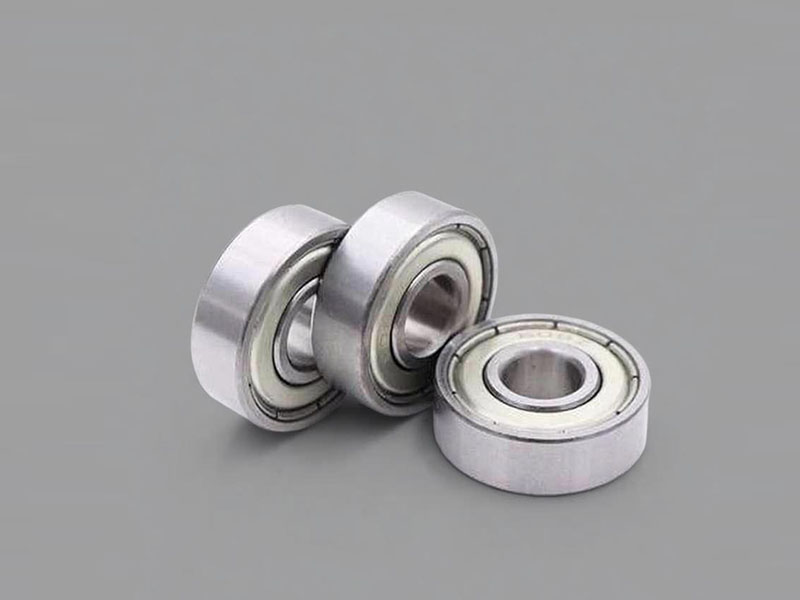
The most widely used material for conventional ball bearings is chrome steel, specifically rolling bearing steel 1.3505 / 100Cr6 known as AISI 52100 in the US, SUJ2 in Japan, and GCr15 in China. This martensitic chrome steel contains approximately 1% carbon and 1.5% chromium.
Key properties of chrome steel bearing balls include:
- Hardness: 60–65 HRC after through-hardening
- Density: 7.85 g/cm³
- Tensile strength: Up to 2400 MPa
- Elastic modulus: 212 GPa
- Continuous operating temperature: Up to 150°C (short-term up to 180°C)
Chrome steel balls offer excellent wear resistance, high fatigue strength, and good dimensional stability. They are extensively used in automotive wheel hubs, industrial machinery, electric motors, and precision instruments. Chrome steel balls are available in precision grades from G10 to G100 for general use, with higher grades (G5, G3) for critical applications.
However, since chromium content is around 1.5% (well below the 10.5% threshold for stainless steel), 100Cr6 provides only moderate corrosion resistance and requires proper lubrication to prevent rust in moist environments.
Balls for Plastic Bearings
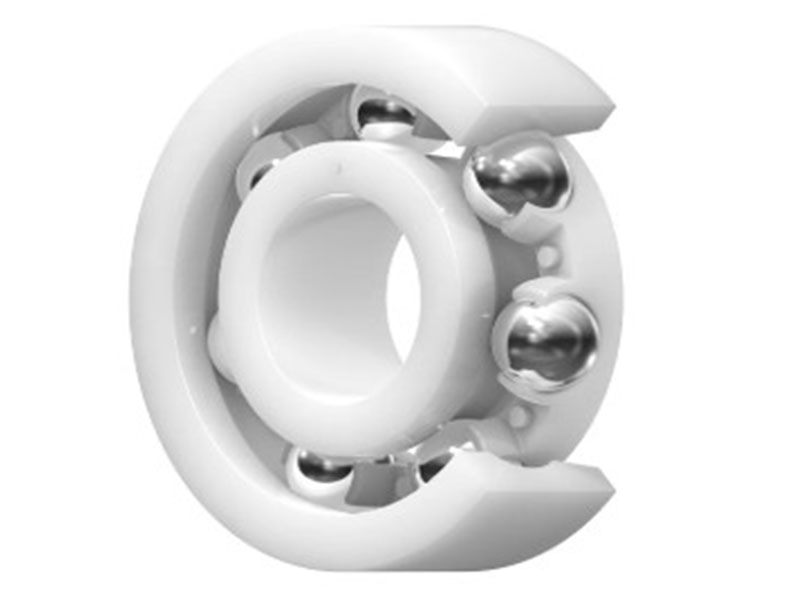
Pastic ball bearings impose different requirements on ball materials. The plastic bearing races, rather than the balls, set the maximum permissible load limits, enabling the use of specialized ball materials.
Stainless Steel 1.4401 / 316L
For plastic ball bearings, unhardened stainless steel balls (grade 1.4401 / 316L) are the standard choice. Their key advantages include:
- Excellent corrosion resistance, including resistance to saltwater, alkalis, and bases
- Cost-effectiveness—lower priced than glass balls
- Sufficient strength for plastic bearing applications (hardening is unnecessary)
Soda-Lime Glass
Soda-lime glass balls are used when a metal-free bearing is required or chemical resistance demands are high. Properties:
- Moderate chemical resistance suitable for short-term chemical exposure
- Good dimensional stability
- Low unit cost
- Light greenish tint (also known as “lemonglass”)
- Typically precision graded G10 to G1000 per ISO 3290
However, soda-lime glass is not recommended for applications involving strong thermal stress or aggressive chemical exposure.
Borosilicate Glass
Borosilicate glass is significantly more expensive than soda-lime glass but provides substantially higher performance. Key characteristics include:
- Very low coefficient of thermal expansion (approximately 3.3 × 10⁻⁶/K)
- Excellent thermal shock resistance (withstands ΔT up to approximately 165°C)
- Superior chemical durability, particularly against strong acids
- Crystal clear and transparent appearance
- Density: Approximately 2.2–2.23 g/cm³ (lighter than soda-lime)
Borosilicate glass balls are specified for demanding applications including laboratory equipment, high-temperature valve systems, chemical processing bearings, and pharmaceutical packaging.
Ceramic Balls for High-Performance Bearings
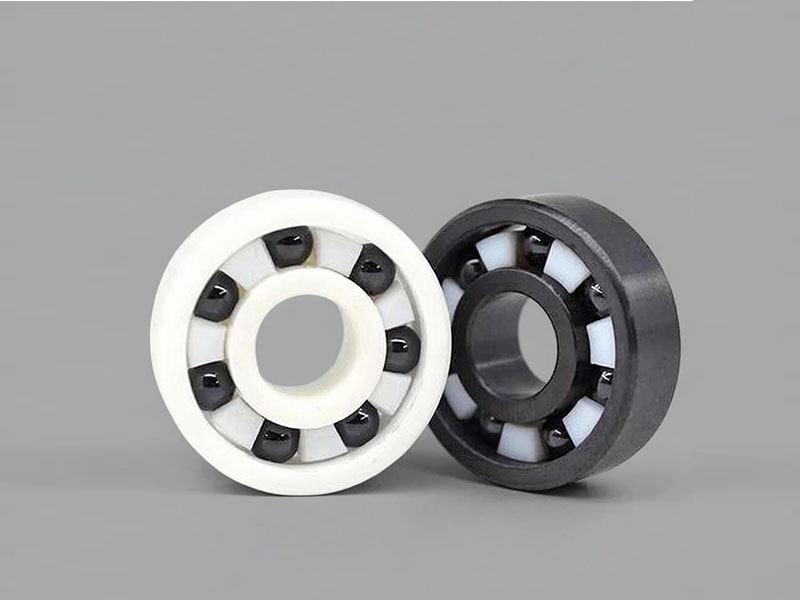
Ceramic balls are increasingly used in high-speed, high-temperature, and corrosive environments. Two primary ceramic materials dominate this segment.
Aluminium Oxide (Al₂O₃)
Aluminium oxide ceramic balls feature a polycrystalline structure. Properties include:
- Good corrosion resistance to water, salt solutions, and many acids
- Self-lubricating behavior
- Electrically insulating
- White to ivory coloration
- Manufactured to ASTM F 2094 Class II/III standards
Chemical limitations: Al₂O₃ balls must avoid contact with hydrofluoric acid, hydrochloric acid, warm sulfuric acid, and strong alkaline solutions.
Silicon Nitride (Si₃N₄)
Silicon nitride ceramic balls offer superior performance compared to Al₂O₃, though at a higher cost.
| Property | Al₂O₃ | Si₃N₄ |
|---|---|---|
| Hardness | 15–18 GPa (Vickers) | 13–16 GPa (Vickers) |
| Fracture toughness | 3–4 MPa·m¹/² | 6–8 MPa·m¹/² |
| Flexural strength | 300–500 MPa | Up to 1000 MPa |
| Thermal conductivity | 20–30 W/m·K | 30–100 W/m·K |
| CTE (×10⁻⁶/°C) | 8–9 | 3–4 |
Silicon nitride balls are:
- Lightweight with high toughness and excellent corrosion resistance
- Self-lubricating and electrically insulating
- Black-pearl colored
- Highly resistant to thermal shock and temperature fluctuations
- Resistant to oxidation up to approximately 1200°C (forming protective SiO₂ layer)
Silicon nitride is the preferred material for high-speed machine tool spindles, aerospace turbine components, and high-performance automotive turbochargers. When ceramic balls are used with steel races, the configuration is called a hybrid bearing, offering an optimal balance of performance and cost.
Ceramic vs. Steel Balls
Ceramic balls offer three major advantages over steel in demanding applications: they are approximately 40% lighter than steel (reducing centrifugal forces in high-speed rotation); they exhibit a friction coefficient approximately 40% lower than steel; and silicon nitride provides wear resistance 5–10 times higher than metal balls due to superior hardness.
Industry Standards and Precision Grades
Ball bearing balls are manufactured to rigorous international standards that define material composition, dimensional accuracy, and surface quality.
- ASTM F2215: Covers ferrous and nonferrous inch balls for bearings, valves, and other precision ball applications, classifying 14 composition types
- ISO 3290 / DIN 5401: Defines dimensional tolerances and surface roughness for steel balls, specifying grades from G3 (highest precision) to G1000 (lowest precision)
- ASTM F2094: Provides specifications for silicon nitride and other ceramic bearing balls, covering geometry, material properties, and inspection requirements
These standards ensure batch-to-batch consistency and interoperability across different bearing designs.
How to Select the Right Ball Material
Selecting the appropriate ball material requires evaluation of several application parameters:
| Operating Condition | Recommended Ball Material |
|---|---|
| High dynamic loads, standard temperatures | Chrome steel (100Cr6 / 52100) |
| Corrosive environments (water, chemicals) | 316L stainless steel or Si₃N₄ ceramic |
| High-speed rotation | Si₃N₄ ceramic (reduced centrifugal force) |
| High temperatures (>150°C continuous) | Borosilicate glass or Si₃N₄ ceramic |
| Metal-free / non-magnetic requirements | Glass or ceramic |
| FDA compliance for food/pharmaceutical | 316L stainless steel or certain ceramics |
| Cost-sensitive, low-load, mild environment | Soda-lime glass |
Soda-lime glass balls represent the most economical non-metallic option for low-load applications exposed to mild environments, whereas borosilicate glass delivers thermal stability for demanding laboratory and chemical processing conditions.
FAQs
Q1: What is the most common material for ball bearing balls?
A1: Chrome steel (100Cr6 / AISI 52100) is the most widely produced bearing ball material, with millions manufactured annually for automotive, industrial machinery, and precision equipment applications.
Q2: What are stainless steel ball bearings used for?
A2: Stainless steel balls are used in applications requiring corrosion resistance—such as marine equipment, food processing machinery, medical devices, and chemical pumps. Austenitic 316L offers the highest corrosion resistance among stainless grades.
Q3: Are ceramic balls better than steel balls?
A3: Ceramic balls outperform steel in high-speed, high-temperature, and corrosive applications due to their lighter weight, lower friction, and superior wear resistance. However, chrome steel is more cost-effective for standard industrial applications where steel’s limitations are not problematic.
Q4: What are non-magnetic ball bearing balls made of?
A4: Non-magnetic ball bearing balls are manufactured from austenitic 300-series stainless steel (316L), glass (soda-lime or borosilicate), or ceramic materials such as Al₂O₃ and Si₃N₄. These materials are essential for MRI equipment and precision electronic instruments.
Q5: How are bearing balls made?
A5: Steel bearing balls are produced through a multi-step process: cold heading from wire rod → flashing (burr removal) → soft grinding → heat treating (hardening) → descaling → final grinding → lapping (superfinishing). Ceramic and glass balls follow different but similarly precise fabrication processes.
Q6: What material is FDA compliant for food processing bearings?
A6: 316L stainless steel and silicon nitride ceramics are FDA-compliant for food and pharmaceutical processing applications. Both materials resist corrosion from cleaning agents and high-temperature sterilization while meeting regulatory requirements.
Q7: Can bearing balls be made of plastic?
A7: Yes, but uncommon. Plastic balls (PEEK, PTFE, or polyamide) are used only in very low-load, low-speed applications where non-conductivity, chemical inertness, or ultra-low weight is required. For most industrial bearings, steel, glass, or ceramic balls are preferred due to their mechanical strength and dimensional stability.
Conclusion
The selection of ball bearing ball materials spans from chrome steel for general-purpose industrial use—including bearing steel ball material 100Cr6 commonly used by DUHUI Bearing and other Chinese automotive wheel hub bearing manufacturers—to glass and ceramic for specialized applications. For corrosion resistance, stainless steel ball bearings remain the standard choice in marine and food-grade environments. Ceramic bearing balls, particularly silicon nitride, provide unmatched performance in high-speed and high-temperature operations. Understanding the trade-offs between hardness, corrosion resistance, thermal stability, and cost ensures optimal bearing reliability in each application.