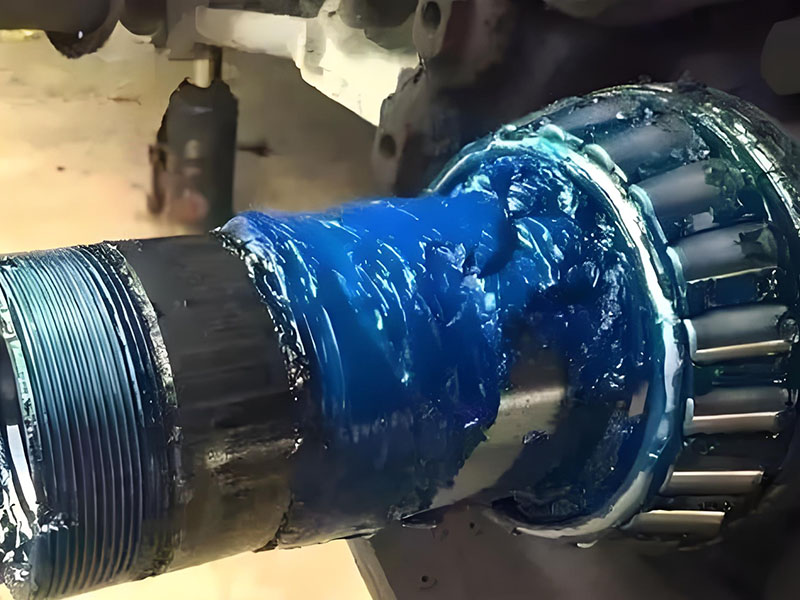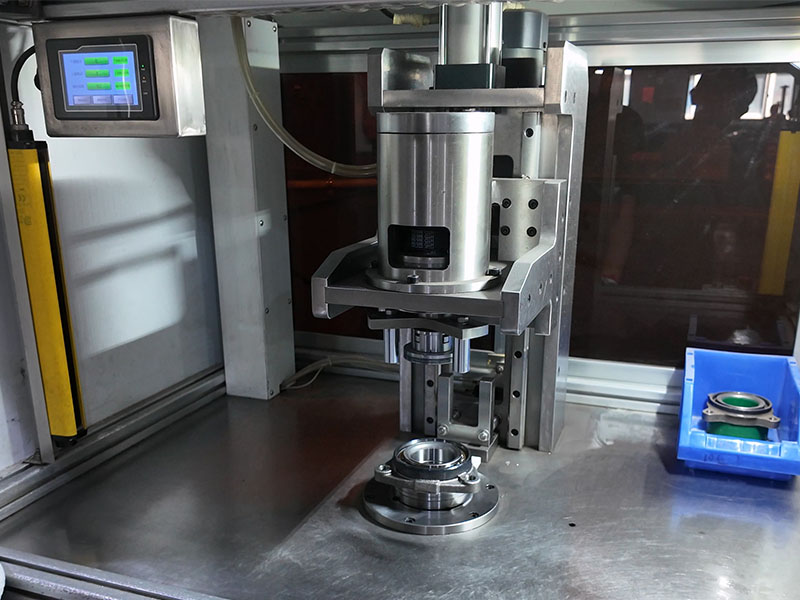
Deep groove ball bearings and angular contact ball bearings are two of the most widely used rolling element bearing types in industrial machinery and automotive applications. While they may look similar at first glance, their internal geometry and performance characteristics differ fundamentally, making each suitable for distinct operating conditions.
Which bearing type is right for your application? How do load direction, speed requirements, and precision demands affect bearing selection? This article provides a technical comparison of deep groove ball bearings vs angular contact ball bearings to help engineers, procurement professionals, and maintenance teams make informed decisions.
Quick Reference Comparison Table
| Feature | Deep Groove Ball Bearings | Angular Contact Ball Bearings |
|---|---|---|
| Structural Design | Symmetrical raceways; balls sit in deep grooves | Offset raceways with a defined contact angle (15°, 25°, 30°, 40°) |
| Primary Load Support | Primarily radial loads; can handle some axial loads | Both radial and axial (unidirectional for single-row) |
| Axial Load Capacity | Moderate; bidirectional | High (in one direction); requires pairing for bidirectional |
| Contact Angle | 0° under pure radial load | 15°-40°; larger angle = higher axial capacity, lower speed limit |
| Limiting Speed | Higher | Lower than equivalent deep groove bearings at same contact angle |
| Typical Applications | General machinery, electric motors, household appliances, automotive wheel hubs | Machine tool spindles, robotics, aerospace, ball screws, high-speed motors |
Deep Groove Ball Bearings: Overview and Characteristics
Deep groove ball bearings are the most common type of ball bearing used across industries. Their popularity stems from a simple yet effective design that balances performance, durability, and cost.
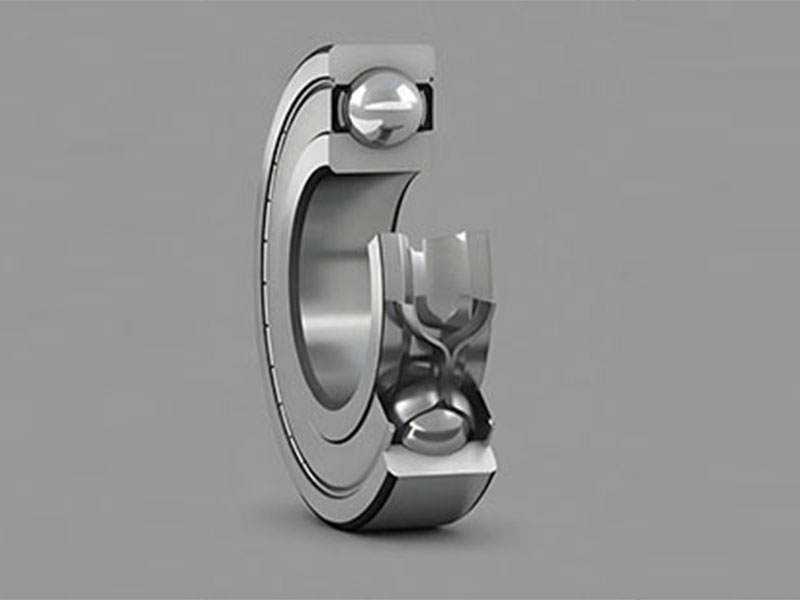
Definition and Basic Structure
A deep groove ball bearing consists of an inner ring, an outer ring, a cage, and a set of balls. The raceways (grooves) on both rings are symmetrical about the centerline and form a circular arc with a radius slightly larger than that of the balls. This deep groove geometry allows the bearing to accommodate both radial loads and axial loads in either direction.
Applications
The versatility of deep groove ball bearings makes them suitable for a broad range of applications. In the automotive sector, they are commonly found in wheel hubs, gearboxes, and alternators. They also play a critical role in electric motors and generators, where reliable high-speed operation is required. In household appliances, such as washing machines, dryers, and vacuum cleaners, deep groove ball bearings provide low-noise, low-vibration performance. Industrial applications include pumps, compressors, conveyors, and agricultural machinery.
Advantages
- High-speed capability – The minimal friction generated by the symmetrical raceway geometry allows these bearings to operate efficiently at elevated rotational speeds.
- Low maintenance – Especially when sealed variants are used, deep groove ball bearings require minimal attention over long service intervals.
- Versatility – Their ability to support axial loads in both directions simplifies assembly and reduces design complexity.
Angular Contact Ball Bearings: Overview and Characteristics
Angular contact ball bearings share the same basic components as deep groove bearings—inner ring, outer ring, cage, and balls. However, a critical design difference gives them unique performance characteristics.
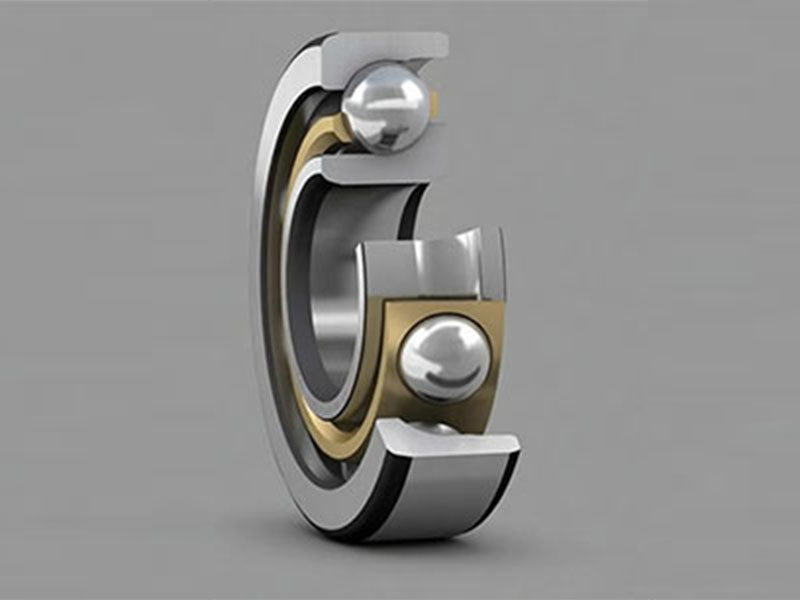
Definition and Core Feature: Contact Angle
In angular contact ball bearings, the raceways of the inner and outer rings are offset relative to each other. This offset creates a defined contact angle—the angle between the line joining the points of contact between the ball and raceways and a line perpendicular to the bearing axis. Standard contact angles include 15°, 25°, 30°, and 40°, though some manufacturers offer custom angles.
The contact angle directly determines the load distribution within the bearing. A larger contact angle increases axial load but reduces the maximum permissible rotational speed.
Applications
Angular contact ball bearings are specified in applications that demand high precision, rigidity, and the ability to handle combined radial and axial loads. Typical uses include machine tool spindles, servo and robot gearboxes, ball screws, high-speed motors, precision turntables, and pumps or compressors. In the aerospace industry, these bearings are used in critical rotating assemblies where reliability and precision are paramount.
Advantages
- High axial load capacity – The primary advantage over deep groove bearings, especially when paired with appropriate preload.
- Precision and rigidity – When preloaded, angular contact bearings provide high stiffness and positioning accuracy, essential for machining and robotics.
- Durability – Well-maintained angular contact bearings offer exceptional service life under demanding conditions.
Key Differences Between Deep Groove Ball Bearings and Angular Contact Ball Bearings
Design and Contact Angle
The most fundamental difference lies in raceway geometry. Deep groove ball bearings feature symmetrical grooves that allow the bearing to operate with a zero contact angle under pure radial loading. Angular contact bearings, by contrast, use asymmetrical raceways that produce a defined contact angle even under purely radial loads.
Load Capacity
Deep groove ball bearings are optimized for radial load applications. While they can accommodate some axial load, their capacity in this direction remains moderate. Angular contact ball bearings excel at handling combined radial and axial loads. However, single-row angular contact bearings can support axial loads in only one direction; to accommodate bidirectional axial forces, they must be used in pairs or as double-row configurations. The axial load capacity of an angular contact bearing increases with the contact angle: larger angles (e.g., 40°) provide the highest thrust capacity at the expense of radial load capacity and speed.
Speed and Temperature Rise
Deep groove ball bearings generally achieve higher limiting speeds than angular contact bearings of the same size. The reduced friction within deep groove geometry results in lower temperature rise during high-speed operation. Angular contact bearings, due to the sliding friction generated at the ball-raceway interface during high-speed rotation, tend to experience higher temperature rise and require careful thermal management in high-speed applications.
Axial Load Direction
Deep groove ball bearings can support axial loads from either direction without modification. Single-row angular contact ball bearings, in contrast, are directionally sensitive—they can support axial loads in only one direction, determined by the orientation of the offset raceways. This directional nature has significant implications for assembly and system design.
Pairing Requirements for Angular Contact Bearings
To support axial loads in both directions, angular contact bearings are commonly arranged in pairs using one of three configurations: back-to-back (DB), face-to-face (DF), or tandem (DT). DB and DF arrangements provide bidirectional axial support and high rigidity, while DT arrangement doubles the axial load capacity in one direction.
Selecting the Right Bearing for Your Application
Choice depends on three primary criteria: load type, speed, and precision requirements.
For applications where radial load dominates, with only occasional or light axial loading, deep groove ball bearings represent the most economical and technically appropriate choice. For systems requiring high-speed operation with minimal friction, deep groove bearings also outperform angular contact alternatives.
When the application demands high axial load capacity in one direction, or when combined radial and axial loads must be managed simultaneously, angular contact ball bearings—particularly those with larger contact angles—are the preferred solution. Applications requiring bidirectional axial support should specify paired configurations.
Choosing a Reliable Bearing Supplier
Partnering with the right bearing manufacturer ensures product quality, technical support, and long-term performance. When evaluating potential suppliers, consider the following criteria.
Quality Certifications and Standards
Professional bearing manufacturers should maintain comprehensive quality management systems, including ISO 9001, IATF 16949 for automotive applications, and ISO 14001 for environmental management. Compliance with international standards such as ISO, DIN, ANSI, or JIS demonstrates adherence to recognized quality benchmarks.
Manufacturing Experience and Technical Capability
Manufacturers with decades of industry experience typically possess mature processes and extensive application knowledge. Key indicators include advanced production equipment (CNC grinders, heat treatment systems), R&D capabilities for non-standard customization, and production scale sufficient to handle both small-batch samples and large-volume orders.
Product Range and Customization Options
A broad product portfolio reflects a manufacturer’s comprehensive technical capability. The ability to provide application-specific customizations—such as specialized lubricants, seal types, or cage materials—adds significant value for customers with unique operating conditions.
After-Sales Support and Technical Assistance
A reliable supplier provides installation guidance, technical consulting, and responsive after-sales support. Access to maintenance advice and long-term service programs helps customers maximize bearing lifespan and minimize unplanned downtime.
Maintenance Best Practices for Ball Bearings
Proper maintenance extends bearing life and ensures consistent performance. The following practices apply to both deep groove and angular contact ball bearings.
Regular Inspections
Inspect bearings for signs of wear, corrosion, scuffing, or pitting on raceway surfaces. Listen for unusual operating noises—grinding or clicking sounds may indicate contamination or misalignment. Monitor operating temperature with infrared thermometers; elevated temperatures often signal lubrication issues or excessive preload.
Proper Lubrication
Lubrication reduces friction, minimizes wear, and dissipates heat. Grease lubrication suits most general applications, providing both lubrication and protection against contaminants. Oil lubrication is recommended for high-speed or high-temperature applications where grease may not provide adequate cooling. Avoid over-lubrication; excess grease can cause churning and overheating.
Contamination Control
Contaminants—dust, moisture, metal particles—represent a leading cause of premature bearing failure. Use sealed or shielded variants where appropriate. Maintain cleanliness in storage and installation areas. Keep unused bearings in their original packaging until ready for use to prevent contamination.
Load Management
Avoid operation beyond specified load ratings. Sudden shock loads or overloading can induce brinelling, fatigue spalling, or raceway indentations that degrade performance and shorten service life.
Frequently Asked Questions (FAQs)
Q1: Can I replace a deep groove ball bearing with an angular contact ball bearing?
A1: Not directly. While they share similar external dimensions, the load direction, mounting orientation, and internal clearances differ significantly. Replacement requires a complete evaluation of the application’s load profile, speed requirements, and available assembly space.
Q2: Why do angular contact ball bearings need to be used in pairs?
A2: Single-row angular contact bearings support axial loads in only one direction due to their offset raceway design. Using two bearings in back-to-back (DB), face-to-face (DF), or tandem (DT) configurations enables bidirectional axial support and provides the rigidity needed for precision applications.
Q3: What is the meaning of contact angle 15°, 25°, and 40°?
A3: Contact angle defines the line of load transmission between balls and raceways. A 15° angle prioritizes high-speed capability with moderate axial load capacity. A 40° angle maximizes axial load support but reduces permissible speed. The 25° angle offers a balanced compromise suitable for many applications.
Q4: Which bearing type is better for high-speed applications?
A4: Deep groove ball bearings generally achieve higher limiting speeds than angular contact bearings of equivalent size due to their lower friction geometry. For extremely high-speed requirements with minimal axial load, deep groove bearings are typically preferred.
Q5: How do I know which contact angle to choose for angular contact bearings?
A5: Match the contact angle to the application’s axial-to-radial load ratio. Larger axial loads relative to radial loads require larger contact angles (e.g., 40°). For applications dominated by radial load with some axial component, smaller contact angles (e.g., 15°) provide adequate capacity while maintaining higher speed capability.
Q6: Are deep groove ball bearings suitable for applications with heavy axial loads?
A6: Deep groove ball bearings support axial loads in both directions but have limited axial capacity compared to angular contact designs. For applications involving heavy or sustained axial thrust, angular contact ball bearings (or thrust bearings) represent a more appropriate technical solution.
Conclusion
Deep groove ball bearings and angular contact ball bearings serve distinct roles within mechanical systems. Deep groove ball bearings excel in general-purpose applications requiring high speeds, moderate loads, and bidirectional axial capacity. Angular contact ball bearings provide superior axial load handling, greater rigidity, and enhanced precision—advantages that come with specific directional constraints and pairing requirements.
Understanding the technical distinctions between deep groove ball bearings vs angular contact ball bearings ensures proper bearing selection based on load type, speed requirements, and precision demands. For most radial-load-dominated applications, deep groove ball bearings remain the reliable, cost-effective choice. For systems requiring high axial load capacity or precision positioning, angular contact ball bearings offer performance that justifies their additional design complexity.