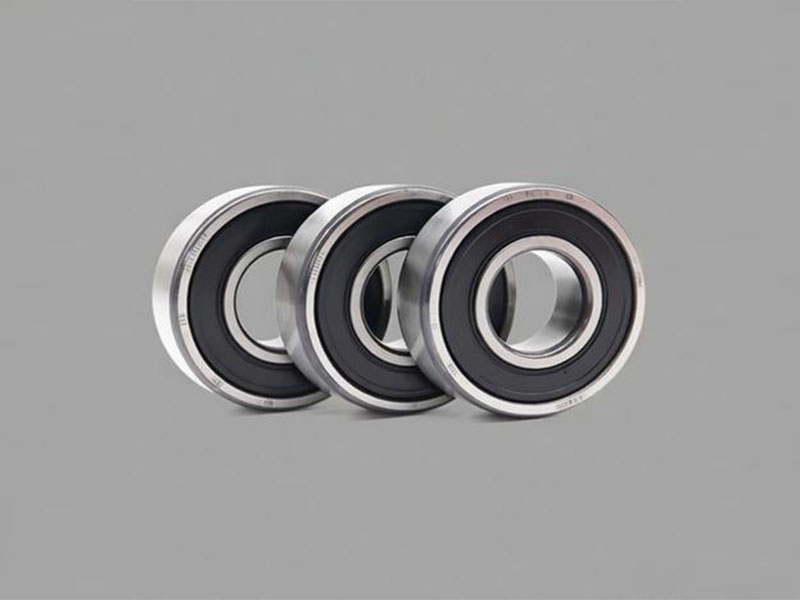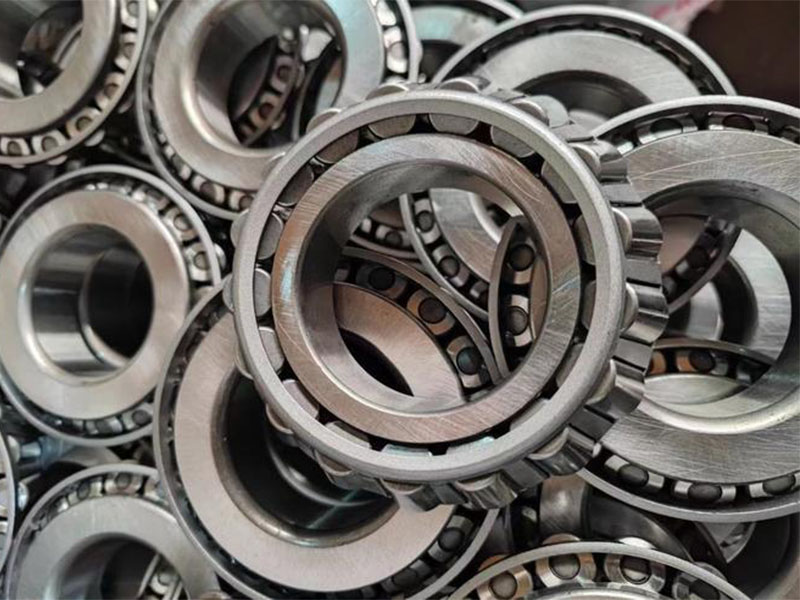
Deep groove ball bearings are among the most widely used rolling bearings in industrial machinery, electric motors, conveyor systems, pumps, and automotive components. Selecting the correct bearing for a specific application requires a systematic approach that considers load characteristics, rotational speed, precision requirements, environmental factors, lubrication, and supplier reliability. This guide provides a structured method to help engineers and maintenance professionals make informed selection decisions.
What Is a Deep Groove Ball Bearing?
A deep groove ball bearing consists of four main components: an inner ring, an outer ring, a set of steel balls, and a cage (or retainer) that keeps the balls evenly spaced. The raceway grooves on both the inner and outer rings are deeper than those of other ball bearing types, which allows the bearing to accommodate not only radial loads but also moderate axial loads in both directions. This combination of radial and bidirectional axial load capacity, along with low friction and high-speed capability, makes deep groove ball bearings a versatile choice across a broad range of industries.
Step 1: Determine the Installation Space
Before evaluating load or speed, confirm the available installation space. The shaft diameter typically determines the bearing bore size. For a given bore diameter, multiple outside diameter and width options are available across different ISO dimension series.
Key takeaway: Start selection by matching bearing bore to shaft diameter, then choose the smallest outside diameter and width that fits your housing.
For applications with very limited radial space, consider the 618 or 619 series, which provide a slimmer profile. Always verify fit tolerances between the shaft, housing, and bearing to avoid interference or excessive clearance that can compromise performance. Ensure the bearing housing and shaft meet strict tolerances—typically ISO IT6 for shafts and IT7 for housings when paired with standard deep groove ball bearings.
Step 2: Understand the Load Requirements
Load analysis begins with identifying the direction and magnitude of forces acting on the bearing.
Radial Load. Deep groove ball bearings are primarily designed for radial loads. In electric motors, for example, the bearing supports the rotor against radial forces generated by magnetic fields and belt tension.
Axial Load. Deep groove ball bearings can accommodate moderate axial loads in both directions. A single-row deep groove ball bearing typically handles axial loads up to 25–50% of its static radial load rating C0r. The axial load capacity is defined by the static axial load rating C0a, per ISO 20015 standards (typically not listed in standard catalog tables but can be provided by manufacturers upon request). For applications with higher axial loads, consider using a larger bearing or switching to angular contact ball bearings.
Key takeaway: A single-row deep groove ball bearing typically handles axial loads up to 25–50% of its static radial load rating.
Combined Load. When both radial and axial loads act simultaneously, the bearing is subjected to a combined load condition. Calculate the dynamic equivalent load using the formula P = XFr + YFa, where X and Y are load factors obtained from bearing manufacturer tables. For deep groove ball bearings, the factor X is approximately 0.56 and Y approximately 2.3 when the inner ring rotates. The resulting equivalent load is then used for bearing life calculation.
Step 3: Determine the Speed Requirements
Every bearing has a limiting speed, which is the maximum rotational speed at which it can operate without generating excessive heat. This speed depends on bearing size, cage design, lubrication method, and sealing configuration.
Key takeaway: Grease-lubricated bearings typically achieve 10–30% lower limiting speeds than oil-lubricated bearings of the same type.
Grease vs. Oil Lubrication. Grease-lubricated bearings typically have lower limiting speeds than oil-lubricated bearings of the same type. For example, a 6407 deep groove ball bearing may have a grease limiting speed of approximately 7,800 rpm and an oil limiting speed of approximately 9,100 rpm. For applications requiring ultra-high speeds, consider oil-air or oil-mist lubrication systems.
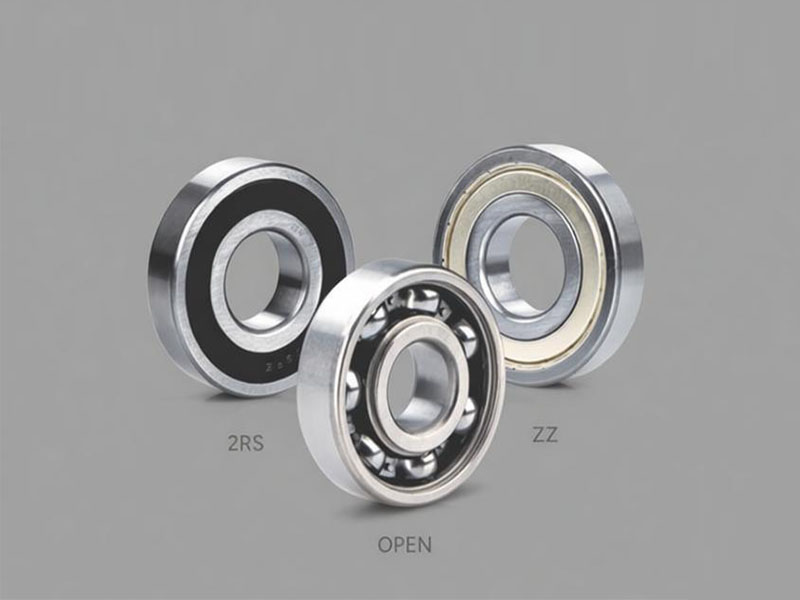
Sealed Bearings. Rubber-sealed bearings (2RS) offer better contamination protection but operate at lower speeds due to seal contact friction. Shielded bearings (ZZ) maintain most of the limiting speed of open bearings while providing adequate particle protection for many industrial environments.
Step 4: Consider Precision and Tolerance Requirements
Bearing accuracy is classified by tolerance grades that define allowable deviations in dimensions, geometry, and runout.
Key takeaway: P0 class bearings suit general machinery; P6–P5 for electric motors and machine tool spindles; P4–P2 for high-precision applications such as aerospace instrumentation.
ISO Accuracy Classes. The ISO system uses P0, P6, P5, P4, and P2, with P0 being standard (normal) precision and P2 representing the highest precision. P0 suffices for general machinery such as conveyors and agricultural equipment. P6 offers tighter tolerances suitable for electric motors and industrial fans. P5 and P4 are precision grades used in machine tool spindles. P2 is ultra-precision for high-speed or high-accuracy applications such as aerospace instrumentation.
ABEC Equivalence. The ABEC system (ABEC 1, 3, 5, 7, 9) corresponds to ISO grades as follows: ABEC 1 ≈ P0, ABEC 3 ≈ P6, ABEC 5 ≈ P5, ABEC 7 ≈ P4, and ABEC 9 ≈ P2. Understanding this equivalence helps when cross-referencing suppliers using different standards.
Runout and Noise. For low-noise applications such as medical devices or audio equipment, specify bearings with low vibration ratings (V1 through V4 suffixes, where V4 indicates the lowest vibration level). Runout (radial and axial deviation during rotation) becomes critical in precision positioning systems.
Step 5: Evaluate Environmental and Operating Conditions
The operating environment often dictates material and sealing choices.
Key takeaway: For high-temperature operation above 150°C, apply a temperature correction factor to the dynamic load rating; for corrosion-prone environments, specify stainless steel or ceramic hybrid bearings.
Temperature. Standard bearing steel maintains hardness up to approximately 150°C. Above this temperature, apply a temperature correction factor to the dynamic load rating. For applications involving cryogenic or extremely high temperatures (above 250°C), consider special materials or ceramic rolling elements.
Contamination. For dusty or dirty environments, sealed or shielded bearings prevent particle ingress. Sealed bearings provide better protection than shielded bearings but incur higher friction. Open bearings require external sealing arrangements.
Corrosion. Standard chrome steel bearings corrode in humid or chemically aggressive environments. Stainless steel bearings (AISI 440C, 304, or 316) conforming to ASTM A276, or ceramic hybrid bearings (Si₃N₄ balls with 440C rings) offer superior corrosion resistance. Ceramic balls weigh up to 40% less than steel balls, reducing centrifugal loading and enabling operation up to 50% faster than conventional bearings.
Step 6: Choose the Right Bearing Type and Features
Single-Row vs. Double-Row Bearings. Single-row deep groove ball bearings are the most common configuration, offering a balance of load capacity, speed, and cost. Double-row deep groove ball bearings provide higher radial load capacity within the same width but have higher friction and lower limiting speeds.
Sealed vs. Shielded vs. Open. Open bearings allow external lubrication systems and achieve the highest speeds. Shielded bearings (suffix Z or ZZ) incorporate steel shields that prevent large particle ingress while maintaining high speed capability. Shielded bearings are typically supplied pre-filled with grease for maintenance-free operation and keep lubricant inside without compromising limiting speed. Sealed bearings (suffix RS or 2RS) feature rubber seals (typically NBR, nitrile butadiene rubber) in contact with the inner ring, providing superior contamination protection at the cost of slightly lower speed and higher torque. Rubber-sealed bearings have a working temperature range from -40°C to 100°C, with a peak of 120°C for short periods.
Key takeaway: Choose sealed bearings (2RS) for dusty or wet environments; choose shielded bearings (ZZ) for clean industrial environments where speed is a higher priority than sealing effectiveness.
Snap Rings. Bearings with a snap ring groove and snap ring (suffix NR) simplify axial positioning within the housing. This design eliminates the need for separate retaining rings or shoulders, reducing assembly complexity in space-constrained applications.
Step 7: Select the Right Lubrication
Lubrication plays a pivotal role in bearing performance. For most industrial deep groove ball bearings, grease lubrication is the standard choice because it requires minimal maintenance and provides adequate cooling for typical speed ranges.
Key takeaway: For sealed bearings, verify the pre-filled grease type and operating temperature range match your application before selection.
Pre-lubricated Sealed Bearings. Sealed and shielded bearings are typically filled with grease before delivery. When selecting such bearings, verify the grease type and operating temperature range match your application.
Oil Lubrication. Oil lubrication provides better heat dissipation and is used in high-speed applications such as turbine spindles, machine tool spindles, and electric vehicle drive units. Oil lubrication also allows for filtration, which extends bearing life by removing contaminants.
Specialty Lubricants. For food processing equipment, use FDA-approved H1 grease. For vacuum or cleanroom environments, specify low-outgassing lubricants. For extreme low-temperature applications (below -30°C), select synthetic lubricants with low pour points.
Step 8: Calculate Bearing Life
The basic rating life (L10) is the number of revolutions at which 90% of a group of identical bearings will still be operational. Per ISO 281, the standard formula for ball bearings is:
L10 = (C / P)³ × 10⁶ revolutions
Where:
- C = Basic dynamic load rating (N or lbf) from manufacturer data sheets
- P = Dynamic equivalent load (N or lbf) calculated as described in Step 2
Key takeaway: The basic L10 formula assumes ideal conditions; in practice, apply reliability and operating condition correction factors.
For applications requiring time-based life estimates, convert revolutions to hours using the operating speed.
Life Correction Factors. Real-world operating conditions often require adjustment of L10 life using correction factors (a₁ for reliability, a₂ for material and operating conditions). Poor lubrication, high contamination, or misalignment can reduce effective bearing life substantially. For improved life estimates, consult manufacturer-adjusted ratings or use online calculation tools.
Final Step: Work with Reputable Suppliers
The final step is selecting a reliable bearing supplier or manufacturer. A good supplier provides more than just components—it acts as a technical partner.
Key takeaway: A supplier with ISO 9001 certification, material traceability, and sample verification capabilities reduces field failure risk.
Quality Certifications. Look for suppliers holding ISO 9001 certification, which indicates adherence to international quality management systems. For automotive applications, IATF 16949 certification is required.
Material Traceability and Batch Consistency. For mission-critical applications, request certification of material composition and heat treatment records. A supplier who maintains material traceability from steel mill to finished product demonstrates a commitment to quality assurance.
Sample Verification. Before committing to large-volume orders, request sample bearings for in-house testing. Verify actual performance parameters, including noise levels (measured by vibration meters), friction torque, and fit dimensions, under your specific operating conditions.
Technical Support. Established suppliers help interpret technical data, recommend suitable products for specific operating conditions, and offer engineering support for unusual applications. They also provide application guidance for special materials, coatings, or seals when catalog products do not meet all requirements.
Conclusion
Selecting the right deep groove ball bearing requires careful consideration of installation space, load characteristics, speed requirements, precision tolerances, environmental conditions, lubrication, bearing life calculations, and supplier reliability. By following this structured approach, engineers can make informed decisions that optimize equipment reliability and reduce downtime. For specialized requirements or application-specific guidance, consult with bearing manufacturers or experienced technical suppliers.
Frequently Asked Questions
Q1: What is the difference between a deep groove ball bearing and an angular contact ball bearing?
A1: Deep groove ball bearings accommodate radial loads and moderate axial loads in both directions due to their symmetrical raceways. Single-row angular contact ball bearings have offset raceways that allow them to handle higher axial loads, but only in one direction. With a contact angle typically of 15°, 30°, or 40°, angular contact bearings are better suited for combined load applications, though they cannot accept axial loads from the opposite direction without supplementary bearings mounted in tandem.
Q2: Can a deep groove ball bearing handle only radial loads?
A2: Yes, deep groove ball bearings are primarily designed for radial loads. In pure radial applications, they perform with minimal friction and high efficiency. They also accommodate some axial load but not as much as angular contact bearings.
Q3: How does lubrication type affect bearing speed?
A3: Oil-lubricated bearings generally achieve higher limiting speeds than grease-lubricated bearings of the same type because oil dissipates heat more effectively. For the same bearing, grease-lubricated limiting speed is typically 10–30% lower than oil-lubricated limiting speed.
Q4: What does ABEC 1 mean for deep groove ball bearings?
A4: ABEC 1 (ISO P0) is standard tolerance class, appropriate for most general industrial applications where extreme precision is not required. ABEC 3 (ISO P6) provides tighter tolerances for applications such as electric motors. Higher ABEC classes (5, 7, 9) are used in precision instruments and high-speed spindles.
Q5: When should I choose a sealed bearing over a shielded bearing?
A5: Choose sealed bearings (2RS) for dusty or wet environments where contamination ingress would cause rapid failure. Choose shielded bearings (ZZ) for clean industrial environments where speed is a higher priority than sealing effectiveness.
Q6: How do I calculate the service life of a deep groove ball bearing?
A6: Use the L10 formula: L10 = (C / P)³ × 10⁶ revolutions. For time-based life, divide by rotational speed in RPM and convert to hours. Apply reliability and operating condition correction factors for improved estimates.
Q7: What is the correct fit for a deep groove ball bearing on a shaft?
A7: Fit depends on operating conditions. Rotating inner rings typically require interference fits (K5, J5, or K5 for light loads, K5 or M5 for heavier loads). For applications with high speeds or heavy loads, tighter fits are required. Stationary outer rings generally use looser fits (H7, J6, or K6 for normal loads) to allow thermal expansion.
Q8: Can deep groove ball bearings be used at high temperatures?
A8: Standard bearings operate up to 150°C. Above this temperature, bearing steel hardness decreases, reducing load capacity. Apply a temperature correction factor to the dynamic load rating for high-temperature operation. For sustained high temperatures above 250°C, consider special heat-stabilized bearings or ceramic hybrid bearings.
Q9: What causes noise in deep groove ball bearings?
A9: Common causes include contamination (dust or debris), insufficient lubrication, bearing damage (spalling, brinelling, indentations from contaminants), improper mounting, and excessive clearance. Specify low-noise bearings (vibration grades V3 or V4) for quiet-operation applications such as medical devices or measuring instruments.
Q10: Do I need stainless steel deep groove ball bearings?
A10: Stainless steel bearings are necessary for humid environments, chemical exposure, food processing, medical devices, or any application where corrosion would compromise performance. Standard chrome steel is adequate for dry, clean conditions. For applications requiring electrical insulation or extremely high speeds, ceramic hybrid bearings (silicon nitride balls with steel races) offer additional advantages.
Q11: How do I maintain and replace deep groove ball bearings?
A11: Proper maintenance extends bearing service life and prevents unexpected failures. Mount bearings using appropriate tools—either cold pressing or shrink fitting (heating the bearing to 80–100°C) for interference fits—and avoid striking bearings directly, which can cause dents and deformation. Contamination control through effective sealing prevents particle ingress that accelerates wear. Routine condition monitoring through vibration analysis and temperature checks helps detect issues before catastrophic failure occurs.
For replacement decisions, bearings with spalling, plastic deformation (brinelling), cracks, or deep pitting corrosion cannot be repaired and must be replaced. Lightly contaminated bearings with degraded lubricant may be restored by thorough cleaning and relubrication if caught before significant wear occurs. Inspect bearings for abnormal noise, vibration, or temperature rise (exceeding 30–50°C above ambient) as key indicators for replacement. When possible, schedule replacements during planned downtime rather than waiting for failure.
Q12: What does C3 mean on a bearing?
A12: C3 indicates a radial internal clearance group larger than normal (C0). Internal clearance is the gap between the bearing rolling elements and the raceways. C3 clearance is suitable for applications with large interference fits between inner/outer rings, significant temperature differences between rings, high axial loads, or applications requiring higher limiting speeds and reduced friction torque. Under normal working conditions with moderate temperatures and standard fits, C0 normal clearance should be selected first.
Q13: How do hybrid ceramic bearings compare to all-steel bearings?
A13: Ceramic hybrid bearings use silicon nitride (Si₃N₄) balls with steel races. Ceramic balls weigh up to 40% less than steel balls, reducing centrifugal loading and friction, enabling operation up to 50% faster and cooler than conventional bearings. Ceramic is harder than steel, non-magnetic, and electrically insulating, making hybrid bearings suitable for applications requiring electrical isolation or operation in corrosive environments. Ceramic balls also experience less wear and provide better bearing service life under poor lubrication conditions compared to standard steel bearings. The primary drawback is cost—ceramic hybrid bearings are more expensive due to complex manufacturing processes and higher precision requirements.
Q14: What are the common mistakes when selecting deep groove ball bearings?
A14: Common selection mistakes include assuming that matching dimensions alone ensures correct fit, ignoring the impact of internal structural design differences on load capacity. Bearings with the same outer and inner diameter but different rolling element counts or ball diameters can vary in radial dynamic load rating by more than 20%, directly affecting impact resistance and service life. Another common error is assuming higher precision class is always better. Blindly pursuing high-precision bearings without considering actual installation errors and speed requirements increases procurement costs and may lead to mismatch between bearing precision and equipment precision. High-precision bearings also have stricter installation environment requirements and are more likely to suffer wear failures in ordinary working conditions.
Q15: How can I verify a deep groove ball bearing’s performance before bulk purchase?
A15: Request sample bearings from the supplier and conduct in-house testing under your actual operating conditions. Measure noise using a vibration meter, monitor temperature rise during initial operation, and verify fit dimensions against shaft and housing tolerances. Compare all measured parameters against the supplier’s data sheet. This practice, recommended by major bearing manufacturers, reduces field failure risk and validates that the selected bearing meets application requirements before volume orders are placed.
Q16: What is the difference between 2RS and ZZ seals?
A16: 2RS indicates two contacting rubber seals (typically NBR, nitrile butadiene rubber) on both sides of the bearing. ZZ indicates two non-contacting steel shields on both sides. Rubber seals provide superior contamination exclusion and lubricant retention but create contact friction that reduces limiting speed. Steel shields maintain higher speed capability by operating without contact but offer only limited particle protection. 2RS bearings are preferred for dusty or wet environments; ZZ bearings are suitable for clean industrial environments where speed is prioritized.
Q17: When should I use double-row deep groove ball bearings?
A17: Double-row deep groove ball bearings provide higher radial load capacity than single-row bearings within the same width. They are suitable for applications where high radial loads are required but space constraints prevent using a larger single-row bearing, and where moderate speed operation is acceptable. Double-row bearings have higher friction and lower limiting speeds than single-row bearings of comparable bore size.
Q18: How does misalignment affect deep groove ball bearing performance?
A18: Deep groove ball bearings have limited tolerance to misalignment. If the inner and outer rings are tilted due to shaft deformation, overloading, or design errors, uneven load distribution occurs, generating additional heat and accelerating wear. During installation, ensure mounting platforms are flat and even, verify alignment at multiple positions, and keep eccentricity below 0.02mm for precision applications. If the shaft is deformed due to overloading or design errors, alignment issues must be addressed through proper housing or shaft design adjustments.
Q19: What are the signs that a deep groove ball bearing needs replacement?
A19: Key indicators include abnormal noise during operation (grinding, clicking, or irregular sounds), continuous temperature rise exceeding 30–50°C above ambient temperature, excessive vibration detected through monitoring equipment, stiff or uneven manual rotation after shutdown, and visible damage such as spalling or pitting on raceways or rolling elements upon disassembly. For critical equipment, establish baseline vibration spectra during commissioning and monitor for amplitude increases exceeding 20%, with temperature checks maintained below 80°C for grease-lubricated bearings.
Q20: Why does bearing clearance matter?
A20: Bearing clearance (the gap between rolling elements and raceways) affects function and performance. During operation, factors such as shaft and housing fits, materials, thermal expansion coefficients, and temperature differences typically cause a “constriction” of the bearing, which reduces nominal internal clearance. If clearance reduction leads to unintended preload, considerable friction losses, additional heat generation, and often premature bearing failure result. Therefore, the operating clearance should be considered carefully when selecting bearings, with appropriate clearance classes (C0, C3, C4) chosen based on interference fit levels, temperature conditions, and load types.