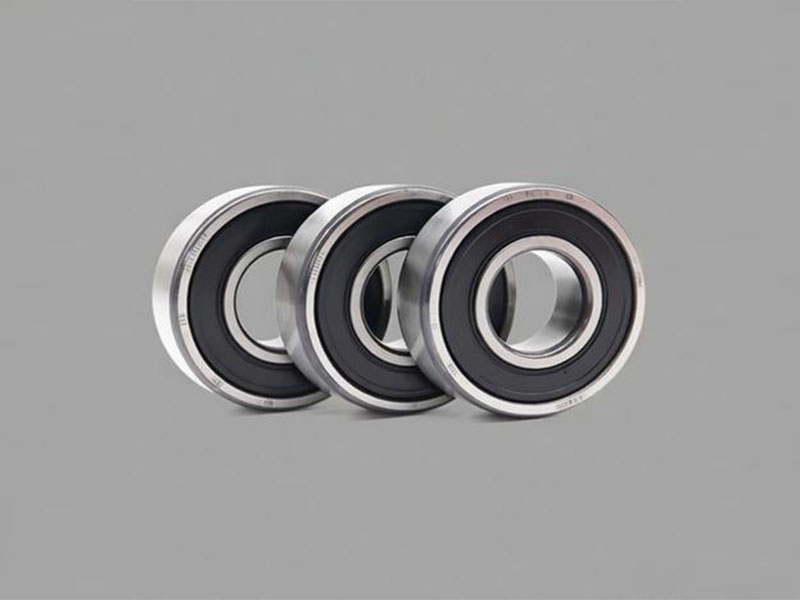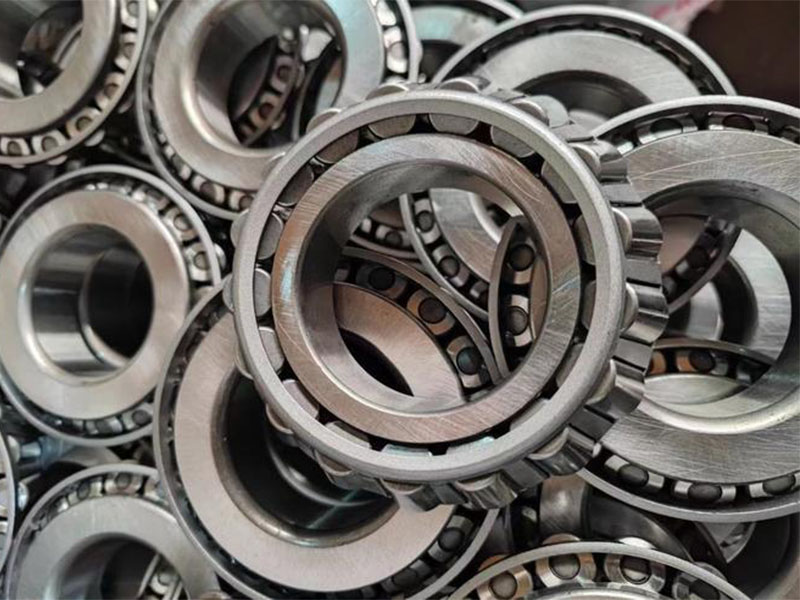
Quick Answer: Flange mounted bearings are bolt-on support units for rotating shafts in industrial equipment where the shaft runs at a right angle to the mounting surface. They handle radial loads, keep shafts properly aligned, and allow fast replacement without special tools–just unbolt the old unit and bolt on a new one. Available with 2, 3, or 4 mounting bolts and in cast iron, stainless steel, or plastic housings, these units are common in conveyors, HVAC systems, food processing lines, and agricultural machinery.
If you maintain or design industrial equipment, you have likely encountered flange mounted bearings. They appear on conveyor frames, fan housings, and packaging lines. But what exactly do they do, and when should you use them instead of other bearing types?
Flange mounted bearings serve a straightforward role in machinery: they support rotating shafts, keep them aligned, and make maintenance far simpler than traditional bearing setups. They are not a niche component–they are a standard solution used across virtually every industry.
This guide explains what flange mounted bearings are, how different designs suit different jobs, where they are used, and why they matter for equipment reliability and maintenance efficiency.
What Are Flange Mounted Bearings?
A flange mounted bearing is a complete bearing unit with a sealed bearing insert preassembled inside a flanged housing. The flange–a flat collar with bolt holes–lets you fasten the entire unit directly onto a support surface.
The key structural point is the mounting orientation: the shaft runs at a right angle to the mounting face. This is what separates flange units from pillow block bearings, where the shaft sits parallel to the mounting base.
The housing is machined flat on the mounting face to ensure a stable, secure fit. Depending on the model, the flange has two, three, or four bolt holes. The bearing inside comes pre-lubricated and sealed, ready to install straight from the box.
Why this design matters: with press-fit bearings, removing a worn unit often requires heating, pullers, or hydraulic presses. With flange mounted bearings, you simply remove the bolts, take off the old unit, and bolt on the replacement. One person can do the job in minutes.
Types of Flange Mounted Bearings
Flange mounted bearings group by housing shape and bolt-hole count. Each configuration was developed for a specific installation need.
2-Bolt Flange Mounted Bearings (Diamond or Oval)
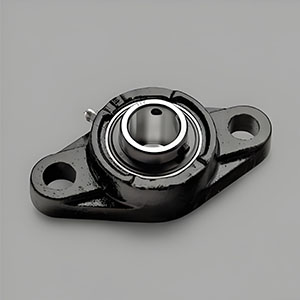
Two-bolt units have mounting holes on opposite sides of the bearing, creating a diamond or oval outline.
- Design purpose: Save space where a 4-bolt housing will not fit. Their compact footprint makes them useful on narrow machine frames and tight equipment panels.
- Load handling: Light to medium loads. Among flange types, they offer the least support and should not be used for heavy service.
- Typical jobs: Small conveyors, light-duty fans, and equipment with limited mounting area.
- Common series: UCFL, FL
3-Bolt Flange Mounted Bearings (Triangular)
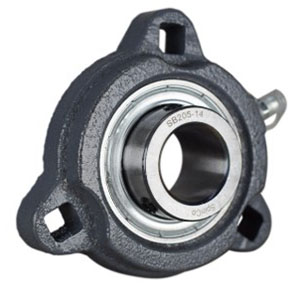
Three-bolt units arrange the mounting holes either at 120-degree spacing around the bearing center or in a triangular offset pattern.
- Design purpose: The three-point mounting gives better stability than 2-bolt designs and holds up better in vibrating equipment. The triangular layout resists loosening.
- Load handling: Moderate loads.
- Typical jobs: Wall-mounted equipment, light industrial machines, and applications where vibration is a concern.
- Common series: UCFB, FB
4-Bolt Square Flange Mounted Bearings
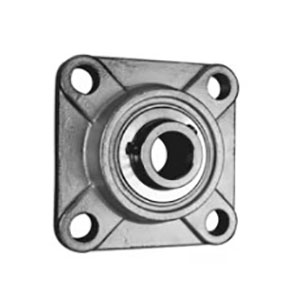
Four-bolt square units have bolt holes at the four corners of a square housing.
- Design purpose: This is the most widely used flange style because it offers maximum strength and support. The four-bolt pattern spreads the load evenly.
- Load handling: Highest capacity among flange types. Choose these for heavy loads and high-vibration conditions.
- Typical jobs: Heavy conveyors, large industrial fans, bulk material handlers, and agricultural equipment.
- Common series: UCF, UKF, UCFS, FS
4-Bolt Round Flange Mounted Bearings
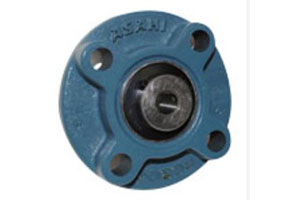
Four-bolt round units have holes evenly spaced around a circular housing. Many include a pilot boss–a raised circular ring on the back face.
- Design purpose: The pilot boss centers the housing automatically during installation. This ensures precise positioning without manual alignment.
- Load handling: Similar capacity to square 4-bolt units, with better positioning accuracy.
- Typical jobs: Precision conveyors, high-speed equipment, and applications where accurate shaft positioning matters.
- Common series: UCFC, FC
Applications of Flange Mounted Bearings
Flange mounted bearings are used wherever rotating shafts need support on vertical surfaces, side panels, or equipment frames. Their real advantage is installation flexibility–they go where pillow block bearings cannot.
- Conveyor Systems: Conveyor rollers and drive shafts rely on flange bearings for stable support under continuous operation. Quick-change capability is a major benefit here–when a conveyor bearing fails, maintenance teams can swap it in minutes and restart production.
- Material Handling Equipment: Package sorters, bulk material conveyors, and lifting equipment use flange bearings to support shafts under variable loads. The bolt-on design allows replacement without dismantling the surrounding structure.
- HVAC Systems: Heating and cooling equipment uses flange bearings on fan shafts and belt drives. Installations often require mounting on ductwork or equipment housings, where the perpendicular mounting feature is essential.
- Food Processing Machinery: Food-grade flange bearings often use stainless steel or plastic housings to resist corrosion and stand up to chemical washdowns. Plastic units also run maintenance-free–no greasing, no corrosion concerns.
- Textile Machinery: High-speed textile equipment uses flange bearings for reliable support in compact machine frames.
- Baggage Handling Systems: Airport baggage sorters run continuously and cannot tolerate long repair delays. Flange bearings keep these systems moving and allow fast turnaround during service.
- Agricultural Machinery: Combine harvesters, balers, and planters operate in dusty, dirty conditions. Flange bearings are built to handle the environment and are simple to change in the field.
- Medical and Clean-Room Equipment: Plastic flange bearings appear in medical devices and clean-room machinery because they are lightweight, corrosion-proof, and require no lubrication that might contaminate the workspace.
Materials and Durability
Housing material selection directly affects bearing life, corrosion resistance, and operating cost. Each material suits different conditions.
- Cast Iron: The standard for general industrial use. Strong, stiff, and dampens vibration well. Handles heavy-duty work and rough environments. Main limitation is weight and susceptibility to rust in wet conditions.
- Pressed Steel: Low-carbon steel formed by stamping. Costs less than cast iron and works well for light to medium-duty applications. Thinner and less rigid than cast iron.
- Stainless Steel: Resists corrosion, chemicals, and washdown solutions. The standard choice for food processing, marine applications, and outdoor equipment exposed to moisture.
- Plastic (Acetal, Nylon, PTFE): Corrosion-proof and do not rust. Substantially lighter than metal–often 80% lighter than stainless steel. Many plastic designs run without additional lubrication. Work well in food contact areas, clean rooms, and chemical environments.
- Zinc Die Cast: Offers a middle ground between plastic and steel. Lighter than cast iron but stronger than most plastics. Often used in 2-bolt flange designs for light-duty service.
Sealing and Grease Fittings: Many flange bearings include grease nipples for periodic relubrication. This lets maintenance crews add fresh grease and extend bearing life. Some units, especially plastic-housed designs, are sealed for life and require no maintenance at all.
Key Purposes of Flange Mounted Bearings
Now we get to the central question: what does a flange mounted bearing actually do? Here are the six core functions.
1. Carrying Radial Loads
Every rotating shaft that supports a load–belt tension, gear forces, roller weight–creates radial force. Flange mounted bearings are built to handle these forces directly.
By supporting the shaft radially, they prevent deflection (bending) that would otherwise cause vibration, seal wear, and coupling damage. The 4-bolt square configuration gives the highest radial load capacity. In heavy applications, this design is the clear choice.
2. Keeping Shafts in Position
The flange itself does more than hold bolts. It acts as a shoulder that prevents the bearing from sliding along the shaft. This axial retention protects gears, couplings, and other drivetrain parts from misalignment.
Flange bearings also carry some axial (thrust) load, but with limits. They are radial bearings first. When axial loads are high, you need to check the bearing rating carefully or consider other designs.
3. Maintaining Shaft Alignment
A misaligned shaft wastes energy, wears seals faster, and shortens coupling life. Flange bearings keep shafts in proper alignment by providing a fixed, rigid mounting point.
The benefit is twofold: friction drops, so the machine uses less power. And wear slows down, so components last longer. In high-speed machinery, proper alignment becomes even more critical–misalignment at speed causes heat, noise, and rapid failure.
4. Speeding Up Bearing Replacement
This may be the most practical reason to choose flange mounted bearings. The bolted design means one person with basic hand tools can change a bearing in a matter of minutes.
Compare that to a press-fit bearing: you need pullers, heat, or a press for removal. Then you need a press for installation. The job takes hours and often requires two people. For a production line, that difference matters enormously. Every hour of downtime costs money–flange bearings keep those hours to a minimum.
5. Reducing Vibration and Noise
A securely mounted bearing makes less noise. A properly aligned shaft vibrates less. Flange bearings deliver both.
Less vibration means less wear on seals, fasteners, and adjacent parts. Less noise improves the work environment. Some designs add rubber inserts to further absorb vibration. Over the life of the equipment, these small benefits add up to longer service intervals and lower repair costs.
6. Adapting to Different Installations
One product line, many configurations:
- Two-bolt for tight spots.
- Three-bolt for vibration-prone installations.
- Four-bolt square for heavy loads.
- Four-bolt round for precision positioning.
And the materials: cast iron for heavy work, stainless for wet conditions, plastic for food and clean rooms. This variety means you can standardize on one bearing type–flange mounted bearings–and still cover most of your mounting needs.
Flange Mounted Bearings vs. Pillow Block Bearings
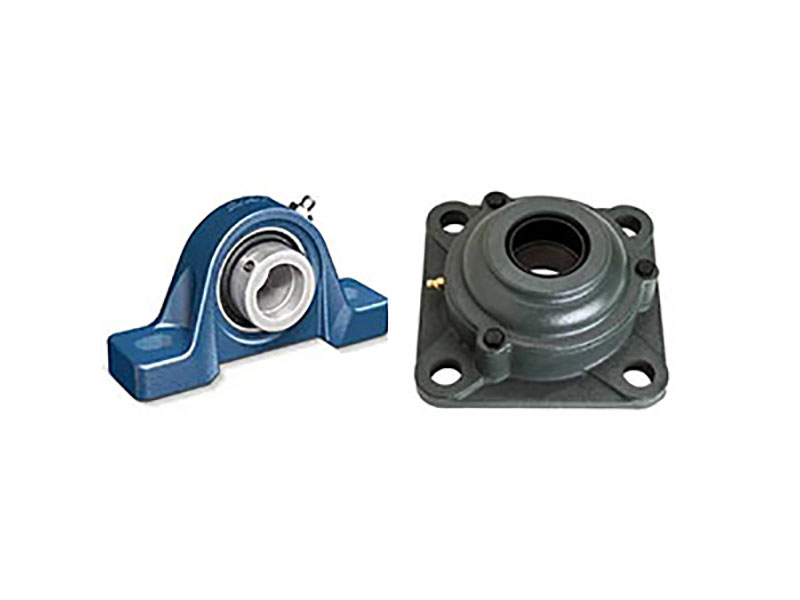
These two mounted bearing types are often confused. The difference is simple once you understand mounting orientation.
| Feature | Flange Mounted Bearing | Pillow Block Bearing |
|---|---|---|
| Mounting surface | Vertical wall, side panel, equipment frame | Horizontal base, floor, flat surface |
| Shaft orientation | Shaft runs at right angle to mounting face | Shaft runs parallel to mounting surface |
| Best use case | End-of-shaft support, space-limited spots | Mid-shaft support, long horizontal shafts |
| Installation | Bolts through flange into side surface | Bolts through base into floor or frame |
The practical rule: if you are bolting to a wall, use a flange bearing. If you are bolting to the floor, use a pillow block.
Key Considerations When Using Flange Mounted Bearings
Flange bearings are straightforward to use, but a few common mistakes shorten their life. Here is what to watch for.
Axial Load Limits Are Real
Flange bearings handle radial loads well. Axial (thrust) loads, much less so. If your application pushes the shaft along its axis–for example, a vertical shaft where the weight of the assembly bears down on the bearing–you must check the axial load rating. Exceeding it leads to early failure.
Vertical Shafts Need Special Attention
In vertical installations, gravity pulls lubricant downward, away from the bearing surfaces. This can leave the upper part of the bearing running dry. Use a lubricant with the right viscosity to stay in place, and choose bearings with effective seals to retain grease.
The Mounting Surface Must Be Flat
An uneven mounting surface is a hidden bearing killer. When you tighten the bolts, the housing distorts. That distortion transfers to the bearing insert, creating stress concentrations and uneven rolling element loading.
Bolt Torque Must Be Correct
Too loose, and the bearing moves. Too tight, and the housing distorts. Always use the torque value specified by the manufacturer. A torque wrench is not optional–it is essential for proper installation.
Conclusion
Flange mounted bearings fill a specific need in industrial machinery. They support rotating shafts where the shaft axis is at a right angle to the mounting surface. They carry radial loads, hold shaft position, maintain alignment, and make bearing replacement fast and simple.
Their real value is in the combination: one unit does the job of support, alignment, and positioning, and it lets you change it out in minutes. That translates to less downtime, lower maintenance costs, and more reliable equipment.
When selecting a flange bearing:
- Match the bolt pattern to your load–2-bolt for tight spaces, 4-bolt for heavy work.
- Choose the housing material for your environment–cast iron for general use, stainless for wet conditions, plastic for food or clean rooms.
- Install it on a flat surface with the correct torque–and the bearing will deliver years of reliable service.
For over 20 years, DUHUI Bearing has manufactured automotive and industrial bearings from its facility in Zhejiang, China. DUHUI produces wheel bearings, bearing kits, and chassis components covering more than 4,000 auto parts models. The company’s experience in precision manufacturing supports reliable performance across demanding industrial applications.
FAQs
Q1: What is the main purpose of a flange mounted bearing?
Flange mounted bearings support rotating shafts where the shaft axis is perpendicular to the mounting surface. They handle radial loads, keep shafts aligned, and allow quick replacement without special tools.
Q2: What is the difference between a flange mounted bearing and a pillow block bearing?
Pillow blocks mount on horizontal surfaces with the shaft parallel to the base. Flange bearings mount on vertical surfaces or side panels with the shaft running at a right angle to the mounting face.
Q3: Can flange mounted bearings be used in vertical applications?
Yes, but check the axial load rating and choose a lubricant that stays in place. Vertical installations can cause grease to drain away from bearing surfaces.
Q4: What are the limitations of flange mounted bearings?
Three key limits: (1) axial load capacity is lower than radial capacity; (2) mounting surface flatness is critical–uneven surfaces distort the housing; (3) bolt torque must be precise for proper installation.
Q5: What are the advantages of plastic flange mounted bearings?
Plastic housings do not corrode, run without lubrication, and are much lighter than metal. They work well in food processing, medical equipment, and chemical environments.
Q6: How do I choose between 2-bolt, 3-bolt, and 4-bolt flange bearings?
2-bolt for light loads and tight spaces; 3-bolt for moderate loads and vibration-prone installations; 4-bolt square or round for heavy loads and high-vibration environments.