Quick answer: A tensioner pulley is a spring-loaded or hydraulic wheel that keeps your engine’s serpentine or timing belt tight. Replace it every 60,000–90,000 miles together with the belt and idler pulleys. Typical 2026 replacement cost: $150–$350 at independent shops (parts $50–$150, labor 1–2h). Never spray lubricants on a noisy pulley – replace the complete assembly instead.
A tensioner pulley is a spring-loaded or hydraulically damped wheel that maintains proper tension on an engine’s drive belt. Without a functioning tensioner pulley, belts slip, wear rapidly, or detach, causing loss of alternator charging, power steering, or water pump circulation. This article explains how a tensioner pulley works, how to distinguish it from an idler pulley, when to replace it, and how to diagnose common failure symptoms – with 2026 pricing and real-world examples.
Understanding the Tensioner Pulley
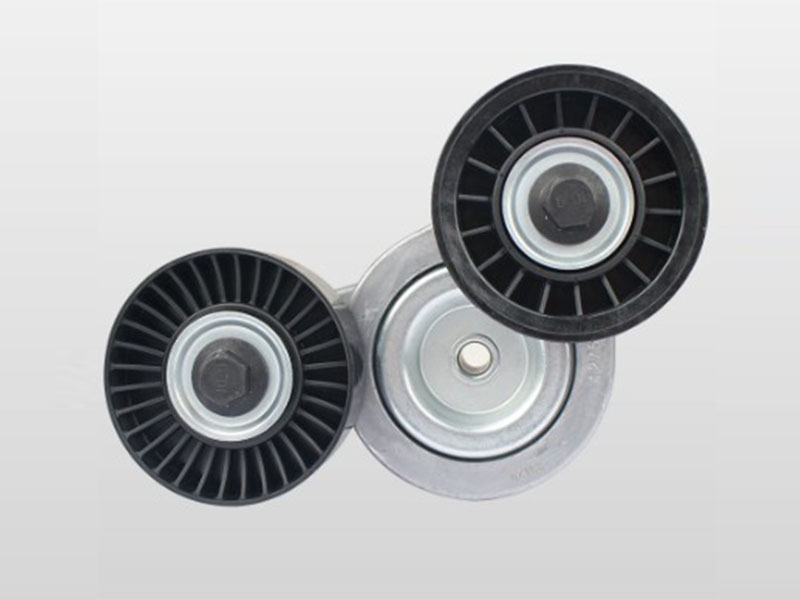
Definition and Core Purpose
A tensioner pulley is a rotating wheel mounted on a pivoting arm. The arm is forced by a torsion spring or a hydraulic damper, pressing the pulley against the back of a drive belt (serpentine belt) or a timing belt. This applied force keeps the belt tight enough to transmit torque from the crankshaft to auxiliary devices—alternator, AC compressor, power steering pump, and water pump—without exceeding the bearing load limits of those components.
Key Functions
- Increases the wrap angle between the belt and pulleys, improving friction grip.
- Maintains constant belt tension under varying engine loads and speeds.
- Compensates for belt elongation that occurs naturally over thousands of miles.
- Allows compact engine accessory layouts by reducing the need for large pulley diameters.
- Prevents belt slip, which reduces energy loss and heat generation.
How It Works and Basic Construction
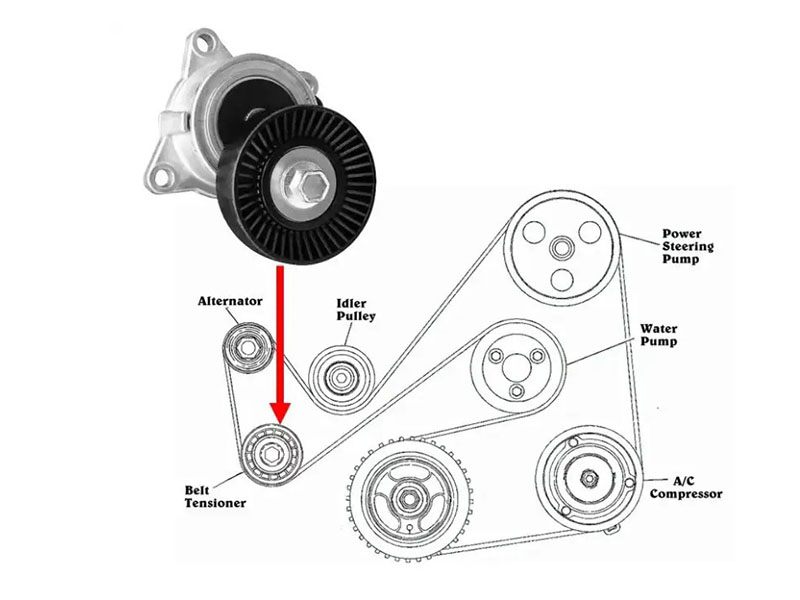
A typical tensioner pulley assembly includes a pulley wheel (stamped steel or engineered plastic) with a pressed-in radial bearing, a pivoting arm (cast iron or stamped steel), a torsion spring or hydraulic cylinder that provides the tensioning force, and a damping mechanism (friction washer or hydraulic piston) to absorb belt vibrations. When the belt is installed, the spring forces the pulley against the belt’s smooth side. The pivot allows the pulley to move in an arc, adjusting the belt path as needed. Modern engines use automatic tensioners that self-adjust for belt stretch and thermal expansion. Older systems required manual adjustment using a tension gauge — a practice largely replaced.
Main Types of Tensioner Pulleys
By operation method:
- Fixed tensioner pulley: Installed at a set position; found in older or simple engines. Does not auto-compensate for belt stretch.
- Automatic tensioner pulley: Industry standard. Uses spring or hydraulic mechanism to continuously adjust tension.
By mechanical design:
- Spring-loaded tensioner: Most common. A coil spring provides tension. Simple, reliable, cost-effective.
- Hydraulic tensioner: Uses a hydraulic cylinder instead of a spring. Provides smoother damping and better control under rapid load changes. Particularly suitable for large V6 or V8 engines where angular vibrations are higher.
- Dual-arm tensioner: Applies tension to both belt spans simultaneously; used in serpentine systems with reverse rotation.
- Eccentric or orbital tensioner: Uses a non-circular cam to manage belt slack in compact spaces.
Tensioner Pulley vs. Idler Pulley
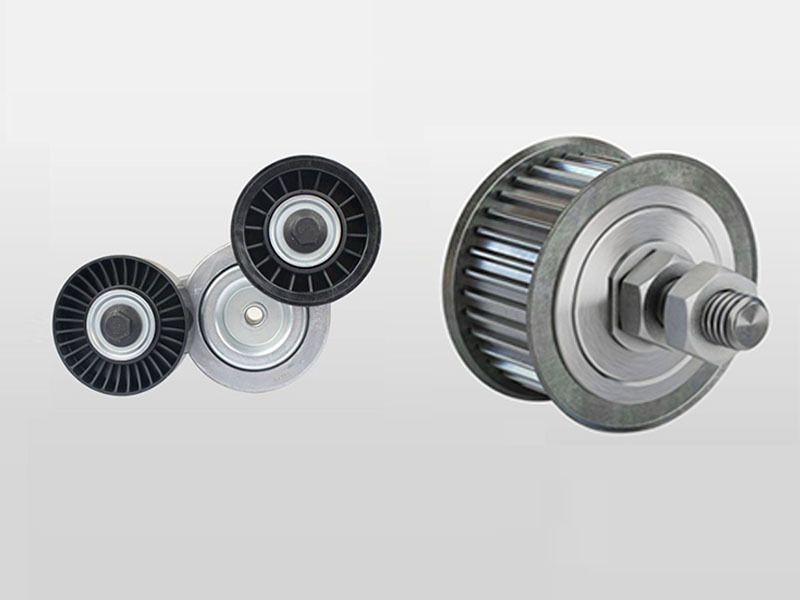
| Feature | Tensioner Pulley | Idler Pulley |
|---|---|---|
| Mounting | Spring/hydraulic arm + elongated slot | Fixed bolt through a round hole |
| Role | Actively adjusts belt tension | Only redirects belt; no tension adjustment |
| Adjustability | Movable / self-adjusting | Fixed position |
| Failure consequence | Loss of tension → slip, noise, accessory failure | Belt path change but tension unaffected |
An idler pulley cannot replace a tensioner pulley. Doing so removes the tensioning mechanism, causing immediate belt slip.
Why the Tensioner Pulley Matters
Both timing belt systems (on interference engines) and serpentine accessory belt systems depend on proper tensioner function.
- In a timing belt system, the tensioner pulley prevents belt tooth skipping on camshaft or crankshaft sprockets. A skipped tooth can cause valve-to-piston contact, leading to major engine damage.
- In a serpentine belt system, the tensioner pulley keeps the belt driving the alternator, water pump, power steering pump, and AC compressor. If tension drops, the belt slips, reducing alternator output and coolant circulation.
A failed tensioner pulley leads to shortened belt life, increased bearing wear on accessories, and eventually a broken belt that leaves the driver stranded.
When to Replace a Tensioner Pulley
Why Replacement Is Necessary
Tensioner pulleys are wear items. The bearing loses grease (the high-temperature grease degrades over time, leading to increased friction and eventual seizure), the spring fatigues, and seals degrade, allowing contamination. No electronic monitor exists; replacement must be based on mileage, time, or symptoms.
Recommended Replacement Intervals (2026)
Most manufacturers recommend inspecting the tensioner pulley and related components around 96,000–145,000 km (60,000–90,000 miles) and replacing by 145,000 km (90,000 miles). Severe conditions (dust, short trips, towing) shorten this interval. A widely accepted practice is to treat the belt, tensioner pulley, and idler pulleys as a replacement set. Their wear rates are similar; mixing old and new leads to premature failure of the newer part.
Why Full System Replacement Is Critical
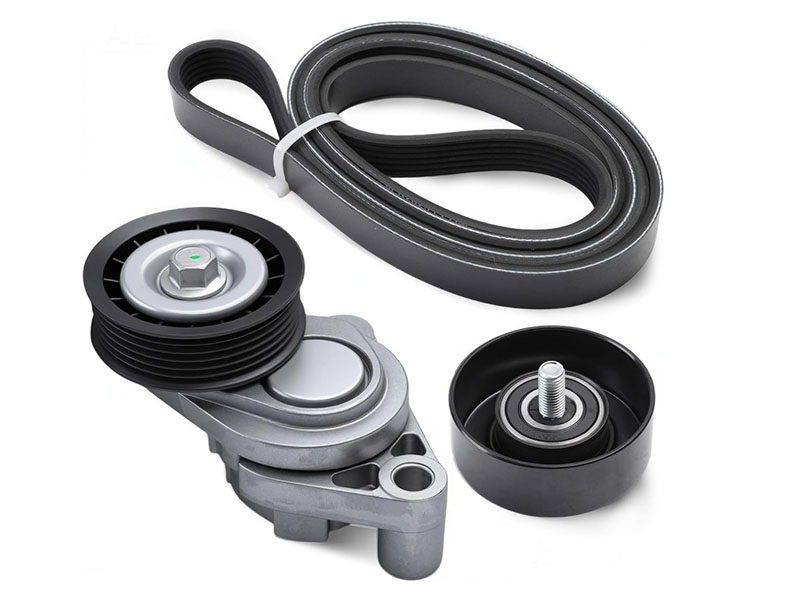
Replacing only the belt while keeping the original tensioner is risky. The old tensioner may have lost spring force or developed bearing roughness. Within a few thousand miles, it fails, destroying the new belt. The labor to redo the job costs far more than replacing the tensioner upfront. When replacing a tensioner pulley, inspect the water pump if driven by the same belt. Many technicians replace the water pump simultaneously because its service life aligns with the tensioner, and the labor is already accounted for.
Common Signs of a Failing Tensioner Pulley
Unusual Noises – What They Mean
- Squealing, screeching, grinding – Bearing seizing or excessive play (most common).
- Clicking, chattering, rattling – Tensioner arm bouncing due to worn damper; arm may hit travel stops.
- Whining or hooting on cold start – Bearing lacks lubrication; grease dried or leaked.
- Chirping (intermittent, sharp) – Often belt misalignment, but tensioner should be inspected.
Look-Listen-Feel Diagnosis – Step by Step
- Look (engine idling): Watch for wobble or excessive movement of the tensioner pulley. Observe belt tracking. Belt riding on edge indicates misalignment (edge wear is a classic sign).
- Look (engine off, belt installed): Reddish-brown rust dust around bearing seal → internal wear. Grease leakage, cracks in plastic pulley, broken stop tab on tensioner body.
- Listen (belt removed, spin pulley by hand): Healthy bearing spins smoothly and quietly. Grinding, rumbling, or clicking means damage. A mechanic’s stethoscope helps, but manual rotation is definitive.
- Feel (engine off, belt removed): Swing tensioner arm through full range. Smooth motion required; notchy or sticking indicates worn bushing or spring. Check lateral play of pulley wheel. Excess movement indicates bearing wear. Spin pulley: if it spins freely more than 1–2 turns with little resistance, grease has dried out; failure imminent.
Underlying Causes of Failure
- Bearing failure (lubricant loss, brinelling, corrosion)
- Spring fatigue (reduced tension)
- Damper wear (friction or hydraulic)
- Seal damage (contaminant ingress)
- Pulley misalignment (bent arm or incorrect installation)
- Foreign object contamination (oil leaks)
Best Practices for Inspection and Maintenance
Recommended Inspection Procedure
- Frequency: At least yearly or at every oil change.
- Visual check with engine off for oil residue, debris, cracks.
- Remove belt tension using correct tool (serpentine belt tool or breaker bar).
- Spin tensioner pulley by hand; feel for roughness; inspect pulley surface.
- Move tensioner arm through travel; should be firm and smooth.
- Check mounting surface cleanliness and flatness before reinstallation.
- After installation, run engine and watch belt tracking; belt should run centered in pulley groove.
Installation and Maintenance Tips – Including Critical Warnings
- Clean mounting surface thoroughly. Debris can tilt tensioner, causing edge wear.
- Follow torque specifications. Over-tightening cracks housing; under-tightening allows movement.
- Some tensioner pulleys are unidirectional; look for arrow marking.
- Do not replace only the bearing or only the pulley wheel. Replace the complete tensioner assembly (arm, spring, damper, bearing, housing).
- Never spray lubricants (WD-40, silicone spray, etc.) on a noisy tensioner pulley. It will further degrade the sealed bearing, wash away remaining grease, and attract dirt – accelerating failure. Replace the assembly instead.
- For hydraulic tensioners: Do not remove the shipping pin before the tensioner is fully installed. Early removal can extend the actuator and ingest air (sponge effect). If the piston can be pushed back by hand after pin removal, the tensioner is spongy and must be replaced.
- When replacing a tensioner pulley, also replace the drive belt and all idler pulleys in that system.
2026 Replacement Cost & Real-World Examples
Replacement costs vary by vehicle and shop type. Below are typical 2026 prices in the U.S. (parts + labor).
| Vehicle example | Independent shop total | Dealer total | DIY parts cost |
|---|---|---|---|
| Honda Civic / Accord (4-cyl) | $150 – $250 | $280 – $380 | $40 – $90 |
| Ford F-150 (V6/V8) | $200 – $330 | $380 – $550 | $60 – $140 |
| BMW 3 Series (I6) | $280 – $450 | $500 – $750+ | $90 – $200 |
| Chevy Silverado 5.3L | $220 – $350 | $400 – $600 | $70 – $160 |
Labor time: 0.8–2.0 hours. Hourly rates (2026): independent shops $80–$150, dealers $150–$220. Always get a written estimate. Replacing the belt and idlers at the same time adds $30–$100 in parts but saves double labor later.
DIY Replacement – Risks and Reality Check
Replacing a tensioner pulley is a moderate-difficulty DIY job (requires basic hand tools, a serpentine belt tool, and torque wrench). However, common mistakes include:
- Stripping the aluminum mounting bolt holes (expensive to repair).
- Improper torque causing cracks or loose tensioner.
- Installing a “pulley-only” instead of the complete assembly – leads to rapid repeat failure.
- Misrouting the new belt, which can destroy the engine in minutes.
If you are not confident, pay a shop. The cost of an engine repair after a belt failure is 10–20x higher than proper tensioner replacement.
When NOT to Replace the Tensioner Pulley (Low-mileage vehicles)
If your vehicle is low-mileage (e.g., 3 years / 30,000 miles) and the tensioner shows no signs of play, noise, or misalignment, and the manufacturer does not specify replacement, a belt-only change may be acceptable. However, most experts recommend replacing the tensioner with every second belt change (typically every 90,000–120,000 miles). When in doubt, follow your vehicle’s service manual.
How to Identify a Quality Tensioner Pulley (No Brand Promotion)
- Bearing type: Sealed, pre-lubricated, high-temperature rated (–40°C to +150°C). Sealed better than shielded. Look for “dual-sealed” or “2RS” designation.
- Housing material: Stamped steel or cast aluminum. Avoid poorly finished plastic.
- Spring/damper: Arm moves with consistent resistance, not abrupt or loose. Hydraulic units: no fluid leaks.
- OE compliance: Matches original dimensions, bolt pattern, pulley offset, spring force. Packaging lists compatible vehicles.
- Complete assembly: Sold as full assembly (arm, spring, pulley, bracket). Avoid “pulley-only” replacements – the spring and arm are the most common failure points.
Conclusion
A tensioner pulley maintains proper belt tension in an engine’s timing or serpentine belt system. It differs from an idler pulley, which only guides the belt. Tensioner pulleys wear out due to bearing grease loss, spring fatigue, or damper failure. Typical replacement intervals are 60,000–90,000 miles, and the belt, tensioner, and idlers should be replaced as a set. Failure signs include squealing, grinding, clicking, belt misalignment, and excessive free spin (more than 1-2 turns). A look-listen-feel inspection identifies most issues. Select a complete assembly with a sealed high-temperature bearing and OE-matching specifications. Regular tensioner pulley inspection prevents unexpected belt failures and protects alternators, water pumps, and other belt-driven accessories.
Frequently Asked Questions (FAQs) – 2026 Updated
Q1: Can an idler pulley replace a tensioner pulley?
A1: No. An idler pulley has no spring or hydraulic mechanism and cannot maintain belt tension.
Q2: How much does a tensioner pulley replacement cost at a shop in 2026?
A2: Independent shops: $150–$350 total. Dealers: $280–$750+ depending on vehicle. Parts alone: $40–$200. Always replace the belt and idlers together for best results.
Q3: How long does a tensioner pulley last?
A3: Typically 75,000–125,000 miles (120,000–200,000 km), but high temperatures and contamination can shorten lifespan.
Q4: Is it safe to drive with a bad tensioner pulley?
A4: Minor noise may allow short distance to a shop. But if tensioner seized or lost all tension, belt can slip off/break, causing loss of power steering, alternator, and water pump. Overheating occurs within minutes. Do not drive if noise is severe or belt misaligned.
Q5: How to tell if noise is from tensioner pulley or another accessory?
A5: Remove the belt and spin each pulley by hand. If noise disappears with belt off, fault is in belt-driven components. Spin tensioner pulley separately; rough/grinding/loose feeling confirms it.
Q6: Can I replace only the bearing in a tensioner pulley?
A6: Not recommended. The spring loses force, arm bushings wear, damper degrades. Replace the complete tensioner assembly.
Q7: Do I have to replace the belt when changing the tensioner pulley?
A7: Yes. Old belt is stretched and mismatched with a new tensioner. Replace belt, tensioner, and idlers as a set.
Q8: My tensioner pulley squeaks. Can I just tighten the belt?
A8: No. Modern automatic tensioners have no manual adjustment. Squeaking indicates a dry bearing or glazed belt. Replace the tensioner assembly and belt. Do not spray any lubricant on it – that makes it worse.
Q9: What is the difference between spring-loaded and hydraulic tensioners?
A9: Spring-loaded uses a coil spring; simpler, cheaper. Hydraulic uses a fluid damper; provides smoother control under rapid load changes, common on V6/V8 engines.
Q10: How to check a hydraulic tensioner for sponge effect?
A10: After belt removal, use a lever to slowly compress the arm. If it moves back easily or piston can be pushed in by hand (after pin removal), air has entered; replace the tensioner.
Q11: Can I drive if my tensioner pulley is making noise but belt looks fine?
A11: Only to the nearest repair shop. A failing bearing can seize suddenly, snapping the belt and leaving you stranded. Extended driving risks overheating (water pump stops) and battery drain (alternator stops).