Quick Answer: A plummer block bearing is a heavy-duty housed bearing unit designed to support rotating shafts in high-load industrial applications. Its robust housing, often split for easy maintenance, encloses a bearing that carries significant radial and axial loads. This article explains what plummer blocks are, how they differ from pillow blocks, their components, working principles, and how to select and maintain them for optimal performance and longevity.
If you work with heavy rotating equipment – such as conveyors, crushers, or large electric motors – you have likely encountered plummer block bearings. These robust units are the backbone of many industrial drive systems, engineered to handle substantial loads and power transmission. But what exactly are they? How do they work, and how do they differ from the pillow block bearings you might also see on the shop floor?
This article provides a comprehensive, practical guide to plummer block bearings. We will cover their design, components, working principles, the key differences from pillow blocks, selection criteria, and best practices for maintenance. Whether you are an engineer specifying bearings or a maintenance professional, you will find clear, actionable information here.
Plummer Block Bearing Definition and Key Features
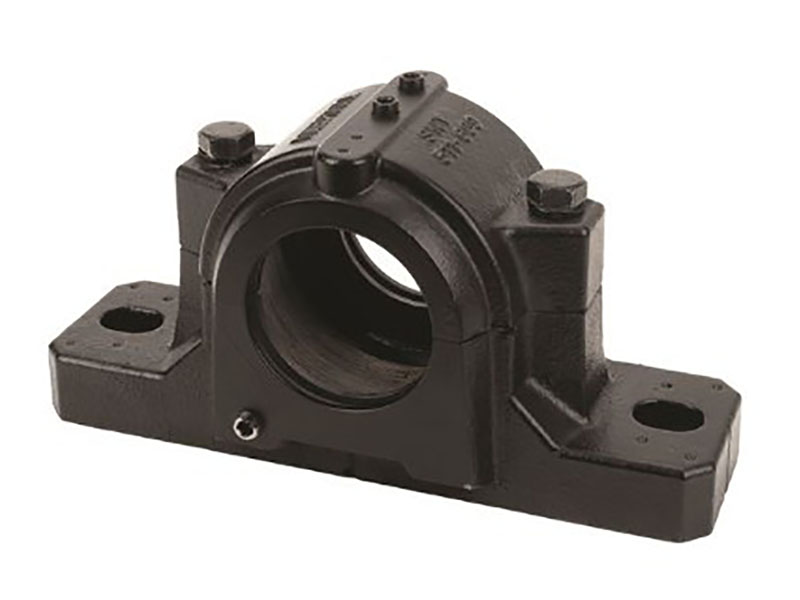
A plummer block bearing is a type of housed bearing unit engineered for demanding industrial environments. It consists of a robust housing, typically made of cast iron or cast steel, which encloses and protects an internal bearing. This housing is bolted to a foundation, providing a secure mounting for a rotating shaft.
The key to a plummer block’s capability is its design. The housings are often of a split (two-piece) design, consisting of a base and a removable cap, which allows for easy inspection and replacement of the internal bearing without needing to dismantle the entire shaft assembly. They are built to accommodate larger, more complex bearings and sealing arrangements, making them suitable for high loads, high power transfer, and harsh, corrosive environments.
Plummer Block vs. Pillow Block: Key Differences
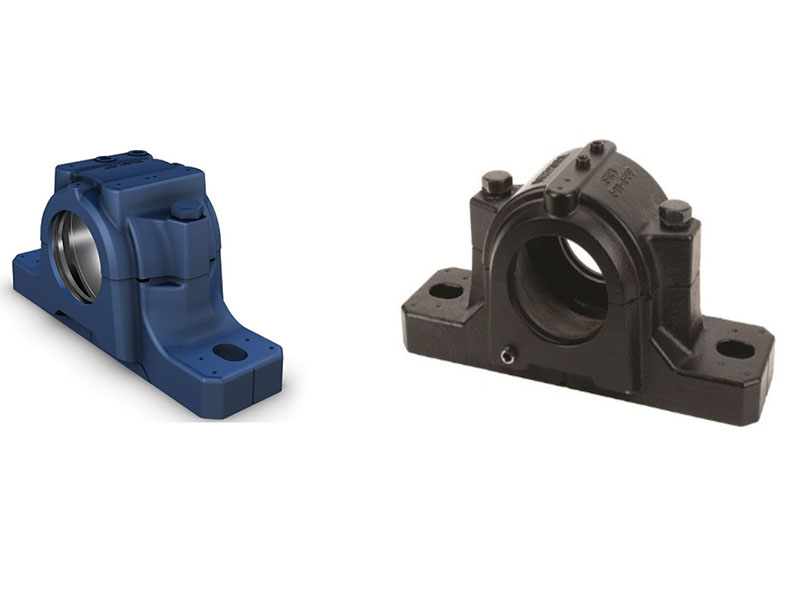
Plummer blocks and pillow blocks are two distinct types of housed bearing units designed for different applications. While both support rotating shafts, their key differences are summarized below:
| Feature | Plummer Block Bearing | Pillow Block Bearing |
|---|---|---|
| Primary Application | Heavy-duty industrial applications (high power, high load) | Light to medium-duty general machinery |
| Load Capacity | Designed for high radial and axial loads | Suited for moderate, lighter loads |
| Housing Design | Robust; often split (base and cap) for easy maintenance | Simpler; often solid but split types also exist |
| Typical Environment | Harsh, corrosive, heavy industrial environments | Cleaner, less demanding environments |
In short, if your application involves a large, heavily loaded shaft in a tough environment like a steel mill or mining conveyor, you need a plummer block. For lighter-duty tasks in cleaner settings, a pillow block is usually the right choice.
Common Types of Plummer Block Bearings
Plummer blocks are available in several configurations to suit different installation and maintenance needs:
- Split housing plummer blocks – The most common type for heavy industry. The housing consists of a base and a removable cap, allowing the bearing to be inspected or replaced without removing the entire shaft.
- Solid housing plummer blocks – A single-piece housing that offers greater rigidity for applications where shaft removal is not a primary concern.
- Flanged housing plummer blocks – Feature a flange for mounting to vertical or horizontal surfaces where a standard base mount is not feasible.
Selection factors include shaft diameter, load magnitude, operating speed, environmental conditions, and maintenance access.
Plummer Block Bearing Components and Design
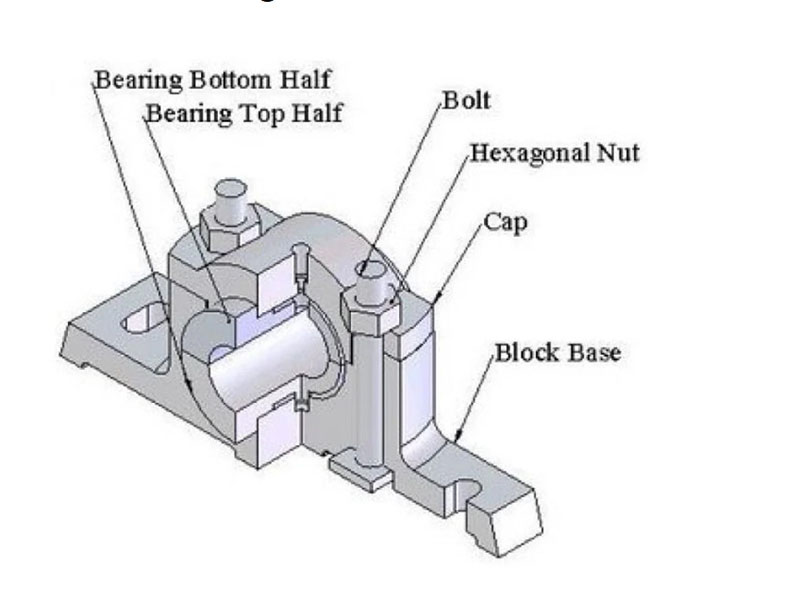
A plummer block bearing unit consists of several key components engineered to work together under heavy loads.
Housing
The housing is the core of the plummer block, typically made of cast iron or cast steel for maximum durability. It provides the structural foundation, featuring a base with bolt holes for secure mounting, and a bore to accurately locate the bearing. Housings are available in split or solid designs.
Internal Bearing
The choice of internal bearing is critical to the plummer block’s performance. Common types include:
- Spherical roller bearings – The most common choice for heavy-duty plummer blocks. They are self-aligning, double-row bearings that handle extreme radial loads and significant axial loads. They accommodate shaft misalignment (typically up to 1.5-2.5 degrees, depending on series and size).
- Tapered roller bearings – Ideal for applications with high combined radial and thrust loads, such as in gearboxes. In many tapered roller bearing designs, axial load capacity can reach a significant portion of the radial capacity.
- Cylindrical roller bearings – Offer very high radial load capacity with low friction, suitable for high-speed applications in well-aligned systems.
- Deep groove ball bearings – Used in lighter-duty plummer blocks for moderate loads and speeds.
Seals
Effective sealing is essential in the harsh environments where plummer blocks operate. Seals protect the bearing from contaminants and retain lubricant. Options range from basic contact seals to advanced non-contact labyrinth seals and heavy-duty Taconite seals for extreme conditions such as mining, cement, and steel industry applications.
Locking Collar and Locating Ring
The locking collar or locating ring secures the bearing onto the shaft. It provides axial positioning and, when properly tightened, applies the correct preload to the bearing for optimal internal clearance and performance.
Grease Fitting
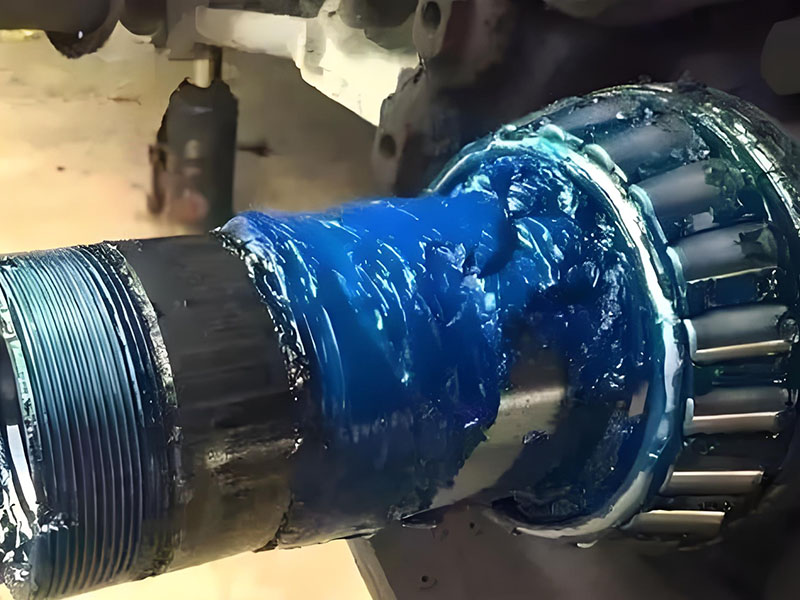
A grease fitting (or grease nipple) on the housing allows for convenient relubrication, which is vital for extending the service life of the bearing in continuous operation.
Engineering Considerations
Proper material selection, dimensional tolerances (typically ISO class P0 or P6), and lubrication are all critical engineering considerations that determine the performance and longevity of a plummer block bearing.
How Plummer Block Bearings Work
A plummer block bearing supports a rotating shaft while minimizing friction, even under heavy loads. This is achieved through the internal bearing’s rolling elements.
The Rolling Principle
As the shaft spins, the inner race of the bearing rotates with it. The outer race remains fixed in the housing. The rolling elements (balls or rollers) between the races roll with very low friction, far less than sliding friction. For estimation purposes, the coefficient of friction for a rolling-element bearing is approximately 0.001. For plain bearings, the value is typically 0.01-0.02. This rolling contact minimizes heat generation and power loss.
Load Support and Alignment
Plummer blocks are designed to support both radial loads (perpendicular to the shaft) and axial loads (along the shaft). The robust housing and precise internal clearances ensure stable shaft support, reducing vibration and maintaining alignment even under dynamic conditions.
The Role of Internal Clearance
Internal clearance is a critical parameter. Too much clearance leads to vibration and uneven load distribution. Too little can cause preload, generating excessive heat and leading to early failure. Clearance is typically specified per ISO 5753. Normal (CN) clearance suits most general-purpose applications. C3 (greater than normal) clearance is recommended for applications with higher operating temperatures or interference shaft fits where thermal expansion is a factor.
How to Select the Right Plummer Block Bearing
Selecting the correct plummer block is crucial for maximizing service life and minimizing downtime. Consider the following factors systematically:
- Shaft diameter – Determines the bearing bore size. Measure the shaft journal precisely (to +/- 0.01 mm) before ordering.
- Load magnitude and direction – Calculate radial and axial loads. For combined loads, spherical or tapered roller bearings are typically best.
- Rotational speed – Higher speeds may require bearings with lower friction, like cylindrical roller bearings.
- Operating environment – Harsh, dusty, or corrosive environments demand robust housings (e.g., cast steel) and effective seals (e.g., Taconite).
- Misalignment tolerance – If misalignment is a concern, choose a self-aligning bearing like a spherical roller bearing.
- Lubrication method – Grease is common for general use, while oil circulation is preferred for very high speeds or temperatures.
- Maintenance access – A split housing design is invaluable if the bearing is difficult to reach.
Plummer Block Bearing Maintenance and Troubleshooting
Regular maintenance is essential for plummer blocks. Field experience shows that proper maintenance can significantly extend bearing service life.
Daily and Routine Maintenance Tasks
- Regular lubrication – Apply grease at recommended intervals, typically every 2,000 operating hours as a general guideline. Use high-quality lithium or polyurea-based grease. Avoid over-lubrication.
- Visual inspection – Check for cracks, corrosion, or damage on the housing and seals.
- Check alignment – Misalignment exceeding 0.05 mm per 100 mm of shaft length can cause premature failure.
- Monitor vibration – A 30% or more increase from baseline indicates developing issues.
- Inspect seals – Replace immediately if cracked or hardened.
- Check preload and bolt torque – Ensure the locking collar and mounting bolts are correctly tightened. As a reference example, an M10 property class 8.8 bolt may require approximately 50 N-m, while an M16 bolt may require approximately 130 N-m. Actual values depend on bolt grade, lubrication, and specific application – always consult the manufacturer’s specifications.
Potential Issues to Watch For
- Excessive noise or vibration – Indicates bearing damage, misalignment, or lubrication failure.
- High operating temperatures – Above 80 degrees C (176 degrees F) signals a problem.
- Loose locking collar – Leads to vibration and shaft damage.
- Lubricant leakage – Indicates seal failure or over-greasing.
Early diagnosis is key. Bearings should be replaced if wear exceeds allowable tolerances, such as the radial internal clearance limits defined in ISO 5753.
Applications of Plummer Block Bearings
Plummer block bearings are used across a wide range of heavy industries where reliable shaft support is critical.
Industrial Applications
- Mining and Aggregate – Conveyors, crushers, vibrating screens.
- Steel and Metal Processing – Rolling mills, calenders.
- Material Handling – Heavy-duty belt and chain conveyors.
- Power Generation – Large fans, blowers, and pumps.
- Industrial Machinery – Gearboxes, large electric motors, and compressors.
Advantages and Disadvantages of Plummer Block Bearings
Advantages
- High load capacity – Engineered to handle the heaviest radial and axial loads.
- Durability – Robust housings protect the bearing in harsh, corrosive environments.
- Easy maintenance – Split housing designs allow for inspection and bearing replacement without full shaft disassembly.
- Versatility – Can accommodate various bearing types and complex sealing/lubrication systems.
Disadvantages
- Cost – More expensive than pillow blocks due to their robust construction and materials.
- Space – Larger and heavier than simpler housed units.
- Speed limitations – The heavy-duty design can limit maximum operating speeds compared to some other bearing types.
Conclusion
Plummer block bearings are indispensable, heavy-duty components designed to support rotating shafts in the most demanding industrial applications. Unlike their lighter-duty counterparts, pillow blocks, plummer blocks are engineered for high loads, high power transfer, and harsh environments. Their robust, often split, housing protects the internal bearing and facilitates easy maintenance. Understanding their design, correct selection, and proper maintenance is key to ensuring long, trouble-free operation and maximizing the reliability of your industrial equipment.
Frequently Asked Questions About Plummer Block Bearings
Q1: What is the main difference between a plummer block and a pillow block?
The main difference is their application. Plummer blocks are heavy-duty units designed for high-load, high-power industrial environments. Pillow blocks are for lighter, general-purpose applications.
Q2: What types of bearings are typically used in a plummer block?
Spherical roller bearings are the most common for heavy-duty applications. Tapered roller, cylindrical roller, and deep groove ball bearings are also used depending on the specific load and speed requirements.
Q3: What is the benefit of a split housing design?
A split housing allows the top half (cap) to be removed, providing easy access to the internal bearing for inspection and replacement without needing to dismantle the entire shaft assembly, which significantly reduces downtime.
Q4: What does C3 clearance mean for a plummer block bearing?
C3 clearance, as defined by ISO 5753, means the bearing has greater than normal internal clearance. It is recommended for applications with high operating temperatures or interference fits, where thermal expansion could otherwise reduce the clearance to zero.
Q5: How often should a plummer block bearing be lubricated?
A common guideline is to relubricate every 2,000 operating hours. However, always follow the manufacturer’s specific recommendations, as intervals depend on load, speed, and environmental conditions.
Q6: What are the warning signs that a plummer block bearing needs replacement?
Key indicators include a sudden increase in vibration (30% or more above baseline), consistently high operating temperatures (above 80 degrees C / 176 degrees F), excessive noise, and visible lubricant leakage.