In the complex ecosystem of an automotive engine, the water pump operates silently but critically at the heart of the cooling system. Its mission: to ensure the engine maintains optimal operating temperatures. At the core of this vital pump lies a component engineered for precision and durability—the water pump bearing.
For over two decades, DUHUI Bearing has specialized in manufacturing high-quality automotive components. In this guide, DUHUI will provide you with a complete understanding of water pump bearings—from their fundamental structure and working principles to advanced selection criteria and failure diagnosis.
What is a Water Pump Bearing?
A water pump bearing is a specialized, pre-adjusted rotary component designed specifically for the demanding environment of an engine’s cooling system.
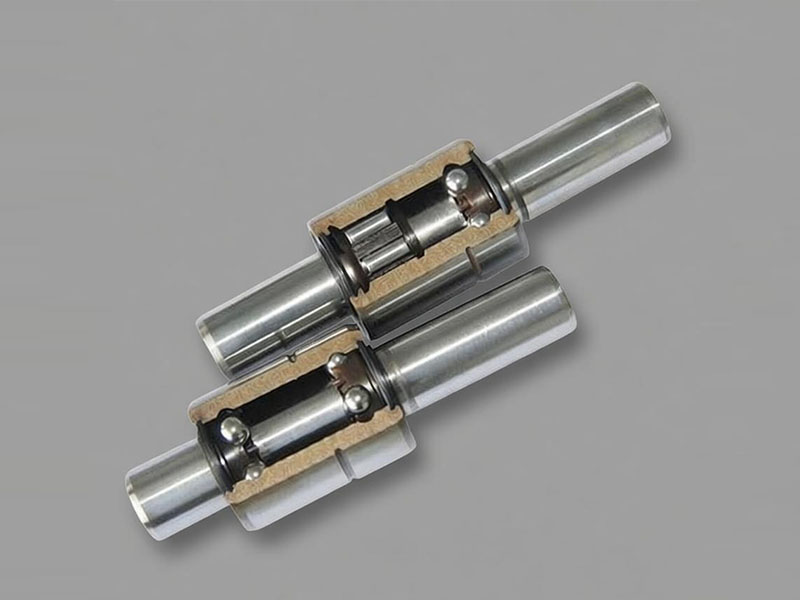
Definition and Basic Structure: Unlike standard bearings, a water pump bearing is typically an integrated unit. Its basic structure consists of:
- A hardened steel shaft (which often serves as the inner raceway)
- An outer ring that houses the rolling elements
- Rolling elements (balls, rollers, or combinations)
- Precision-engineered seals on both sides
- Pre-packed high-temperature grease
Core Function: The water pump bearing serves two critical functions simultaneously:
- Rotational Support: It provides low-friction support for the水泵 impeller and pulley, enabling smooth rotation at varying speeds.
- System Integrity: It maintains precise shaft positioning while withstanding the mechanical forces generated by belt tension and coolant flow.
How Water Pump Bearings and Seals Work
The efficiency of a water pump bearing relies on its dual ability to manage mechanical loads and maintain sealing integrity simultaneously.
Bearing Support Mechanism: Withstanding Radial and Axial Forces
- Radial Forces: Generated primarily by the tension of the drive belt on the pulley. These forces act perpendicular to the shaft.
- Axial Forces: Created by the helical action of the rotating impeller as it pushes coolant through the engine block. These forces act parallel to the shaft.
- The internal geometry of the bearing’s raceways and the arrangement of its rolling elements are specifically engineered to handle this combined load condition, which is unique to water pump applications.
Dynamic Sealing Principle: Leak Prevention and Lubrication Retention
The seal operates in a dynamic environment—the shaft rotates at thousands of RPM while the outer housing remains stationary.
The sealing lip, made of high-temperature elastomers (such as Viton or HNBR), maintains constant, light-pressure contact with the rotating shaft.
This dynamic seal performs three critical functions:
- Prevents coolant from escaping the cooling system
- Blocks contaminants (dirt, road salt, moisture) from entering the bearing cavity
- Retains the internal grease that lubricates the rolling elements
Structural Characteristics of Water Pump Bearings
Modern water pump bearings incorporate several distinctive design features that differentiate them from standard bearings.
No Inner Ring Design (Integrated Shaft)
This is perhaps the most defining characteristic. The shaft itself is ground to serve as the inner raceway for the rolling elements. This design offers multiple advantages:
- Eliminates the need for a separate inner ring, reducing components
- Allows for a larger shaft diameter within the same space envelope
- Provides greater rigidity and strength
- Ensures perfect concentricity between the shaft and raceways
Shared Outer Ring and Rolling Element Assembly
A single, common outer ring houses both rows of rolling elements. This design feature:
- Ensures precise alignment between the two rows of rolling elements
- Simplifies installation into the water pump housing
- Reduces overall component count and manufacturing complexity
- Maintains consistent preload across both bearing rows
Double-Sided Rubber Seal Design
High-quality water pump bearings feature seals on both sides of the bearing:
- Coolant-side seal: Faces the impeller and must resist coolant penetration
- Pulley-side seal: Faces the drive belt and must block external contaminants
- These seals are often supplemented with dust slingers or additional protective shields in severe-duty applications
Compact Design
The integrated construction results in a unit that is significantly more compact and lightweight than using conventional bearings with a separate shaft. This compactness:
- Reduces overall water pump weight
- Allows for more efficient engine packaging
- Minimizes rotational inertia
Bearing Types and Seal Performance
The relationship between bearing type and sealing effectiveness is critical to water pump reliability.
Integrated Sealed Deep Groove Ball Bearing Design:
Most modern water pump bearings utilize a deep groove ball bearing configuration that is:
- Pre-packed with the precise amount and type of grease for the application
- Permanently sealed to maintain lubrication for the bearing’s entire service life
- Designed with labyrinth-style seal paths that enhance protection
- Tested to withstand millions of revolutions without grease degradation
Precision Fit Between Bearing and Impeller Shaft:
The interface between the bearing shaft and the impeller is engineered for:
- Interference fit: Ensures the impeller does not slip or loosen over time
- Concentricity: Maintains impeller balance to prevent vibration
- Surface finish: Proper shaft finish is essential for seal longevity
- Corrosion resistance: Shaft materials and treatments must resist coolant corrosion
Water Pump Bearing Design Types
The internal configuration of a water pump bearing is determined by the specific load and speed requirements of the application. Two primary designs dominate the market:
Double-Row Ball Design
This is the most common configuration for passenger car and light truck applications.
- Configuration: Two rows of ball bearings operating in shared raceways
- Load characteristics: Provides balanced handling of both radial and axial loads
- Speed capability: Excellent high-speed performance due to point contact
- Typical applications: Most gasoline engines, light-duty diesel engines
- Advantages: Smooth operation, lower heat generation, good misalignment tolerance
Ball-and-Roller Combination Design
This hybrid configuration is preferred for heavier-duty applications.
- Configuration: One row of ball bearings (typically positioned near the impeller) handles axial thrust, while one row of cylindrical rollers handles radial loads
- Load characteristics: Superior radial load capacity from roller section
- Speed capability: Generally suitable for medium-speed applications
- Typical applications: Heavy-duty diesel engines, commercial vehicles, agricultural equipment
- Advantages: Higher load capacity, extended service life in severe conditions
Water Pump Bearing Selection Considerations
Choosing the correct water pump bearing requires careful analysis of multiple operating parameters:
Load Type and Magnitude
Analyze both the radial and axial loads the bearing will experience.
- Consider belt tension variations (new vs. worn belts)
- Account for impeller thrust at different coolant temperatures
- Evaluate any vibration or shock loads from engine operation
- Double-row ball for balanced loads, ball-roller combination for high radial loads
Speed Requirements
Engines operate across a wide RPM range.
- Maximum continuous operating speed
- Speed fluctuations and acceleration rates
- The bearing’s limiting speed based on internal design and lubrication
- Higher RPM applications require precision-graded rolling elements and optimized cages
Temperature Range
The bearing must withstand extreme thermal conditions.
- Normal operating temperature (typically 80°C-120°C)
- Peak temperature excursions (engine overheating events)
- Cold start conditions
- Internal grease must maintain viscosity across the entire temperature range
- Seal elastomers must resist hardening at high temperatures and cracking at low temperatures
Sealing Grade:
Assess the operating environment to determine required seal effectiveness.
- Standard duty: Normal passenger car operation on paved roads
- Severe duty: Off-road, construction, agricultural applications
- Enhanced seals may include additional dust shields or labyrinth features
- Seal material selection (HNBR, FKM, ACM) based on coolant compatibility
Common Signs of Bearing Failure
Early detection of a failing water pump bearing can prevent catastrophic engine damage. Watch for these telltale signs:
Unusual Noises from the Engine Compartment:
Audible warnings often precede complete failure.
- Rumbling or grinding: Indicates advanced wear of rolling elements or raceways
- Chirping or squeaking: May indicate lubrication starvation or seal drag
- Intermittent noises: Often change with engine RPM or temperature
- Any new or unusual noise from the front of the engine warrants inspection
Visible Coolant Leakage at the Weep Hole
The weep hole is a small port on the water pump designed to provide an early warning of seal failure.
- Dried coolant residue around the weep hole indicates past leakage
- Active dripping from the weep hole confirms complete seal failure
- This leakage path prevents coolant from entering the bearing cavity
- Important: Leakage at the weep hole means the bearing seal has failed, and bearing failure will follow shortly
Silent Failure: Internal Seal Damage with Slow Coolant Loss
Sometimes the most dangerous failures are the quiet ones.
- The bearing may operate without abnormal noise
- But internal seal damage allows gradual coolant loss
- Coolant may leak internally or evaporate before reaching the weep hole
- Result: Slow coolant depletion without visible external signs
- Consequence: Unexplained engine overheating and potential engine damage
Applications and Reliability
Water pump bearings are mission-critical components with no room for compromise in performance or durability.
Core Application Areas:
Automotive Engine Cooling Systems
- Passenger vehicles: Gasoline and diesel engines
- Commercial vehicles: Trucks, buses requiring extended service intervals
- Heavy equipment: Construction, agricultural, and mining machinery
- Marine engines: Specialized corrosion-resistant variants
- Stationary engines: Generators, pumps in industrial applications
Performance Characteristics:
Ensuring Stable Support and Long-Term Sealing
- High-speed stability: Maintain precise rotation without vibration at operating speeds
- High-load capacity: Endure constant belt tension and impeller thrust
- Temperature resistance: Function reliably across extreme thermal cycles
- Coolant compatibility: Resist chemical attack from modern coolants
- Long-term durability: Engineered for tens of thousands of miles of service
- Sealing integrity: Maintain leak-proof operation throughout service life
Conclusion
The water pump bearing may be a small component within the vast complexity of a modern engine, but its role is anything but minor. It stands at the intersection of mechanical support and fluid control, operating under constant load, at varying speeds, across extreme temperatures—all while maintaining perfect sealing integrity.
Understanding the intricate mechanics, design variations, and failure modes of water pump bearings empowers engineers and procurement professionals to make informed decisions. Whether selecting bearings for original equipment manufacturing or sourcing reliable replacements for the aftermarket, this knowledge translates directly into better performance, longer service life, and fewer costly failures.
For technical consultation, custom engineering support, or reliable sourcing of water pump bearings for your specific applications, the DUHUI team stands ready to assist.