In the world of mechanical engineering, bearing selection often involves a series of trade-offs. One of the most significant is the decision between using a bearing with a cage and one without. Full complement bearings, as the name suggests, omit the cage to maximize the number of rolling elements. This design choice results in the highest possible load-carrying capacity within a given envelope size but introduces distinct operational limitations. Understanding these trade-offs is crucial for engineers and procurement specialists aiming to optimize machinery for durability, performance, and cost.
What Are Full Complement Bearings?
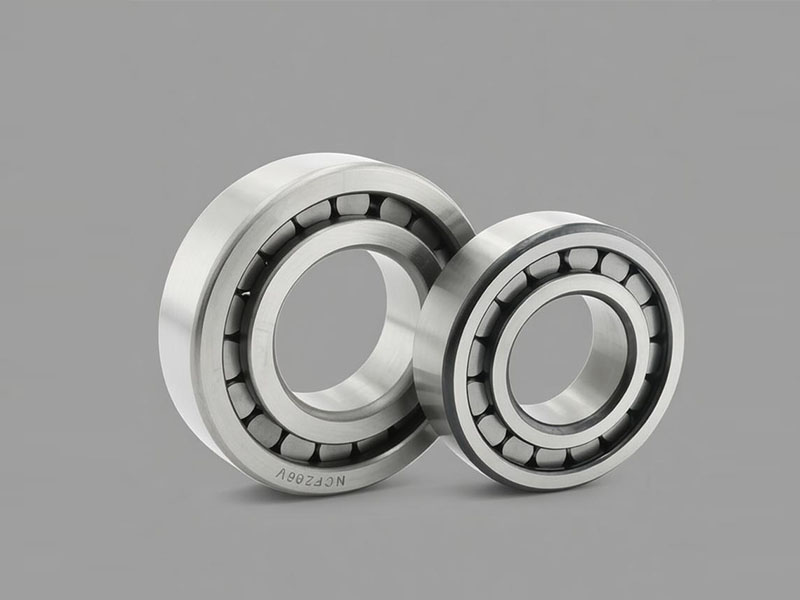
A full complement bearing is a type of rolling bearing that does not use a cage or retainer to separate the rolling elements (rollers or balls). By eliminating the cage, the space it would have occupied is filled with additional rolling elements . This “full house” of elements is the defining characteristic of the design.
The core design principle is simple: more contact points between the rolling elements and the raceways mean the load is distributed over a larger surface area. This allows the bearing to withstand significantly higher radial and, in some designs, axial loads compared to a similarly sized caged bearing .
Common Types of Full Complement Bearings
While the “full complement” concept can be applied to various bearing types, some designs are more prevalent in industrial applications.
Full Complement Cylindrical Roller Bearings: This is the most common category, often used in gearboxes and heavy machinery. They are typically single-row and designed for very high radial loads. Key designs include:
- NCF Design (SL18 series): These bearings typically feature two integral flanges on the inner ring and one on the outer ring, with a retaining ring to hold the assembly together. They can accommodate axial displacement in one direction .
- NJG Design (SL19 series): Part of the heavy 23 dimension series, NJG bearings are intended for extremely heavily loaded, low-speed applications. They have a self-retaining roller complement, which simplifies mounting .
Full Complement Deep Groove Ball Bearings: These are less common than their roller counterparts but are used in specific applications. They often utilize a “filler notch” design, where a notch ground into the raceways allows for the insertion of extra balls. While this increases radial load capacity, it can limit the bearing’s ability to handle axial loads .
Special Structures and Double-Row Designs: For applications requiring extreme rigidity and load capacity, manufacturers offer double-row full complement cylindrical roller bearings (such as the SL04 and SL1850 series). These are often used in rope sheaves, rolling mills, and wind turbine gearboxes . Another specialized type is the full complement CARB toroidal roller bearing, which can accommodate both misalignment and axial displacement .
Key Advantages of Full Complement Bearings
The primary benefits of this bearing type all stem from the increased number of rolling elements.
- Exceptionally High Load Capacity: This is the most significant advantage. By maximizing the number of rollers or balls, full complement bearings can support much heavier radial loads—often 20% to 40% more—than caged bearings of the same dimensions . This makes them ideal for compact designs where space is limited but loads are high .
- High Rigidity: The abundance of rolling elements creates a large contact area between the rollers and raceways. This results in very high radial stiffness, minimizing deflection under load and ensuring precise shaft positioning, which is critical in machine tools and gearboxes .
- Suitability for Heavy Shock Loads and Low Speeds: Without a cage to damage, these bearings are inherently more robust and can withstand high loads and vibrations. They excel in低速, heavy-duty applications like construction equipment, mining machinery, and conveyor systems .
- Cost-Effective for Specific Applications: In designs where extreme load capacity is the primary requirement, using a full complement bearing can be more economical than stepping up to a larger, heavier, and more expensive caged bearing series .
Critical Disadvantages and Limitations
The advantages of full complement bearings come with inherent drawbacks that must be carefully considered.
- Lower Speed Capability (Speed Limit): This is the most critical limitation. In a cageless design, the rolling elements rub directly against each other . This generates significant friction and heat, limiting the bearing’s permissible speed. Full complement bearings are fundamentally not suitable for high-speed applications .
- Increased Friction and Heat Generation: As the rollers slide against each other (with the inner ring acting as a “sun gear” driving them in opposite directions at their contact points), bearing torque and heat generation increase substantially . This can lead to higher operating temperatures and reduced lubricant life if not managed correctly .
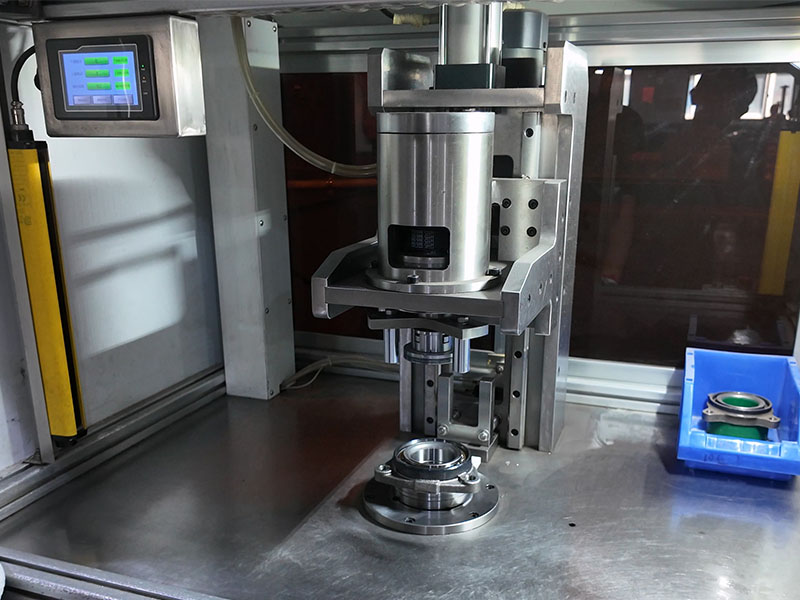
- Installation and Complexity: While some designs like NJG are self-retaining, others can be more challenging to install. The lack of a cage means the roller set can be unstable during handling. Special care must be taken to ensure rollers are not displaced or damaged during mounting . Some designs, like double-row locating bearings, may have split rings or retaining devices that require careful attention .
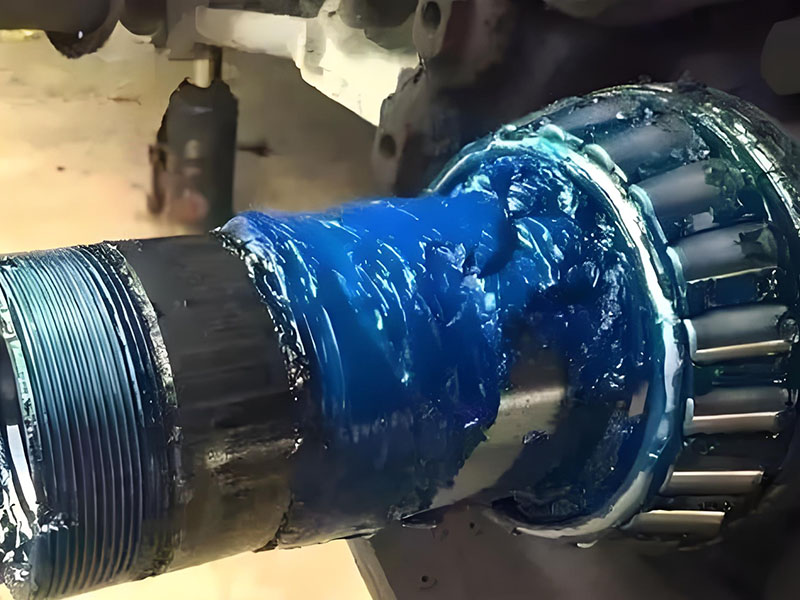
- Critical Lubrication Requirements: To mitigate the inherent friction between rolling elements, lubrication is absolutely critical. A continuous supply of high-quality, high-viscosity lubricant is necessary to form a protective film and dissipate heat. Failure to do so will rapidly accelerate wear and lead to premature bearing failure .
Conclusion
Full complement bearings are specialized components designed to excel in a specific set of conditions: high radial load, high rigidity, and low to moderate speeds. They are the perfect choice for applications like planetary gearboxes, heavy-duty industrial drives, and construction machinery where load capacity and compactness are paramount.
However, their limitations in speed and their sensitivity to lubrication and installation mean they are not a one-size-fits-all solution. A successful bearing selection requires a deep understanding of your application”s operating conditions.
At DUHUI Bearing, we bring over 20 years of manufacturing experience and 15 years of exporting to this exact challenge. We don”t just supply bearings; we provide engineering support to help you navigate complex decisions like these. Whether you need a standard NCF design or a custom-engineered solution for a unique application, our team is here to help you find the perfect balance of load, speed, and durability.