Quick Answer
A bad wheel hub bearing typically shows through unusual noises (roaring, grinding, clicking) that change with speed and turns, steering wheel vibration or looseness, vehicle pulling to one side during braking, uneven tire wear, and visible wheel wobble. These symptoms worsen over time. Under normal driving conditions, wheel bearings last about 85,000 to 100,000 miles (136,000 to 160,000 km). If you notice any of these signs, have the bearing inspected immediately – driving on a failed bearing can lead to wheel separation.
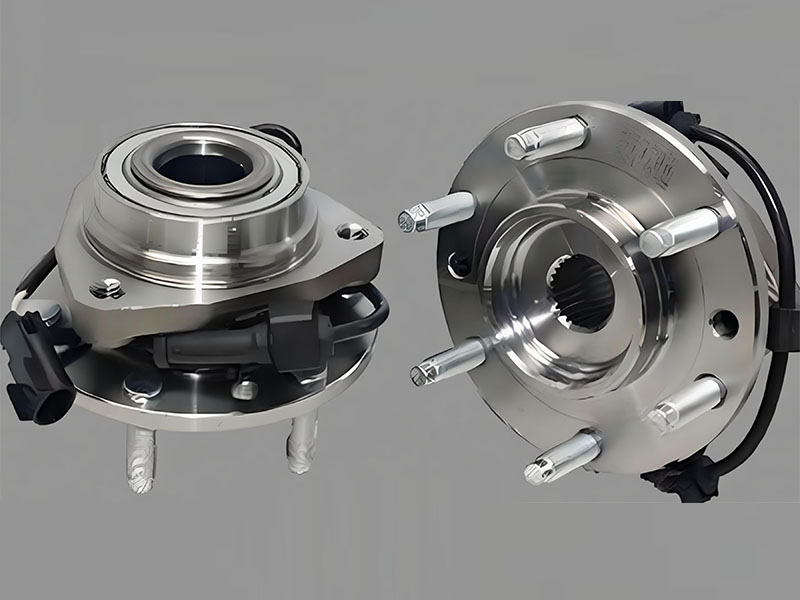
Every time your vehicle moves, its wheels must rotate with minimal resistance while supporting the full weight of the car. That job falls to the wheel bearing – a ring of steel balls or rollers housed inside the wheel hub assembly. Together, the bearing and hub allow the wheel to spin smoothly around the axle. In most modern cars, this is a sealed, pre-assembled unit that cannot be disassembled for maintenance or re-greasing.
Under normal use, these bearings are built to cover a solid distance – 85,000 to 100,000 miles (136,000 to 160,000 km) on average, according to MOOG automotive (a Federal-Mogul brand) – before they need attention. But they aren’t invincible. Harsh road impacts, water intrusion, and simple age all take their toll over time. When a bearing begins to degrade, it almost always gives off warning signals. Overlooking these clues can lead to a complete breakdown – and in extreme cases, the affected wheel could detach while you’re behind the wheel.
Below, we walk through the most reliable signs of a failing wheel hub bearing, along with methods to pinpoint the problematic side and an explanation of what typically causes early failure.
Sign 1: Unusual Noises from the Wheel
A failing bearing often announces itself with a sound that starts subtly and becomes more pronounced over time. The type of noise – and the driving conditions under which it appears – can tell you a lot about what’s happening inside the bearing. Typically, these noises become noticeable above 20 to 30 mph (30 to 50 km/h) and intensify as vehicle speed increases.
Roaring, Growling, or Humming
This is the symptom drivers report most often. A worn bearing typically emits a deep, low-pitched rumble that intensifies with speed – almost like driving over a coarse road surface, but the sound comes from one corner of the vehicle. You’ll usually hear it most clearly when moving straight ahead. The pitch or volume often shifts when you gently turn the wheel left or right, which helps narrow down which side is affected. This noise results from the bearing’s internal surfaces losing their smooth finish and beginning to rub roughly against one another.
Grinding
If the sound turns into a harsh, metallic grinding, the bearing has likely reached a critical stage. The protective grease inside has either deteriorated or leaked out, leaving metal components in direct, abrasive contact. This is the point where internal damage accelerates quickly. Some drivers also note a gritty sensation they can feel through the floor pan or brake pedal when this happens.
Knocking or Clicking During Turns
A rhythmic knock or click that emerges when you steer into a turn – especially at lower speeds – can point to excessive end play within the bearing. End play refers to the slight axial movement the bearing allows; when it becomes too large, the internal components shift position under cornering loads, producing a percussive sound. This indicates the bearing is no longer holding the hub securely in place.
Crackling, Popping, or Snapping
Crackling or snapping sounds during sharp turns are often associated with CV joint wear, but a failing wheel bearing can produce similar noises when clamping force is inadequate or when axial play exceeds specifications. It’s worth checking both systems if you hear this type of sound.
Squealing or Chirping – Less Common but Possible
Some drivers report a high-pitched squeal or chirp that worsens during acceleration or while turning. Though less typical than rumbling or grinding, this often points to a bearing running hot due to insufficient lubrication. It’s not the most common symptom, but it’s still a valid reason to investigate further.
A helpful rule of thumb for diagnosing by ear: Pay attention to which direction you’re turning when the noise peaks. If the sound grows louder during a left turn, the right-side bearing is the likely culprit. If it intensifies on a right turn, check the left side. That’s because turning transfers more weight – and therefore more load – to the outside wheel, making a worn bearing on that side more vocal.
Sign 2: Steering Wheel Vibration or Looseness
A failing bearing can transmit vibration all the way up to the steering wheel. This feels different from the vibration caused by an out-of-balance tire, which usually appears only at highway speeds. Bearing-related vibration often becomes noticeable at lower speeds and tends to worsen steadily as you accelerate.
The root cause is internal play inside the bearing. As the wheel rotates, the loose components allow slight movement in the hub, creating a wobble that travels through the suspension and into the steering column. In more advanced cases, you might also sense this vibration through the driver’s seat or the floor beneath your feet.
Alongside vibration, you may notice the steering wheel itself feels loose or less precise. A worn bearing creates slack between the hub and the spindle, which translates to a vague, wander-y sensation when you steer – as though the front wheels aren’t responding as directly as they should.
Sign 3: Vehicle Pulling to One Side When Braking
If your car drifts to one side every time you press the brake pedal, a bad wheel bearing could be the reason – though brake issues like a seized caliper can cause similar behavior.
Here’s what happens: a loose bearing allows the wheel hub to wobble slightly as it spins, creating uneven rotation (known as runout). When you apply the brakes, that wobble translates into a pulsating or dragging force that pulls the vehicle toward the side with the faulty bearing.
Additionally, if the bearing surface has become corroded or pitted, it generates roughness that travels through the steering linkage, amplifying the pulling sensation. As a best practice, rule out brake problems first – if your calipers, pads, and rotors check out fine, the bearing becomes a strong suspect.
Sign 4: Uneven or Abnormal Tire Wear
A wheel bearing that has developed play can cause the tire on that corner to wear irregularly. Because the wheel no longer maintains a fixed, stable angle relative to the road, the tire scuffs and scrubs as it rolls – wearing down certain sections of the tread faster than others.
The wear pattern typically appears on one side of a single tire, rather than evenly across both front or both rear tires. Look for signs like feathering (one edge of each tread block worn smoother than the other) or cupping (dipping wear patterns across the tread surface). Excessive bearing play allows the wheel to tilt from its intended camber angle, causing the tire to ride on its inner or outer edge.
One important caveat: Noise from a failing bearing usually shows up long before tire wear becomes visible. If you spot uneven wear but haven’t heard any bearing noise, the culprit is more likely an alignment issue, worn suspension parts, or improper tire pressure. But when noise and uneven wear appear on the same wheel, the bearing deserves a close look.
Sign 5: Wheel Wobble or Excessive Play
Once a bearing has become severely loose, you can often confirm the problem with a simple hands-on test. Raise the vehicle using a floor jack and support it securely on jack stands. Then:
- Grip the tire at the top (12 o’clock) and bottom (6 o’clock) positions.
- Try to rock the tire by pushing in at the top while pulling out at the bottom, then reversing the motion.
- If you detect any distinct movement or clunking – that’s excessive play – the bearing is almost certainly shot. Industry service manuals specify that bearing play exceeding 0.005 inches (0.13 mm) at the wheel rim indicates replacement is required.
For a more complete check, repeat the test at the 3 o’clock and 9 o’clock positions (side to side). Play in the vertical (12/6) direction generally points to bearing wear, while play in the horizontal (3/9) direction is more often associated with steering or suspension components.
One caution: Lower ball joint wear can produce a similar rocking sensation. If you’re not sure what you’re feeling, it’s wise to have a mechanic take a look rather than guessing.
How to Tell Which Wheel Bearing Is Bad
The On-Road Listening Test
Find a quiet, smooth stretch of road and bring the vehicle up to about 40 mph. Make gentle, sweeping turns left and right while keeping your ears open:
- Turn left -> noise gets louder -> suspect the RIGHT-side bearing.
- Turn right -> noise gets louder -> suspect the LEFT-side bearing.
This works because cornering loads the outside wheel more heavily, which in turn makes any bearing wear on that side more audible.
The Hands-On Confirmation
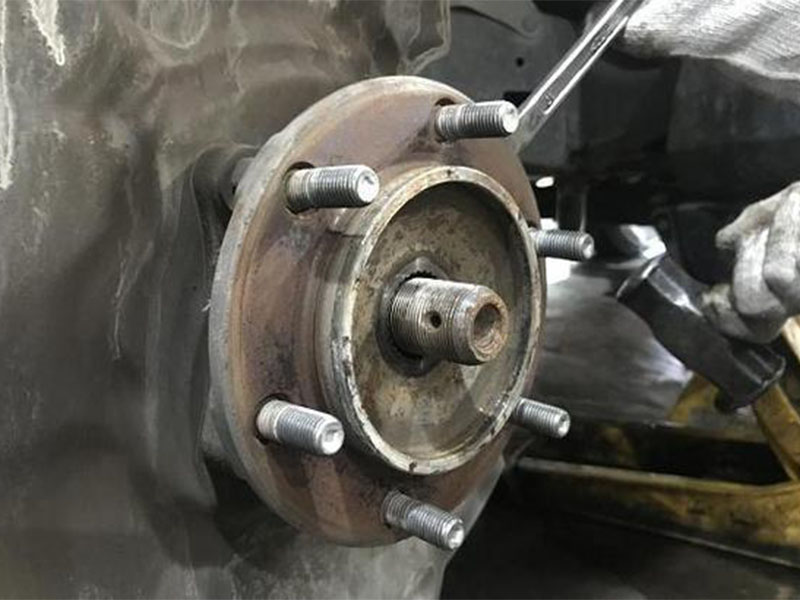
If the road test leaves you uncertain, raise the vehicle and perform the 12/6 o’clock rock test described earlier. You can also spin the wheel by hand – a worn bearing may feel rough, notchy, or emit a low grinding sound when rotated.
Front versus rear: If you feel vibration primarily through the steering wheel, the issue is likely at the front. Rear bearing problems tend to produce noise without much steering-wheel feedback.
What Causes Wheel Bearings to Fail Prematurely?
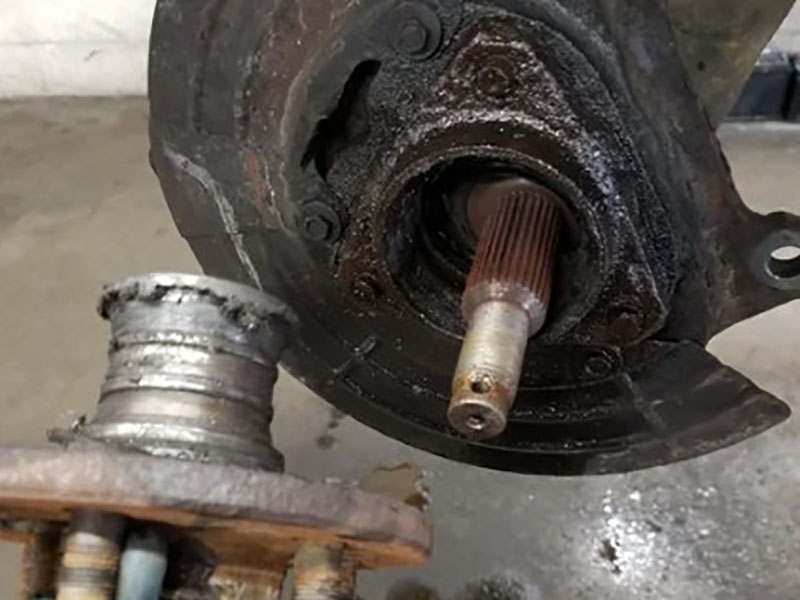
Knowing why bearings fail can help you avoid repeat failures and recognize early warning signs more quickly.
Impact from Potholes, Curbs, or Debris
Striking a pothole or scraping a curb sends a sudden, heavy shock through the wheel and into the bearing. Even if the tire and wheel look fine, the bearing’s internal races can develop tiny dents – a condition called brinelling. These dents may not cause immediate symptoms, but they create weak spots that fail thousands of miles later. SAE (Society of Automotive Engineers) technical papers identify impact damage as one of the two primary failure modes for automotive wheel bearings.
Water, Dirt, and Salt Contamination
Bearings depend on clean grease to stay cool and run smoothly. If the seal gets damaged – by road debris, age, or pressure washing – water, mud, or winter road salt can work its way inside. Contaminated grease loses its lubricating properties quickly, and a bearing can fail within just a few thousand miles once contaminants enter. Deep puddles or flooded roads are particularly dangerous for this reason. SAE research also identifies contaminant ingress as a leading cause of premature bearing failure.
Incorrect Installation
Improper installation ranks among the most frequent causes of early bearing failure. Using an impact wrench on the axle nut, failing to torque fasteners to the manufacturer’s specification, or pressing a bearing in at an angle can all shorten its service life dramatically. Over-torquing puts too much preload on the bearing, causing it to run hot. Under-torquing leaves room for play, leading to impact damage during normal driving. Mopar OEM service guidelines emphasize that using a calibrated torque wrench – never an impact gun for final tightening – is essential for proper installation.
High Mileage and Gradual Wear
Even under ideal conditions, bearings eventually reach the end of their service life. The typical lifespan for a sealed hub assembly falls in the range of 85,000 to 100,000 miles (136,000 to 160,000 km), according to MOOG automotive data. Beyond that point, microscopic fatigue cracks – known as spalling – begin to form on the rolling surfaces and races, leading to progressive failure. Regular inspection is recommended after the 75,000-mile mark.
Aftermarket Modifications
Fitting larger-diameter wheels, wider tires, lower-profile sidewalls, or stiffer suspension components adds extra stress to the wheel bearings. These modifications change the bearing’s load dynamics and can accelerate wear, sometimes cutting bearing life short by a significant margin.
Substandard Replacement Parts
Not all aftermarket bearings are created equal. Parts manufactured with inferior steel or inadequate heat treatment simply won’t last as long. Skimping on bearing quality is a false economy – the labor involved in replacing a failed bearing far outweighs the cost difference between a budget part and a reliable one. This is precisely why choosing a supplier with proven metallurgical and manufacturing standards matters. DUHUI Bearing has specialized in automotive hub assemblies since 2003, producing components to OE-equivalent tolerances using controlled heat-treatment processes and premium-grade steel. View our wheel hub bearing product lineup to see what consistent quality looks like.
Conclusion
A wheel bearing on its way out rarely goes unnoticed – if you know what to listen and feel for. The common threads are unusual noise that changes with speed and steering input, steering vibration or vagueness, a pull during braking, uneven tire wear, and detectable wheel wobble.
Ignoring these warnings is risky. A bearing that fails completely can cause the wheel to lock, wobble dangerously, or even separate from the vehicle – all of which can lead to loss of control. There’s also a financial incentive to act early: replacing a bearing before it damages the hub, axle, or speed sensor is significantly less expensive than repairing the collateral damage.
A few habits can go a long way toward preventing premature failure: steer clear of deep potholes when you can, replace seals whenever you service a bearing, and – most importantly – choose quality replacement parts and have them installed to the vehicle manufacturer’s torque specifications. Typical axle nut torque specifications range from 80 to 110 ft-lbs depending on the vehicle model. Always consult your vehicle’s service manual for the exact value. And on a higher-mileage vehicle – generally over 75,000 miles (120,000 km) or more – keep in mind that when one bearing goes, the one on the opposite side often follows soon after.
For additional technical guides, installation tips, and maintenance advice, visit our blog. And when replacement becomes inevitable, choose a manufacturer with a track record you can trust – DUHUI Bearing, serving the global aftermarket since 2003.
FAQs
Q1: How long can I drive on a bad wheel bearing?
A: You shouldn’t. While a bearing rarely fails catastrophically the instant it starts making noise, the risk grows rapidly with every mile. In the early noise-only stage, you might have a few hundred miles, but this is unpredictable. Once play or vibration appears, failure can occur within tens of miles. A severely deteriorated bearing can cause the wheel to seize or detach. If you absolutely must move the vehicle to get to a shop, drive slowly and cautiously – but towing is the far safer option.
Q2: How do I know which wheel bearing is bad?
A: Use the road test: drive at roughly 40 mph and turn gently in both directions. Turn left -> noise louder -> right bearing is bad. Turn right -> noise louder -> left bearing is bad. To confirm, raise the vehicle, grip the tire at 12 and 6 o’clock, and rock it – any noticeable play points to a bad bearing.
Q3: Can I replace a wheel hub bearing myself?
A: If you have mechanical experience and the proper tools, it’s doable. But it’s not a quick or simple job. Many modern vehicles use press-fit bearings that require a hydraulic press for removal and installation. Bolt-in hub assemblies are more DIY-friendly. If you don’t have the means to torque fasteners precisely or handle a press safely, professional installation is money well spent.
Q4: Should I replace wheel bearings in pairs?
A: On vehicles with more than 75,000 miles (120,000 km), replacing both bearings on the same axle is a smart move. The other bearing has endured similar wear and conditions, so it’s likely not far behind. Doing both at once saves you double labor costs down the road. On lower-mileage vehicles, replacing only the failed one is acceptable.
Q5: What causes wheel hub bearings to fail prematurely?
A: The top culprits are: impact damage from potholes or curbs, contamination from water, dirt, or salt breaching the seal, improper installation (wrong torque or using impact tools), and poor-quality parts. Vehicle modifications such as larger wheels or stiffer suspension can also shorten bearing life.
Q6: Can a bad wheel bearing trigger the ABS light?
A: Yes, and this is fairly common. Many modern vehicles house the wheel speed sensor – a critical component for ABS and traction control – inside the hub assembly. When bearing play develops, the gap between the sensor and the tone ring changes, producing erratic signals that the ABS module interprets as a fault. Metal debris shed by a failing bearing can also physically damage the sensor.
Q7: At what speed do symptoms of a bad wheel bearing typically appear?
A: Noise-related symptoms often become noticeable above 20 to 30 mph (30 to 50 km/h). At lower speeds, the sound may be intermittent or masked by other road noises. As speed increases, a failed bearing usually produces a consistent humming, growling, or grinding tone. Some defects also cause vibration that intensifies with vehicle speed.
Q8: Can driving through deep water or puddles damage wheel bearings?
A: Occasional splashing is normally harmless, but repeated submersion or driving through deep water can force water past the bearing seals. Once water mixes with the grease, it reduces lubrication and causes corrosion (rust pitting) on the rolling elements and races. Seal damage from mud or debris accelerates this process. Bearings exposed to deep water should be inspected for early noise or play.
Q9: What torque specification should I use when installing a wheel hub bearing?
A: Torque specifications vary by vehicle make and model. Typical axle nut torque ranges from 80 to 110 ft-lbs (108 to 149 Nm). Always consult your vehicle’s factory service manual for the exact specification. Using a calibrated torque wrench – never an impact gun for final tightening – is essential. Under-torquing allows bearing movement, while over-torquing distorts the races and causes overheating.
Q10: What happens if a wheel bearing fails completely while driving?
A: Complete failure typically leads to: sudden loud grinding or metal-on-metal noise, severe wheel wobble that makes steering difficult, brake rotor damage from the bearing play pushing the rotor against the caliper, and – in extreme cases – wheel separation from the vehicle. The vehicle becomes nearly uncontrollable, with a high risk of accident.
Q11: How do you check a wheel bearing for roughness?
A: Safely raise the vehicle and support it on jack stands. Rotate the wheel slowly by hand while feeling for grinding, clicking, or uneven resistance. Listen for any noise during rotation. A smooth, silent rotation with consistent resistance is normal. If you feel a gritty or notchy sensation, the bearing is worn and requires replacement.
Q12: How does a bad wheel bearing affect brake performance?
A: A loose bearing allows the wheel hub and brake rotor to wobble as they spin. This wobble (runout) pushes the brake pads unevenly against the rotor, creating a pulsation or vibration felt through the brake pedal. It can also increase stopping distance and accelerate uneven pad wear. The pulling sensation during braking is another direct effect of bearing-induced rotor movement.