Quick Answer
Use this guide to learn how to maintain, diagnose, and replace rear wheel bearings after the factory warranty ends. Key topics include bearing lifespan (85,000–150,000 miles), noise diagnosis (growling that changes with cornering), cost ranges ($350–$900 per wheel in 2026), and when to replace in pairs. It also lists OE brands like NTN, SKF, Timken, and reliable aftermarket options including MOOG, ACDelco, NAPA, Duralast, and DUHUI Bearing.
Rear wheel bearings are critical for smooth rotation, load support, and ABS accuracy. Once your vehicle leaves the dealership, you own the maintenance cycle. How do you know when a bearing is failing? Can you drive with a bad bearing? Should you replace just one or both? This guide answers those questions using real workshop data and component specifications. You will learn what shortens bearing life, how to pinpoint the faulty side without special tools, and what a fair repair cost looks like in 2026. We also break down OE manufacturers vs. aftermarket alternatives so you can make a confident, budget‑smart choice for your vehicle.
What Are Rear Wheel Bearings and How Do They Work?
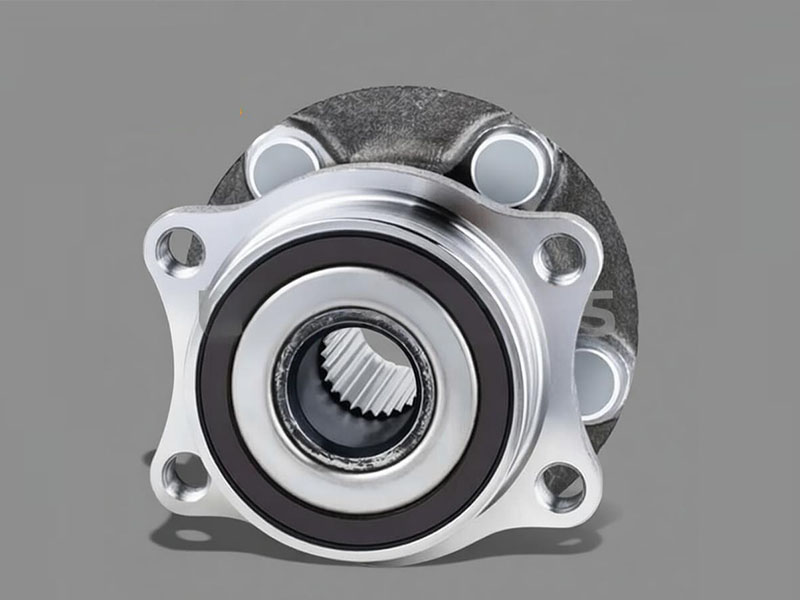
A rear wheel bearing sits inside the wheel hub or on the solid axle. Its job is to let the wheel spin with minimal friction while supporting the vehicle’s weight and side loads from cornering. Most modern cars use sealed, maintenance‑free bearings (Gen 3 hub assemblies), while older or heavy‑duty vehicles may have serviceable tapered roller bearings.
The bearing contains steel balls or rollers, a cage, inner/outer races, and a rubber seal. The seal keeps grease in and water, salt, and dust out. When the seal fails or the grease degrades, metal‑to‑metal contact starts. You hear grinding or growling, and soon the wheel can develop play. On rear axles, bearings often live longer than front ones because they face less steering load. Some rear solid‑axle bearings even run in gear oil, extending their life beyond 150,000 miles under normal use.
Rear Wheel Bearing Lifespan and Maintenance Schedule
Normal Lifespan
Sealed hub bearings typically last 85,000 to 100,000 miles. Many reach 150,000 miles or more, especially on rear non‑drive axles. Heavy loads, frequent potholes, and deep water crossings shorten this drastically – sometimes to 30,000 miles.
Maintenance Intervals
- Serviceable bearings: Clean and repack with high‑temperature EP grease every 25,000–30,000 miles or during brake jobs.
- Sealed bearings: No lubrication possible. Only replace when worn.
Smart drivers inspect bearings at these opportunities:
- Brake pad or rotor replacement
- Tire rotation or new tire installation
- After any major impact (curb, deep pothole)
What Kills Bearings Early?
- Impact damage (potholes, speed bumps at speed) → Brinelling (dents on raceways)
- Water intrusion (deep puddles, pressure washing the wheel area) → grease washout
- Heat from dragging brakes or over‑tightened hub nuts → blue discoloration on races
- Road salt that seeps past seals → corrosion pitting
Check the hub nut torque after any suspension work. An over‑tightened bearing can fail in weeks.
How to Diagnose a Failing Rear Wheel Bearing – Noise and Play
Listening on the Road
Bad rear bearings produce a low‑pitched growl or grinding that:
- Gets louder as speed increases
- Does not change when you shift to neutral (different from differential noise)
- Changes pitch when you swerve left or right
Swerve test example: On a quiet straight road, gently turn left. If the noise increases, the right bearing is likely bad (load shifts to the right side). Turn right – noise louder on the left side.
Using a Mechanic’s Stethoscope
Lift the vehicle and support securely. Place the stethoscope probe on the spindle or hub while spinning the wheel by hand. A rough, rumbling sound identifies the failing bearing.
Physical Checks
With the wheel off the ground:
- 12‑6 o’clock shake: Push the top and bottom of the tire. Any noticeable clunk or movement means excessive axial play (should be 0 mm).
- Hand spin: Rotate the wheel. Listen for grating or feel for notchiness.
Other Symptoms
- ABS warning light on (magnetic encoder inside the bearing damaged)
- Rear wheel feels hot after a short drive
- Uneven tire wear (scalloped edges)
According to repair shop data, 51% of bad bearings are found because the customer complains about noise. Another 24% are discovered during brake service.
After‑Sale Care: Extending Bearing Life
Driving Habits That Help
- Slow down for potholes and railroad tracks
- Avoid driving through water deep enough to cover the wheel center
- Do not ride the parking brake – heat travels into the bearing
Inspection Routine (Every Oil Change)
- Jack up each rear corner.
- Grab the tire at 3 and 9 o’clock, then 12 and 6. No movement allowed.
- Spin the wheel – should feel smooth and silent.
- Check the inner seal area for grease streaks (leak sign).
Servicing a Repackable Bearing (Old‑Style)
If your car has tapered roller bearings:
- Remove the hub and catch the old grease.
- Clean all parts with solvent. Inspect rollers and races for pitting or bluing.
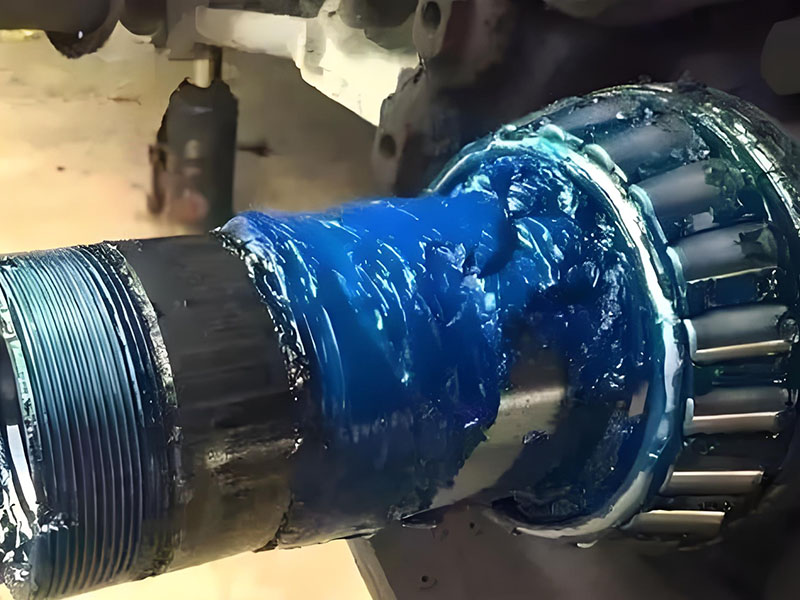
- Pack new high‑temperature wheel bearing grease by hand or with a packer.
- Always install a new seal – reused seals leak within months.
- Tighten the spindle nut to manufacturer specs (typically 15–25 ft‑lbs initial, then back off 1/4 turn for cotter pin alignment).
Sealed bearings: No service. Replace when symptoms appear.
Do You Have to Replace Rear Wheel Bearings in Pairs?
This is a common debate. Here is the rule most shops follow:
Replace both if the failure is due to normal wear and both bearings have similar mileage. The undamaged side is likely near the end of its life too. You save labor – doing the second bearing later means paying the same hourly rate twice.
Replace only one if the failure was caused by a specific impact (pothole, curb hit) and the other side is known to be newer or has very low miles.
SKF and Timken both note that matching the bearing condition on both wheels improves handling balance and braking stability. For sealed hub units, many brands sell them individually, but professional technicians often recommend pairs for customer satisfaction and warranty simplicity.
Cost perspective: Labor for one bearing is roughly $150–$240. If the second bearing fails 6 months later, you pay that labor again. Replacing both at once adds only the parts cost for the second unit.
DIY or Professional Replacement – What to Expect
Difficulty Level
Replacing a bolt‑on hub assembly is a solid intermediate DIY job. You need basic hand tools, a torque wrench, and often a breaker bar for rusted bolts. Press‑in bearings require a hydraulic press – that is better left to a shop.
Time and Cost Comparison
| Factor | DIY | Professional |
|---|---|---|
| Parts cost | Pay retail (you can shop around) | Shop may mark up 20–30% |
| Labor | $0 (your time) | $150–$240 per side |
| Special tools | May need bearing puller / press | Shop has them |
| Warranty | Parts only | Often includes 12‑month service warranty |
| Typical time | 2–4 hours first time | 1–2 hours per side |
Real‑World 2026 Rates
- Independent shop: $350–$600 per wheel (parts + labor)
- Dealer: $600–$900 per wheel
- Press‑in bearing on a rear solid axle: often cheaper ($300–$500) because the bearing itself costs less ($40–$80) but you still need press work.
If you DIY, rent a torque wrench and a hub puller from an auto parts store. Watch two or three YouTube videos for your specific model – torque sequences matter.
2026 Cost Breakdown by Vehicle Type
All figures in USD, including typical parts and 1.5 hours of shop labor at $120/hour.
| Vehicle Class | Example | Parts Cost | Labor | Total per Wheel |
|---|---|---|---|---|
| Compact car | Honda Civic, Toyota Corolla | $90–$220 | $180–$320 | $270–$540 |
| Midsize SUV | RAV4, CR‑V, Rogue | $150–$320 | $220–$400 | $370–$720 |
| Full‑size pickup | F‑150, Silverado | $180–$380 | $250–$450 | $430–$830 |
| Luxury sedan | BMW 5 Series, Mercedes E‑Class | $280–$550 | $320–$520 | $600–$1,070 |
| Luxury SUV / AWD | X5, Q7, GLE | $350–$650 | $380–$600 | $730–$1,250 |
Data compiled from repair shop surveys and Empire Auto Protect’s 2026 annual report.
How to Save Money
- Buy the bearing yourself from a reputable supplier and bring it to a shop that allows customer parts.
- Combine with brake pad/rotor replacement – labor overlaps.
- Use a quality aftermarket brand instead of OE (see next section).
- For older cars, consider a used OEM hub from a low‑mileage donor, but inspect carefully for seal damage.
Bearing Brands – OE Giants vs Aftermarket Alternatives
OE‑Tier Manufacturers (Factory Fitment)
These companies supply bearings to car factories worldwide. Their parts meet strict OEM validation standards.
- NTN – Supplies over 30% of North American assembly plants. Its BCA aftermarket line uses the same tooling. Very strong for Japanese and Korean nameplates.
- NSK – Japanese precision leader. Often original equipment on Toyota, Honda, and Subaru. Excellent for direct replacement.
- Schaeffler Group (FAG) – German engineering with 130+ years of history. Top choice for European vehicles (VW, BMW, Mercedes).
- SKF – Swedish bearing giant. Known for advanced sealing technology and low‑friction designs. Covers most global platforms.
- JTEKT – Toyota Group company. Produces Koyo bearings (see below). Focus on ultra‑low rolling resistance.
- Timken – American tapered‑roller specialist. Dominates heavy‑duty and truck applications. Cone and cup must be same brand.
- KOYO (JTEKT Group) – Commonly found on Japanese cars from factory. Highly trusted in owner forums alongside NSK and NTN.
- NACHI-FUJIKOSHI – Precision bearing maker serving many Asian OEMs. Less common in aftermarket but excellent quality.
Aftermarket Replacement Brands
These brands do not typically supply factories but offer reliable, often more affordable alternatives. Many are sold through parts stores or online.
- MOOG – Well‑known in chassis components. Their wheel hubs use larger ball sets and reinforced seals. Popular with DIYers and shops.
- ACDelco – GM’s own service brand. Gold line matches GM OE specs. OE line carries a limited lifetime warranty.
- NAPA – Sold exclusively at NAPA stores. Proformer series hubs are made by SKF or other top tier suppliers. Backed by a 3‑year / 36,000‑mile warranty.
- Duralast (AutoZone) – AutoZone’s house brand. Heat‑treated steel, pre‑greased, sealed. Generally affordable. Some user reports of early failures – check recent batch reviews.
- DUHUI Bearing – Chinese manufacturer founded in 2003 (Zhejiang). Specializes in aftermarket replacement bearings and repair kits. Holds IATF 16949 quality certification. You can order custom kits by OE number. Positioned as OE‑quality at a competitive price – suitable for budget‑conscious repairs.
Warning on counterfeits: SKF, Timken, and NTN are widely counterfeited on marketplaces. Always buy from authorized distributors or verify serial numbers on brand websites.
Parts That Work With Your Rear Wheel Bearings
When replacing a rear bearing, you often touch these related components. Inspect them at the same time:
- Brake rotor or drum (must be removed anyway)
- Brake caliper and pads (consider replacement to combine labor)
- Hub nut and axle nut (always use a new nut if manufacturer says so)
- ABS wheel speed sensor (clean magnetic ring surface)
- Lower control arm or trailing arm (if bushings are worn, they can cause false bearing play)
- Rear shock absorber or strut (loose shocks can amplify bearing noise)
If you see grease leaking past the inner seal, the seal failed first – replace it regardless of bearing condition.
DIY Step‑by‑Step (Bolt‑On Hub Assembly Type)
- Secure the car on level ground, chock front wheels.
- Loosen lug nuts, then lift and support on jack stands.
- Remove wheel, then brake caliper (hang with wire – do not let it hang by the hose). Remove rotor.
- Unplug the ABS sensor connector.
- Remove the hub nut (often 32‑36 mm, requires breaker bar).
- Unbolt the hub assembly from the knuckle (usually 4 bolts).
- Clean the knuckle mating surface with a wire brush.
- Install new hub – torque bolts to spec (e.g., 65‑80 ft‑lbs).
- Install new hub nut – follow torque + angle procedure (e.g., 200 ft‑lbs then 180°). Do not reuse old nut if it’s a torque‑to‑yield type.
- Reinstall rotor, caliper, and wheel. Lower car and torque lug nuts.
- Test drive – listen for noise, check ABS light.
For press‑in bearings: you will need a hydraulic press and bearing drivers. This guide does not cover that due to safety risk – seek professional help.
Conclusion
Your rear wheel bearings are not a “set and forget” component. Understanding their lifespan (85k–150k miles), knowing how to diagnose the growling noise, and planning replacements in pairs when feasible will save you money and prevent unsafe wheel play. Cost for a professional repair in 2026 ranges from $270 on a compact car to over $1,000 on a luxury SUV. Choose between OE manufacturers like NTN, SKF, or Timken for factory‑matched quality, or consider aftermarket brands like MOOG, NAPA, Duralast, or DUHUI Bearing for reliable performance at a lower price point. Always replace the seal, torque the hub nut precisely, and avoid deep water and potholes to maximize service life.
FAQs – After‑Sales Care for Rear Wheel Bearings
Q1: Can I drive with a bad rear wheel bearing?
A: No. A grinding bearing generates heat, can lock up, or cause the wheel to separate. Once you hear a constant growl or feel play, replace it within a week.
Q2: How do I know which side is bad without a shop?
A: Perform the swerve test on an empty road. Noise increases when you turn away from the bad bearing (load shifts to that side). Also, a stethoscope on the spindle while spinning the wheel confirms.
Q3: Is it worth buying a cheap aftermarket bearing?
A: Depends on your expected ownership period. For a car you will keep two more years, a mid‑range aftermarket hub (e.g., DUHUI, Duralast) is fine. For long‑term ownership, an OE‑tier brand (SKF, Timken) may last the rest of the car’s life.
Q4: Why does my ABS light come on after hitting a pothole?
A: The impact might have damaged the magnetic encoder ring inside the sealed bearing. The ABS computer sees erratic wheel speed and turns on the light. Replacing the bearing usually fixes it.
Q5: Can I just repack a sealed bearing?
A: No. Sealed hub assemblies are not designed to be opened. Cutting the seal to add grease will immediately invite dirt and water – failure will follow soon.
Q6: Do I need an alignment after rear bearing replacement?
A: Generally no, because you are not changing any suspension geometry. However, if the old bearing had excessive play that affected tire wear, a four‑wheel alignment check is wise.
Q7: What torque spec for the hub nut?
A: Varies by vehicle – typical range: 150–250 ft‑lbs. Always look up the exact spec for your year/model. Many newer cars use a torque‑to‑yield nut that requires a specific angle (e.g., 200 ft‑lbs + 150°).
Q8: Are DUHUI bearings pre‑greased and sealed?
A: Yes, like all modern sealed hubs, DUHUI bearings come pre‑packed with high‑temperature grease and fitted with double lip seals. They are ready to install out of the box.
Q9: How long should a quality aftermarket bearing last?
A: In normal driving (no off‑road, no constant potholes), expect 60,000–100,000 miles from a tier‑2 brand like MOOG or DUHUI. Premium OE brands often reach 100,000–150,000 miles.
Q10: Why does my repair shop insist on replacing both rears?
A: They want to avoid a comeback. If one bearing wore out from age/mileage, the other is statistically near failure. Replacing both now costs one labor charge. Doing them separately costs double the labor.