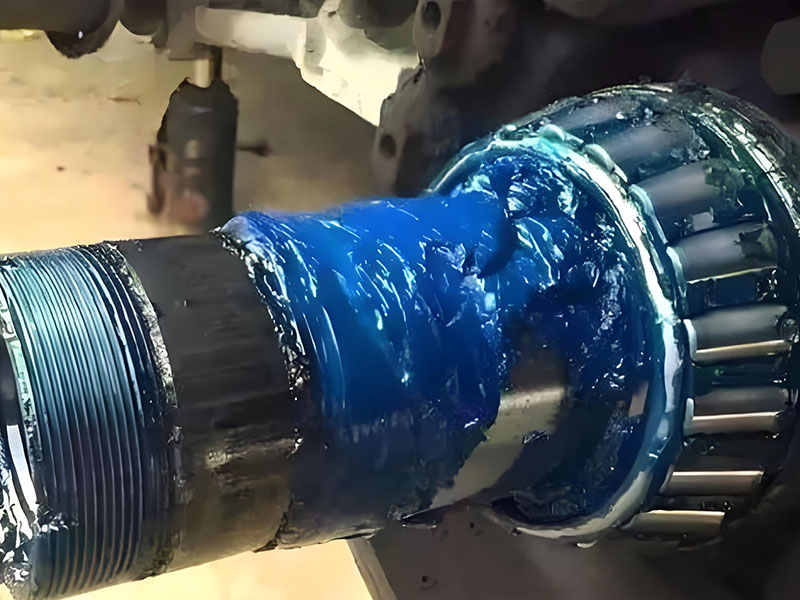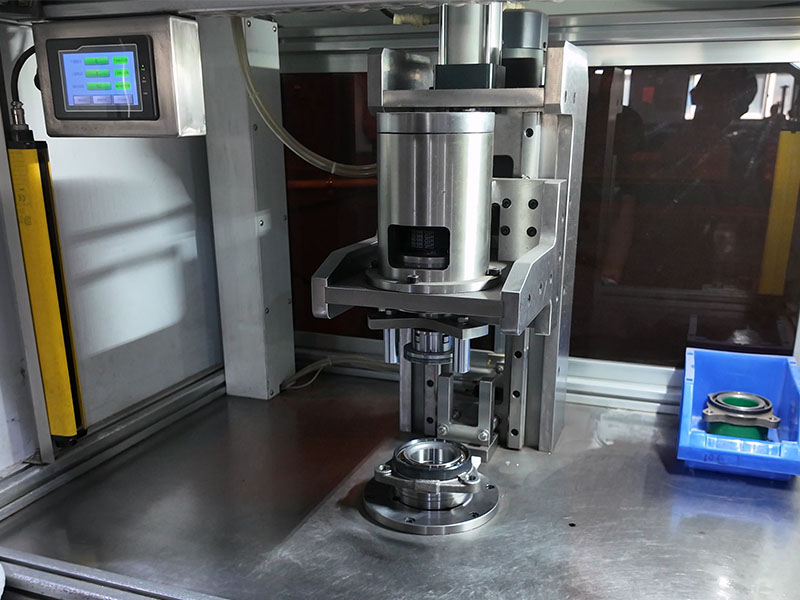
Quick Answer: How bearings are made comes down to turning bearing steel into rings, hardening those rings, and grinding them to micron-level accuracy. The usual route runs forging, turning, heat treatment, grinding, and assembly, then washing, testing, and rustproofing. Rings, rolling elements, and cages are produced separately and meet at assembly, where clearance and running quality are checked. The sequence is common, but the settings inside each stage follow the bearing type and size.
Bearing manufacture turns bar and wire stock into hardened, ground components that fit together within microns. The route is well documented, yet the details at each stage explain why the finished bearing performs as it does. The route below follows the steel from cut blank to packed unit and shows where hardness, geometry, and surface finish are actually set.
How Bearings Are Made: The Standard Process at a Glance
Rolling bearings are generally produced through five core stages: forging, turning, heat treatment, grinding, and assembly. For deep groove ball bearings the route continues after assembly with washing, testing, and rustproofing before the parts are packed.
- Forging creates the ring shape from cut steel.
- Turning establishes the geometry and cuts the raceway for the first time.
- Heat treatment gives the rings the hardness and toughness to carry load.
- Grinding brings hardened parts to micron-level size and surface quality.
- Assembly brings rings, rolling elements, and cage into one unit that can carry load.
The stage sequence is common, but the parameters inside each stage – heating temperature, stock allowance, the number of grinding operations – are set per bearing type and size. Rings, rolling elements, and cages are produced on separate routes that only converge at assembly.
Bearing Steels Used for Rings and Rolling Elements
Ring and rolling element performance depends on the steel grade and on the heat treatment applied to it, not on geometry alone. Two families cover most rolling bearings: high-carbon chromium bearing steel and martensitic stainless steel. Hardness figures quoted below apply after the standard heat treatment specified for the grade, not to the steel as supplied.
High-Carbon Chromium Steel: 52100 and ASTM A295
52100 is a high-carbon steel containing about 1.5% chromium. After standard heat treatment its minimum hardness is HRC 60, and it offers high wear resistance. It is the default choice for rings and rolling elements in general-purpose bearings.
ASTM A295/A295M-14(2020), Standard Specification for High-Carbon Anti-Friction Bearing Steel, covers high-carbon bearing-quality steel used to make anti-friction bearings. It sets requirements for chemical composition, microstructure, decarburization, and surface defects, which is why incoming steel quality is checked before forging rather than assumed from the certificate.
Martensitic Stainless Steel: 440C
440C is a martensitic high-carbon stainless steel containing up to 18% chromium. Its minimum hardness after standard heat treatment is HRC 58, and bearings made from it can operate at temperatures up to 250 degrees F (121 degrees C). Stainless grades are chosen where corrosion resistance or elevated temperature matters more than maximum load capacity.
Rolling Elements and Cages Follow Separate Routes
Rolling elements start as wire, not as ring blanks. The documented ball and roller route is wire, closed-die forging, heat treatment, rough grinding, precision grinding, and lapping. Lapping is the final polishing step that brings the rolling surface to its finished condition.
Cages can be produced from steel plate through pressing, rough forging, finish forging, boring, and surface treatment. Cage material and forming method differ by design, so the steel plate route is one documented example rather than a rule for every bearing. These components are matched to the rings at assembly rather than machined as part of them.
Step 1: Forging the Ring Blanks
Steel is cut to length according to the bearing size being produced, then heated and pressed into a thick disc. A metal die forms the disc into a ring, and the ring is expanded to the required size. The finished ring becomes the inner ring or the outer ring of the bearing.
The output of this stage is a rough bearing ring that still carries machining allowance for turning, hardening, and grinding. Blank size and expansion amount follow the finished bearing dimensions plus the allowance later operations need.
Step 2: Turning the Rings to Rough Geometry
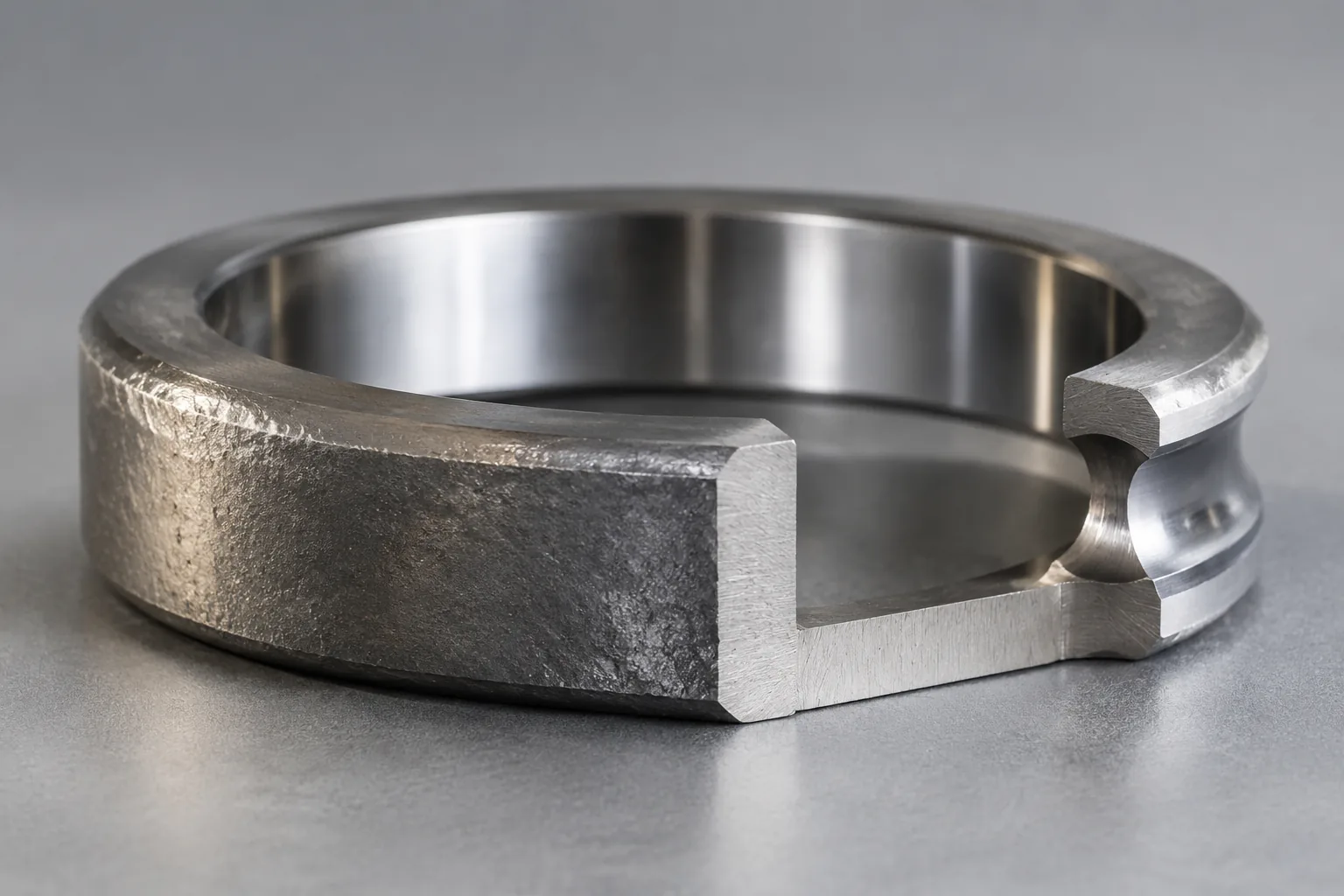
Forged rings are turned on lathes to give them their rough shape, and the raceway – the groove the rolling elements run on – is first cut at this stage. Turning leaves controlled stock for heat treatment and grinding, so the final dimensions are created later on hardened material. Accurate turning reduces the amount of grinding required and protects the final raceway profile.
Step 3: Heat Treatment for Hardness and Toughness
After forming, bearing steel is heated to at least 800 degrees C, quenched in oil, and cooled rapidly to raise strength and toughness. A representative ring hardening cycle austenitises at about 860 degrees C for 15 to 20 minutes, followed by quenching and tempering.
Tempering after quenching reduces brittleness while retaining the hardness the bearing needs. Hardening must avoid oxidation and surface decarburization, because a decarburized surface layer cannot hold the required raceway hardness.
After hardening the rings are known as black stock, with a dark surface layer that grinding removes. Time and temperature depend on steel grade, section thickness, and furnace type, so the values above are documented examples rather than universal settings. Stainless and special grades use different cycles from the standard 52100 sequence.
Step 4: Grinding and Superfinishing to Micron Tolerance
Hardened rings are ground on their width, outside diameter, inside diameter, and groove. Dimensional accuracy at this stage can reach 1 micrometer, or 1/1,000 mm. The raceway surface is then refined further so rolling elements run smoothly. Grinding is the operation that brings hardened rings and rolling elements to final size, and the tolerance actually achieved depends on the bearing’s tolerance class, the machine, and the measuring equipment.
Inner Ring and Outer Ring Grinding Sequences
- Inner ring: forging, turning, heat treatment, width grinding, groove grinding, single bore grinding, superfinishing.
- Outer ring: forging, turning, heat treatment, width grinding, outside-diameter grinding, groove grinding, groove finishing.
The two routes differ because the inner ring bore and the outer ring outside diameter are the mounting surfaces that set fit on the shaft and in the housing. Groove grinding comes before the final finishing operation on both rings, so raceway geometry is set before the surface is refined.
Superfinishing, Honing, and Lapping
Grinding brings hardened rings and rolling elements precisely to final size. Honing finishes and polishes the raceway so it meets the required surface roughness. Lapping is the polishing step applied to rolling elements after precision grinding. Surface finish matters because it affects friction, noise, and the film of lubricant between rolling surfaces.
Step 5: Assembly of Rings, Rolling Elements, and Cages
Balls are placed between the inner ring and the outer ring, then a cage is fixed from above and below so the balls stay at even spacing around the raceway. Assembly includes matching the inner ring, outer ring, and rolling elements to the intended internal fit. Depending on the bearing design, the cage, lubricant, seals, or shields are added at this stage, which is where the separate component routes converge into a single bearing.
Sealed and shielded versions carry components that open bearings do not have; grease fill and seal type follow the bearing designation.
Step 6: Washing, Testing, and Rustproofing
After assembly, bearings are washed to remove grinding residue, handling contamination, and excess lubricant from the surfaces. Testing verifies that the finished bearing meets its specification before packing, and rustproofing protects the freshly ground surfaces during storage and transport. The final sequence is assembly, washing, testing, and rustproofing.
Test scope is set by the manufacturer’s control plan and the bearing type, so not every check is performed on every unit.
Internal Clearance and Vibration Checks
Internal clearance checking confirms that the clearance between rings and rolling elements falls within the specified range. Clearance outside specification changes load distribution and operating temperature, so it is measured rather than assumed. Vibration checking verifies bearing quality and confirms low-noise, smooth running. The vibration signature is also a practical indicator of raceway finish and rolling element quality. Acceptance limits depend on the bearing type, tolerance class, and the manufacturer’s specification.
Tolerances and Standards That Set the Targets
Grinding and inspection targets are not chosen freely; they come from published bearing tolerance standards.
- ISO 492:2023, the sixth edition published in August 2023, specifies the dimensional and geometrical characteristics, limit deviations from nominal dimensions, and tolerance values for the boundary dimensions of radial rolling bearings.
- ISO 199:2023, the fifth edition published in August 2023, sets the corresponding dimensional characteristics, deviation limits, and tolerances for the boundary dimensions of thrust bearings.
Both standards are maintained within ISO/TC 4/SC 4, the bearings subcommittee for boundary dimensions and tolerances. That is why the same micron-level grinding capability is applied to different tolerance classes, and why inspection gauges are matched to the class being produced. A bearing meets a tolerance class only if every specified characteristic is within its limit; individual dimensions alone do not establish the class.
How the Process Varies by Bearing Type and Production Volume
The five-stage sequence is common, but the number of grinding operations, the finishing method, and the inspection plan change with the bearing type. Deep groove ball bearings follow the detailed ring routes above, with superfinishing on the inner ring and groove finishing on the outer ring.
Metric tapered roller bearings are produced on dedicated lines that combine heat treatment capability with finishing technology. A plant in Prahova, Romania, operated by a company headquartered in North Canton, Ohio, is one documented example of this arrangement. Automated operations are used to drive consistency and maximize efficiency, because repeatability between parts matters as much as the capability of a single machine.
High-precision bearings are manufactured in dedicated plants. One documented example is a site in Villar Perosa, Italy (Via Dante Alighieri 6, 10069), identified as ID275 for super-precision bearing manufacturing under ISO 9001:2015.
Small and thin-section bearings require tighter control of heat treatment distortion because there is less stock available for correction during grinding. Ceramic, hybrid, and other special bearings use different material and finishing routes from the all-steel process described here. The plant examples show how the process is organized at industrial scale; they are not statements about any other manufacturer’s capability or certification.
Conclusion
Bearing manufacturing is a chain in which each stage creates the condition the next stage depends on: forging sets the blank, turning sets the geometry and raceway, heat treatment sets hardness and toughness, grinding and finishing set micron-level size and surface quality, and assembly with washing, testing, and rustproofing delivers the finished unit. How bearings are made is therefore less about one clever operation than about those dependencies holding together.
The material choice, whether 52100 or 440C, and the heat treatment cycle determine what grinding can achieve. Tolerance standards such as ISO 492:2023 and ISO 199:2023 set the targets the process must hit, which is why grinding precision and inspection are specified together. Before comparing bearing offers, confirm the required tolerance class, steel grade, and finishing requirements, because those three items describe the process that produced the part.
FAQs
Q1: What steel are bearings usually made from?
A: Most rolling bearings use high-carbon chromium bearing steel such as 52100, which contains about 1.5% chromium and reaches a minimum of HRC 60 after standard heat treatment. Martensitic stainless steel such as 440C, with up to 18% chromium and a minimum of HRC 58, is used where corrosion resistance or an operating temperature up to 250 degrees F (121 degrees C) is required.
Q2: Why is heat treatment necessary in bearing production?
A: Heat treatment raises the strength and toughness of the rings so the raceway can carry load without deforming. Bearing steel is heated to at least 800 degrees C, with a typical ring cycle austenitising at about 860 degrees C for 15 to 20 minutes, then quenched and tempered. Oxidation and surface decarburization must be avoided, because a soft surface layer cannot hold the required hardness.
Q3: What tolerance can bearing grinding achieve?
A: Grinding of hardened rings can hold dimensional accuracy to 1 micrometer, or 1/1,000 mm, across width, outside diameter, inside diameter, and groove. The tolerance class actually delivered is set by the standard the bearing is made to, such as ISO 492:2023 for radial bearings or ISO 199:2023 for thrust bearings, not by machine capability alone.
Q4: What is the difference between grinding, honing, and lapping?
A: Grinding brings hardened rings and rolling elements precisely to their final size. Honing finishes and polishes the raceway to the required surface roughness. Lapping is the polishing step applied to rolling elements after precision grinding.
Q5: Are all bearings made the same way?
A: No. The five-stage sequence of forging, turning, heat treatment, grinding, and assembly is common, but the number of grinding operations, the finishing method, and the inspection plan change with bearing type, size, and production volume. Ceramic, hybrid, and other special bearings use different material and finishing routes from the all-steel process.
Q6: What checks are done before a bearing is packed?
A: After assembly the bearing is washed, tested, and rustproofed. Testing includes internal clearance checking against the specified range and vibration checking for low-noise, smooth running behavior. The exact test scope is set by the manufacturer’s control plan and the bearing type.
Q7: Why are bearings rustproofed after grinding?
A: Grinding exposes bare, freshly cut steel on the raceway and mounting surfaces, and those surfaces corrode easily during storage and transport. Rustproofing is applied after washing and testing, as the last step before packing, so the finished surfaces stay protected until installation.