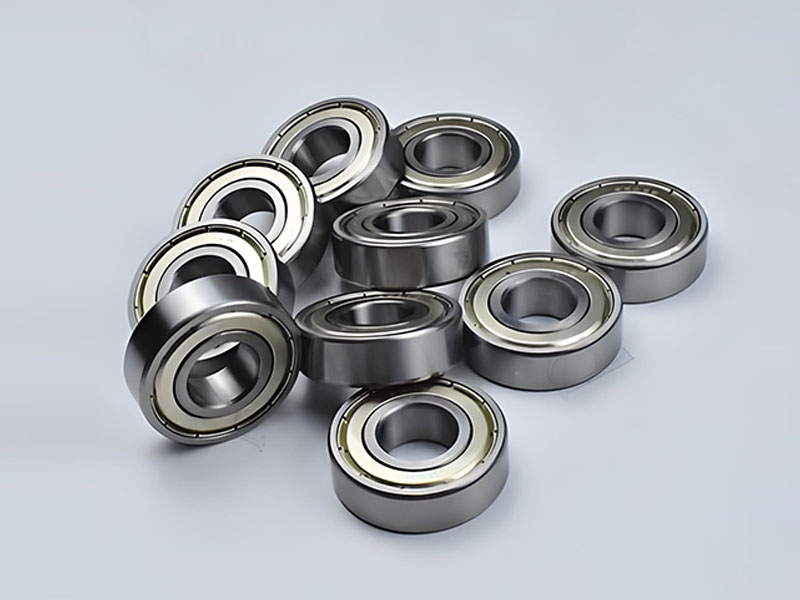
Quick Answer: Live axle bearing replacement begins by identifying whether the axle is semi-floating, 3/4 floating, or full-floating, because bearing location, adjustment, and tools differ. Noise, looseness, drag, or lubricant leakage calls for inspection. Check the bearing, shaft journal, and seal surface before ordering parts. Install the correct bearing and seal with the specified tools, orientation, OEM torque, and lubricant, then verify the fill level.
A live axle bearing replacement is a wheel-end repair, not a parts swap. The axle shaft and housing can stay only when their surfaces remain serviceable and the bearing, seal, and adjustment are correct. The job changes sharply between semi-floating, 3/4 floating, and full-floating designs, so the first decision is identification, not disassembly. The sections below move from symptoms and inspection limits to tools, installation, torque, lubrication, and the point at which the shaft or complete axle assembly should be replaced.
What a Live Axle Bearing Does and Why Axle Design Changes the Job
A live axle carries vehicle load and transmits drive torque to the wheels. At the wheel end, the bearing supports the rotating parts and must hold the shaft in the correct position. The bearing location, preload or end play, removal tools, and seal arrangement all change with axle design. A 3/4 floating axle has its own parts breakdown and adjustment requirements, so confirm the design from the OEM service information before ordering.
Do not order parts or start disassembly until the axle is identified as semi-floating, 3/4 floating, or full-floating. A parts list for one layout will not transfer safely to another.
Semi-Floating Axle Bearings
In semi-floating axles, the bearing rollers may run directly on the half-shaft journal as the inner race. SKF notes that this design can wear a groove into the half-shaft, so the journal must be inspected before a new bearing is fitted. A new bearing on a grooved journal will not restore a reliable bearing surface.
Full-Floating Axle Bearings
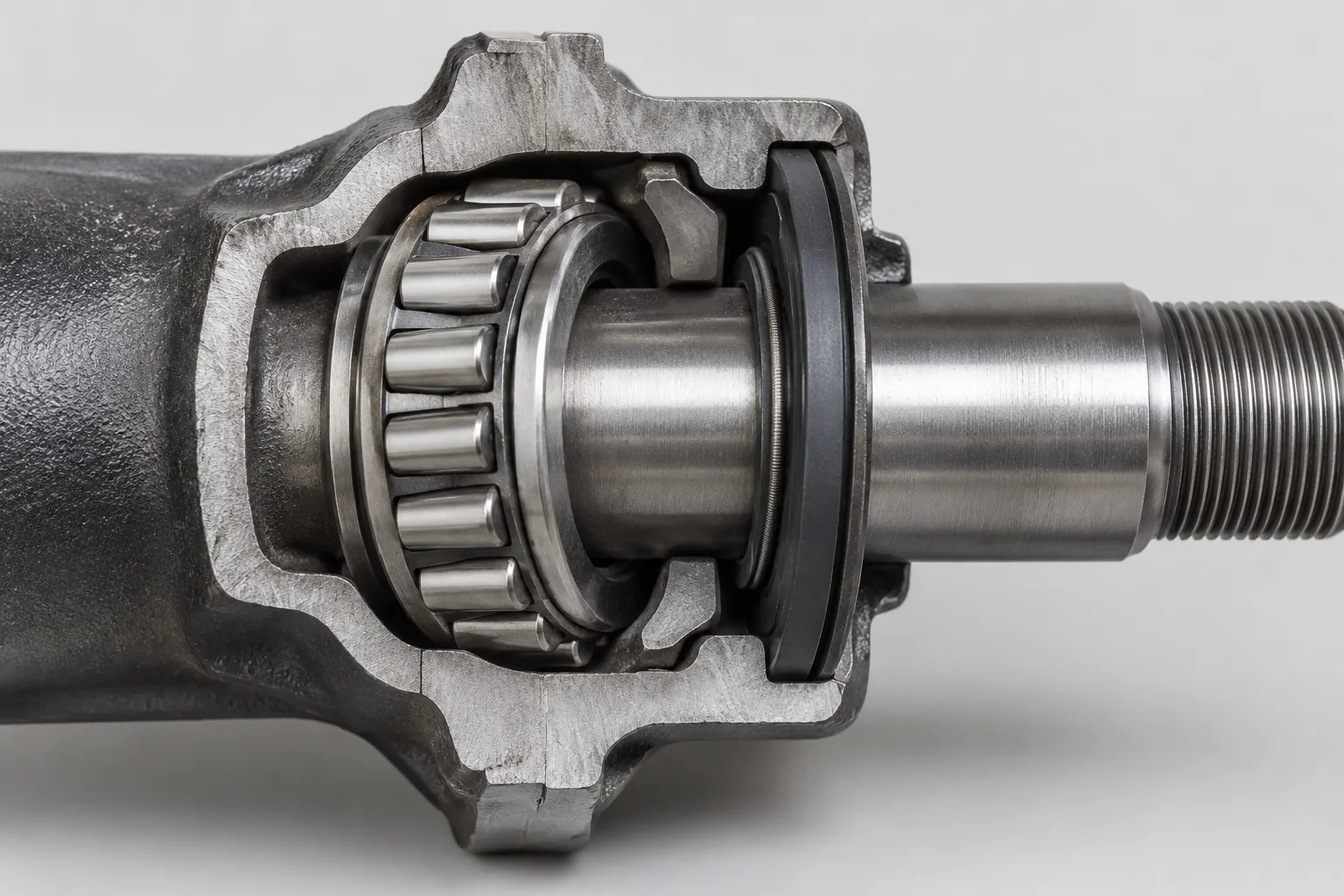
In full-floating axles, vehicle weight is carried by the axle housing spindle, hub, and inner and outer wheel bearings. The half-shaft mainly transmits torque. Meritor MS145 wheel-end diagrams list the axle shaft, outer wheel bearing, inner wheel bearing, inner and outer oil seals, adjusting nut, and lock washer. Full-floating service therefore includes hub bearing adjustment and separate seal inspection, not only axle shaft bearing replacement.
Symptoms That Point to Live Axle Bearing Wear
Ford maintenance guidance lists abnormal noise, wear, looseness, and drag as wheel-end conditions to check. Readers should also look for grinding or rubbing noise, wheel-end play, abnormal resistance, and lubricant leakage at the wheel end.
- Noise: grinding, rubbing, or cyclic wheel-end noise that changes with wheel speed.
- Play: looseness at the wheel or hub that is not caused by a worn suspension joint.
- Drag: abnormal resistance when the wheel is rotated by hand.
- Leakage: oil or grease at the wheel end, axle tube, or brake backing area.
Symptoms identify a need for diagnosis; they do not prove that the bearing alone has failed. Isolate wheel-end noise from brake, tire, and differential noise before replacing parts.
Inspect the Bearing, Shaft Journal, and Seals Before Replacing Parts
After disassembly, inspect the bearing, bearing race, half-shaft bearing journal, seal surface, and axle lubricant for debris. Stellantis recall R59 accepts a surface that is polished, smooth, and free of pitting. Pitting, scoring, or the start of a groove requires replacement of the complete axle assembly.
Stellantis N08 states that if the half-shaft bearing race is pitted or scored, the bearing must be replaced and the damaged half-shaft addressed. Debris left inside the axle can damage new seals, bearings, and gears, so the housing must be cleaned before reassembly.
SKF rear axle repair kits are intended only for half-shafts still in good condition. The kit moves the bearing rollers and seal to an unworn area, and SKF states it can double shaft life. The kit is not a rescue for a shaft that is already grooved, pitted, or below the journal limit.
Bearing Journal Wear Limits and Replacement Criteria
Meritor TSB 20-001 gives R Series drive axle bearing journal minimum diameters for the lower 120-degree zone and for other journal areas. The values apply to the journal areas identified in that bulletin, not to every live axle.
| Journal area | Inner bearing journal minimum | Outer bearing journal minimum |
|---|---|---|
| Lower 120-degree zone | 95.16 mm | 82.46 mm |
| Other journal areas | 95.21 mm | 82.51 mm |
Below these limits, Meritor requires axle housing replacement and does not approve repair of worn bearing journals. Measure the journal where the service information specifies, and replace the housing rather than trying to restore a below-limit surface.
Tools and Parts Needed for Live Axle Bearing Replacement
Typical parts include the correct bearing, new axle seal, axle lubricant, and any gasket, lock washer, or adjusting nut specified by the OEM. Typical tools include a bearing puller or remover, bearing installer, press, seal installer, torque wrench, and lifting or support equipment.
Repair Kits and Seal Installers
A rear axle repair kit is not a substitute for a damaged shaft. It is limited to shafts that remain in good condition and have an unworn area for the new bearing and seal position. Confirm kit coverage by axle model and shaft dimensions before purchase.
Use the seal installer specified for the axle so the seal lip seats squarely at the correct depth. Stellantis N08 uses Bearing Remover 6310 with Foot 6310-9 and Installer C-4198 with Handle C-4171; these are examples, not universal tool numbers. The same procedure uses Installer C-4076-B with Handle C-4735 for the axle seal. Dana/Spicer offers seal installation tool kit SPI401 for common Dana Spicer axle models to seat the seal at the correct position and depth.
Step-by-Step Live Axle Bearing Replacement
Follow the OEM service procedure for the identified axle. The steps below are decision points and examples, not a universal sequence. Support the vehicle safely and use the specified lifting points before removing wheel-end components. Keep removed parts clean and identify shims, spacers, lock washers, and adjusting nuts so they can be reinstalled correctly.
Semi-Floating Bearing Removal and Installation
Remove the wheel-end components and axle shaft as required by the service information, then remove the old bearing with the specified puller or remover. Discard the old bearing and inspect the shaft journal and axle tube before installing the new bearing.
Press the new bearing with the specified installer until the tool contacts the axle tube, as stated in Stellantis N08. Stellantis N08 requires the bearing part-number side to face the installation tool during pressing. Check that requirement against the bearing and tool before any force is applied.
Full-Floating Axle Shaft and Wheel Bearing Service
After removing a full-floating axle shaft, cap both wheel-end openings to prevent lubricant loss and keep dirt out of the bearing cavity. Ford warns not to use a chisel or wedge to loosen a full-floating axle shaft because it can damage the hub, shaft, and seal.
Inspect the hub, inner and outer wheel bearings, seals, adjusting nut, and lock washer before reassembly. Push the axle shaft fully into the housing until the shaft flange and gasket contact the hub. If a differential lock is fitted, the shaft may have two spline sets; rotate the shaft slightly to align the differential side gear and lock-sleeve splines.
Seal Installation and Bearing Orientation
Lubricate the new seal lip with the specified axle lubricant before installation. Install the seal with the specified seal installer so it seats at the correct position and depth; do not drive it crooked. Clean the seal bore and shaft surface, and remove nicks, burrs, or old sealant that could damage the new lip.
Check bearing orientation before pressing. The marked side or part-number side must face the tool or direction specified by the OEM. Wrong orientation can misposition the seal or race even when the bearing is pressed fully.
Torque, Bearing Adjustment, and Lubrication After Replacement
Axle bearing nut, axle shaft nut, and wheel bearing adjustment values are vehicle-specific. NTN/BCA states that installation to the correct vehicle torque specification is important for bearing life, reliability, and safety. BCA released its Axle Nut Torque Specification Lookup App on June 22, 2023, with data by year, brand, and model.
Heavy-duty wheel bearing adjustment follows TMC RP618, and wheel seal and bearing removal, installation, and maintenance follow TMC RP622. Dana/Spicer requires axle and driveshaft fasteners to be tightened to OEM torque after reassembly. Full-floating hub bearing adjustment uses the OEM adjusting nut and lock washer sequence; do not substitute a generic torque or end-play value.
There is no universal axle nut or bearing adjustment torque. Confirm the exact vehicle, axle, and bearing design before tightening.
Lubricant Fill and Service Intervals
Fill the axle with the specified lubricant to the bottom of the fill hole, as stated in Dana/Spicer drive axle assembly guidance. For certain 2002-2004 F-150, Expedition, Navigator, Explorer, and Mountaineer vehicles built before March 30, 2004, Ford TSB 05-23-3 says that when rear axle service requires an oil change, replace SAE 75W-90 FEHP oil with SAE 75W-140 synthetic rear axle lubricant.
Ford lists a 30,000 mi (48,000 km) interval for wheel bearing grease repacking and seal replacement on some vehicles with non-sealed bearings. The owner maintenance table for the specific vehicle and duty cycle controls the interval. Do not treat the Ford TSB fluid change or the 30,000-mile interval as a universal specification for all live axles.
Common Mistakes and Safety Boundaries
- Wrong bearing direction: installing the bearing in the wrong direction can misposition the seal or race; Stellantis N08 requires the part-number side toward the installation tool.
- Reusing a worn journal: fitting a new bearing onto a pitted, scored, or grooved shaft journal causes repeat failure; replace or repair the shaft or assembly according to OEM criteria.
- Dry or damaged seal: dry-installing a seal or damaging the lip during installation causes leaks and contaminant entry.
- Chisel or wedge use: using a chisel or wedge on a full-floating axle shaft can damage the hub, shaft, and seal.
- Open axle: leaving the axle open or allowing debris into the housing can damage new bearings, seals, and gears.
- Generic torque: using a generic axle nut torque or bearing preload instead of the OEM value can cause looseness, overheating, or premature failure.
- Wrong lubricant: mixing lubricant types or using the wrong fill level can affect bearing and gear durability.
When to Replace the Axle Shaft or Complete Axle Assembly
- Replace the axle shaft when the bearing journal is pitted, scored, or grooved beyond the OEM limit, or when the seal surface cannot be restored.
- Stellantis R59 requires a complete axle assembly replacement when the inspection area shows pitting, scoring, or the start of a groove.
- Meritor does not approve repair of R Series bearing journals below the published minimum diameters; the axle housing must be replaced.
- If the shaft is in good condition and an unworn area exists, an SKF rear axle repair kit may relocate the bearing rollers and seal. Confirm kit coverage and shaft condition first.
Do not infer that a repair kit, bearing, or shaft is interchangeable from dimensions alone. Use the OEM part number or catalog application for the specific axle.
Conclusion
Live axle bearing replacement follows a decision path: identify the axle design, confirm symptoms, inspect the shaft journal and seals, select the correct bearing and seal tools, and follow OEM torque and lubricant specifications. A new bearing alone is not a repair when the shaft journal, axle housing, or seal surface is worn beyond limits.
Obtain the vehicle or axle service information, measure the journal where specified, and replace the shaft or assembly when OEM criteria require it. Correct identification and inspection protect the new bearing, the seal, and the wheel-end safety of the vehicle.
FAQs
Q1: Can I replace a live axle bearing without replacing the axle shaft?
A: Yes, if the shaft journal and seal surface are within OEM limits and free of pitting, scoring, or grooves. If the journal is pitted, scored, or grooved beyond the limit, replace the shaft or assembly according to OEM criteria.
Q2: How can I tell if my axle is semi-floating or full-floating?
A: Check the OEM service information or axle identification before ordering parts. Semi-floating axles use a bearing at the outer end of the half-shaft, while full-floating axles use hub bearings carried by the axle housing spindle and a shaft that mainly transmits torque.
Q3: Do I need a press to install a live axle bearing?
A: Many axle bearings are pressed or driven with an OEM installer. Stellantis N08 uses a press-type installer, but the required method depends on the axle design, so use the service procedure.
Q4: What torque should I use for the axle bearing nut or axle shaft nut?
A: Use the OEM torque for the exact year, model, and axle. There is no universal value, and NTN/BCA states that correct vehicle-specific torque is important for bearing life and safety.
Q5: Can I drive with a noisy or loose live axle bearing?
A: Do not continue normal driving when a wheel-end bearing is noisy, loose, dragging, or leaking. The condition can worsen and affect wheel-end safety, so inspect it promptly.
Q6: Should I replace both rear axle bearings at the same time?
A: Replace the failed bearing and inspect the opposite side. Replace the other bearing if it shows the same wear, leakage, or looseness, or if the OEM service interval calls for it.
Q7: Why did my new axle bearing fail again?
A: Common causes include a worn or grooved shaft journal, debris left in the housing, a damaged seal, incorrect bearing orientation, wrong preload or torque, and inadequate lubrication. Inspect these before fitting another bearing.
Q8: Is a live axle bearing the same as a wheel bearing?
A: It is a wheel-end bearing in a live axle, but the exact type depends on the axle design. Semi-floating axles may use a bearing on the half-shaft, while full-floating axles use inner and outer hub wheel bearings.