Quick Answer: A flat spring is formed from sheet, strip, or plate stock instead of round wire. The word flat describes the cross-section of the starting material, not a requirement that the finished part remain straight. These springs store and release energy mainly through elastic bending, and they can be blanked, bent, and formed into contacts, clips, retainers, detents, leaf springs, and wave springs.
A flat spring starts as flat strip, sheet, or plate. The finished part may be straight, bent, looped, or formed into a complex profile, so the category covers more than a simple flat strip. This guide explains the working principle, common types, applications, materials, manufacturing methods, design factors, and standards that matter when specifying a flat spring.
Flat Spring Definition
A general spring engineering guide includes a dedicated flat-spring design section. Standard definitions classify a flat spring by its stock form: sheet, strip, or plate instead of round wire. That material-form definition is the clearest way to separate a flat spring from a round-wire coil spring.
The word flat describes the cross-section of the starting stock. It does not mean the finished spring must remain flat. After blanking or cutting, a flat spring can be bent, formed, and given multiple bends or complex contours. Some parts finish as straight cantilevers; others become clips, contacts, or wound strips.
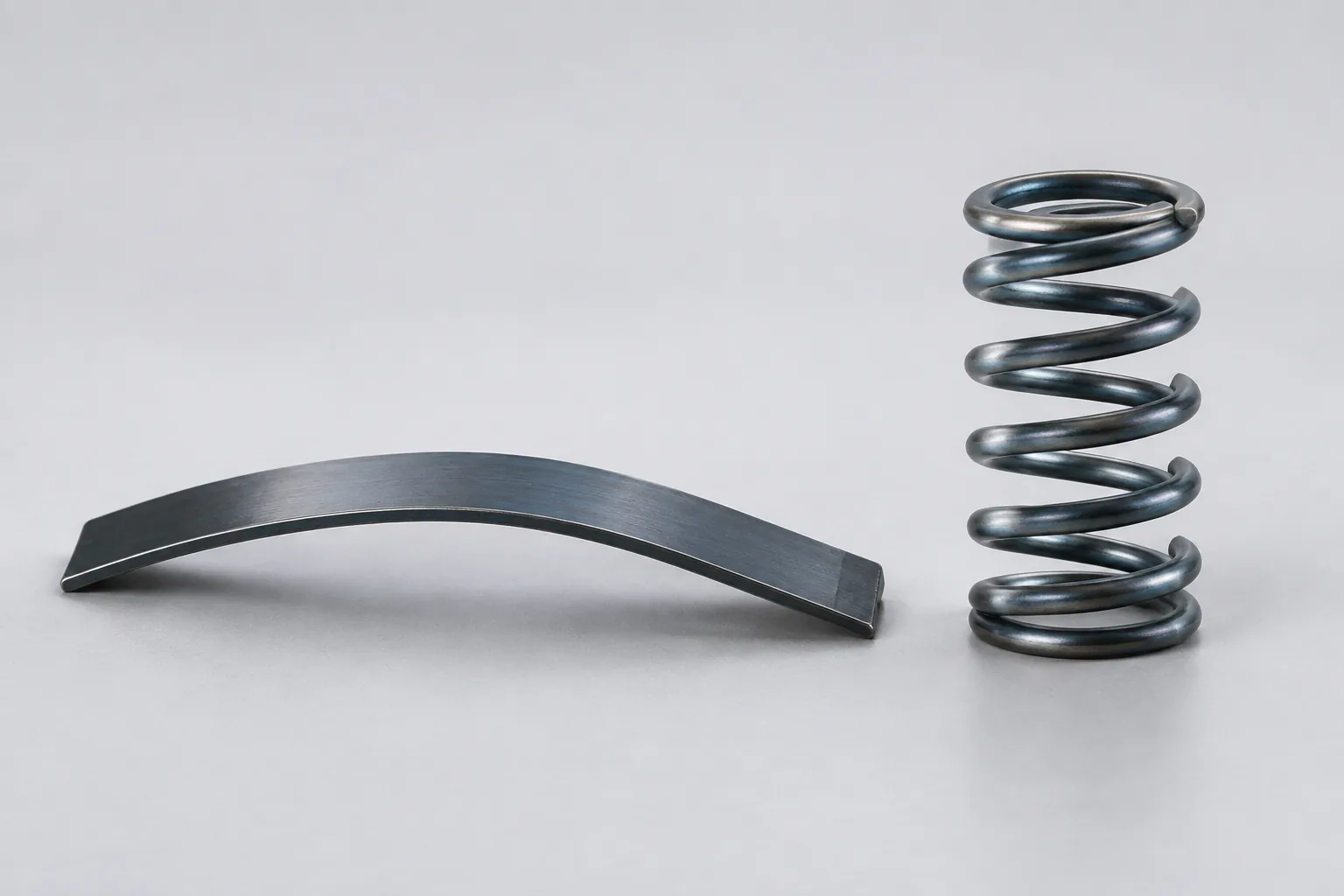
The category is broad. It can include simple beam parts, leaf springs, wound flat-strip springs, and wave springs. Washers and power springs may be placed in separate product families in some classifications, but power springs are still wound from flat strip and are treated here as a wound flat-strip type.
How Flat Springs Work
Flat springs deflect mainly in elastic bending. The material bends within its elastic limit, stores energy, and returns toward its free shape when the load is removed. A round-wire coil spring primarily uses torsion of the wire; a flat spring primarily uses bending of a strip or plate.
For basic design, the active elastic portion is often modeled as a cantilever beam or a simply supported beam. Bernoulli-Euler small-deflection beam theory is commonly used to estimate stress, load, and deflection in that portion.
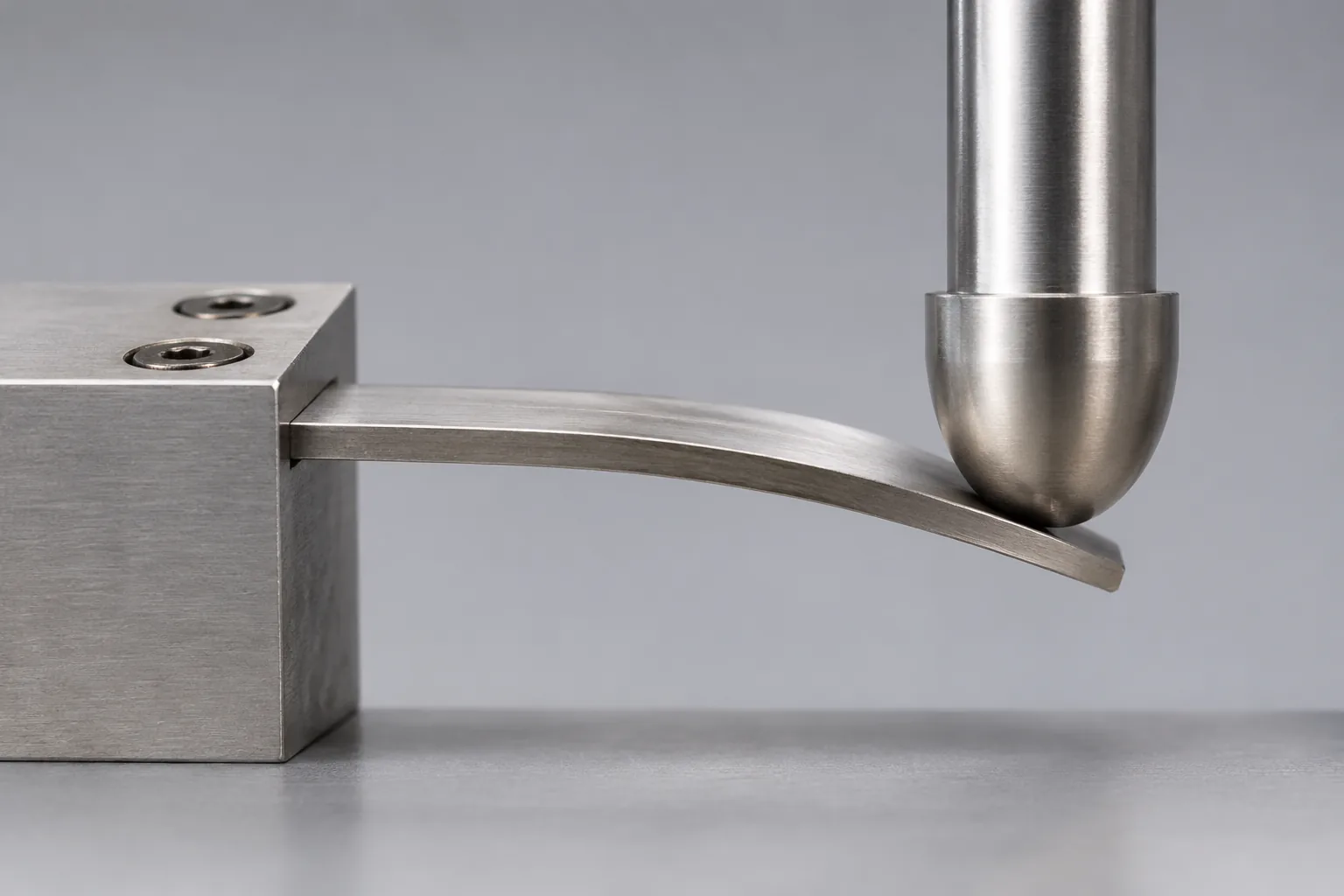
Beam equations are a starting point, not a complete validation. They suit simple, small-deflection geometries. Complex contours, contact between parts, large deflection, and nonlinear material behavior may need additional analysis or physical testing.
Fatigue-sensitive parts should avoid burrs, sharp edges, and excessively small bend radii. These features create stress concentrations that can reduce fatigue life. When a load is specified at a defined working height, inspection is also usually more practical than checking only a theoretical deflection.
Common Types of Flat Springs
Flat springs are not one shape. They can be grouped into beam and formed types, leaf-spring variants, and wound flat-strip or wave-spring types. The grouping helps distinguish a straight contact spring from a vehicle leaf spring or a wave spring, even though all three are flat-material products.
Beam, Finger, Contact, and Clip Springs
Common straight or beam-style flat springs include:
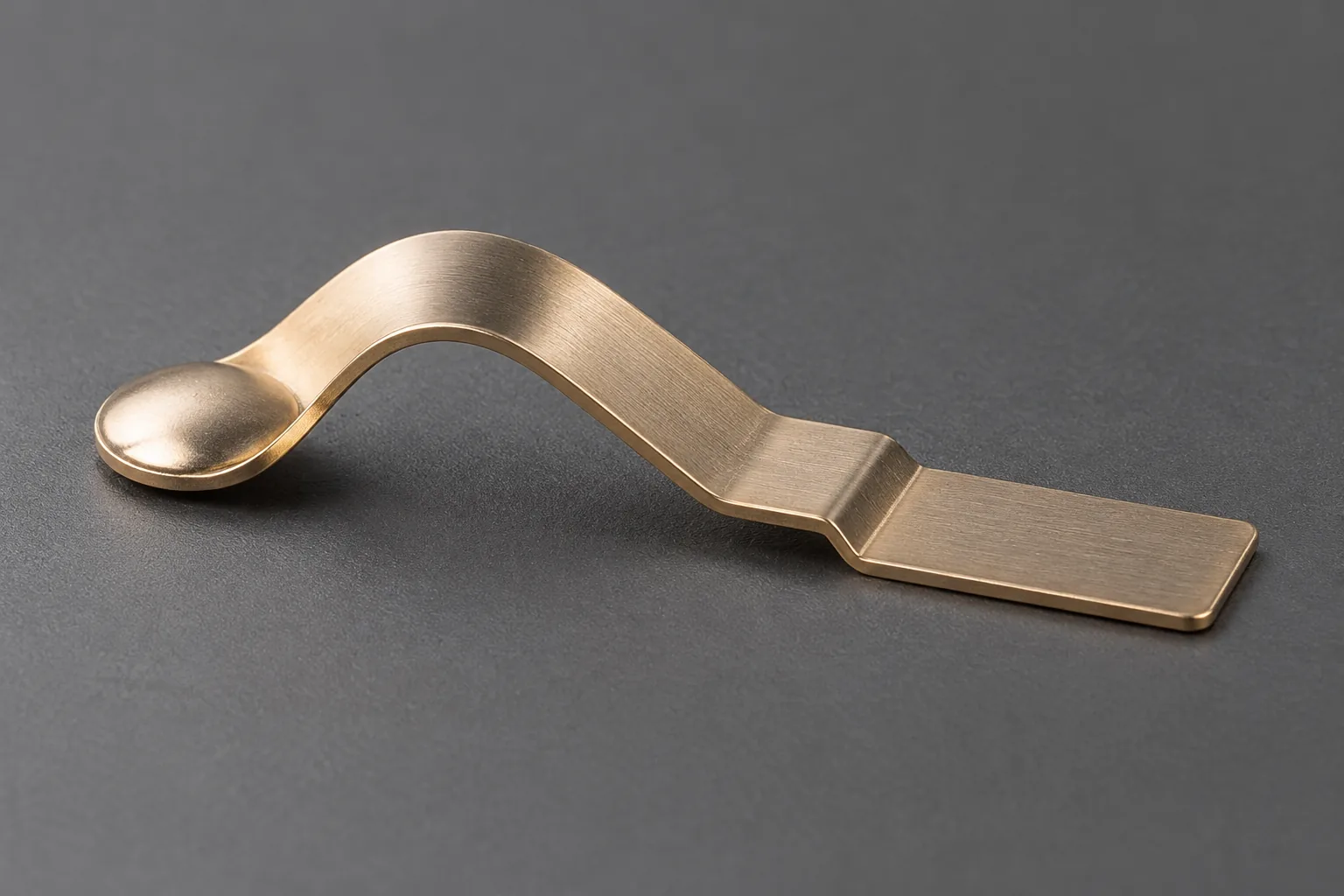
- Cantilever springs and simple beam springs, which bend as a beam under load.
- Finger springs and contact springs, often used where a small, localized force or an electrical contact is needed.
- Detent springs, which provide a locating or indexing force.
- Spring clips and formed sheet-metal springs, which may combine spring force with retention.
These forms are often multifunctional. A single part can act as a fastener, clip, detent, latch, retainer, or electrical contact while also providing spring force. That multifunctionality is one reason flat springs appear in compact assemblies.
Leaf Spring Variants
A leaf spring is a flat-spring family made from one or more flat pieces. Vehicle suspension commonly uses multi-leaf springs and parabolic leaf springs. The leaves may be stacked or shaped to distribute load and control deflection.
Flat spring and leaf spring are not exact synonyms. A leaf spring is a subset or related family within the broader flat-spring category. A contact spring, clip, or wave spring is also a flat spring but not a leaf spring.
Wound Flat-Strip and Wave Springs
Wound flat-strip products include constant-force springs, power springs, and spiral torsion springs. These parts use flat strip in a wound form rather than a straight beam.
Wave springs are flat-wire compression springs with multiple waves. For multi-wave designs, a common manufacturer claim is that multiple wave peaks can provide comparable force within about 50% of the working height of a conventional round-wire compression spring. That comparison is a design claim for wave springs, not a universal rule for all flat springs.
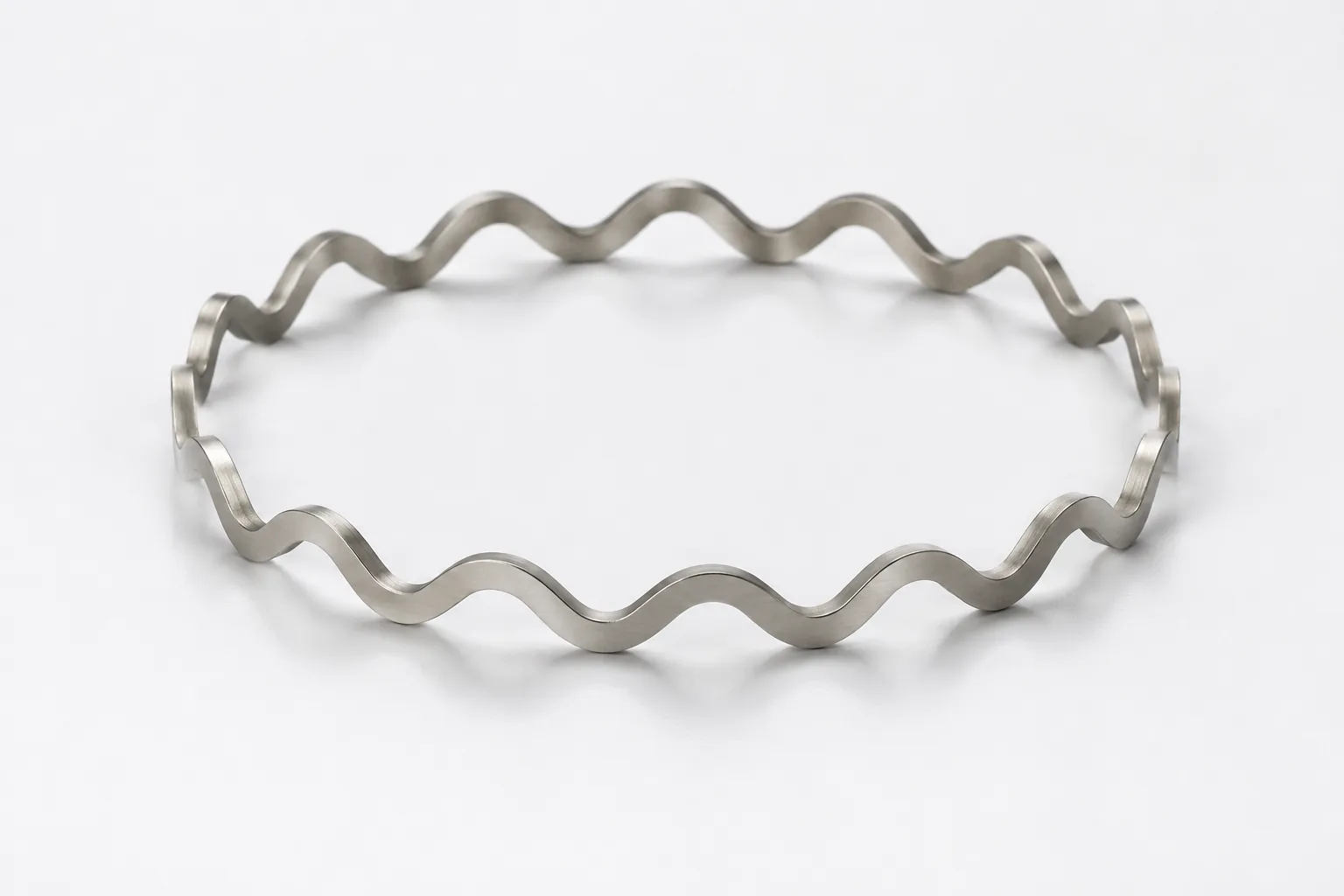
Standard flat-wire wave springs may use SAE 1070-1090 carbon steel or 17-7 PH stainless steel. A representative flat-wire wave spring can have a strip thickness of 0.61 mm and a radial width of 3.76 mm.
What Flat Springs Are Used For
Typical flat-spring applications include:
- Battery contacts, electrical connector fingers, and switch contacts, where conductivity and spring force are both required.
- Retaining clips and detents, where the spring also positions or holds a component.
- Vehicle leaf springs, where one or more flat leaves carry suspension loads.
- Bearing-preload wave springs, where a compact wave form applies axial force.
Flat springs are often selected when the spring must also fasten, retain, position, latch, clamp, or conduct electricity. A thin-slot installation space is another common reason to choose a flat spring over a round-wire spring. In a low-profile envelope, a formed strip can provide the required force without the height of a conventional coil.
Flat Spring Materials
Common flat-spring materials include high-carbon spring steel, stainless steel, cold-rolled steel, aluminum, brass, copper, phosphor bronze, and beryllium copper. For high-temperature or corrosive environments, Inconel, Hastelloy, Monel, and titanium alloys may be used.
Material choice follows function:
- Conductive flat springs commonly use copper, brass, phosphor bronze, or beryllium copper.
- Spring-tempered stainless steel is common when higher strength and corrosion resistance are needed.
- High-carbon spring steel is common where strength and spring temper matter more than corrosion resistance.
- Nickel alloys and titanium alloys are options when temperature or corrosion demands exceed what ordinary spring steels can handle.
Selection depends on required conductivity, corrosion resistance, temperature, strength, fatigue life, and formability. A material that performs well in one environment may be a poor choice in another.
How Flat Springs Are Manufactured
Common manufacturing processes include stamping, blanking, laser cutting, etching, bending, and four-slide or multi-slide forming. Formed parts may then receive stress relief, hardening, or surface finishing as required.
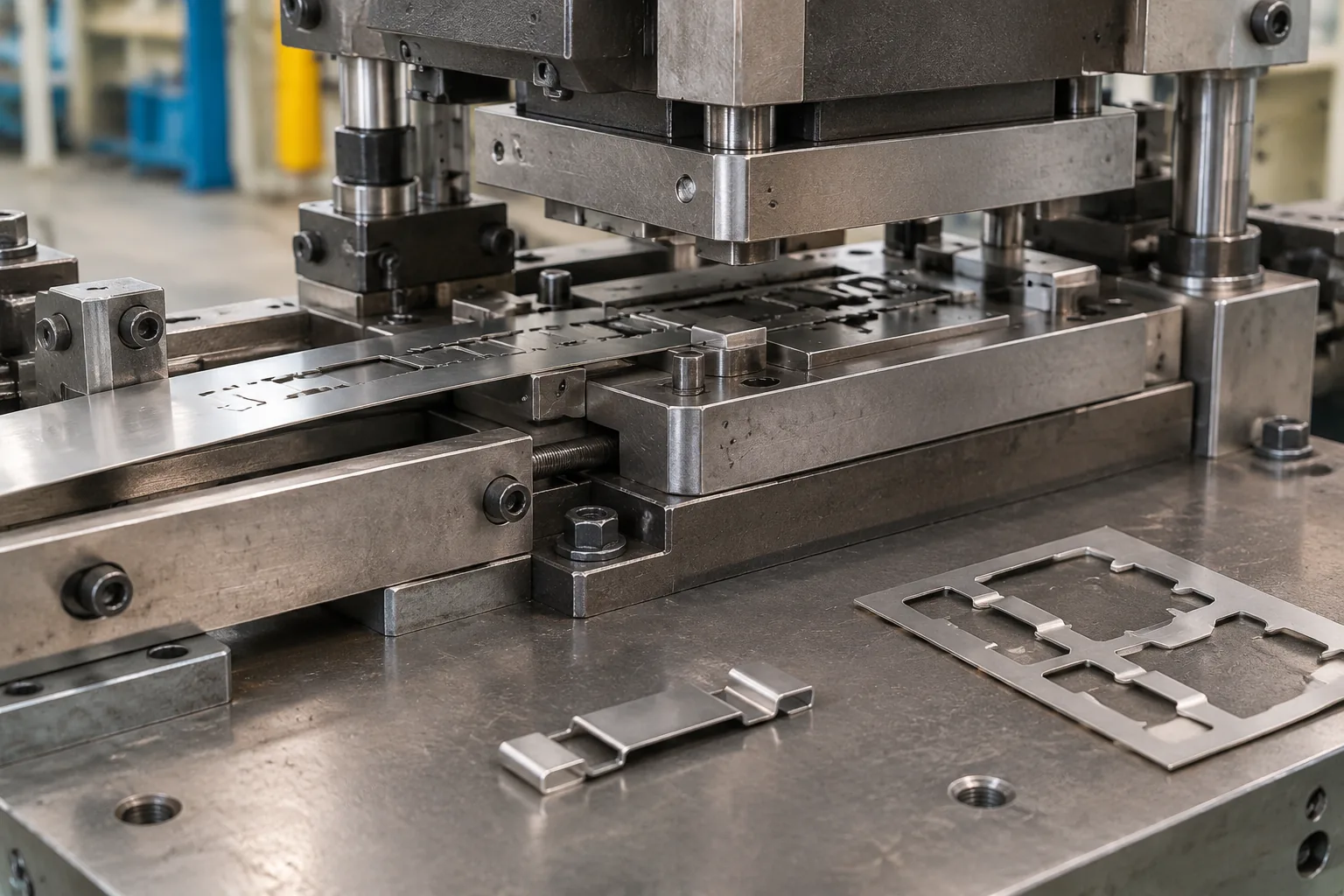
Edge quality and bend geometry matter. Burrs, sharp edges, and tight bend radii should be controlled because they reduce fatigue life through stress concentration. For rolled strip, the bend axis is usually oriented perpendicular to the rolling direction because the strip has higher ductility along the rolling direction.
The method depends on thickness, quantity, tolerance, material, and whether the part is a simple blank, a formed strip, a contact, a clip, or a wave spring. A process that suits a thin contact may not suit a thicker leaf or a high-cycle beam spring.
Key Design and Specification Factors
Key flat-spring specifications include material, thickness, width, active length, free shape, mounting method, working deflection, required load, cycle life, temperature, and surface finish.
Load at a specified working height is usually more practical to inspect than load defined only by theoretical deflection. The working height ties the measurement to the installed condition and reduces ambiguity between design and inspection.
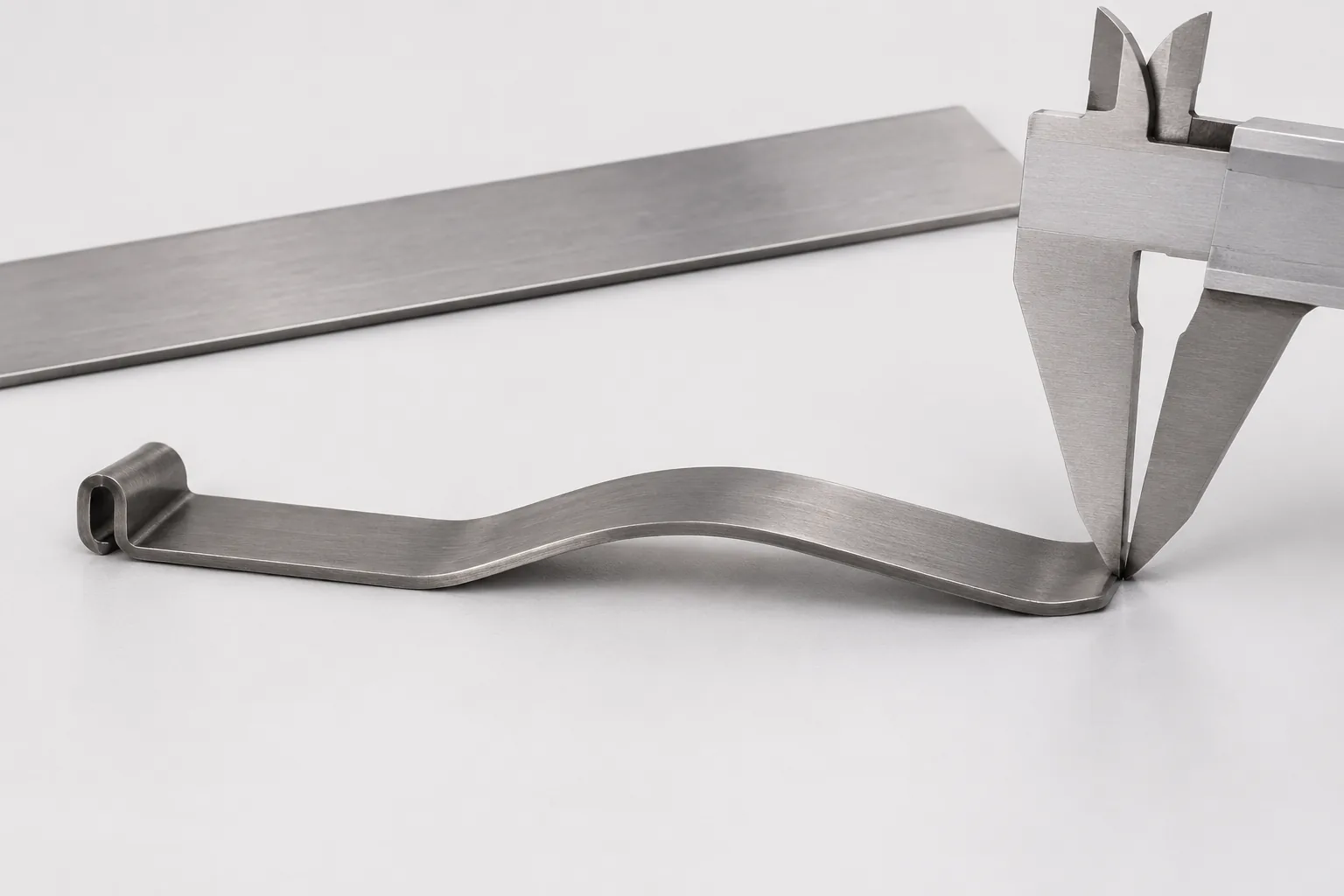
Basic beam-model calculations are useful for early-stage load, stress, and deflection estimates. For cyclic applications, review fatigue, stress concentration, bend radius, burr control, and material grain direction together. A change in any one of these can alter the useful life of the part.
Standards and Material Specifications to Reference
Standards are useful context for material selection, but they do not replace application-specific design validation. Coverage differs by material, product form, thickness, width, and industry.
- ASTM A684/A684M-25a covers cold-rolled high-carbon steel strip, generally up to 7.50 mm thick and 12.5-600 mm wide.
- ISO 6931-2:2005 covers cold-rolled stainless steel narrow strip for springs, with thickness up to 3 mm and rolling width less than 600 mm. It was reviewed and confirmed in 2021.
- ISO 683-6:2023 covers alloy steels for quenched and tempered springs, including round bars, flat bars, and wire rods for springs that are hot formed or cold formed and then heat treated.
- ISO 9442:1988 covers dimensions and tolerances of hot-rolled ribbed or grooved flat steel for leaf springs and is classified under ICS 77.140.25 Spring steels.
- BS 2S 513:1970 is a British specification for high-carbon spring steel strip for aerospace use, classified under ICS 49.025.10.
Use the exact standard designation and current edition when a material certificate or purchase specification requires it. Confirm that the standard actually covers the product form, thickness, and material condition in the application.
When to Choose a Flat Spring
Choose a flat spring when installation space is a thin slot or a compact, low-profile envelope. A formed strip can fit where a round-wire coil would add unwanted height or width.
Choose a flat spring when the part must conduct electricity or act as an electrical contact. Copper alloys and other conductive materials make this possible in a single component.
Choose a flat spring when the spring must also position, retain, latch, clip, or fasten a component. The spring force and the retention feature can be combined in one formed part.
Use a round-wire or other spring type when the application needs a conventional coil-spring geometry and flat-spring multifunctionality is unnecessary. Final selection should consider load, deflection, cycle life, material, tolerance, and assembly method. Flat springs are not automatically superior for every spring application.
Conclusion
A flat spring is defined by its material form: it is made from sheet, strip, or plate rather than round wire, and it stores energy mainly through elastic bending. That broad definition covers beam springs, contacts, clips, detents, leaf springs, wound flat-strip springs, and wave springs.
The right choice depends on the working height, required load, deflection, cycle life, conductivity, corrosion exposure, and available space. Define those conditions first, then select the material, forming process, and applicable standard. For a cyclic or safety-related application, validate the design beyond a simple beam estimate before release.
FAQs
Q1: Is a flat spring the same as a leaf spring?
A: No. A flat spring is a broad material-form category, while a leaf spring is one family made from one or more flat pieces. A contact spring, clip, or wave spring can also be a flat spring. Use the geometry and application, not the name alone, to classify the part.
Q2: What is the difference between a flat spring and a coil spring?
A: A flat spring is formed from strip, sheet, or plate and stores energy mainly in bending. A round-wire coil spring primarily uses torsion of the wire. Flat springs can fit thin slots and can also act as contacts or retainers, while coil springs are usually chosen for conventional coil geometry.
Q3: Which materials are used for conductive flat springs?
A: Copper, brass, phosphor bronze, and beryllium copper are common when electrical conductivity is required. Spring-tempered stainless steel is more common when strength and corrosion resistance matter more than conductivity.
Q4: How are flat springs manufactured?
A: Common processes include stamping, blanking, laser cutting, etching, bending, and four-slide or multi-slide forming. Formed parts may be stress-relieved, hardened, or surface-finished. Burrs, sharp edges, and tight bend radii should be controlled in cyclic service.
Q5: What specifications should a flat-spring drawing include?
A: Include material, thickness, width, active length, free shape, mounting method, working deflection, required load, cycle life, temperature, and surface finish. Specifying load at a defined working height is usually easier to inspect than relying only on theoretical deflection.
Q6: Are wave springs a type of flat spring?
A: Yes, a wave spring is a flat-wire compression spring with multiple waves. It is a wound flat-strip product. A common manufacturer claim for multi-wave springs states that comparable force can be reached within about 50% of the working height of a conventional round-wire compression spring; this is a design claim, not a universal rule.